
Why Is Chicken Breast So Dry? Causes and Fixes
Chicken breast dries out because it is lean, cooks fast, and loses moisture quickly when you push it too far.
You can keep it much juicier with better heat control, even thickness, and a few simple prep steps.
If you want to avoid dry chicken, use a thermometer and pull the chicken at the right point.
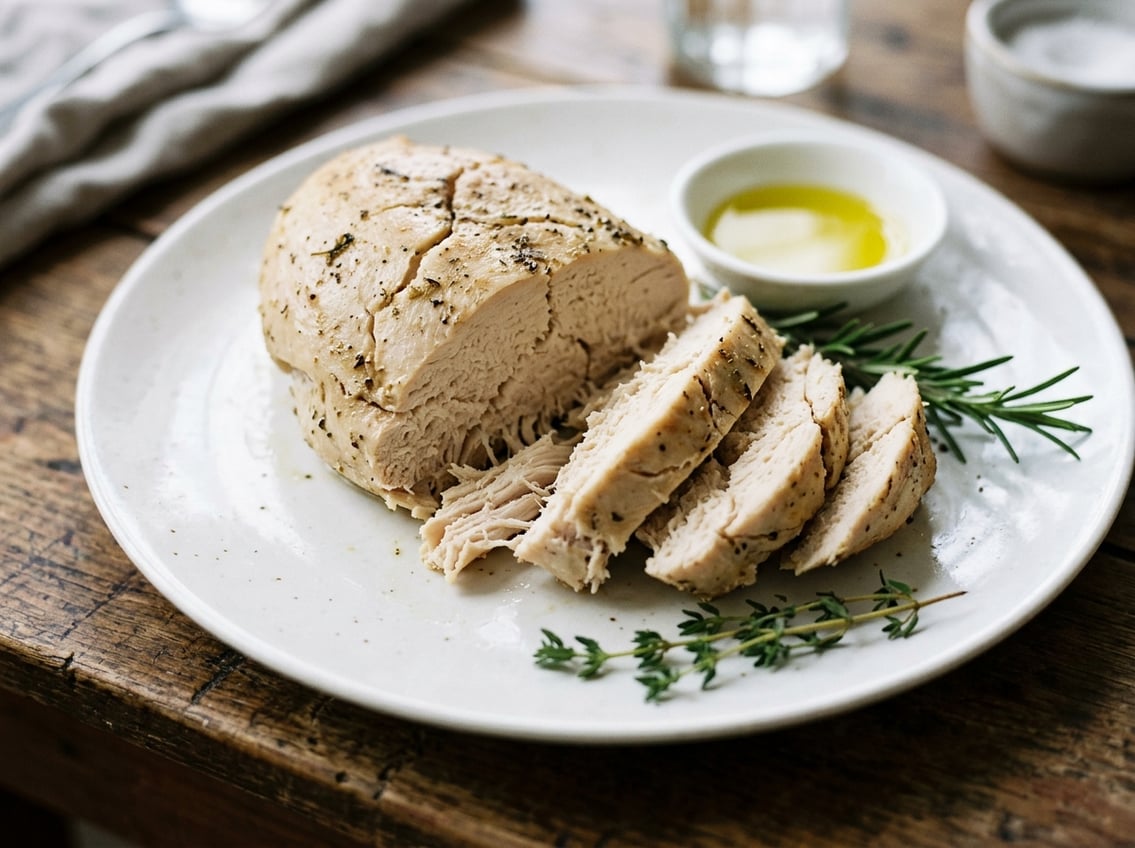
Seasoning is not usually the problem with dry chicken breast.
It usually happens because of how you cook it, which means you can fix it.
When you cook chicken breast with more control, you can get juicy results with less stress.
Small changes make a real difference, especially with lean white meat.
What Makes Chicken Breast Lose Moisture So Fast
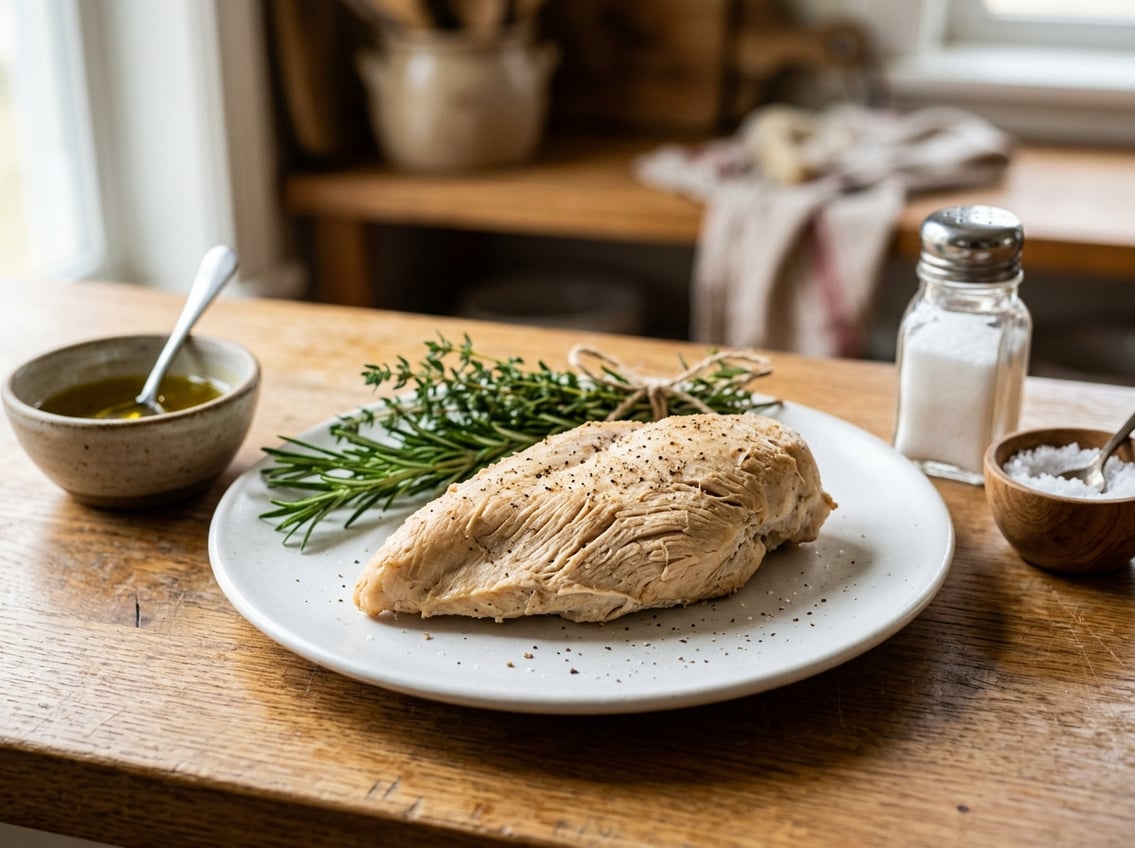
Chicken breast loses moisture quickly because it has very little fat and can overcook fast.
Once heat tightens the muscle fibers, the juices have fewer places to stay, so chicken breast can turn dry in a short time.
Why Lean White Meat Dries Out More Easily
Chicken breast is lean white meat, so it has less fat to protect it during cooking.
Fat helps slow moisture loss, which is why fattier cuts stay juicy more easily.
Without that buffer, the meat depends on careful timing.
If you go past doneness, the texture changes fast and the breast starts to feel dry and stringy.
How Overcooking Tightens Proteins and Forces Out Juice
Heat changes the proteins in chicken breast.
At the right level, the meat sets and stays juicy, but too much heat makes those proteins tighten and squeeze out liquid.
Dry chicken breast often happens because of time or temperature errors, not bad seasoning.
As Cook Answers explains, lean chicken loses moisture fast when you cook it too long or too hot.
Why Uneven Thickness Creates Dry Spots
Chicken breast is often thicker on one end than the other.
The thin part reaches doneness first, while the thick part still needs more time.
If you keep cooking for the thick end, the thin end can dry out.
Even cooking depends on even thickness, so the whole piece finishes at about the same time.
The Most Important Cooking Fixes
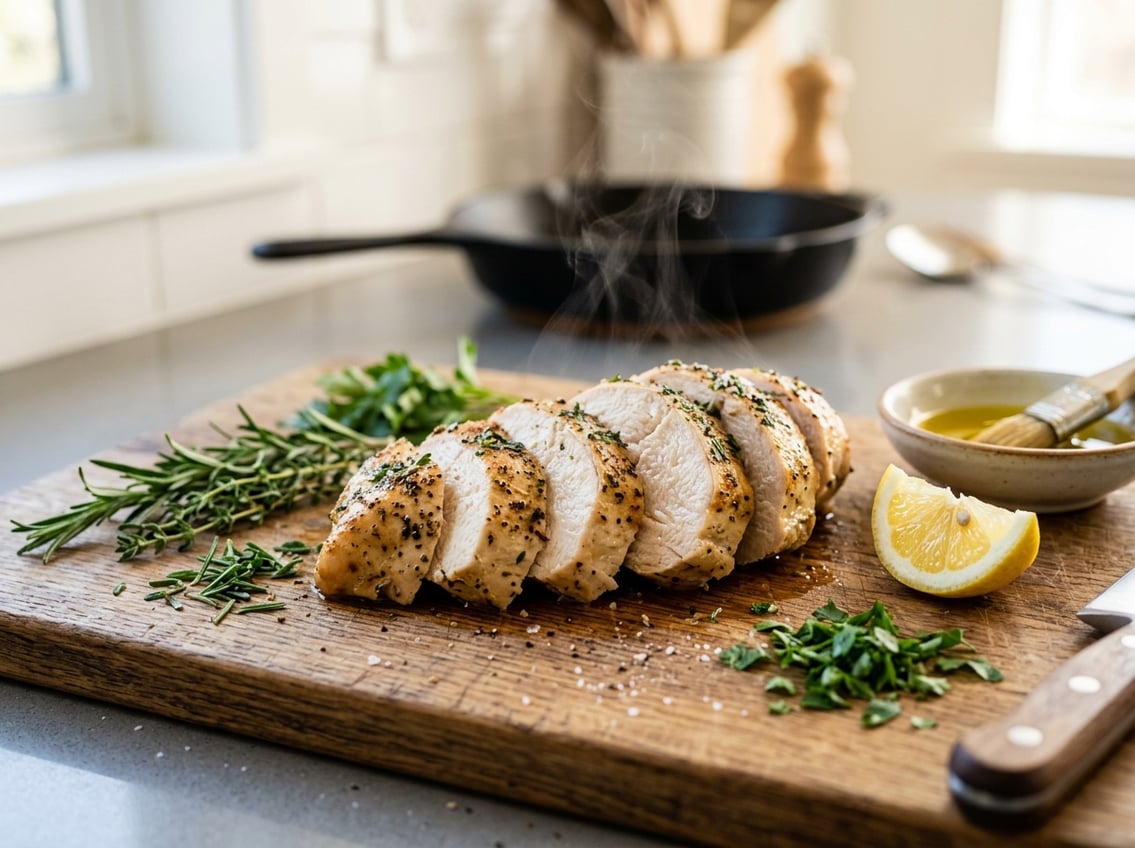
The main fixes are simple, and they work together.
You need accurate temperature checks, good timing, and even thickness so you can prevent overcooking and keep a juicy chicken breast.
Use a Meat Thermometer Instead of Guessing
A meat thermometer or digital thermometer removes the guesswork.
Check the thickest part of the chicken breast, since that is the last part to finish cooking.
Color alone is not reliable.
A thermometer gives you a clear stop point, which helps you avoid dry chicken before it happens.
Pull It Early and Let Residual Heat Finish the Job
Residual heat keeps cooking the chicken after it leaves the pan or oven.
You should pull it a little early, not wait until the meat looks fully done on the heat.
This small timing shift helps you protect moisture.
It also gives the juices time to settle instead of spilling out the moment you slice in.
Cook to the Right Internal Temperature Without Overshooting
Hit the right internal temperature, then stop.
If you push past that point, the meat tightens and loses more juice.
A few degrees matter.
That is why a digital thermometer is so useful for chicken breast, especially when you want even cooking and consistent results.
Why Pounding Chicken Helps It Cook Evenly
Pounding chicken breast gently flattens the thicker parts so the meat cooks at the same rate.
That makes it easier to prevent overcooking the thin end while the thick end finishes.
You do not need to smash it flat.
Light pounding is enough to improve even cooking and make the whole breast more predictable.
Prep Methods That Improve Juiciness Before Cooking
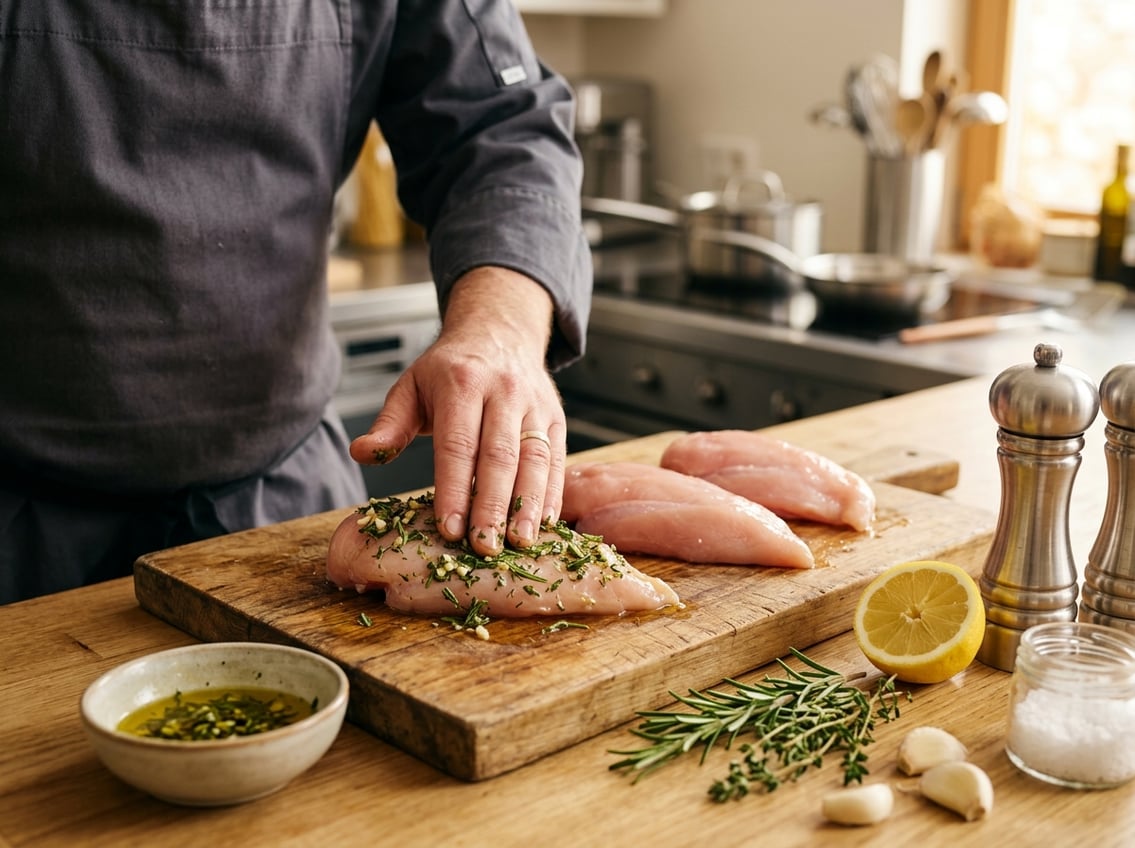
Good prep can make tender chicken breast easier to achieve before heat even starts.
Brining, dry brining, and better store choices all help you avoid dry chicken by improving moisture and texture.
When Brining Helps
Brining works well when you want extra insurance against dryness.
A saltwater brine gives the meat time to absorb seasoning and hold onto moisture more effectively during cooking.
It is useful for larger pieces or when you know the cooking method will be a little less forgiving.
The tradeoff is time, since wet brining takes planning.
Why Dry Brining Is Often the Simpler Option
Dry brining means salting the chicken ahead of time and letting it rest.
It is usually simpler than wet brining, and it still helps the meat season more evenly.
This method can improve the texture of chicken breast without adding extra water.
For many home cooks, it is the easiest prep step to repeat.
How Better Grocery Choices Affect Texture
Your shopping choice matters too.
Air-chilled chicken breast often has a better texture because it does not hold as much added water as some package-chilled options.
Real Simple notes that choosing air-chilled chicken can support a juicier result when you cook it correctly.
If you want to avoid dry chicken, look for chicken that feels firm and fresh.
Season it early and cook it with control.
Better prep gives you a better starting point before the heat goes on.


