
Why Should I Brine Chicken Breast for Juicier Results
Brining chicken breast gives you a simple way to make lean meat juicier, more seasoned, and less likely to dry out while cooking.
If you have ever asked why should I brine chicken breast, the short answer is that saltwater changes the meat in ways that help it stay tender and taste better.
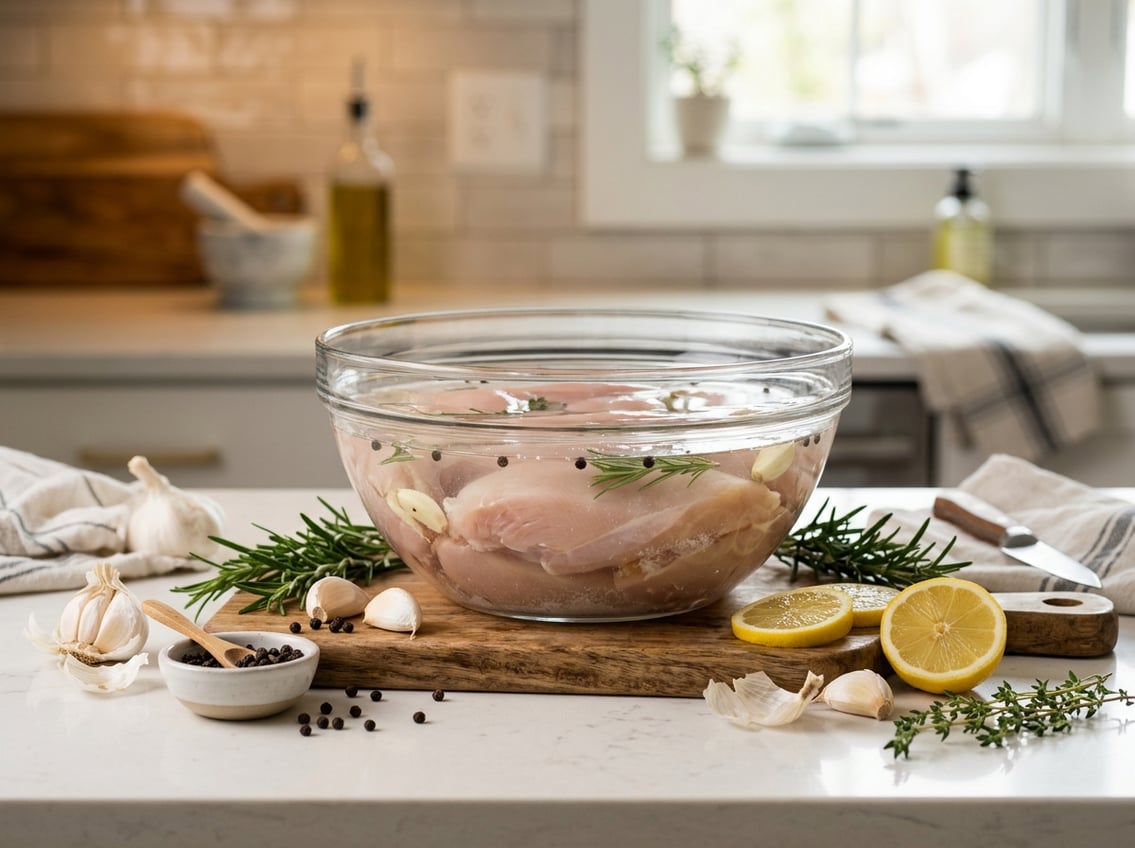
Boneless skinless chicken breasts are lean and cook quickly, so they dry out easily. Brining can give you a better result with little extra effort, whether you bake, grill, or sear the chicken.
A brine improves moisture retention, seasons the meat deeply, and lowers the risk of a dry texture.
What Brining Improves in Chicken Breast
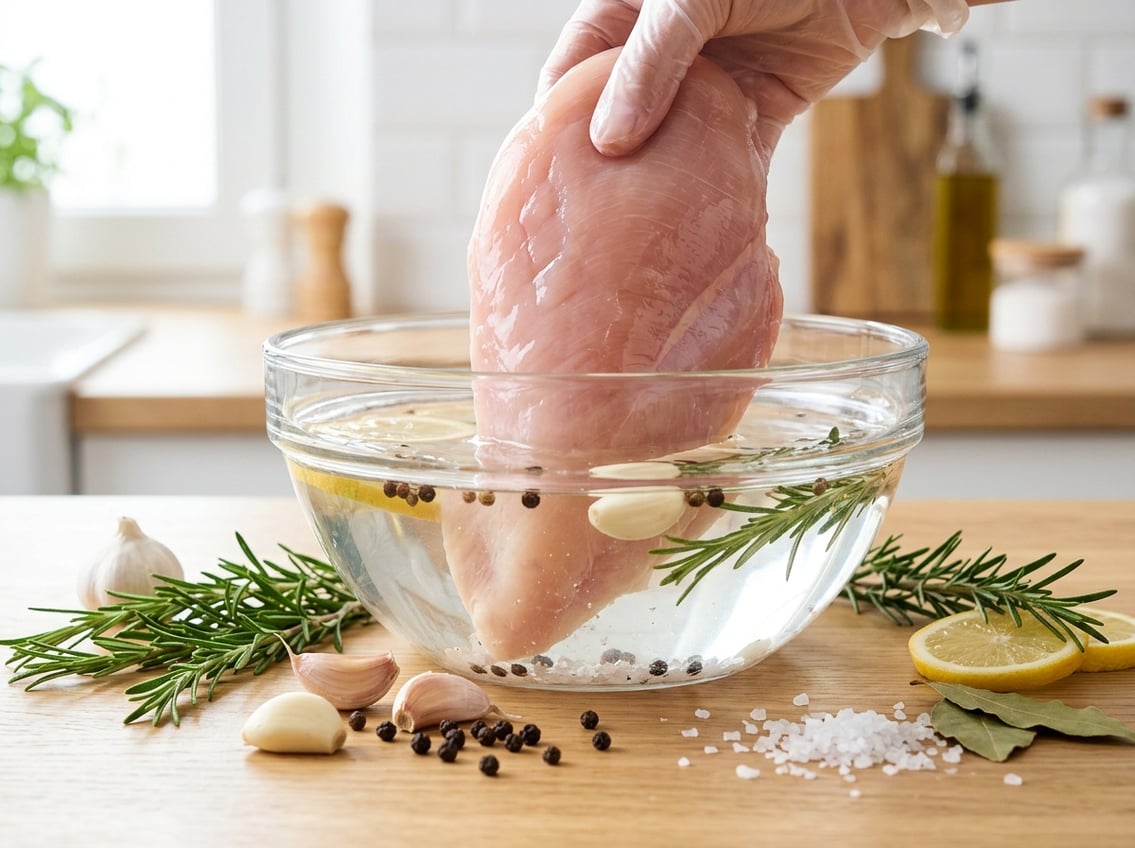
Salt changes how chicken behaves during cooking. In a wet brine, the meat absorbs some saltwater, which helps it cook up juicier and more evenly seasoned.
Juicier Meat Through Moisture Retention
Chicken breast is low in fat, so it dries out fast if it goes past done.
A brined chicken breast holds onto more moisture during cooking, which helps you avoid that dry, stringy bite.
Osmosis and protein denaturation cause this effect. Salt changes the proteins so they trap more water, letting the meat lose less juice while cooking.
Better Flavor From Inside-Out Seasoning
A brine seasons the meat throughout, giving you a stronger flavor than just sprinkling salt on the outside.
Brining helps boneless skinless chicken breasts taste less flat by letting seasoning reach deeper than a dry sprinkle.
More Tender Texture Through Protein Changes
Salt relaxes the proteins in the meat, so the texture becomes more tender instead of tight or rubbery.
Many cooks use wet brining for lean cuts for this reason. A quick brine for chicken breasts can make a real difference before grilling or baking.
How to Brine It the Right Way

A good brine recipe is simple, and the salt level matters more than extra ingredients.
Once you know the right ratio, you can brine chicken breasts with confidence and keep the meat from turning too salty.
Basic Brine Recipe and Salt Ratios
Start with cold water and the right salt concentration.
A practical base is 4 cups water with 33 grams salt, which matches a tested brine recipe for chicken breasts.
Salt type changes the volume you need.
- Diamond Crystal kosher salt: about 1/4 cup for that amount of water
- Morton’s kosher salt: denser, so use less by volume
- Table salt: finer and more concentrated
- Sea salt: varies, so weighing it is best
You can add a little sugar or brown sugar for light browning and a mild sweet note.
Dissolve the mix fully before adding the chicken.
Best Brining Time for Boneless Cuts
Boneless skinless chicken is thin, so it does not need a long soak.
Usually, 15 to 30 minutes is enough for brining chicken breast.
Longer times can make the meat too salty or too firm.
Wet Brine vs Dry Brine
Wet brining uses water and salt, while dry brining uses only salt.
In dry brining, the chicken draws out its own moisture and then reabsorbs it.
Dry brining is simpler and less messy.
Wet brining is useful when you want a classic saltwater solution.
Both methods can work well for boneless skinless chicken, so choose the one that fits your cooking plan.
What to Add for Flavor and What Not to Expect
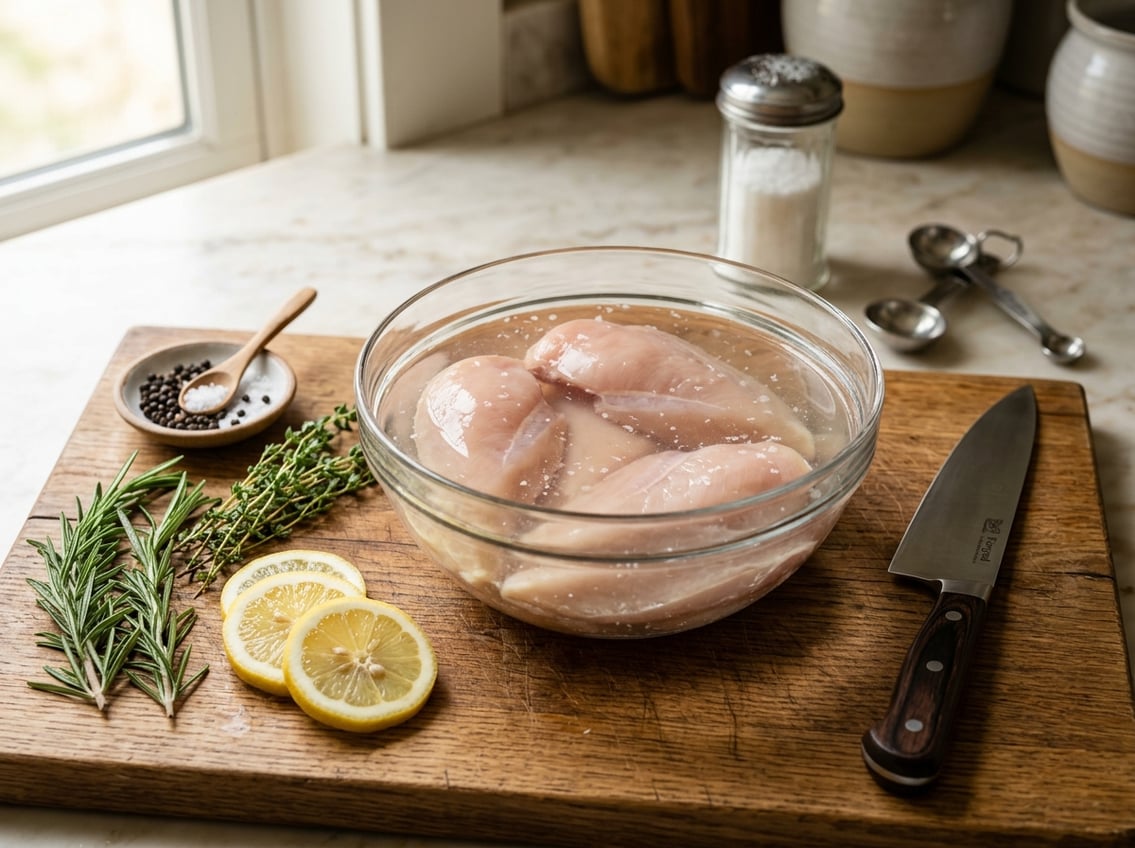
A brine can carry flavor, but its main job is to improve texture and seasoning.
Use ingredients that fit the meat cleanly.
Herbs, Spices, and Aromatics That Fit a Brine
Simple add-ins work best.
Spices, herbs, garlic, peppercorns, bay leaves, rosemary, thyme, oregano, and citrus peels all fit well in a brine for chicken breasts.
These ingredients add a light background flavor.
They work especially well when you grill, bake, or use the chicken in salads and wraps.
Sweet, Savory, and Global Flavor Ideas
You can build a brine with soy sauce, ginger, honey, sesame oil, lemon juice, vinegar, or yogurt in small amounts.
These ingredients support a flavor direction, such as savory, bright, or lightly sweet.
The brine should not become a heavy sauce.
A mild mix gives the cleanest result and avoids muddy flavors.
How Brining Differs From Marinating
Brining uses salt for moisture retention and texture.
Marinating is about surface flavor.
Marinades add strong taste on the outside, while brining works from within the meat.
If you want both, brine first and then add a glaze or light marinade before cooking.
Common Mistakes, Cooking, and Safety Tips

Timing and cooking method still matter.
The best results come from avoiding over-brining, using the right cook method, and checking doneness with a thermometer.
How Over-Brining Affects Taste and Texture
If you leave chicken in brine too long, the meat turns overly salty.
It may develop a strange, spongy texture or a cured feel.
Thin cuts are especially sensitive.
For most boneless skinless chicken breasts, short brining is enough to get good results.
How to Cook Brined Chicken Breast Well
Before cooking, pat the chicken dry so it browns better.
Use cooking techniques that match the cut, such as baking, grilling, or searing.
A brined chicken breast cooks well in the oven or over medium heat on the grill.
You can also sear brined chicken and finish it gently to protect moisture.
Food Safety and Doneness Checks
Keep the chicken refrigerated while it brines.
Never leave it at room temperature.
Use a meat thermometer when you cook brined chicken.
Check that chicken breast reaches a safe internal temperature of 165°F, since that matters more than color alone.
You can use the same approach when brining chicken thighs or working with brining pork chops.
Salt can improve lean meat in similar ways.


