
When Does Chicken Breast Go Bad? Storage and Spoilage Signs
When does chicken breast go bad? In the U.S., raw chicken breast usually stays safe in the fridge for only 1 to 2 days.
Cooked chicken breast lasts about 3 to 4 days in the fridge. If you keep it longer, the risk of spoilage and foodborne illness rises fast.
You can usually tell if chicken breast has gone bad by checking the date, smell, color, and texture. If you are unsure, it is safer to throw it out.
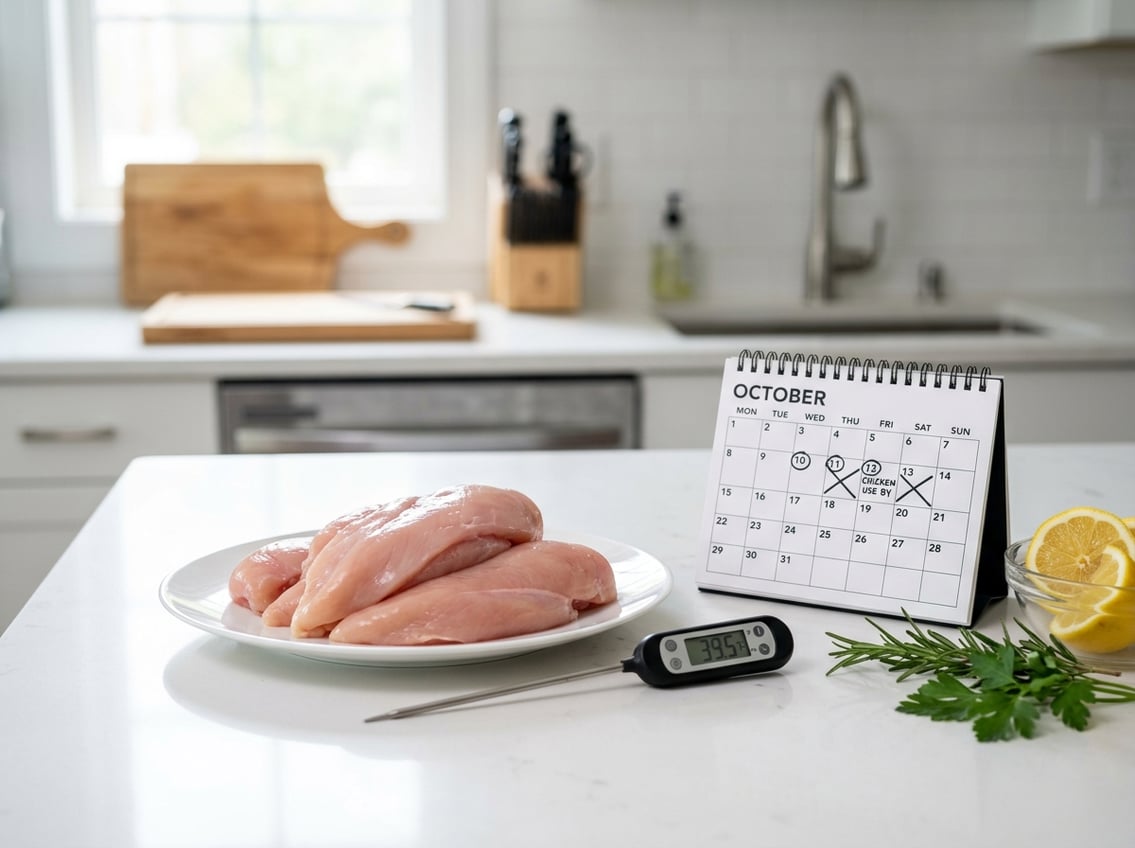
Chicken can carry harmful bacteria like campylobacter. Your storage habits matter from the moment you bring it home.
Good refrigeration, freezing, and thawing practices help keep chicken breast safe. These habits also reduce waste.
How Long Chicken Breast Stays Safe
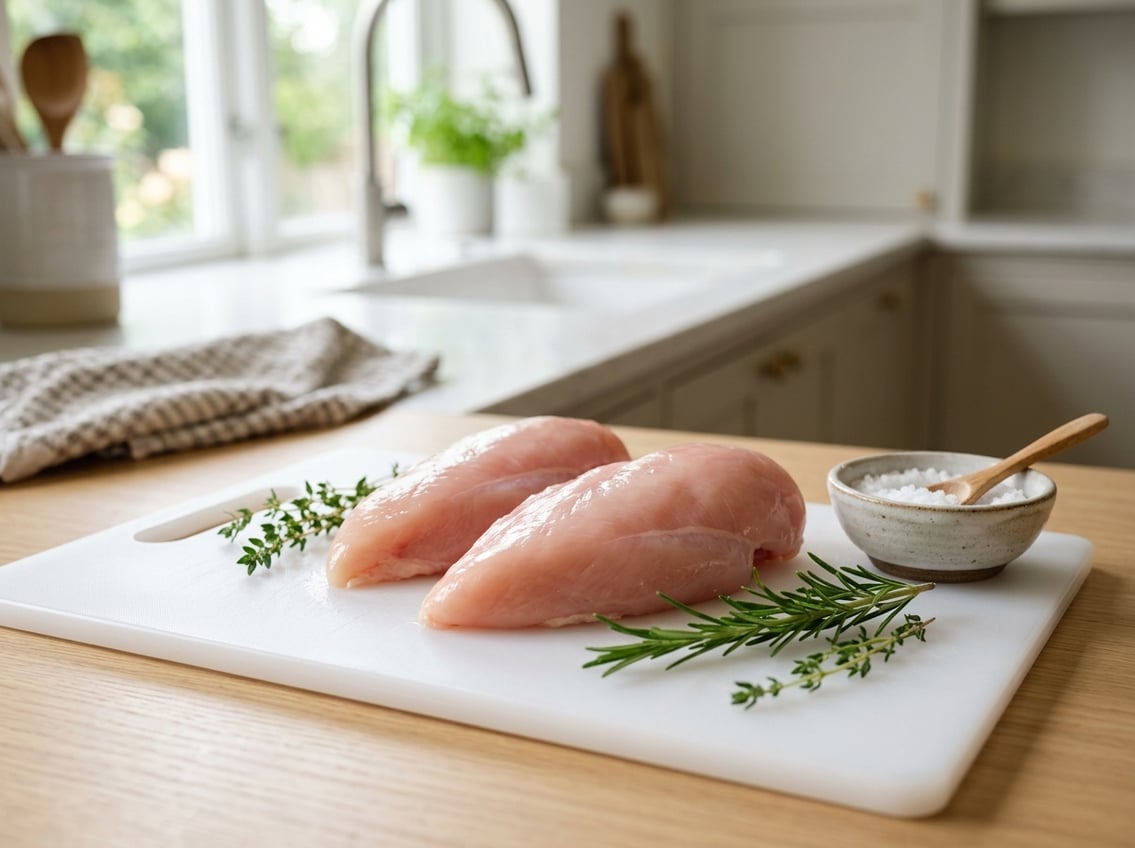
How long chicken breast lasts depends on whether it is raw, cooked, or frozen. The fridge gives you only a short window.
The freezer gives you much more time if you store it correctly.
Raw Chicken in the Fridge
Store raw chicken breast in the refrigerator at 40°F or below and use it within 1 to 2 days. That short time frame applies even if the package still looks sealed.
If you do not plan to cook it quickly, move it to the freezer right away. Freezing it sooner keeps it safer.
Cooked Chicken in the Fridge
Cooked chicken breast usually lasts 3 to 4 days in the refrigerator. Keep it in a shallow, covered container and refrigerate it within 2 hours of cooking.
If you want to keep it longer, freeze cooked chicken breast for later meals. Cooked chicken breast can be frozen for up to 2 months.
Frozen Storage Timelines
Frozen chicken breast stays safe much longer than refrigerated chicken. Your freezer should stay at 0°F or lower.
Use raw chicken within about 6 months for best quality. Cooked chicken stays best for about 2 to 6 months, depending on packaging and freezer conditions.
Chicken breast can stay frozen for up to 9 months, although texture may decline with time. Longer freezing can still affect taste and moisture.
When Dates on the Package Matter
Sell-by, use-by, and best-by dates are helpful, but they are not a guarantee of safety. Your refrigerator temperature, handling, and how long the chicken sat out matter just as much.
If the package date looks fine but the chicken smells bad or feels slimy, throw it away. Date labels can guide you, but they do not replace food safety checks.
Signs It Should Be Thrown Out
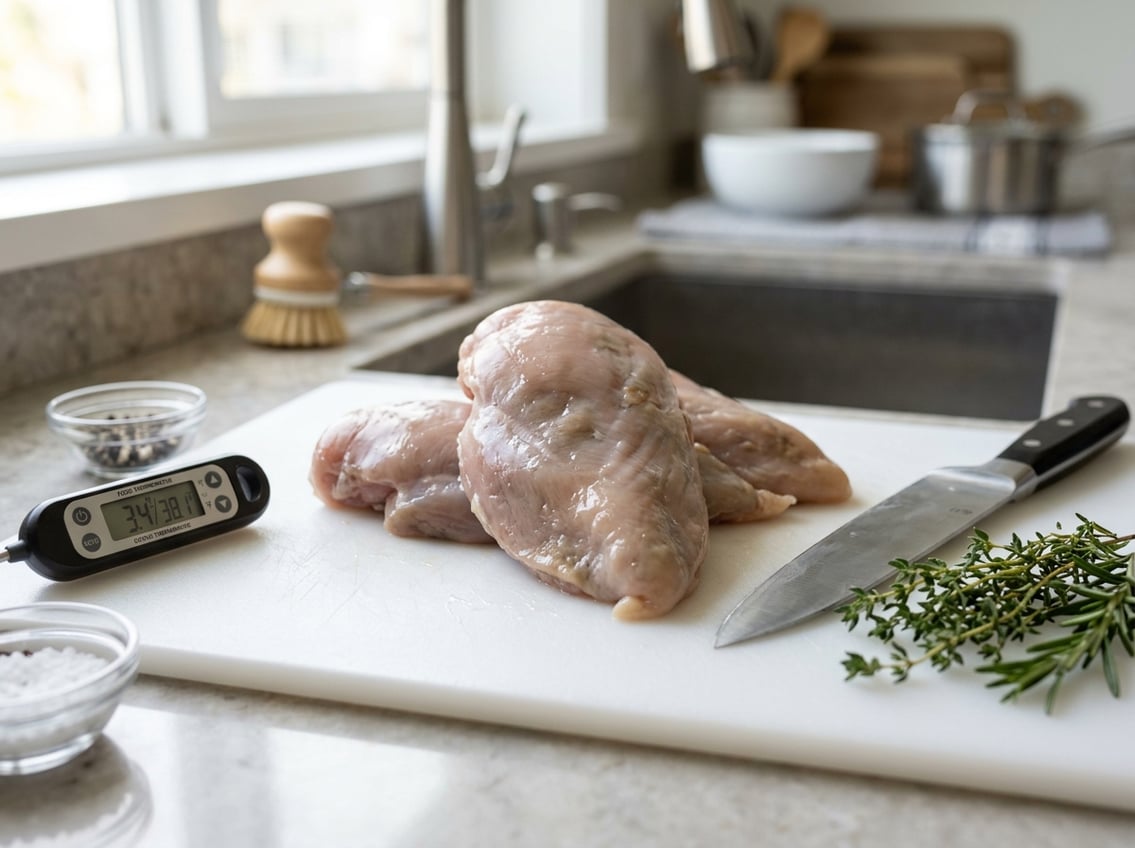
Spoiled chicken breast often shows more than one warning sign. Color, smell, and texture can all change, and mold is a clear reason to discard it.
Color, Smell, and Texture Changes
Fresh chicken breast is usually pale pink or light white. If it turns gray, greenish, or shows dark spots, that is a bad sign.
The smell can also change from mild to sour, rotten, ammonia-like, or sulfur-like. The texture may become sticky, slimy, or mushy instead of firm.
Signs of Spoiled Chicken Breast
Clear signs of spoiled chicken breast include:
- White, green, or fuzzy mold on the surface
- Slimy or sticky coating
- Strong sour or rotten odor
- Gray, green, or discolored patches
- Soft, mushy flesh
If you see more than one of these signs, the safest choice is to throw the chicken away.
Spoiled Chicken vs. Undercooked Chicken
Spoiled chicken has gone bad before cooking. Undercooked chicken was not heated enough to kill harmful bacteria.
Chicken breast should reach 165°F at the thickest part. If it smells normal before cooking but is still pink inside after cooking, it may be undercooked, not spoiled.
In that case, cook it more until it reaches a safe temperature.
Why Smell Alone Is Not Enough
Smell is useful, but it is not the only check you should use. Some harmful bacteria do not create a strong odor.
Chicken can still make you sick even if it smells only slightly off. You should use the date, storage time, and visible signs together before deciding to cook or eat it.
How to Store, Freeze, and Thaw It Properly
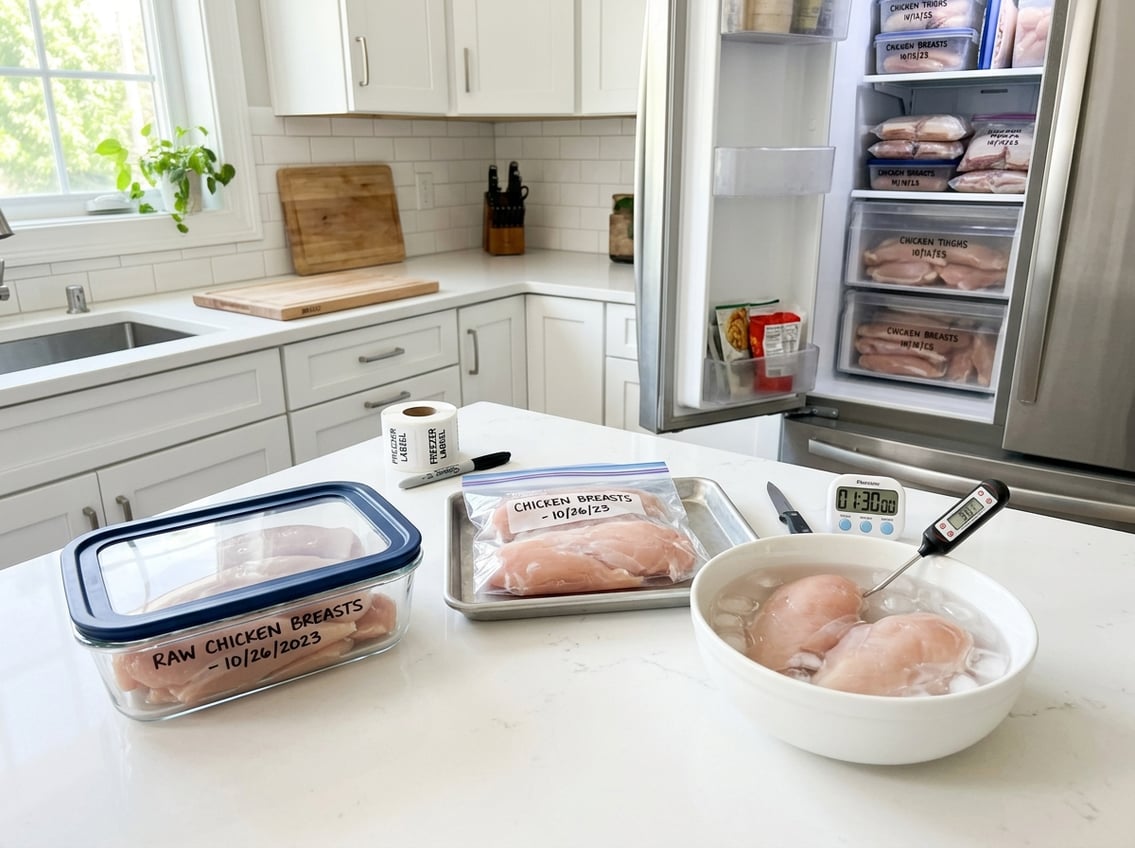
Good storage keeps chicken breast safer. It also helps you reduce waste.
The basics are simple. Keep raw chicken cold, seal it well, and thaw it in a safe place.
How to Store Chicken Breast Safely
Store chicken breast in the fridge on the lowest shelf in a sealed container or leak-proof bag. This prevents juices from dripping onto other foods.
If you need to keep raw chicken out of the package, use clean tools and wash your hands right away. Cross-contamination is a major risk when you handle raw poultry.
Freezing Chicken Breast the Right Way
Wrap chicken breast tightly and place it in a freezer bag or airtight container. Remove as much air as possible before sealing.
Freeze chicken breast in portions so you only thaw what you need. This also makes it easier to freeze cooked chicken later if you have leftovers.
How to Prevent Freezer Burn
Freezer burn does not usually make chicken unsafe, but it can hurt texture and flavor. To help prevent it, wrap chicken tightly, use freezer-safe packaging, and keep air exposure low.
Label the package with the date so you can use older chicken first. A tight seal matters more than appearance when you want to protect quality.
How to Thaw Frozen Chicken Safely
Thaw frozen chicken breast in the refrigerator, in cold water, or in the microwave if you plan to cook it right away.
Do not thaw it on the counter, because the outside can warm up too fast.
If you use cold water, place the chicken in a leak-proof bag.
Change the water every 30 minutes.
Once thawed, cook the chicken soon.
Only refreeze the chicken if you thawed it in the fridge and it stayed cold the whole time.


