
Can Chicken Breast Make Soup? How to Do It Well
You can make soup with chicken breast, and it turns out very well when you cook it gently and season it well. The key is to protect the lean meat from drying out while you build enough flavor in the broth around it.
If you know when to use chicken breast, how to cook it, and how to season the pot, you can make a clear, satisfying soup with tender shredded chicken instead of dry meat.
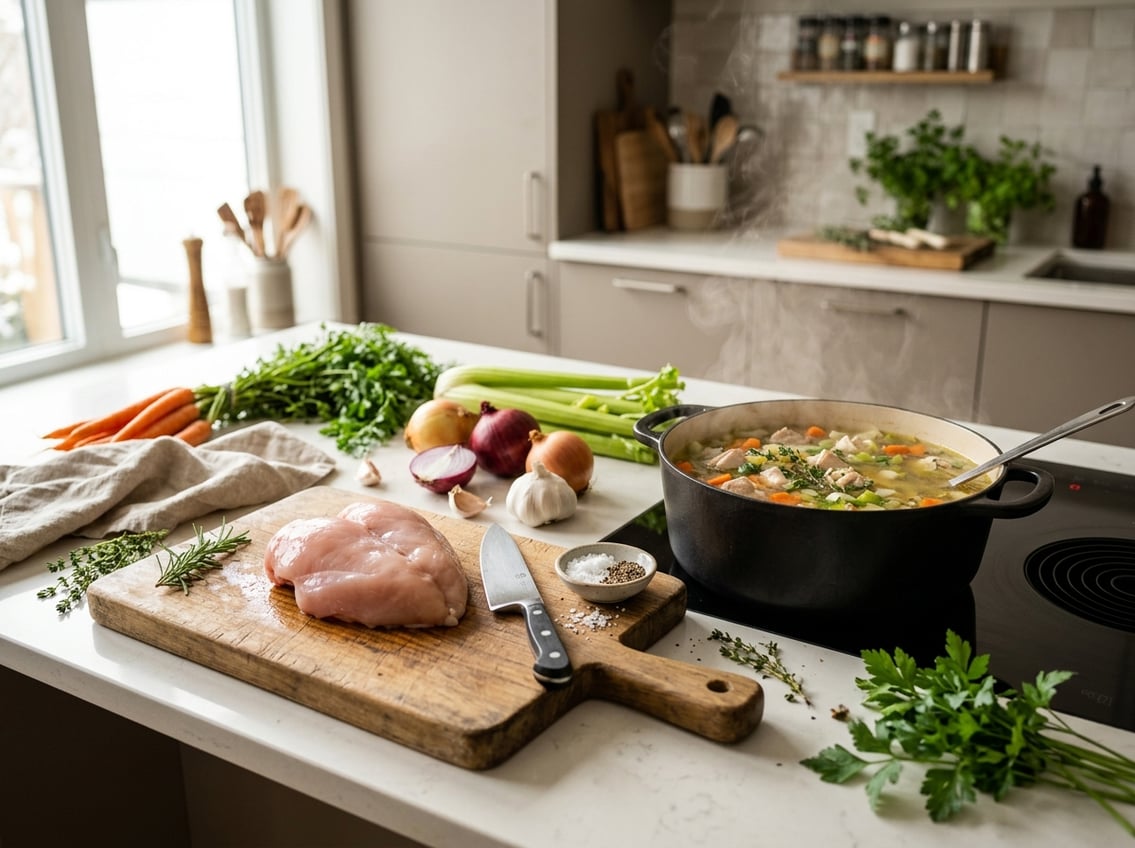
Chicken breast works especially well in chicken noodle soup, vegetable soup, and light broth-based soups. Since it is less forgiving than thighs or a whole chicken, the cooking method matters.
A gentle simmer, enough salt, and a broth with aromatics make a big difference.
When Chicken Breast Works Best in Soup
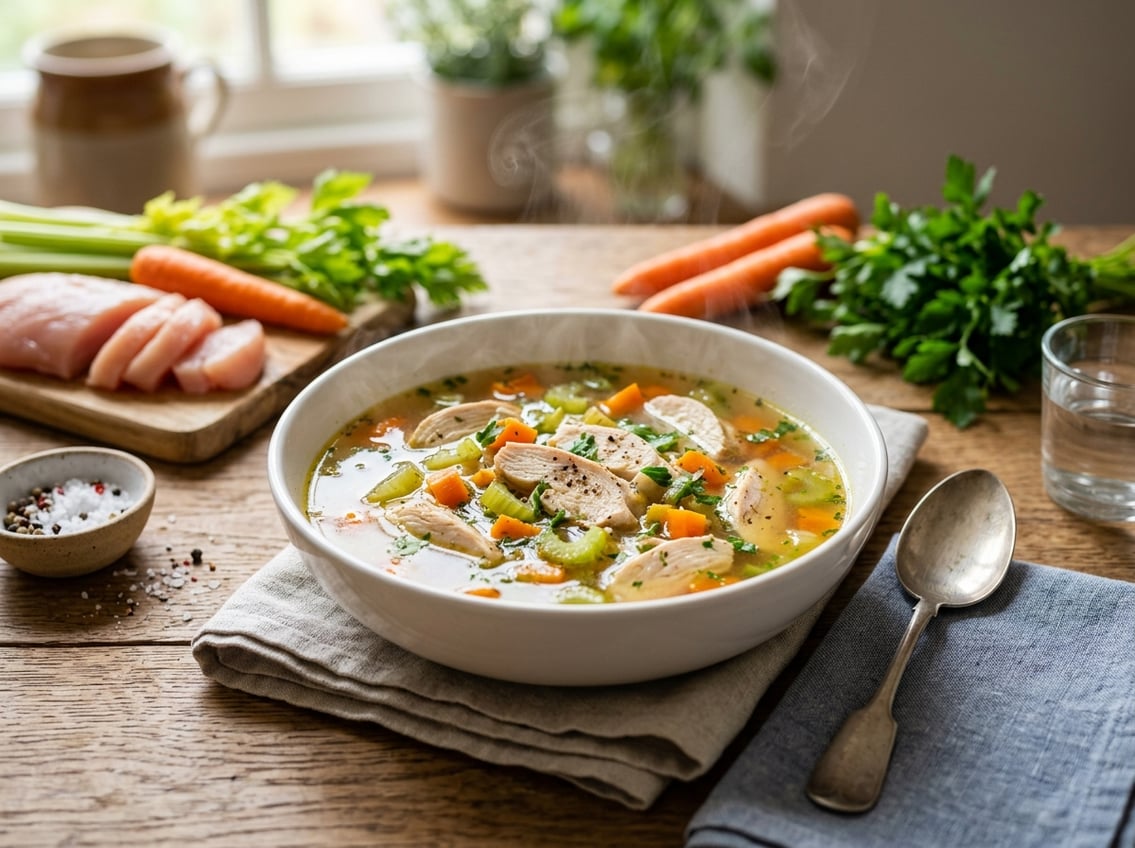
Chicken breast gives you lean protein, a mild flavor, and clean slices or shreds that fit well in lighter soups. It works best when the broth, vegetables, and seasoning carry most of the flavor.
Why It Can Make a Good Soup Base
Chicken breast makes a good soup base when you want a lighter result with less fat. It cooks quickly, shreds neatly, and pairs well with carrots, celery, onions, noodles, rice, and herbs.
Gentle methods like poaching keep the meat moist and flavorful. That matters because breast meat has less connective tissue and fat than darker cuts.
How It Compares With Thighs and Whole Chicken
Chicken thighs usually give you richer flavor and stay tender longer because they contain more fat. A whole chicken adds both breast meat and darker meat, plus bones that can deepen the broth.
Chicken breast is a strong choice when you want a clean taste, fast cooking, and easy shredding. If you want a deeply gelatinous stock or a very rich, old-fashioned chicken soup, bone-in pieces or a whole bird usually do better.
How to Cook Chicken Breast for Tender Results
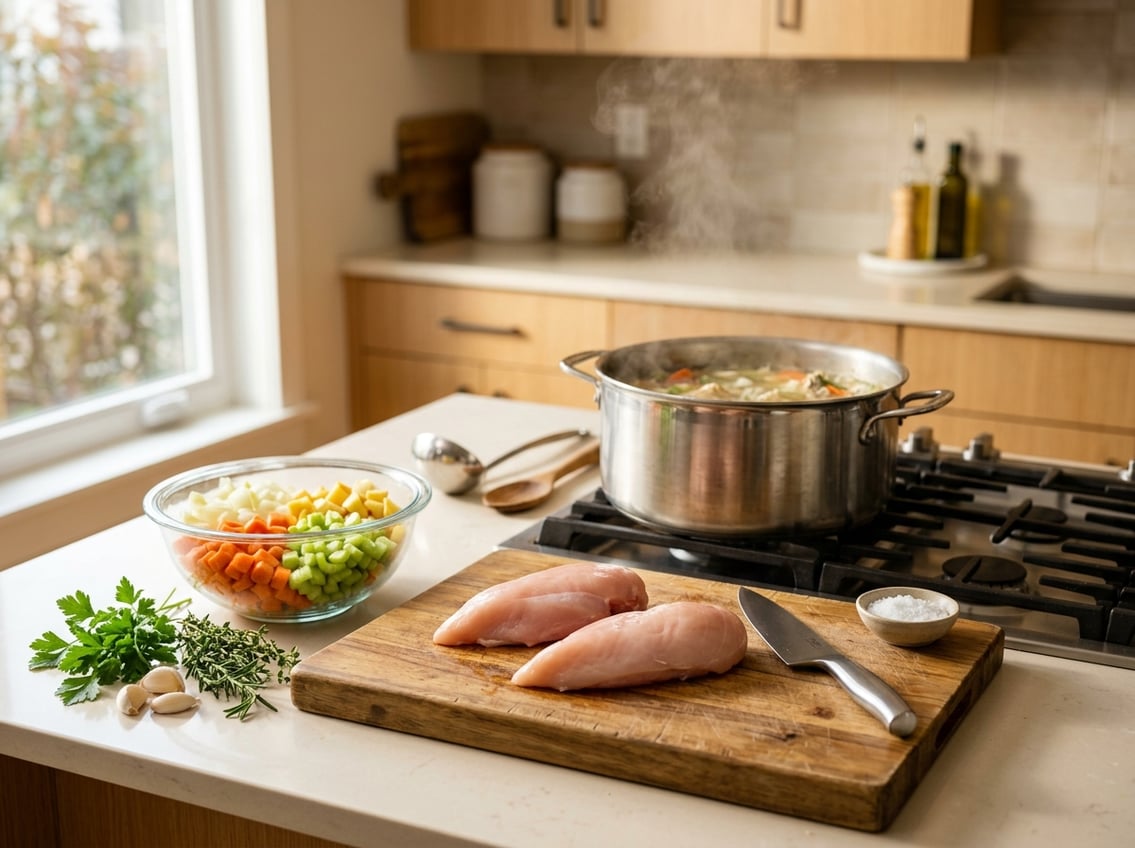
Tender chicken breast starts with gentle heat and careful timing. You want the meat cooked through, still juicy, and easy to shred or cube without becoming stringy.
Poaching for Moist, Shreddable Meat
Poaching works well for soup chicken because it keeps the meat in hot liquid without harsh bubbling. Use broth, water, or a mix of both, then add onion, celery, carrots, bay leaf, peppercorns, thyme, parsley, or rosemary.
Bring the liquid to a gentle simmer, not a rolling boil. Cook until the thickest part reaches 165°F, then rest the chicken in the hot liquid for a few minutes before shredding.
Boiling vs. Simmering
Boiling is too aggressive for breast meat. Fast bubbling tightens the protein and can leave the chicken dry and tough.
Simmering gives you more control. Small, steady bubbles are enough to cook the chicken while protecting the texture.
Choose the lowest heat that still cooks the chicken safely.
When to Add the Meat to the Pot
Add chicken breast early if you want it to help flavor the broth. Add it later if the soup already has a strong base and you only need cooked chicken.
For soups with long-cooking vegetables, poach the chicken separately, shred it, then return it near the end. That keeps the meat tender and helps you avoid overcooking while the rest of the soup finishes.
How to Build Flavor Around Lean Meat
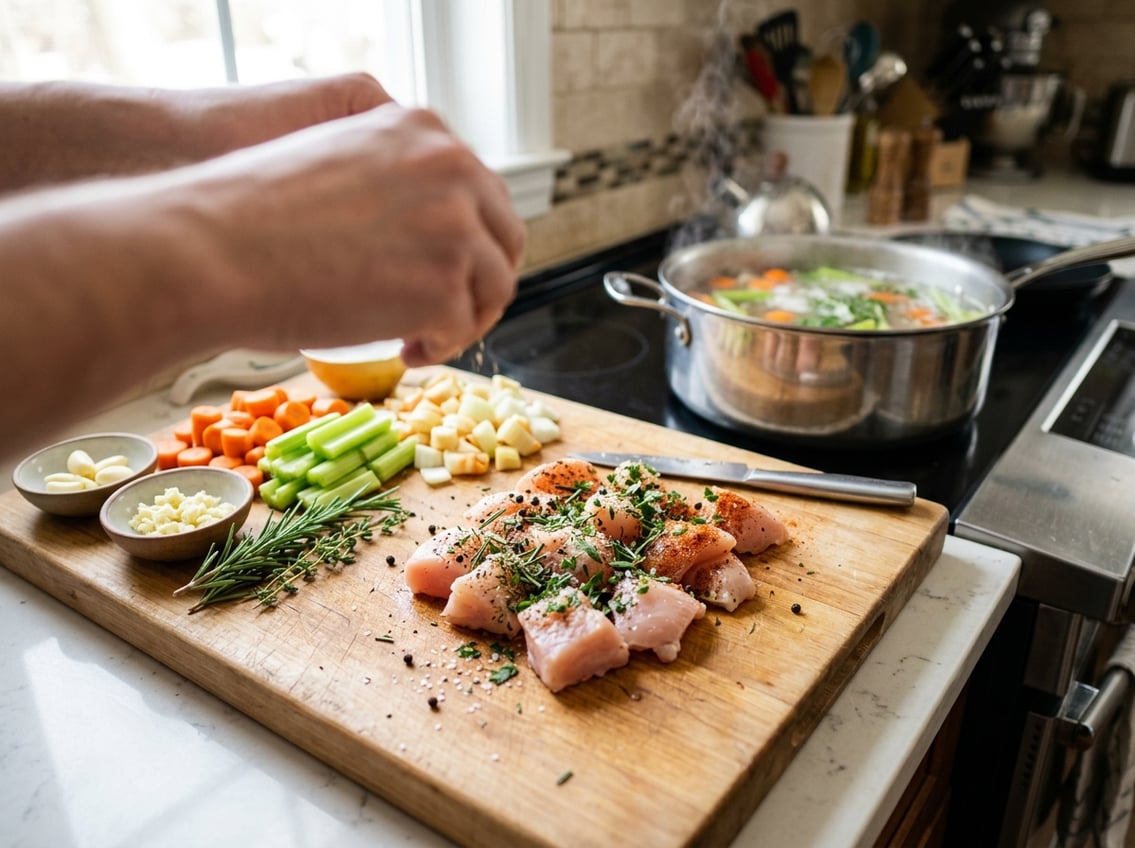
Lean chicken breast needs a flavorful broth, not just plain water. Strong aromatics, enough salt, and the right vegetables help the soup taste full and balanced.
Using Broth, Aromatics, and Seasoning
Start with chicken broth or chicken stock when possible. Add onion, garlic, celery, carrots, bay leaves, black pepper, thyme, and parsley for a classic flavor base.
Poaching in broth with aromatics improves both the meat and the liquid. That gives you a better result than seasoning only at the end.
Salt matters early. If the broth tastes flat, the whole soup will taste flat.
Vegetables and Noodles That Pair Well
Chicken breast works well with:
- Egg noodles
- Rice
- Orzo
- Potatoes
- Carrots
- Celery
- Mushrooms
- Spinach
- Green beans
These ingredients add body and texture without overpowering the mild meat.
A simple chicken noodle soup method shows how shredded chicken and noodles come together cleanly in a brothy soup.
Ways to Keep the Soup From Tasting Flat
Use a little acid at the end, such as lemon juice or a small splash of vinegar. Fresh herbs help brighten the bowl.
Taste before serving and adjust salt, pepper, and herbs as needed. If the soup still feels thin, add more sautéed onion, garlic, or a parmesan rind during simmering for extra depth.
Common Mistakes to Avoid
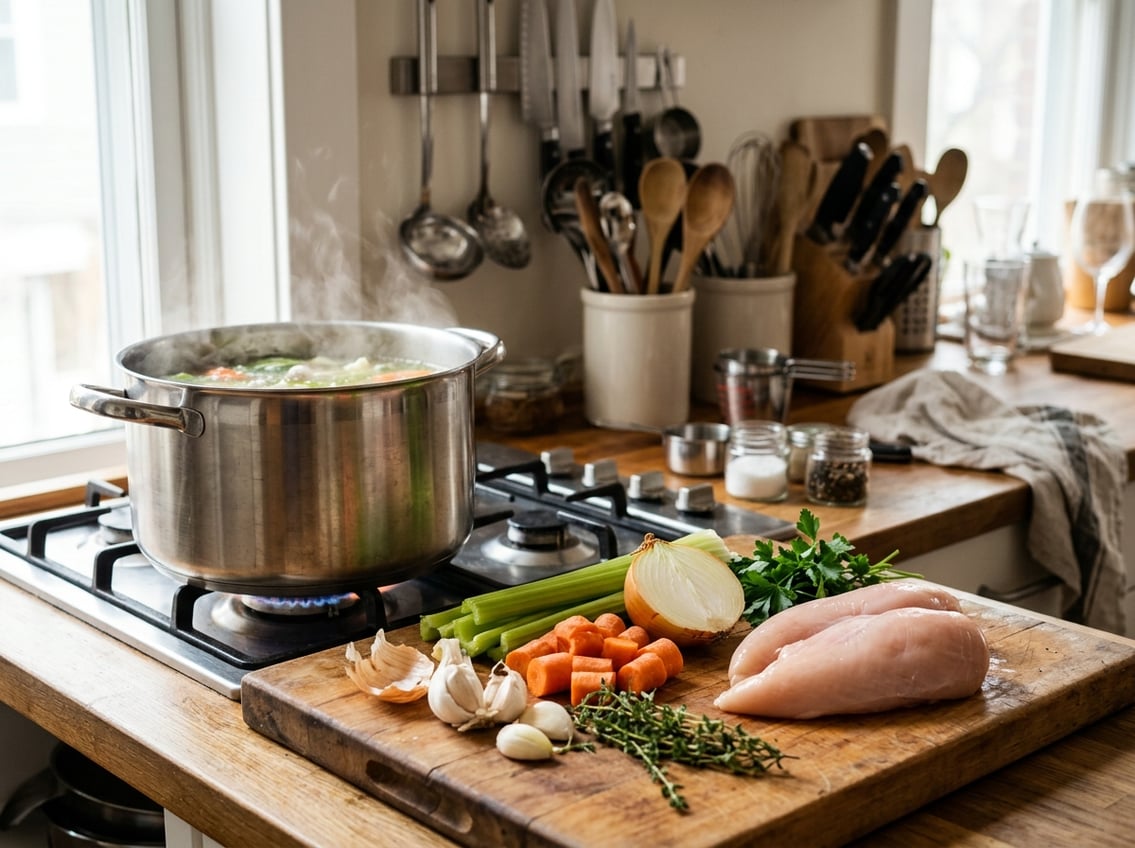
Most problems with chicken breast soup happen because of heat, seasoning, or choosing the wrong cut for the recipe.
Overcooking and Dry Texture
Overcooking is the most common mistake. Chicken breast dries out fast once it goes past the point of doneness, especially in a hard boil.
Keep the heat low and check for doneness early. If you are unsure, pull the chicken at 165°F and let it rest before shredding.
Underseasoning the Broth
Chicken breast is mild, so weak broth makes the soup taste dull. If you only season the chicken, the soup can still taste flat.
Season the broth itself with salt, herbs, aromatics, and enough time for the flavors to blend. Taste near the end and adjust again if needed.
Choosing the Wrong Cut for the Style of Soup
Chicken breast does not work well for every soup.
For rich chicken and dumplings or deeply savory stock, thighs or a whole chicken often give better results.
Use breast meat for lighter soups and faster weeknight meals.
Choose bone-in chicken when the recipe needs a full-bodied stock.


