
Do You Wash Chicken Breast? What to Do Instead
You do not need to wash chicken breast before cooking it.
Washing raw chicken can spread bacteria around your kitchen and make your food less safe.
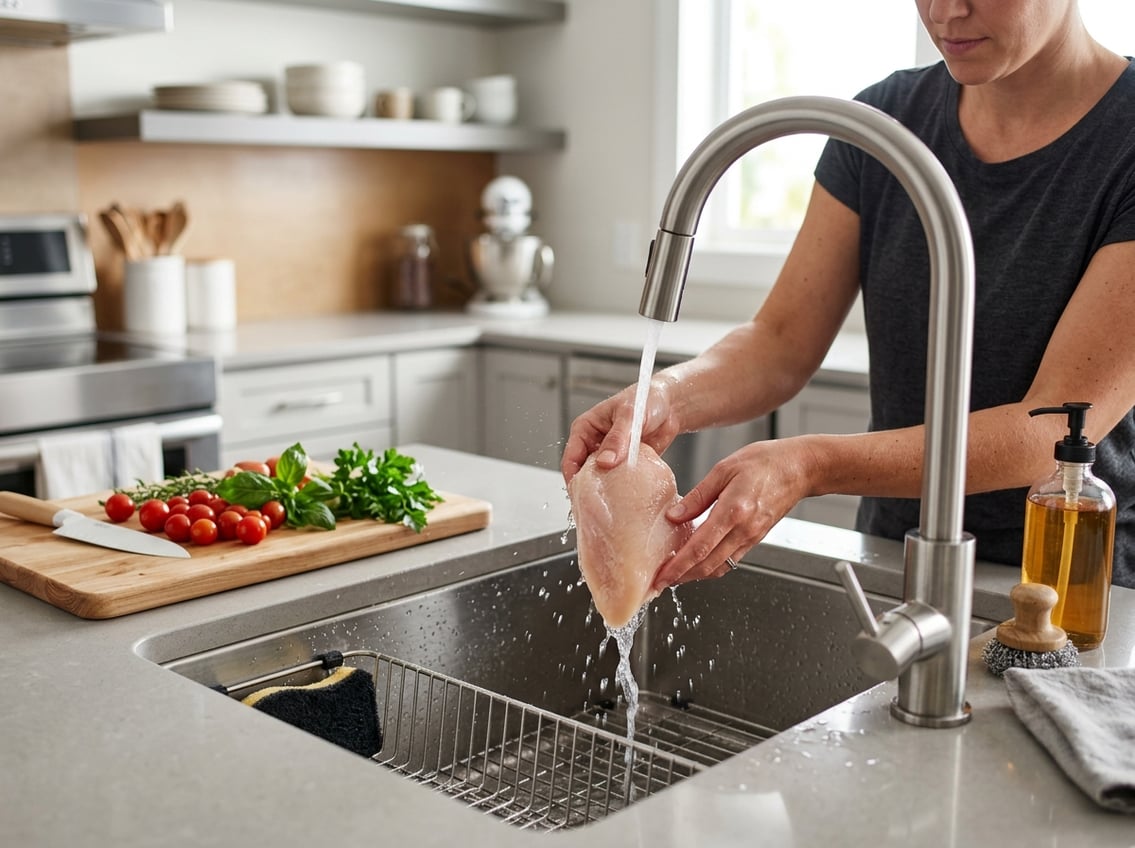
If you have ever wondered, do you wash chicken breast, the safest answer is no.
Handle raw poultry carefully, cook it to the right temperature, and keep it away from ready-to-eat foods.
The goal is not to make raw chicken look clean.
You want to avoid cross-contamination and cook it enough to destroy harmful bacteria.
Why Rinsing Makes Chicken Less Safe
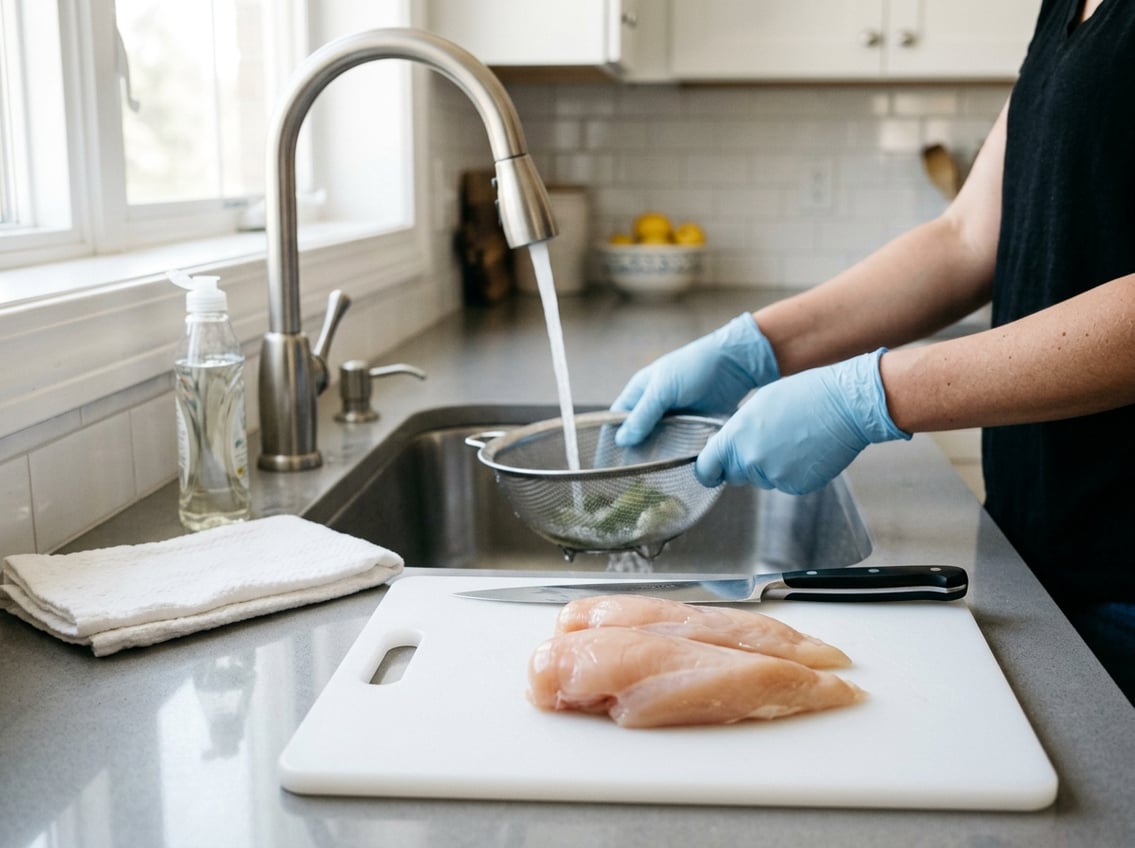
Washing chicken does not remove the main safety risk.
Water droplets can spread bacteria and raise the chance of foodborne illness.
Food safety experts warn that rinsing raw chicken can spread salmonella, campylobacter, and other germs onto sinks, counters, utensils, and even nearby food, as noted by Martha Stewart and Food Poisoning News.
How Cross-Contamination Happens in the Sink Area
When you rinse raw chicken, splashes can land on the faucet, sink basin, counter, sponge, and cutting board.
Those surfaces can then touch clean foods or clean hands.
The risk is not just the water itself.
Water carries tiny droplets to places you may not notice.
Why Salmonella and Campylobacter Are the Main Risk
Raw poultry often carries salmonella and campylobacter.
These bacteria can cause stomach cramps, diarrhea, fever, and vomiting.
You cannot see, smell, or taste these bacteria.
Washing chicken breast will not reliably remove them, and it can move them into more places in your kitchen.
Why Cooking Works Better Than Washing
Proper cooking destroys harmful bacteria.
That is why you should cook chicken to a safe internal temperature instead of washing it.
How to Prep Chicken Breast Before Cooking
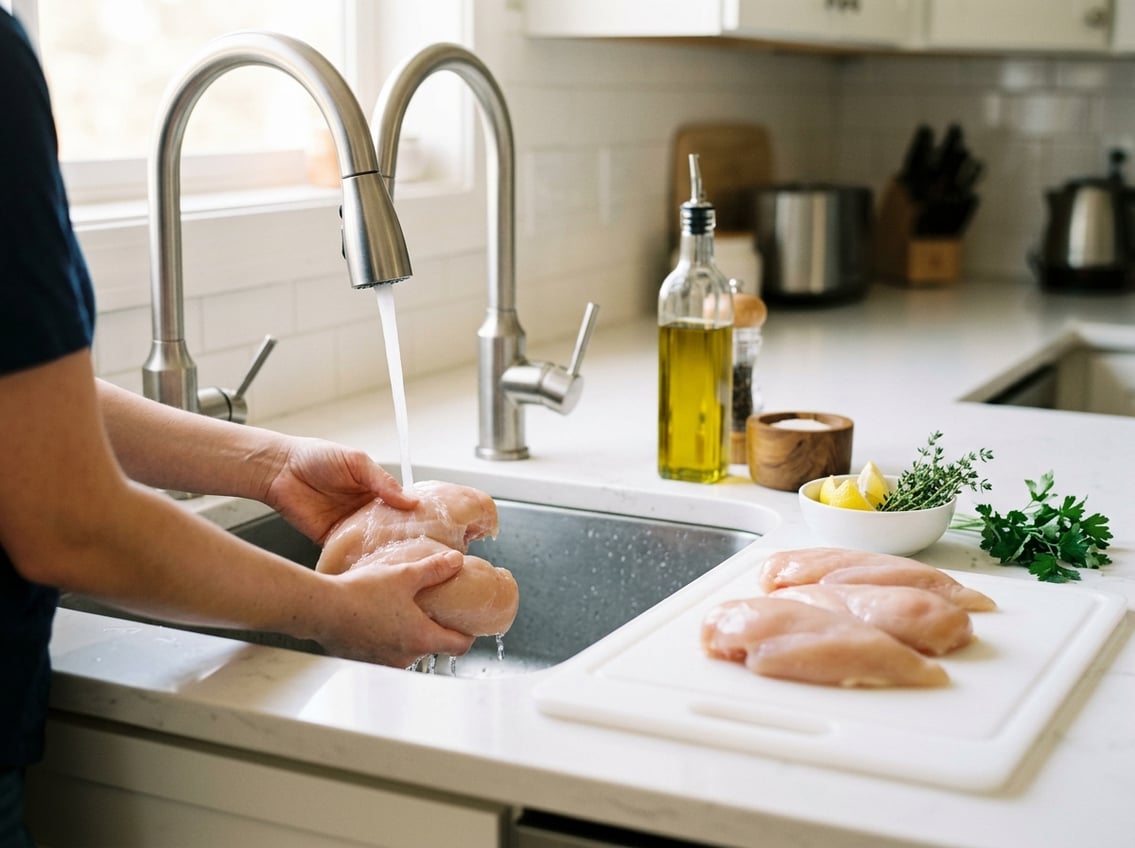
You can prep chicken breast safely without washing it.
Focus on clean handling, removing excess moisture, and keeping raw meat away from foods you will eat without cooking.
How to Open the Package and Discard Juices Safely
Open the package over the sink or on a tray so the liquid stays contained.
Place the chicken on a clean plate, tray, or cutting board meant for raw meat, then throw away the wrapper and juices right away.
After that, wash your hands.
If the package leaks, wipe the area with hot soapy water.
When to Pat It Dry Instead of Rinsing
Pat chicken breast dry with paper towels instead of rinsing it.
Drying helps the surface brown better in a skillet or oven.
Use the towels once, then throw them away.
Do not reuse them on counters, dishes, or produce.
What to Do if You Want to Remove Surface Debris
If you see a small bone fragment, a bit of fat, or packaging debris, remove it with clean hands or clean tongs.
If a piece of chicken looks torn or has extra liquid, just trim it or blot it dry.
You do not need to use water to make chicken breast ready to cook.
Careful handling is enough.
Safe Handling and Cooking Basics
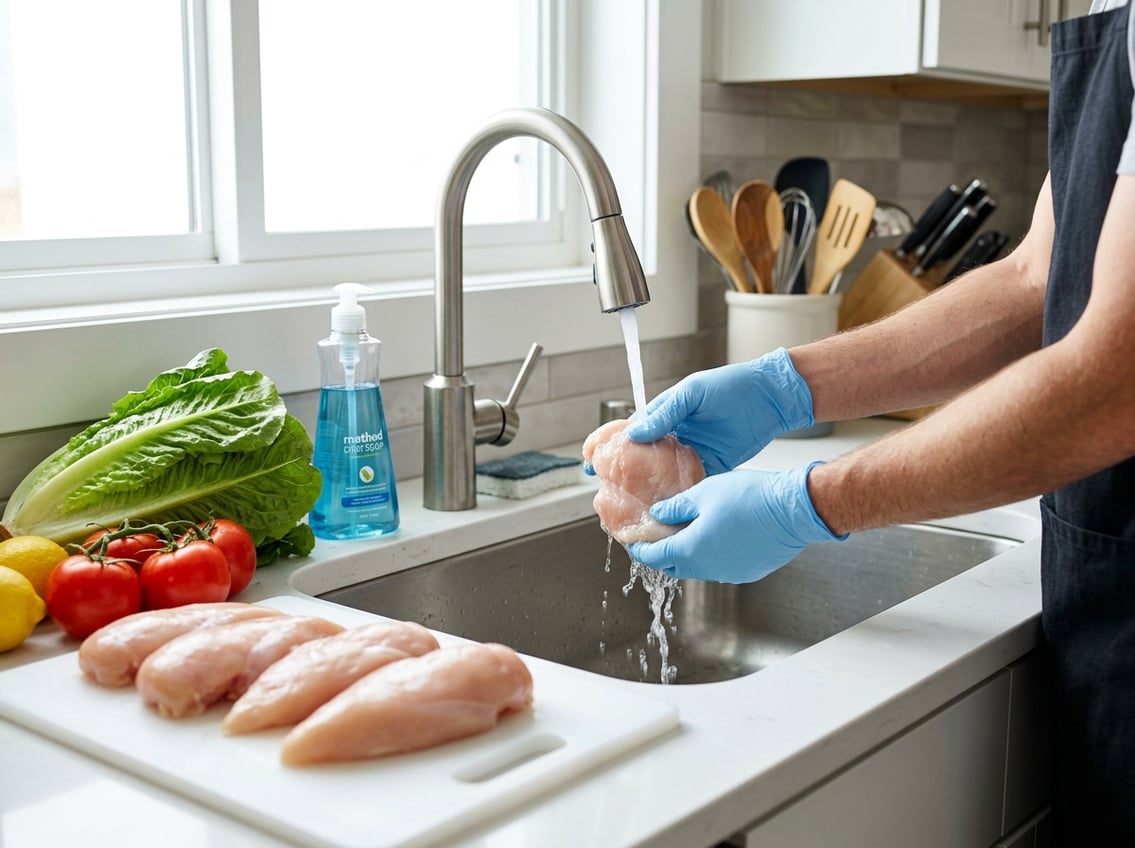
Safe chicken prep is mostly about separation, cleaning, and temperature control.
Keep raw poultry away from ready-to-eat foods and cook it well to lower the risk of foodborne illness.
How to Keep Raw Poultry Away From Ready-to-Eat Foods
Keep raw chicken separate from salad, fruit, bread, and cooked foods in your cart, fridge, and prep area.
Use a dedicated cutting board for raw meat if you can.
Do not place cooked chicken back on a plate that held raw chicken unless you have washed it first.
What to Wash and Sanitize After Prep
Wash knives, cutting boards, counters, and hands with hot soapy water after handling raw chicken.
If raw chicken juices touch a surface, clean it right away.
This helps stop cross-contamination before it spreads.
How to Check the Safe Internal Temperature
Check the thickest part of the chicken breast with a food thermometer. Make sure the temperature reaches 165°F.
Do not guess by color alone. A thermometer gives you a clear reading.


