
Has Chicken Breast Gone Bad? Signs to Check Fast
If you wonder if chicken breast has gone bad, check time, smell, color, and texture together. If chicken breast has stayed in the fridge too long, smells sour or sulfur-like, looks gray or green, or feels slimy, throw it out.
Do not rely on just one clue, as unsafe chicken may not always look spoiled. Chicken can look normal but still carry bacteria that can make you sick, like salmonella and campylobacter.
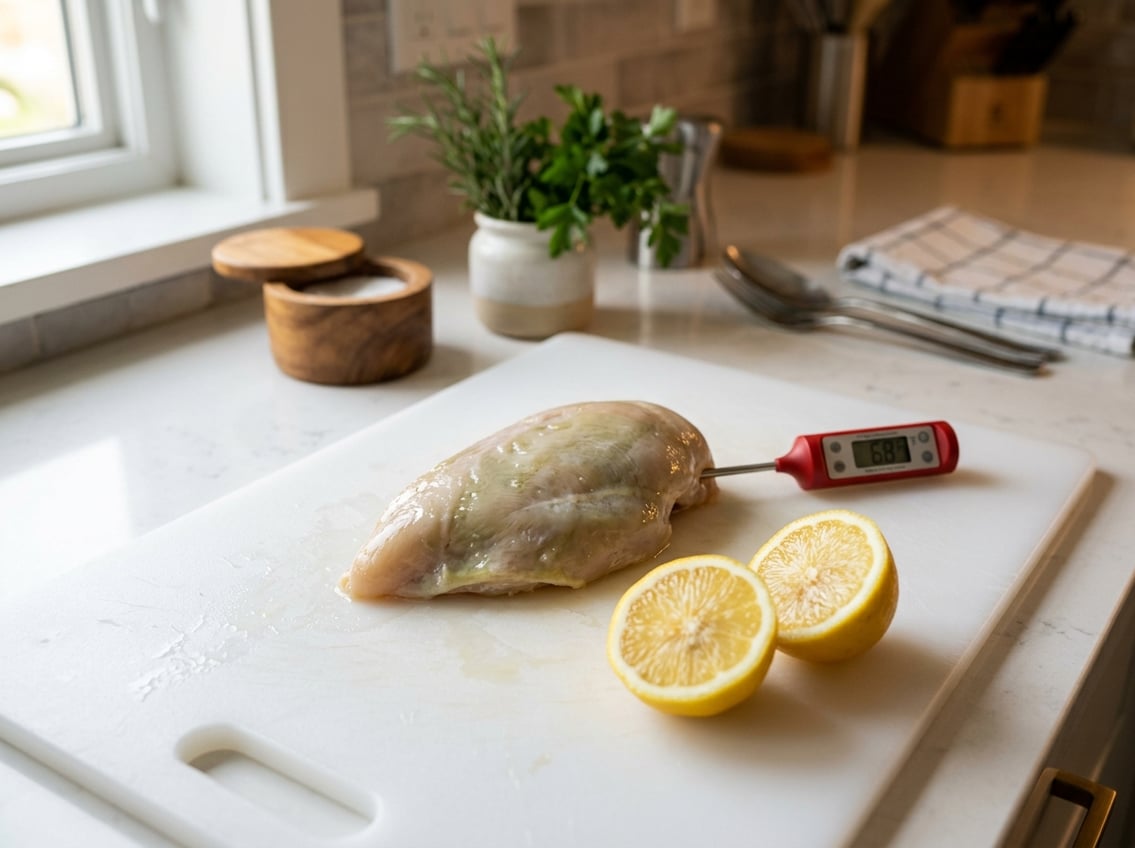
Check how long the chicken has been in the fridge, then inspect it closely. If anything seems off, toss it.
When to Toss It Immediately
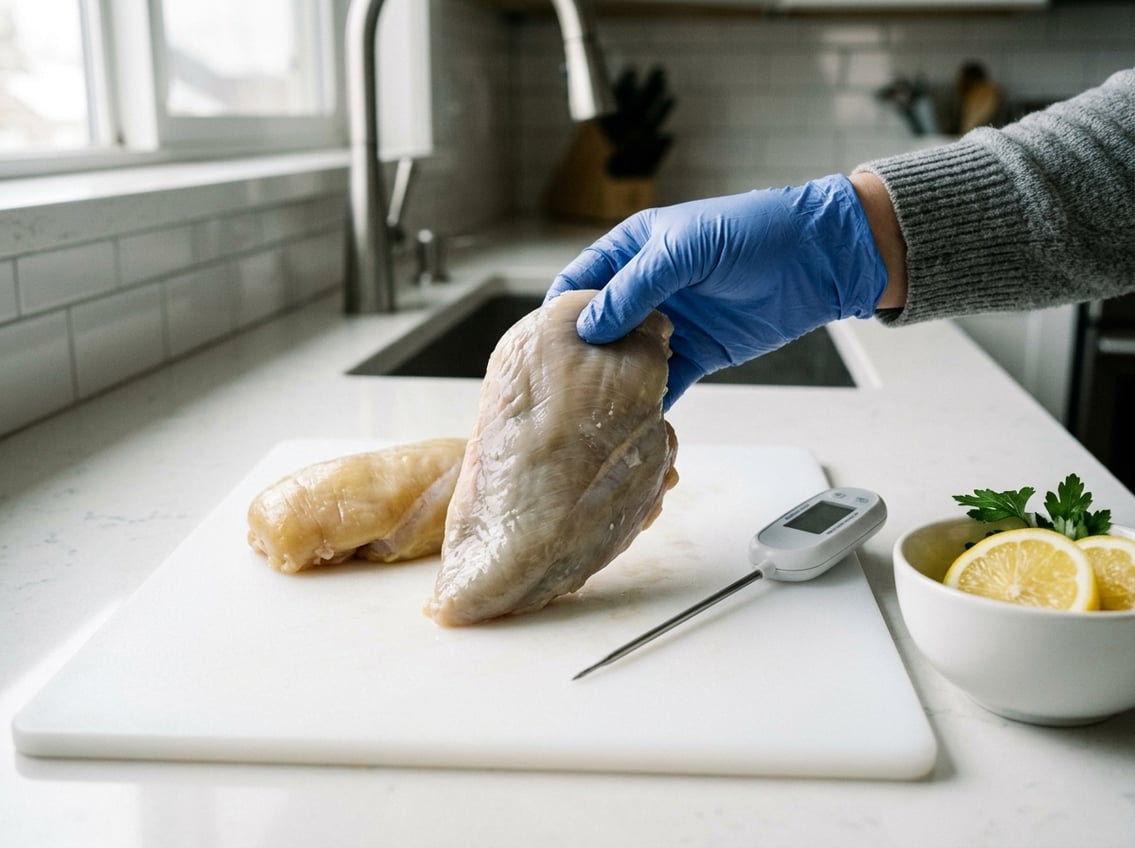
How long chicken lasts depends on whether it is raw or cooked. Time and temperature matter more than appearance, and chicken can become unsafe before it looks spoiled.
Fridge Time Limits for Raw and Cooked Chicken
Raw chicken breast stays safe in the refrigerator for 1 to 2 days. Cooked chicken breast usually lasts 3 to 4 days in the fridge, according to FoodSafety.gov guidance summarized by The Daily Meal.
If you pass those windows, do not try to stretch it by cooking longer. Heat can kill many bacteria, but it cannot make spoiled meat safe if toxins have formed.
Why Time and Temperature Matter
Chicken stays safest at 40 F or below in the fridge. When chicken warms up, bacteria such as salmonella and campylobacter can multiply fast, even if the chicken still looks fine.
Room temperature time matters during shopping, transport, and prep. If chicken breast sat out for too long, put it in the trash, not back in the fridge.
When the Packaging Date Helps
A sell-by or use-by date can help guide your decision, especially if the chicken stayed cold the whole time. It does not tell you what happened after the package left the store.
Damaged packaging, leaks, bulging, or thaw-refreeze signs matter more than the printed date. If the package is torn, swollen, or sticky outside, treat it as a warning sign.
Spoilage Signs You Can See, Smell, and Feel
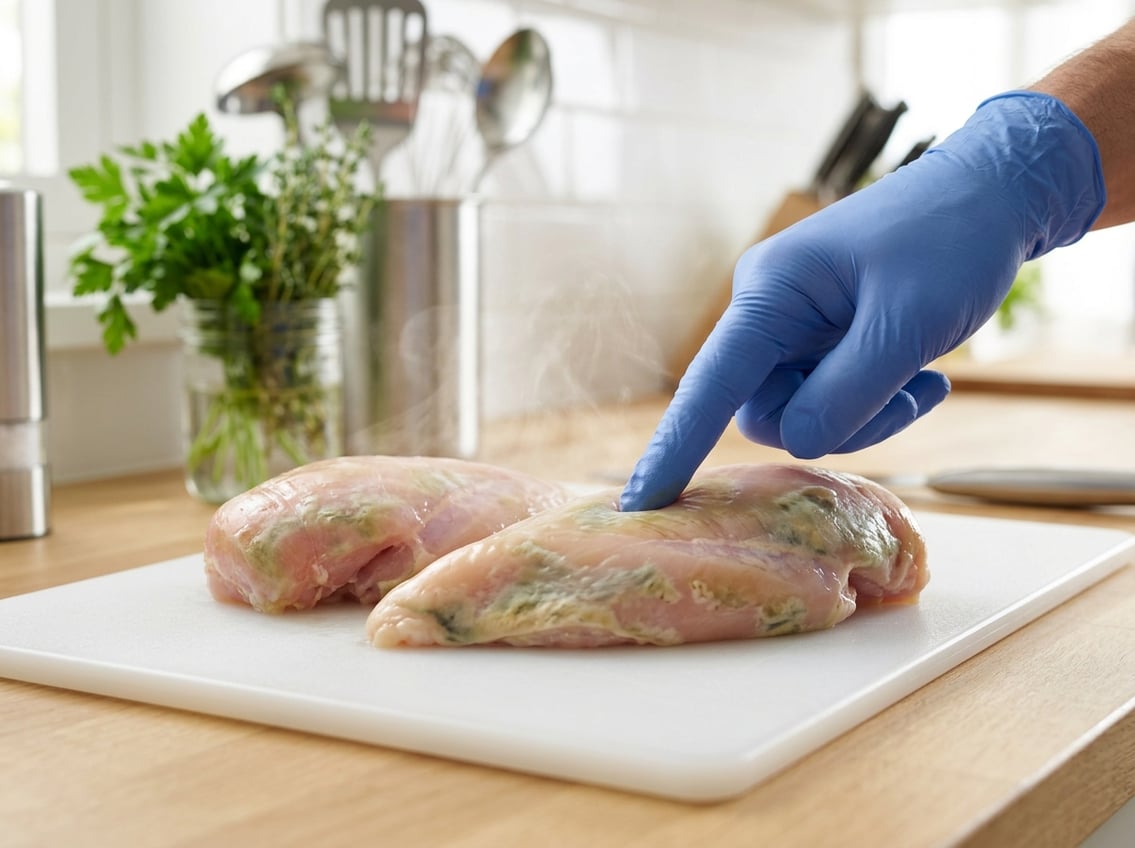
To tell if chicken is bad, use sight, smell, and touch together. Fresh chicken breast should look even in color, smell mild, and feel firm and moist, not sticky or slippery.
Color Changes That Signal Trouble
Raw chicken breast is usually pale pink to light pink, with creamy white fat. Gray, greenish, yellow, or blotchy discoloration can point to spoilage, especially if the color looks uneven.
Cooked chicken should look normal for the recipe you made. If it develops strange gray patches, green spots, or visible mold, throw it out right away.
Off Odors, Sour Smells, and Sulfur Notes
Fresh chicken should not have a strong smell. If you notice sour, ammonia-like, rotten egg, or sulfur notes, the chicken is likely bad.
These odors often result from bacterial growth, including salmonella or campylobacter contamination. If the smell is strong enough to notice before cooking, do not taste it to check.
Slimy, Sticky, or Tacky Texture Red Flags
Raw chicken breast should feel moist, not slippery. A slimy, sticky, tacky, or filmy surface is a red flag you should not ignore.
A fresh piece feels firm when pressed lightly. If it feels mushy, oddly soft, or leaves a residue on your fingers or gloves, discard it.
How Raw and Cooked Chicken Differ
Raw chicken is easier to judge by smell and texture. Cooked chicken can hide spoilage longer, especially if stored in sauce, seasoning, or a covered container.
If cooked chicken breast smells off, feels slimy, or shows unusual color changes, throw it away without reheating.
What Freezing Changes
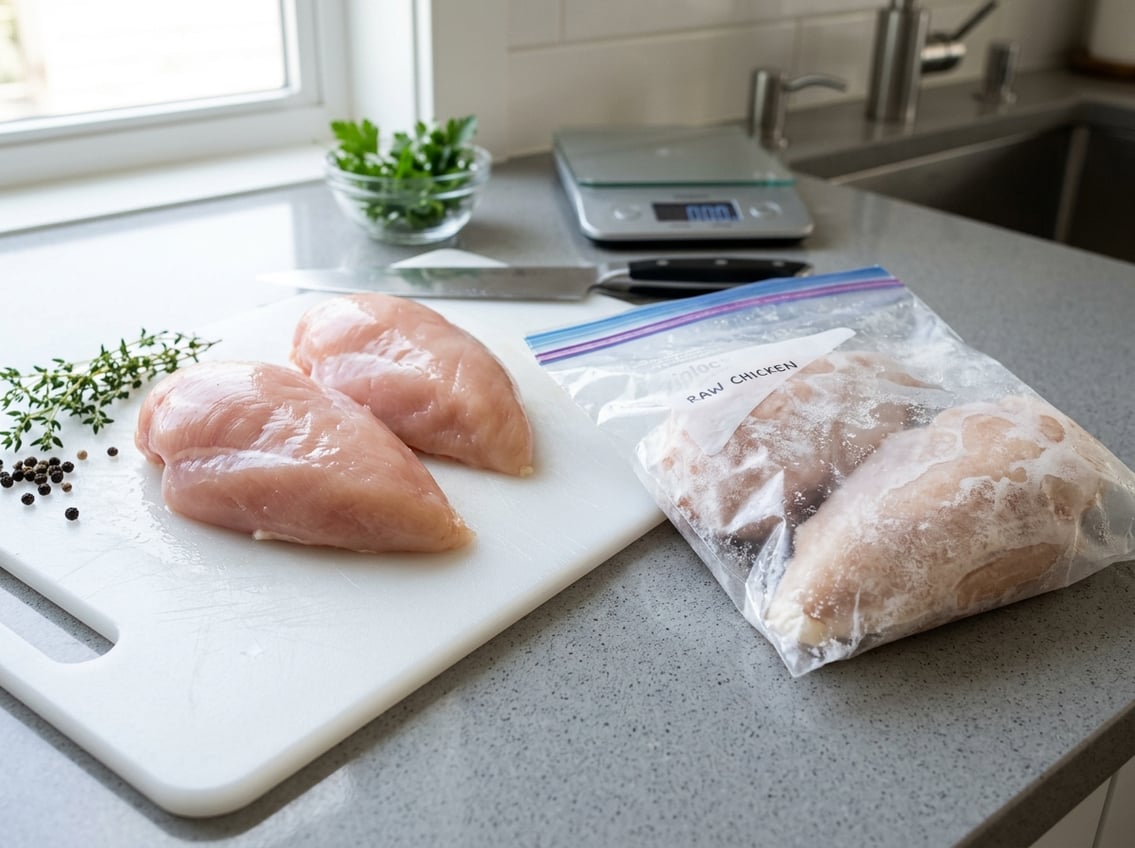
Freezing chicken slows bacterial growth and helps protect quality for longer storage. Freezing does not fix chicken that was already unsafe before, and it does not erase poor handling before the freezer.
When Freezing Chicken Is the Better Option
If you will not use raw chicken within 1 to 2 days, freeze it. That extends storage time and reduces waste.
Freeze cooked chicken too if you will not eat it within a few days. Keep track of the date so you know how long it has been stored.
How to Spot Freezer Burn and Quality Loss
Freezer burn looks dry, pale, gray-white, or leathery on the surface. It can make chicken taste bland and feel tough after cooking.
Freezer burn is a quality problem, not always a safety problem. Chicken with freezer burn may still be safe if it stayed frozen solid, but the texture will usually be worse.
How to Prevent Freezer Burn With Better Packaging
Wrap chicken tightly in freezer-safe bags or airtight containers before freezing. Remove as much air as possible, since air speeds up moisture loss.
Label the package with the date and use the back of the freezer if possible. A steadier cold temperature helps protect texture, and better packaging helps prevent freezer burn during storage.
Safe Storage Habits That Reduce Risk
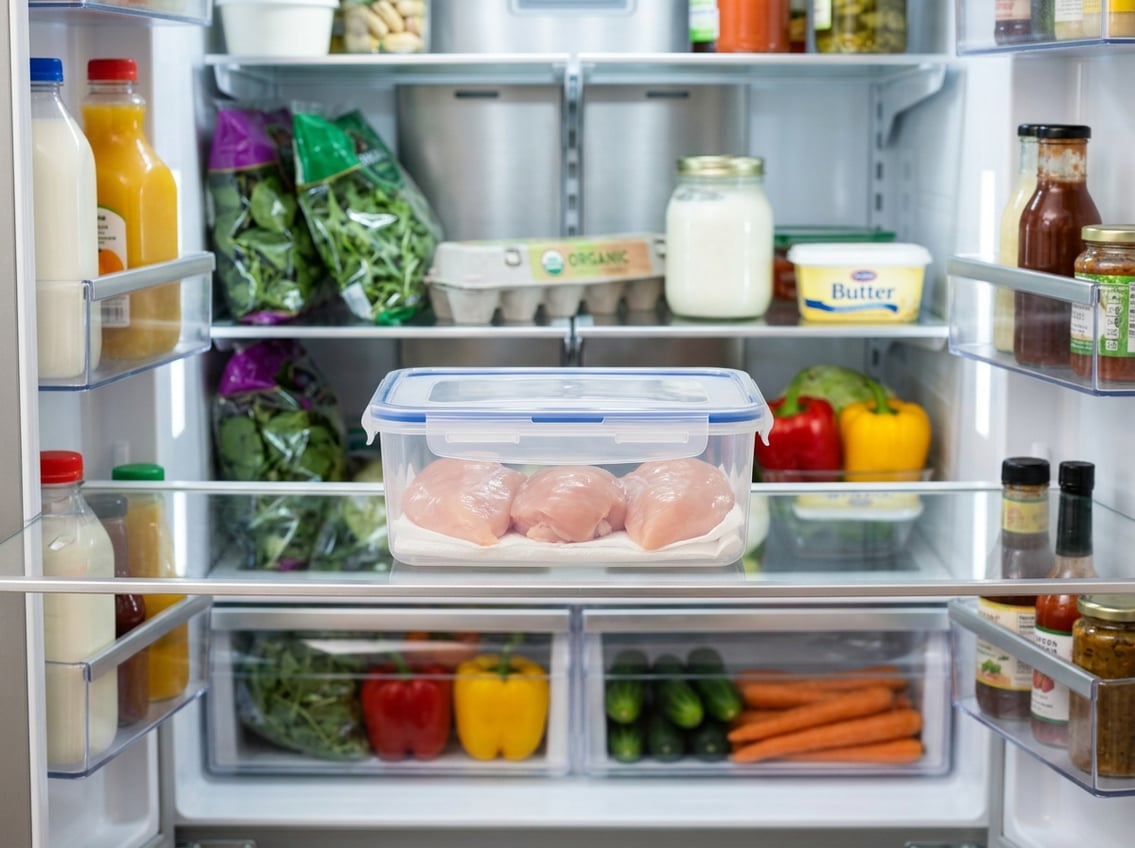
Good storage habits make it easier to keep chicken safe. You lower your risk when you control temperature, keep raw meat sealed, and prevent juices from touching other food.
Where to Store Chicken Breast in the Fridge
Store raw chicken breast on the bottom shelf in a sealed container or on a plate. That keeps drips from reaching produce, leftovers, or ready-to-eat food.
Keep the fridge at 40 F or lower. Do not let the chicken sit in the car or on the counter for long.
How to Avoid Cross-Contamination at Home
Use separate cutting boards for raw chicken and other foods if possible. Wash hands, knives, counters, and boards with hot soapy water after contact with raw poultry.
Do not rinse chicken in the sink. Rinsing can splash bacteria around your kitchen and increase the chance of spreading salmonella or campylobacter.
Why Bacteria Can Be Present Even Without Obvious Spoilage
Chicken can carry bacteria even if it does not smell, change color, or develop slime.
You should cook chicken to a safe internal temperature instead of trusting appearance.
Spoilage signs can help you spot a bad batch. If the chicken has passed the fridge time limit, throw it out.


