
Does Marinating Chicken Breast Work? What to Know
You may wonder if marinating chicken breast works when the cut is already lean and easy to dry out. Marinating can help, but not in the way many home cooks expect.
A marinade mainly changes the surface, adds salt and flavor, and can help the meat stay juicier if you build the mix well.
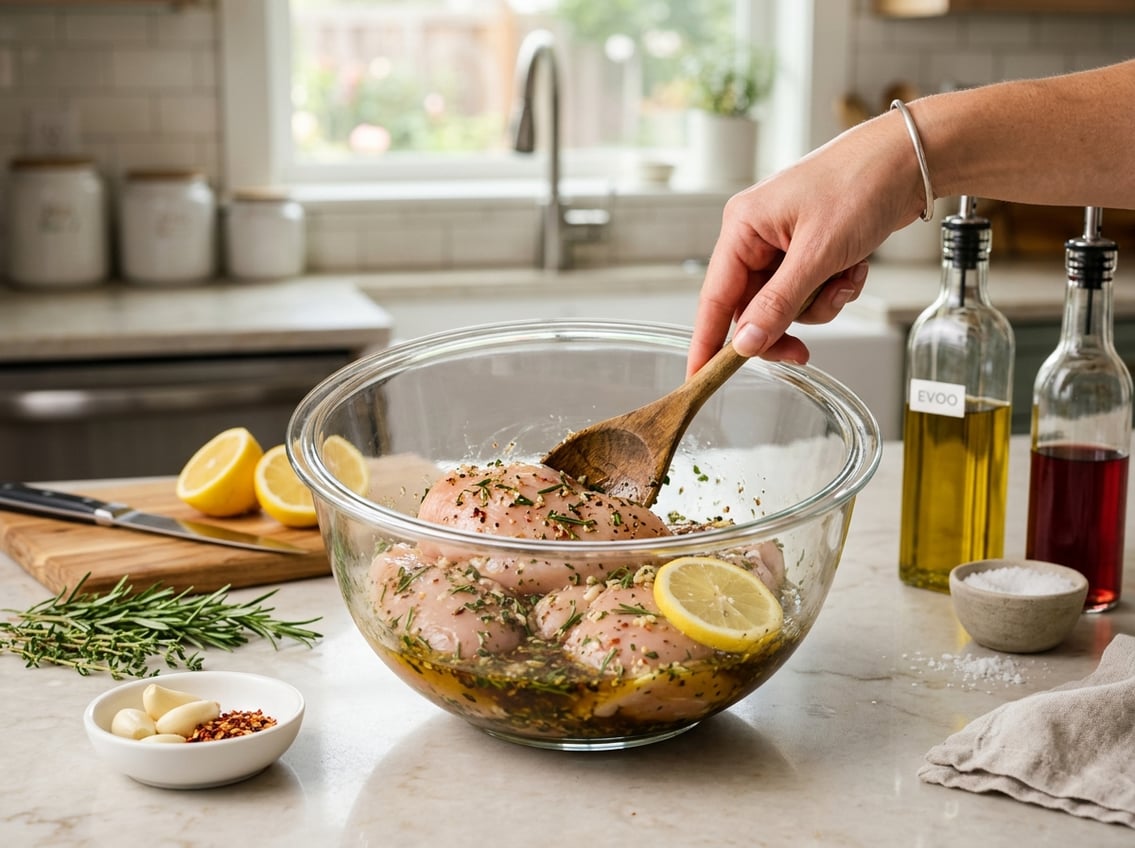
The best way to marinate chicken breast is to use the right balance of salt, fat, and mild acid. Give it enough time without overdoing it.
A good marinade can improve taste and texture, while a weak one may only coat the outside.
If you want better chicken breast, it helps to know what a marinade can and cannot do. That keeps you from waiting too long, using too much acid, or expecting deep flavor where there usually is none.
What Marinades Actually Do
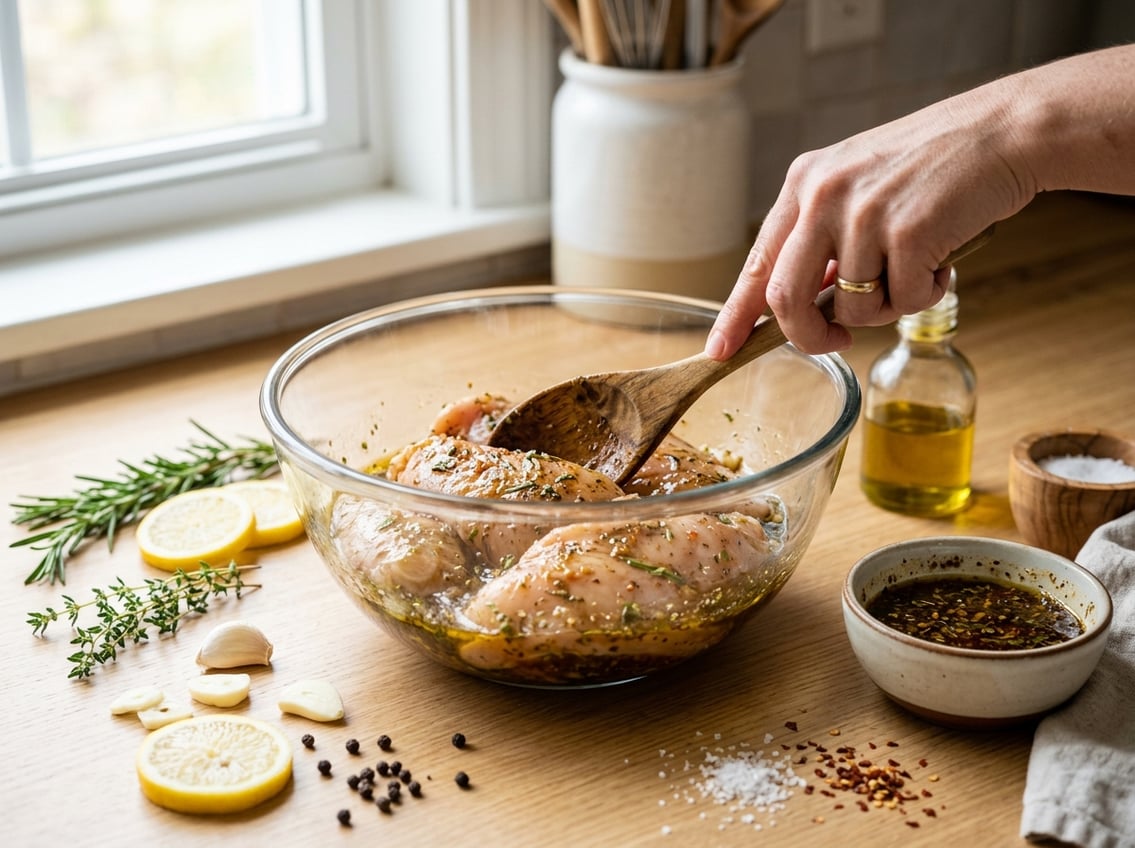
A marinade can make chicken breast more flavorful, more tender on the surface, and a little better at holding moisture during cooking. It does not season the meat all the way through.
How Surface Flavoring Differs From Deep Seasoning
Marinating chicken mostly changes the outer layer of the meat. Salt, aromatics, and spices cling to the surface and work into thin cuts or small scores.
The center of the chicken breast stays mostly unchanged.
That is why marinating chicken breast works best when you want brighter, more noticeable surface flavor.
Can Marinades Tenderize Chicken Breast?
Acid in a marinade can soften the outer proteins and make chicken breast feel less firm. Too much acid or too much time can make the surface mushy instead of tender.
A high-acid marinade can cause problems, especially with thin, boneless chicken breast.
Does Marinating Improve Moisture Retention?
A marinade with salt can help chicken breast hold onto moisture during cooking. Salt acts like a small brine and makes the meat retain more juiciness.
The chicken may still dry out if you overcook it. A well-salted marinade gives you a better starting point.
How to Build a Marinade That Makes Sense
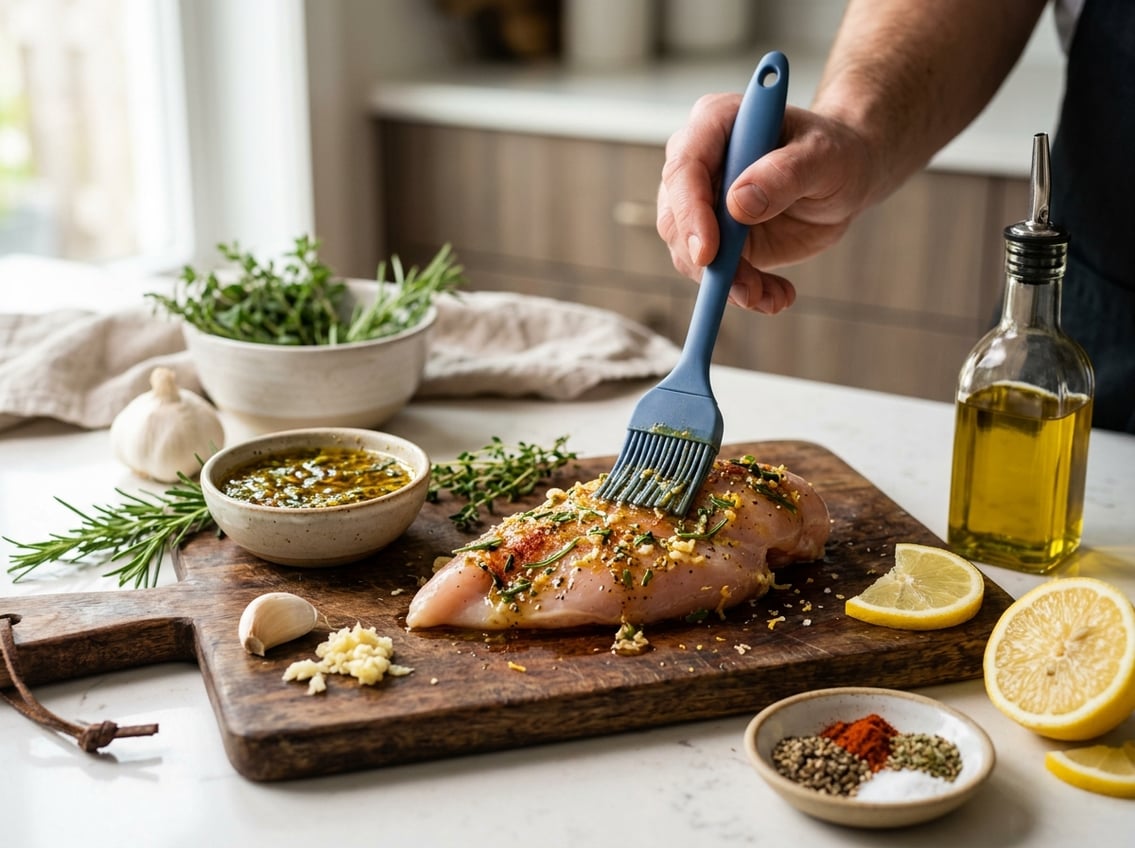
A useful marinade is simple, balanced, and suited to chicken breast’s lean texture. You want fat for flavor, salt for seasoning, and acid in a controlled amount.
From there, you can choose ingredients that fit your cooking method.
The Role of Olive Oil, Salt, and Aromatics
Olive oil helps carry flavor and keeps the marinade from tasting sharp. It also helps herbs, garlic, and spices stick to the meat.
Kosher salt matters just as much as oil. Garlic, onion, herbs, pepper, and paprika add the flavor you actually notice after cooking.
When an Acidic Marinade Helps or Hurts
An acidic marinade can brighten chicken breast and add a clean, fresh taste. It works well when the acid level is moderate, such as with lemon, vinegar, or yogurt used in balance.
Too much acid, or too long in the marinade, can make the surface tough and chalky. If you use a very sharp acidic marinade, keep the time shorter and watch the texture.
When Buttermilk Is Worth Using
Buttermilk is a smart choice when you want gentle acidity and a softer texture. It is especially useful for fried chicken, oven-baked chicken, or any recipe that benefits from a mild tang.
It is less likely to make chicken breast mushy than a strong citrus or vinegar mix.
Timing, Safety, and Cooking for Better Results

Time matters as much as ingredients. Marinating too briefly gives you little benefit, while marinating too long can hurt texture.
Safe handling also matters, since raw poultry needs cold storage.
Best Marinating Time for Chicken Breast
For boneless chicken breast, a good window is about 30 minutes to 6 hours. Shorter times work for light flavor, while longer times make sense when the marinade is balanced and not too acidic.
A guide from BBQ Report lists 2 to 6 hours as a practical target for chicken breast, with 24 hours as the outer limit.
Why You Should Always Marinate in the Refrigerator
You should always marinate in the refrigerator, not on the counter. Raw chicken can grow harmful bacteria quickly at room temperature.
Keep the chicken covered in a bowl or sealed bag in the fridge. Take it out only when you are ready to cook.
Cook to Doneness With a Meat Thermometer
A meat thermometer removes the guesswork. Chicken breast is done when the thickest part reaches 165°F.
Even a good marinade cannot fix overcooking. If you pull the chicken at the right temperature, you preserve the moisture the marinade helped you keep.
Better Alternatives When Marinades Fall Short

If you want more flavor than a marinade can give, you have other tools. Some work better for lean chicken breast than a long soak does.
Dry Brining With Kosher Salt
Dry brining means salting the chicken ahead of time and letting it rest in the fridge. Kosher salt draws moisture to the surface, then the chicken reabsorbs that seasoned liquid.
This can improve moisture retention and flavor without adding extra liquid.
Brining vs. Marinating for Lean Cuts
Brining is usually better when your main goal is juiciness. Marinating is better when you want added surface flavor and some surface tenderizing.
For lean cuts like chicken breast, a salt brine or dry brine often gives more noticeable results than a long marinade. A marinade still helps, especially when you want herbs, citrus, or spice on the outside.
Simple Ways to Get More Flavor Without a Long Soak
You can get strong flavor with a few fast steps. Pound the chicken to even thickness.
Season it well. Cook it with a sauce, glaze, or pan juices.
A short marinade also works well if you are in a rush. Many kitchens use a focused mix of salt, oil, and flavorings with good timing instead of a long soak.


