
How Long Can Chicken Breast Sit Out Safely?
If you are asking how long chicken breast can sit out, the safe answer is short. Raw or cooked chicken breast should not sit at room temperature for more than 2 hours. If the room is hot, the safe time drops to 1 hour.
That limit follows FDA and USDA food safety guidance. Bacteria grow quickly in the danger zone.
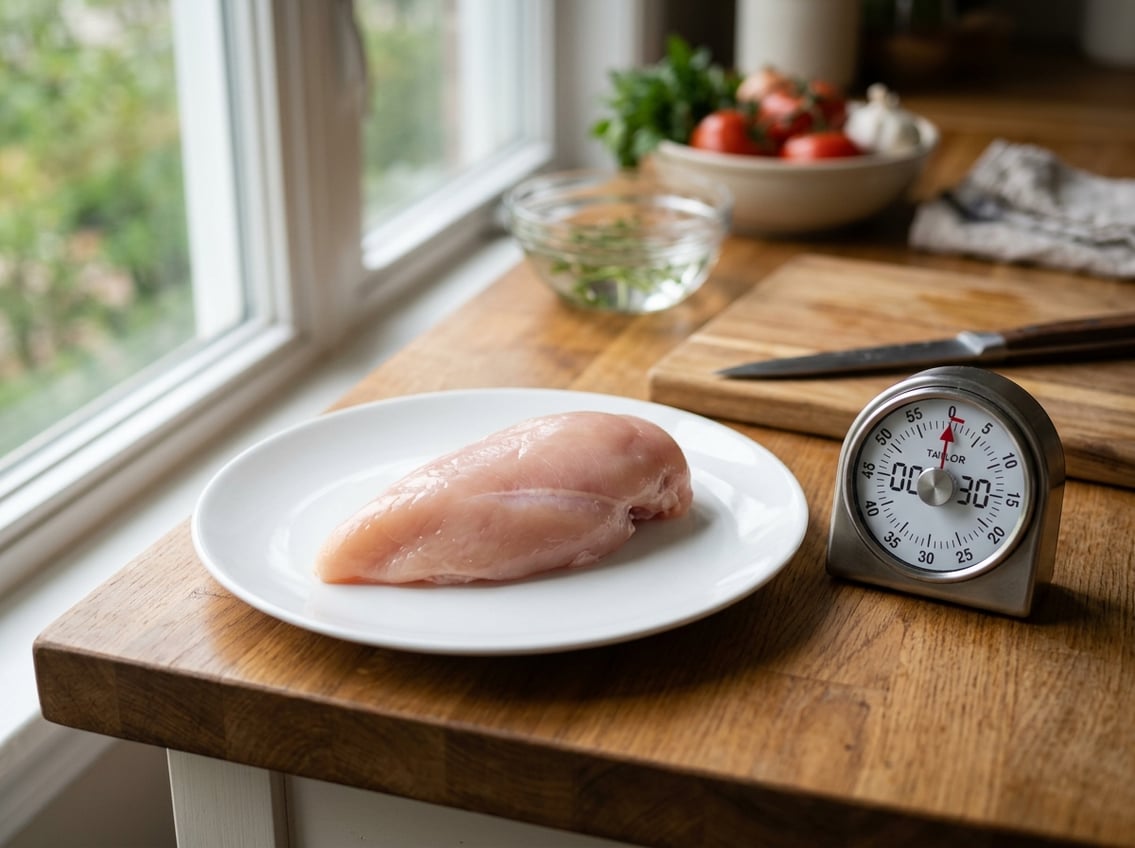
This rule covers chicken breast left on the counter during meal prep, on the table after dinner, or in a bag after a grocery run. Cooking does not make chicken safe to leave out for longer.
To keep chicken breast safe, refrigerate it promptly. Do not rely on smell or appearance to judge safety.
Safe Time Limits for Chicken Breast
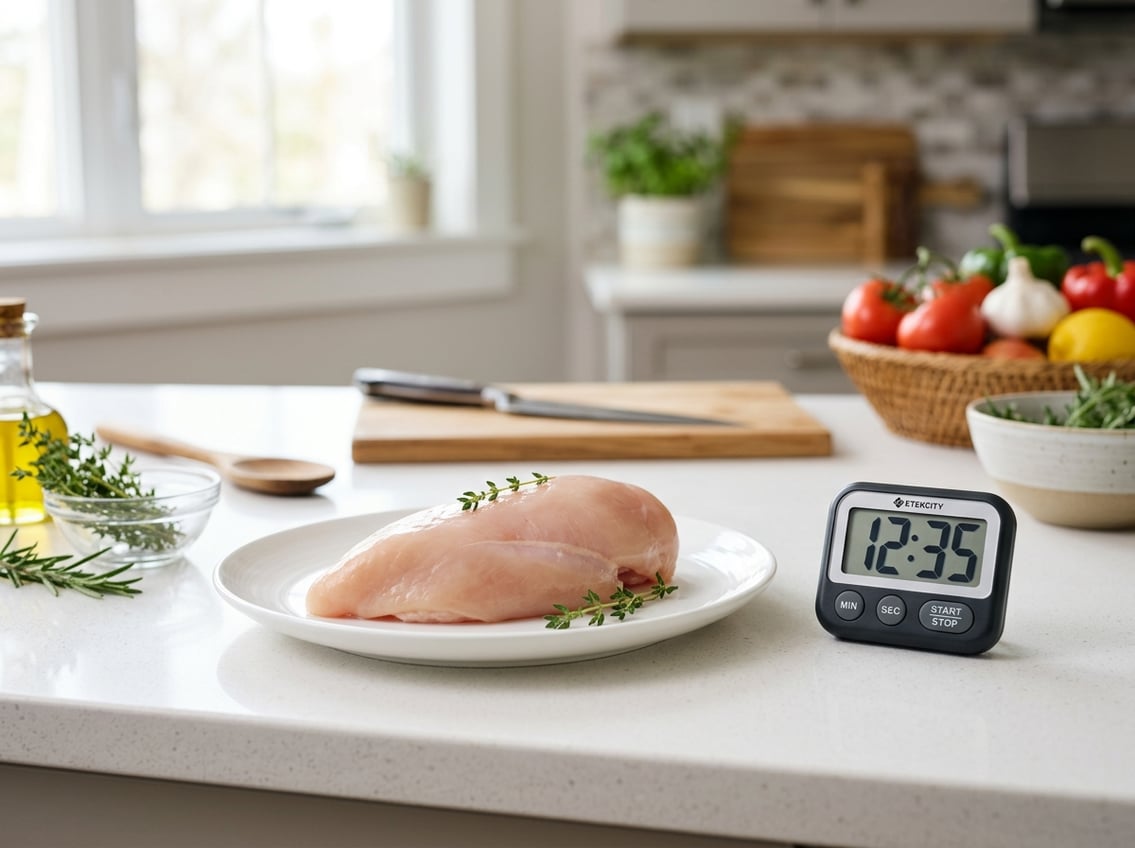
The same rule applies to both raw and cooked chicken breast. The details change when the temperature climbs.
The two-hour rule is the main benchmark. Hotter conditions shorten the safe window.
Raw Chicken Breast at Room Temperature
Do not let raw chicken breast sit out for more than 2 hours. That includes time on the counter before cooking, in a car, or on a prep table, as food safety guidance explains.
If the kitchen is warm, be more strict. Bacteria multiply faster in heat, so waiting the full 2 hours is not safe.
Cooked Chicken Breast at Room Temperature
Cooked chicken breast also follows the 2-hour limit. After cooking, germs can still grow if the food stays in the danger zone.
If you have cooked chicken left out after dinner, move it to the fridge as soon as you can. The practical answer is 2 hours maximum, and less if the room is warm.
What Changes Above 90°F
When the air temperature is above 90°F, the safe time drops to 1 hour. This matters at cookouts, outdoor lunches, tailgates, and picnics where food warms up quickly.
Both raw and cooked chicken become much riskier after 1 hour in the heat. In hot weather, do not use the normal 2-hour limit.
What Counts as Left Out Overnight
Discard chicken that was left out overnight. Overnight exposure means many hours in the danger zone, giving bacteria far more time to grow than any safe window allows.
That rule applies whether the food was raw, cooked, covered, or uncovered. Once chicken has been sitting out that long, it is no longer safe.
Why Chicken Becomes Unsafe So Quickly
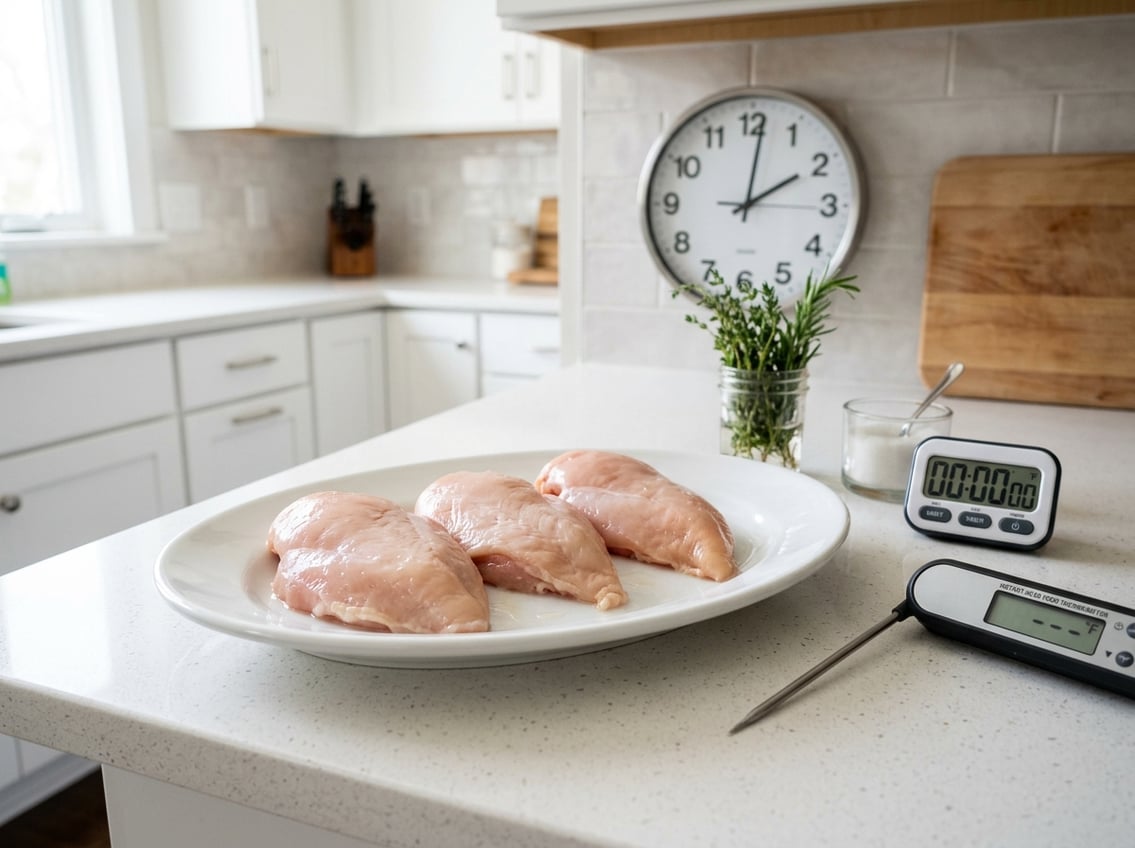
Chicken moves into the danger zone faster than many people expect. Unsafe bacteria can spread without obvious warning signs.
The main risks come from temperature, bacteria type, and the fact that reheating does not fix spoiled food.
The 40°F to 140°F Danger Zone
Bacteria grow fastest between 40°F and 140°F. That is why the two-hour rule exists.
If you leave cooked chicken out in this range, the food can become unsafe even if it still looks normal. The same applies to chicken left out on a buffet table or kitchen counter.
Salmonella and Campylobacter Risks
Chicken can carry salmonella and campylobacter, two bacteria linked to foodborne illness. According to food safety guidance, poultry is a common source of these illnesses.
Cooking lowers risk when the chicken reaches a safe internal temperature. Quick refrigeration is still needed after cooking.
Why Smell and Appearance Are Not Reliable
Chicken can look and smell normal and still be unsafe. Bacteria that cause illness do not always create strong odors, slime, or color changes right away.
If you use smell alone, you may miss food that has already passed the safe time limit. Time and temperature are more reliable than your senses.
Why Reheating Does Not Make It Safe Again
Reheating can kill some bacteria, but it does not always fix the problem. Some bacteria leave behind toxins that stay harmful even after reheating.
Do not assume you can save chicken that sat out too long by reheating it. If chicken was out beyond the safe limit, throwing it away is the safer choice.
What to Do in Common Real-World Situations
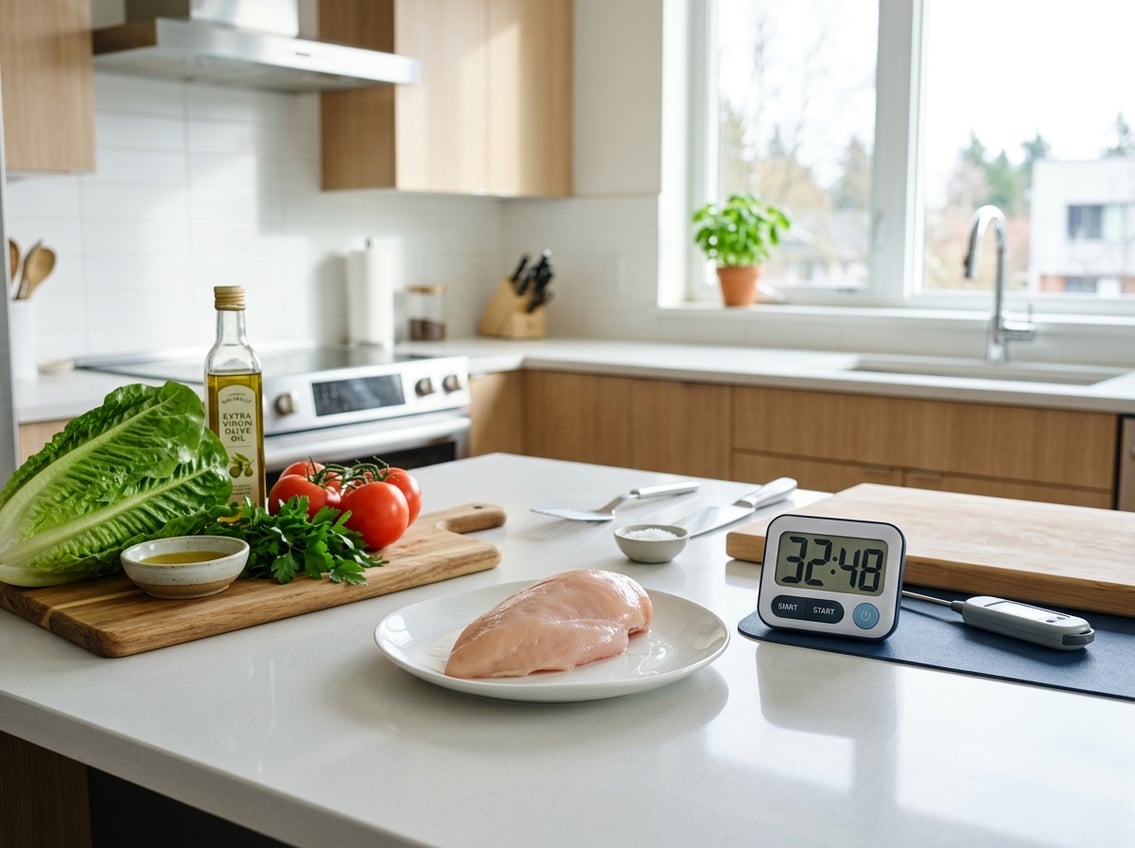
Mistakes often happen during cooking, travel, or parties, when time gets away from you. The safest response depends on how long the chicken has been warm and whether it was raw, cooked, or frozen.
Chicken Breast Left on the Counter During Meal Prep
If raw chicken breast sat out while you were setting up ingredients, check the clock first. If it has been under 2 hours, move it back to the fridge or cook it right away.
If you are past 2 hours, it is safer to throw it out.
Cooked Chicken Breast at Parties, Picnics, and Lunches
At parties and picnics, chicken often sits on a platter too long because people graze over time. If it has been out more than 2 hours, discard it, and use the 1-hour limit in hot weather.
When serving a crowd, put small batches out and keep the rest chilled.
Frozen Chicken Thawing on the Counter
Do not let frozen chicken sit out for more than 2 hours. Frozen chicken is not safe to thaw on the counter because the outside can warm up while the inside is still frozen.
Thaw chicken in the refrigerator, in cold water that is changed often, or in the microwave if you cook it right away. You can find more on safe frozen chicken sit-out limits.
Whether You Can Refreeze Thawed Chicken
You can refreeze thawed chicken if it was thawed safely in the refrigerator and stayed cold. If it sat out at room temperature, do not refreeze it.
If you had to wonder whether it was safe, it usually is not worth keeping.
Storage and Handling Mistakes to Avoid
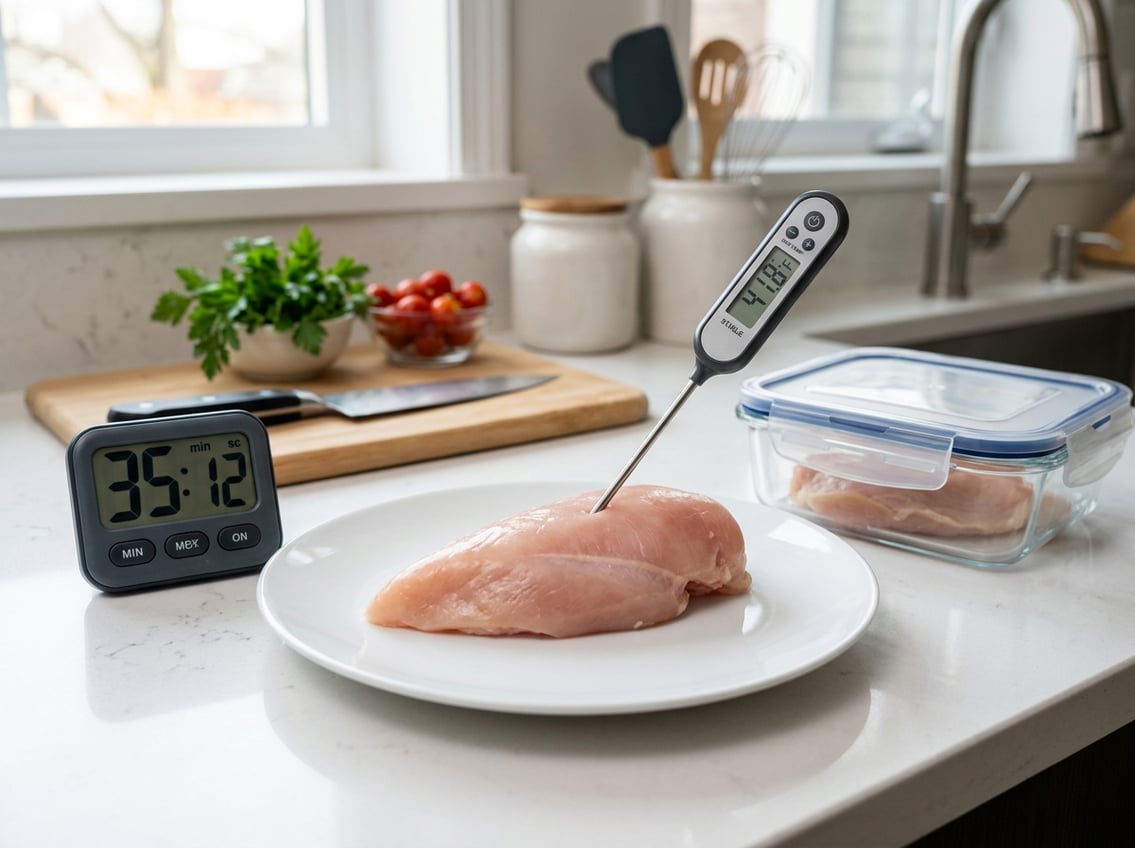
Good storage habits keep chicken safe before and after cooking. The biggest mistakes are cooling it too slowly, storing it too late, and letting juices spread to other foods.
How to Cool and Refrigerate Chicken Breast Properly
Put cooked chicken into the fridge within 2 hours, and sooner if the kitchen is hot. If the food is in a large pan, divide it into smaller containers so it cools faster.
Do not stack hot chicken in deep layers. Shallow containers help it drop in temperature faster and reduce the time it spends in the danger zone.
How Long Chicken Breast Lasts in the Fridge or Freezer
Raw chicken is usually safe in the fridge for about 1 to 2 days. Cooked chicken leftovers are typically good for 3 to 4 days when stored properly.
For longer storage, you can freeze chicken for several months, as noted by guidance on chicken fridge and freezer storage. Keep chicken in airtight containers or sealed bags.
Label the date so you know how long it has been stored.
Why You Should Not Rinse Raw Chicken
Do not rinse raw chicken in the sink. Rinsing does not remove harmful bacteria, and it can spread droplets onto counters, sinks, and nearby foods.
Cooking makes chicken safe, not washing it under water. Skipping the rinse also lowers the chance of cross-contamination.
How to Prevent Cross-Contamination
Keep raw chicken separate from ready-to-eat foods like salad, bread, and fruit.
Use a clean cutting board and knife after handling raw meat.
Wash your hands with soap and water right away.
Place raw chicken on the bottom shelf of the fridge in a sealed container.
That keeps juices from dripping onto other foods and helps protect the rest of your kitchen.


