
How Make Chicken Breast That Stays Juicy
You can make chicken breast that stays juicy by focusing on texture, heat, and timing.
If you handle the meat well before cooking, use the right oven or skillet method, and stop cooking at the right moment, you get a juicy chicken breast instead of dry, stringy meat.
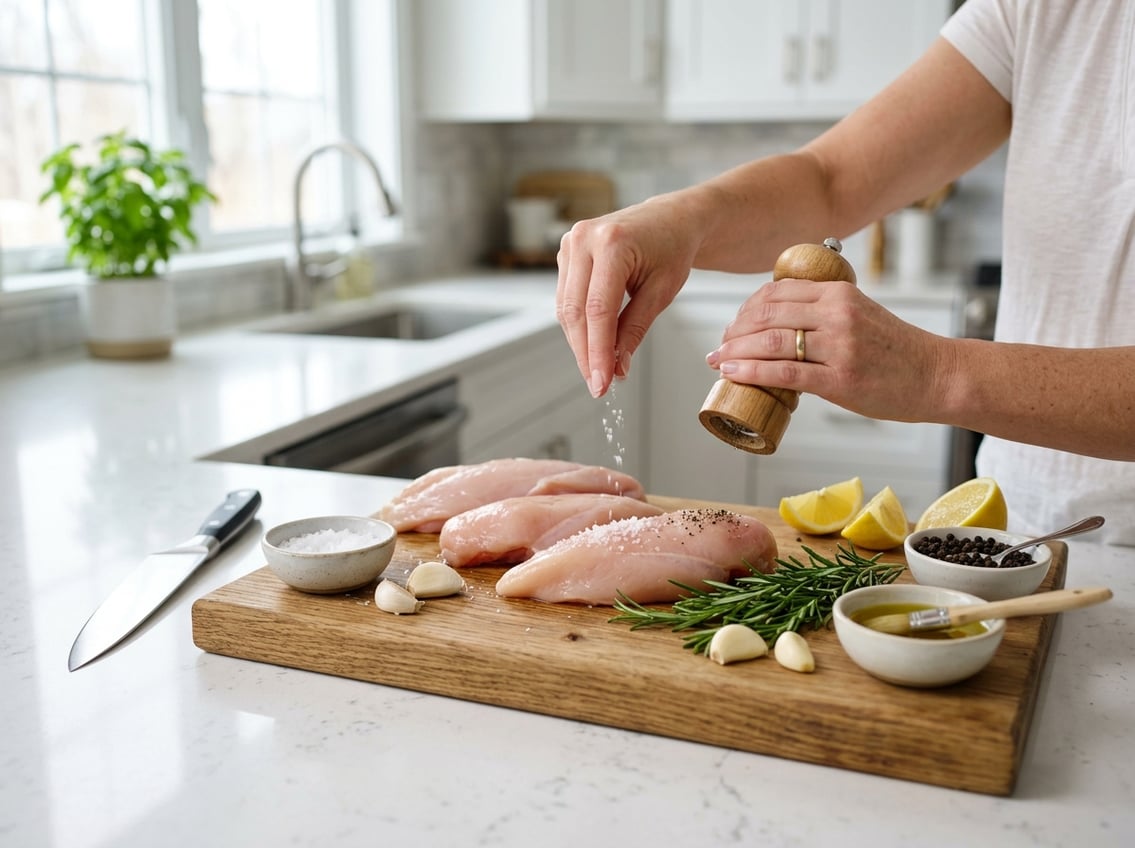
A good chicken breast recipe does not need many ingredients.
It needs a few smart steps that protect moisture and build flavor without overcooking the outside.
That approach works for weeknight dinners, meal prep, and leftover lunches.
It also gives you a more tender chicken breast that slices cleanly and still tastes fresh.
Prep Chicken Breast for Better Texture
Texture starts before the chicken hits the heat.
The cut you choose, how even the pieces are, and whether you add salt or marinade all affect the final bite.
A few minutes of prep help boneless chicken breast, skinless chicken breast, or boneless skinless chicken breasts cook more evenly and stay moist.
Choose Between Boneless and Bone-In Cuts
A bone-in chicken breast usually cooks a little more slowly and can stay juicier because the bone helps protect the meat from direct heat.
A boneless skinless chicken breast cooks faster, which is convenient, and it works well when you want quick meals.
If you want juicy chicken breasts with less guesswork, choose bone-in pieces for a wider window before the meat dries out.
If you choose boneless, watch the time closely and check temperature early.
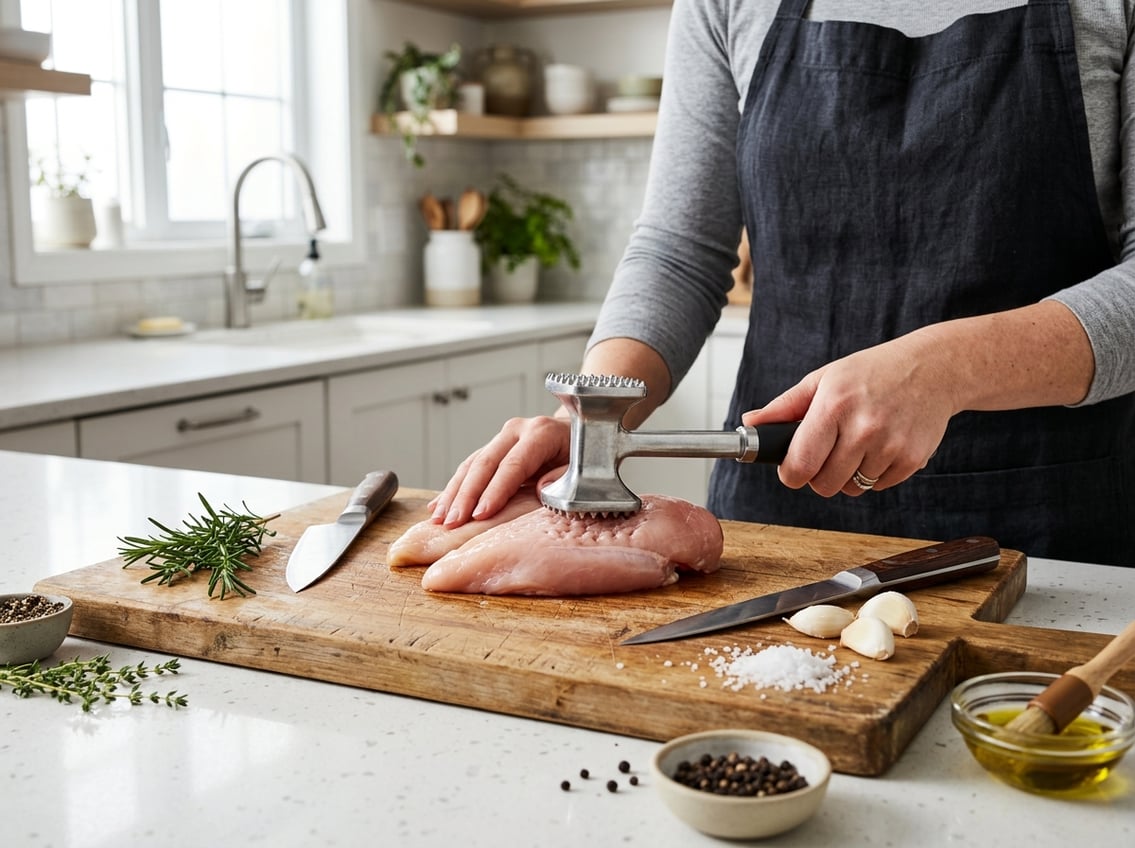
Pound Thick Pieces for Even Cooking
Chicken breasts are often thicker on one end than the other.
Pounding them to an even thickness helps the whole piece finish at the same time and avoids dry spots.
Place the chicken between parchment or plastic wrap.
Gently pound the thickest parts until the breast is even.
This works well for both boneless skinless chicken breasts and thicker cutlets.
Brine or Marinate for More Moisture
A short brine or marinade helps the meat hold moisture during cooking.
Salt is the key part in a brine, while a marinade adds both flavor and a little tenderness.
For a simple option, salt the chicken and let it rest in the fridge for 30 minutes to 2 hours.
For a richer route, use yogurt, buttermilk, lemon, or herbs, which are common in recipes built for a tender chicken breast.
Season Simply Without Overpowering the Meat
Strong seasoning is not always better.
If you plan to use the chicken in another dish, simple salt, pepper, garlic powder, and a little oil are enough.
That lighter approach matches advice from Better Homes & Gardens on how to bake chicken breasts, where simple seasoning is recommended when the chicken will be added to a bold recipe later.
Cook It Right in the Oven or Skillet
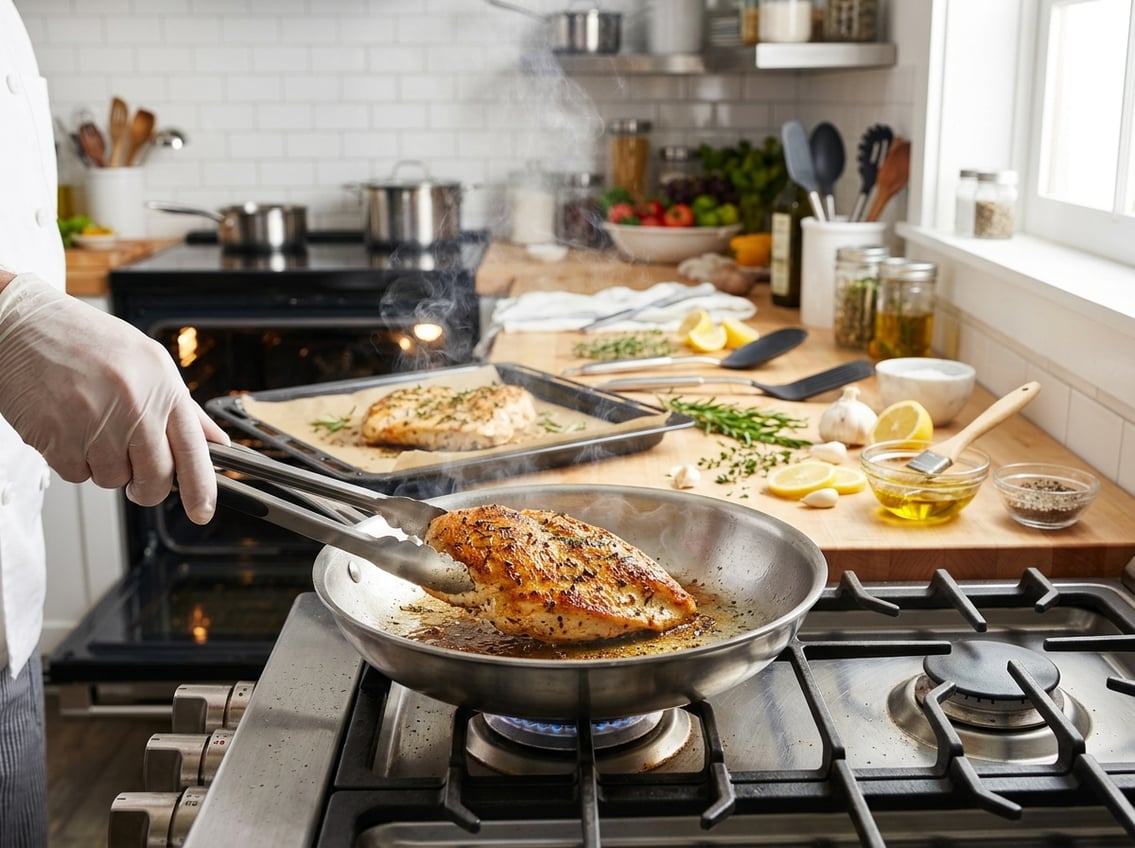
The cooking method matters as much as the prep.
A properly heated oven gives you a reliable baked chicken breast, while a skillet gives you fast browning and a deeper savory flavor.
Either way, the goal is the same: cook the meat just enough to stay juicy.
Bake at the Right Temperature and Time
If you want to bake chicken breasts without drying them out, use moderate heat and avoid leaving them in the oven too long.
Many tested methods for how to bake chicken breast use 375°F and a cook time around 25 to 30 minutes for average-sized pieces.
According to Better Homes & Gardens, bake uncovered chicken breasts at 375°F for 25 to 30 minutes for 6- to 8-ounce pieces.
Larger breasts need more time, so size matters.
Use Internal Temperature Instead of Guessing
The most reliable way to protect a juicy chicken breast is to check the internal temperature.
Pull the chicken when the thickest part reaches 165°F.
A meat thermometer removes the guesswork and helps you keep a tender chicken breast from drying out in the oven.
Pan-Sear for Fast Weeknight Results
For a quicker dinner, pan-fried chicken gives you a browned exterior and fast cooking.
Use medium to medium-high heat, a little oil, and a skillet that holds heat well.
Sear each side until the surface is golden.
Lower the heat if needed so the center finishes gently.
This method works well when you need dinner fast and do not want to wait for the oven.
Rest Before Slicing to Keep Juices Inside
Resting is not optional if you want moist meat.
When you cut too soon, the juices run out onto the board instead of staying in the chicken.
Let the chicken rest for 5 to 10 minutes before slicing.
This gives the meat time to settle and helps keep every bite moist and more flavorful.
Add Flavor and Turn Pan Drippings Into Meals
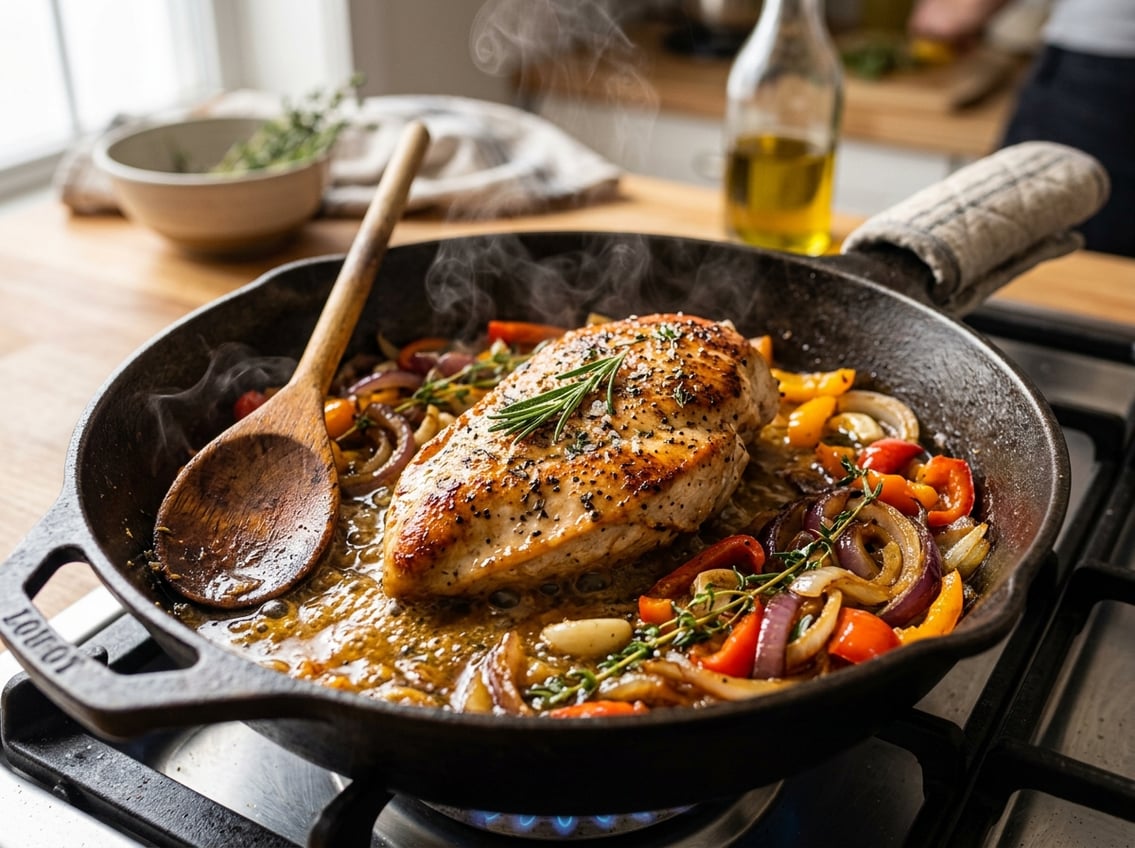
Once you cook the chicken, the pan still holds flavor.
You can turn drippings into a quick sauce, add different seasonings, or use leftovers in simple meals like chicken salad and chicken casserole.
Make a Quick Pan Sauce
A simple pan sauce turns browned bits and drippings into something useful.
After you remove the chicken, add a little broth, butter, garlic, shallot, or lemon juice, then scrape the pan and simmer until slightly reduced.
That method works well after skillet chicken, because the drippings already carry salt and flavor.
If your pan is very dry, add broth instead of relying on fat alone.
Try Lemon, Herb, or Cajun Variations
Chicken breast tastes better when the seasoning matches the rest of the meal.
Lemon and herbs give you a light, clean flavor, while Cajun seasoning adds more heat and depth.
A lemon version works well for baked lemon chicken.
Herb seasoning pairs with simple vegetables, and Cajun seasoning fits rice, potatoes, or a fast skillet dinner.
Slice, Shred, or Serve Whole
How you serve the chicken depends on the meal.
Slicing works for plates, shredding is useful for bowls and sandwiches, and serving whole keeps the breast moist longer on the plate.
If the chicken is fully rested, cut across the grain for a softer bite.
That helps even a simple tender chicken breast feel more polished.
Use Leftovers in Easy Dishes
Leftover chicken breast is useful because it is mild and already cooked.
You can fold it into chicken parmesan or chicken marsala for a fuller dinner.
Try it in chicken cordon bleu as well.
It also works in buffalo chicken sliders when you want something fast.
Use it in lunch recipes like chicken salad.


