
Whole Chicken Breast Protein by Portion and Weight
You can easily estimate whole chicken breast protein once you know if you are weighing it raw or cooked, boneless or bone-in, and skinless or skin-on.
A typical skinless chicken breast gives a large amount of protein for relatively few calories. That is why it remains popular for meal prep and macro tracking.
Weigh the edible meat in the same state you log it, because raw and cooked weights do not mean the same thing.
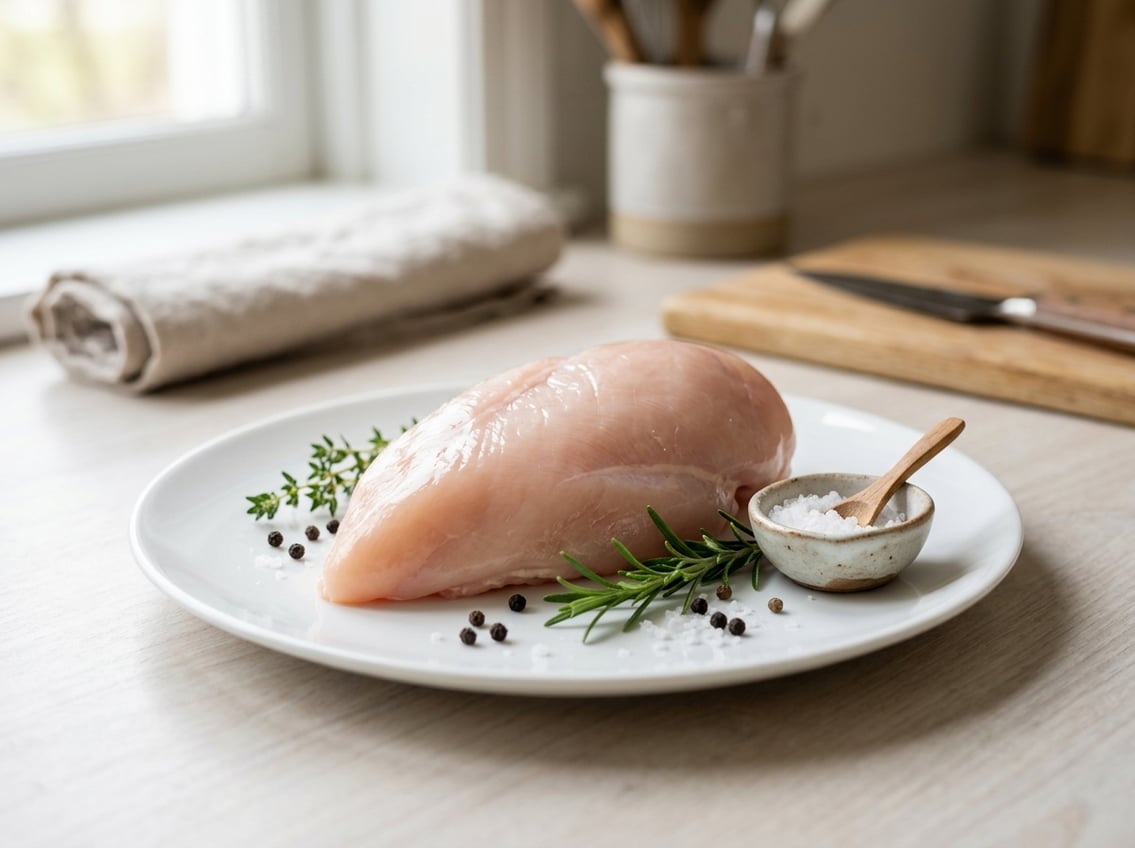
A whole breast can range from a modest serving to a very large one. The protein changes with size.
Chicken breast stays one of the most protein-dense foods you can buy, especially when you remove the skin.
Protein Amount in a Whole Breast
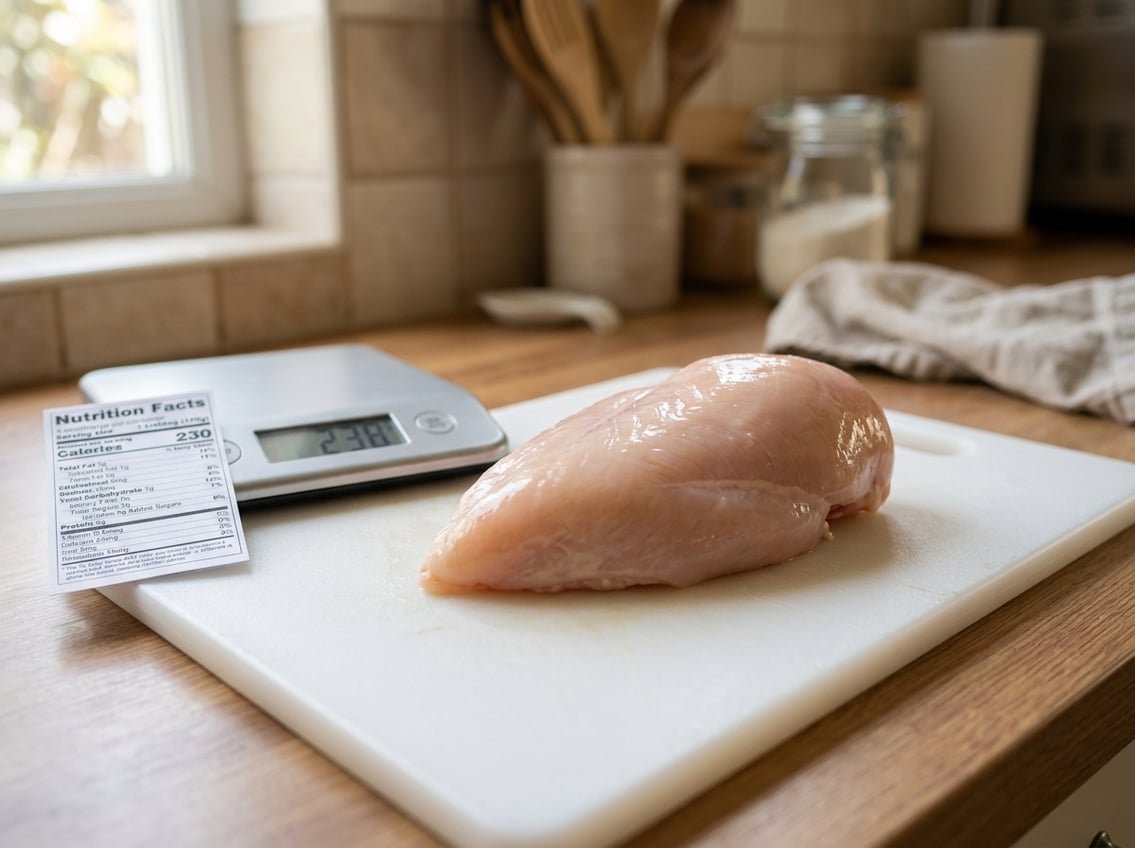
A whole skinless chicken breast usually provides a high amount of protein for its size.
The exact number depends on weight, whether the breast is boneless, and whether you are measuring raw or cooked meat.
Typical Protein in One Whole Piece
A standard cooked skinless chicken breast contains about 35 to 55 grams of protein.
Smaller breasts may land near the low end, while large restaurant-style breasts can go higher.
A 3-ounce cooked portion of chicken breast gives about 25 to 26 grams of protein.
A whole breast is often several portions, so the total climbs quickly.
According to Tatnuck Meat and Seafood, chicken breast is among the most protein-rich parts of the bird, with about 31 to 32 grams per 100 grams.
Protein per 100 Grams and per Ounce
You can use weight as a shortcut:
- 100 grams cooked skinless chicken breast: about 31 to 32 grams of protein
- 1 ounce cooked: about 9 grams of protein
- 4 ounces cooked: about 26 to 30 grams of protein
These numbers make it easier to compare labels, recipes, and meal prep portions.
A protein calculator for chicken breast can also help you estimate macros by weight.
Calories and Protein Density
Chicken breast is known for protein density, not just high protein.
Skinless breast gives a lot of protein with relatively low fat, which keeps calories lower than many other cuts.
That is why people often use it for weight loss plans and muscle-focused diets.
The lean profile also means small changes in portion size can change your macro totals in a meaningful way.
Raw vs. Cooked Weight Differences
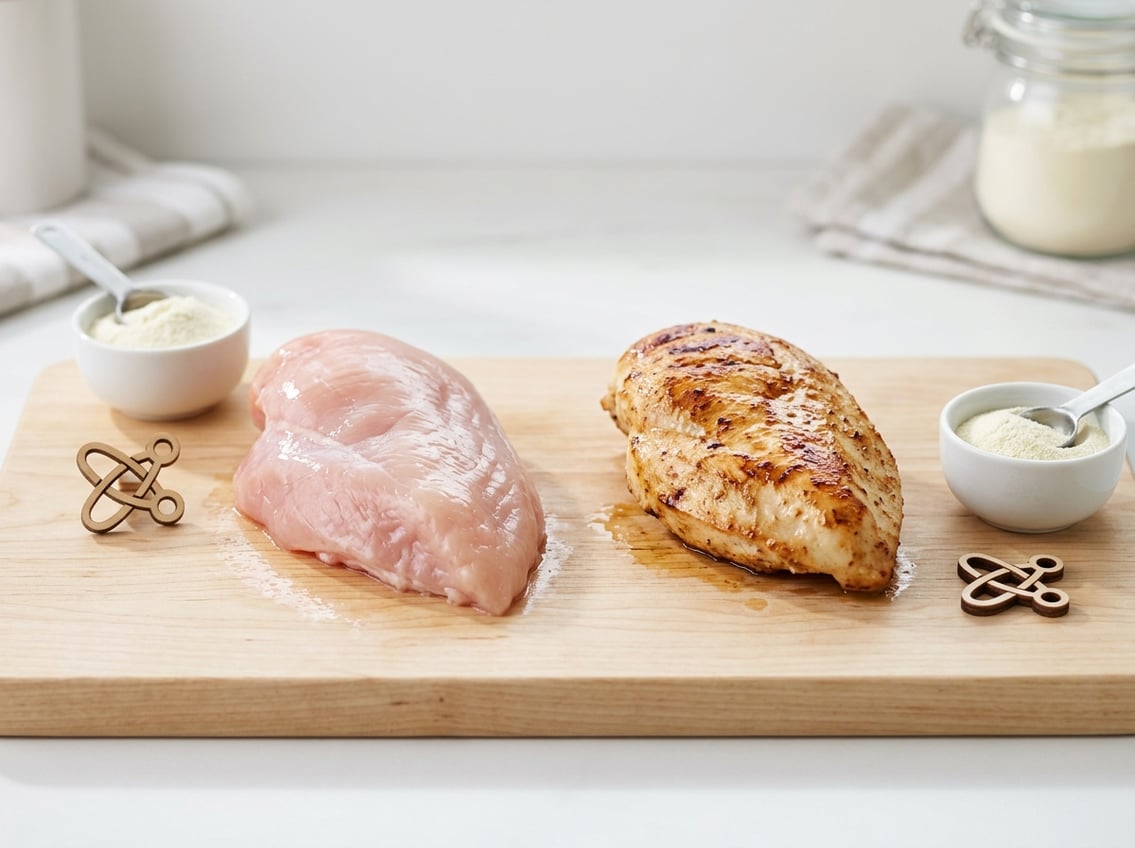
Raw and cooked chicken breast contain the same protein in the meat itself. The weight changes after cooking.
That shift affects how much protein you see per gram, and it is the main reason tracking errors happen.
Why Cooked Portions Show More Protein per Gram
When you cook chicken, water leaves the meat.
The total protein stays in the breast, so each gram of cooked meat contains more protein than each gram of raw meat.
This makes cooked chicken breast look more protein-dense on a label or app.
As explained in a raw vs. cooked chicken protein explanation, the protein stays, but the weight drops as moisture is lost.
How Moisture Loss Changes Portion Size
A raw breast can lose roughly 20 to 30 percent of its weight during cooking, depending on heat and cooking time.
A 6-ounce raw breast may end up closer to 4.5 or 5 ounces cooked.
That smaller cooked weight can make your portion look smaller than it really is.
If you only compare cooked weight to raw nutrition data, you may overcount or undercount chicken protein.
Estimating Cooked Yield From Raw Weight
You can estimate about 75 to 80 percent cooked yield from raw boneless breast.
That means:
- 8 ounces raw may cook down to 6 to 6.5 ounces
- 4 ounces raw may cook down to 3 ounces
- 10 ounces raw may cook down to 7.5 to 8 ounces
If you want consistent tracking, choose one method and stick with it.
Weigh raw meat before cooking, or weigh cooked meat after cooking and use cooked nutrition data.
Portion Size, Cuts, and Tracking Accuracy
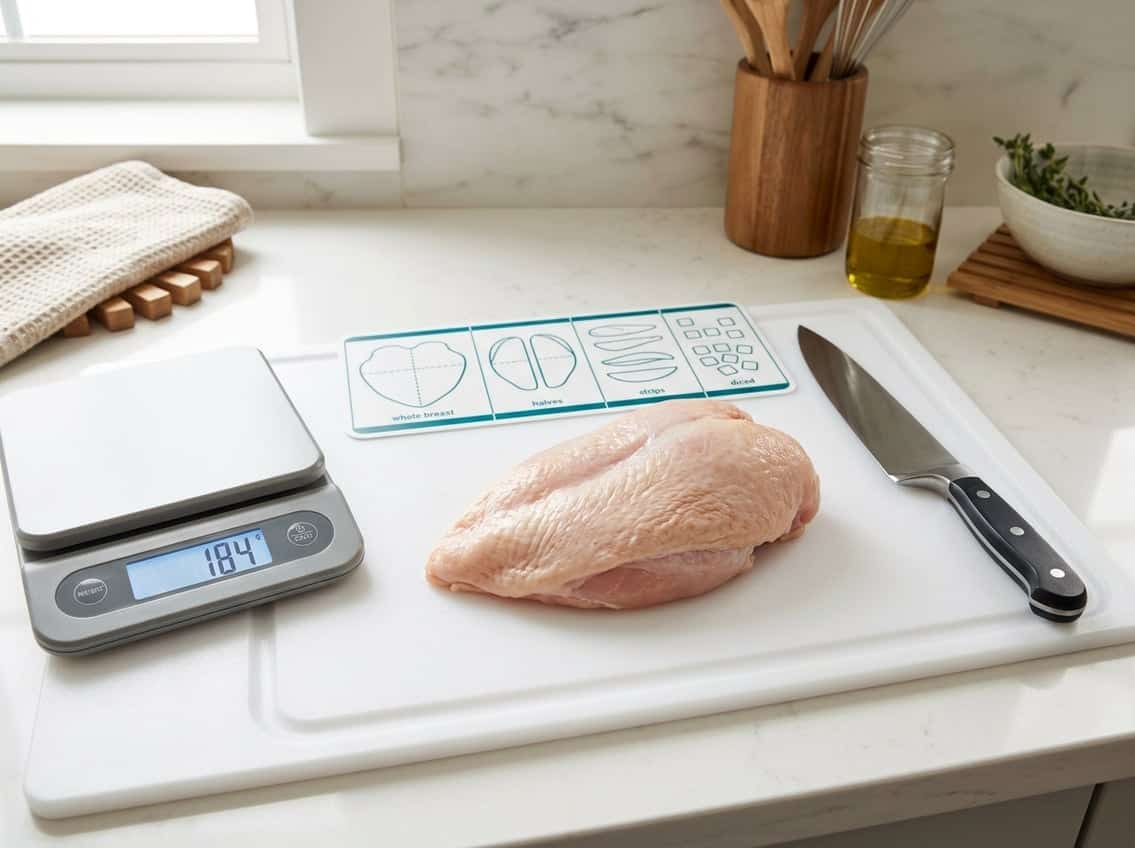
Portion size changes more than many people expect, especially when the breast has bone or skin attached.
Accurate logging depends on knowing which part of the bird you actually eat.
Boneless vs. Bone-In Meat Yield
Bone-in chicken breast weighs more than the edible meat alone.
A bone-in piece gives you less protein per ounce of total weight than a boneless piece.
As Bodybuilding Meal Plan notes, the bone takes up part of the weight, so the meat yield is lower.
If your breast is bone-in, only part of what you weigh is actual chicken protein.
Skin-On vs. Skinless Comparisons
Skin adds mostly fat, not much protein.
A skinless chicken breast is leaner and easier to fit into high-protein meal plans.
Skin-on breast can still be useful if you want more flavor or a higher calorie meal.
The protein changes very little, but the calorie count goes up because of the extra fat in the skin.
How to Weigh and Log Servings Correctly
For the most accurate tracking:
- Decide whether you log raw or cooked weight.
- Keep the same method every time.
- Remove bones and skin if your nutrition entry is for skinless meat.
- Use a food scale, not visual guesses.
If you buy a packaged chicken breast, the label usually refers to raw weight.
A tracking entry based on cooked weight works better only after cooking is done.
How It Compares With Other Chicken Cuts
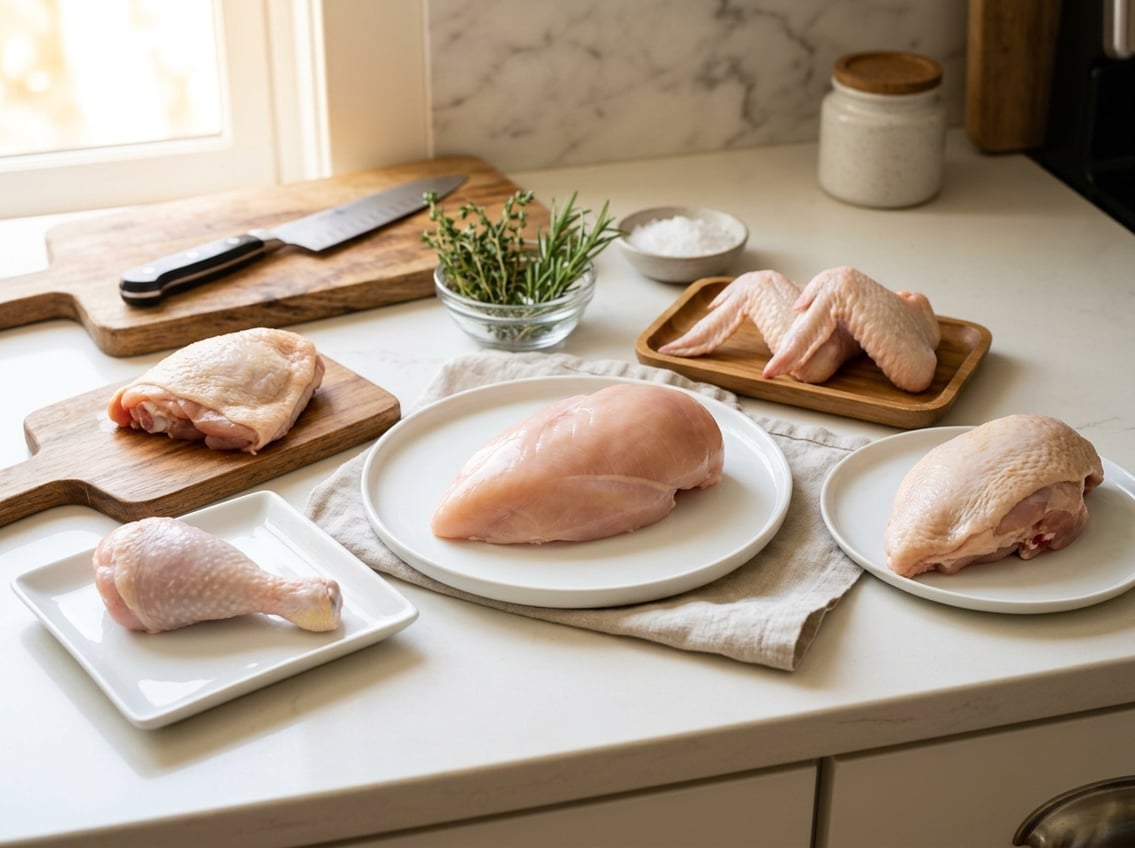
Chicken breast gives the highest protein concentration of common chicken cuts.
Other parts still provide useful protein, along with more fat, more flavor, or a softer texture.
Breast vs. Thigh, Drumstick, and Wing
Chicken breast is usually the leanest and most protein-dense choice.
According to Health.com, it has more protein and less saturated fat than many other cuts.
Typical protein per 100 grams is roughly:
- Breast: 31 to 32 grams
- Thigh: 25 to 26 grams
- Drumstick: about 24 grams
- Wing: about 24 grams
That gap may look small, yet it adds up across a large meal or a full week of meal prep.
Best Choice for Weight Loss or Muscle Support
If you want the most protein with the fewest calories, skinless chicken breast is the strongest choice.
It makes it easier to hit your protein target without adding much fat.
It also works well for muscle support because it gives you a large protein dose in one serving.
This helps when you want a simple, predictable food for post-workout meals or high-protein lunches.
When Higher-Fat Cuts May Make More Sense
Thighs, drumsticks, and wings work well when flavor, texture, or satiety matter more than leanness.
The extra fat makes the meal feel more satisfying and helps when you need more calories in the day.
If your diet is already very lean, you may find a higher-fat cut fits better than breast.
The best choice depends on your calorie target and taste preference.


