
Which Part Chicken Breast: Location, Cuts, and Uses
You can find which part chicken breast refers to by looking at the front of the bird, where the large pectoral muscles sit under the skin.
On a whole chicken, the breast is the meaty, white-meat section on both sides of the breastbone.
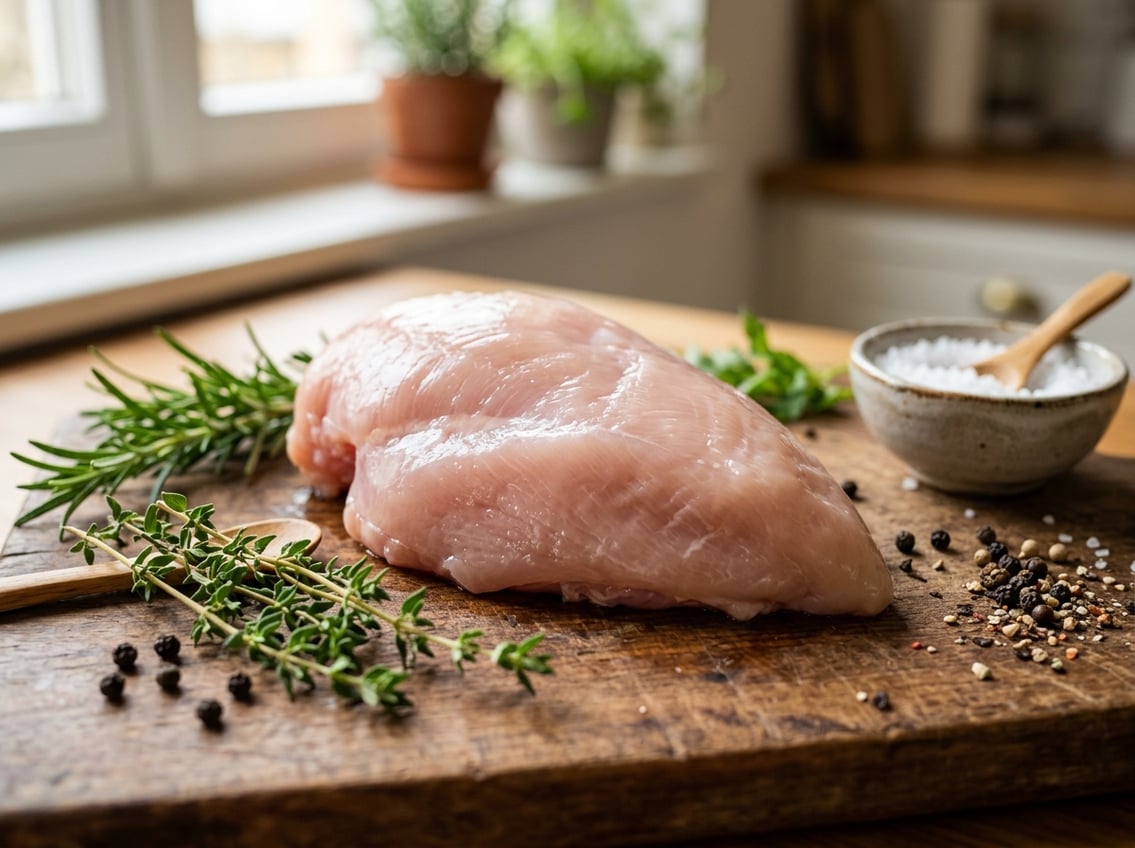
If you know where the breast sits on the bird, you can identify chicken parts faster and choose the right cut at the store.
Chicken breast is one of the most common parts of a chicken, but it is easy to confuse with nearby cuts like the tenderloin, split breast, or breast quarter.
A clear look at chicken anatomy helps you tell each one apart on a whole chicken and in the meat case.
Where the Breast Sits on the Bird
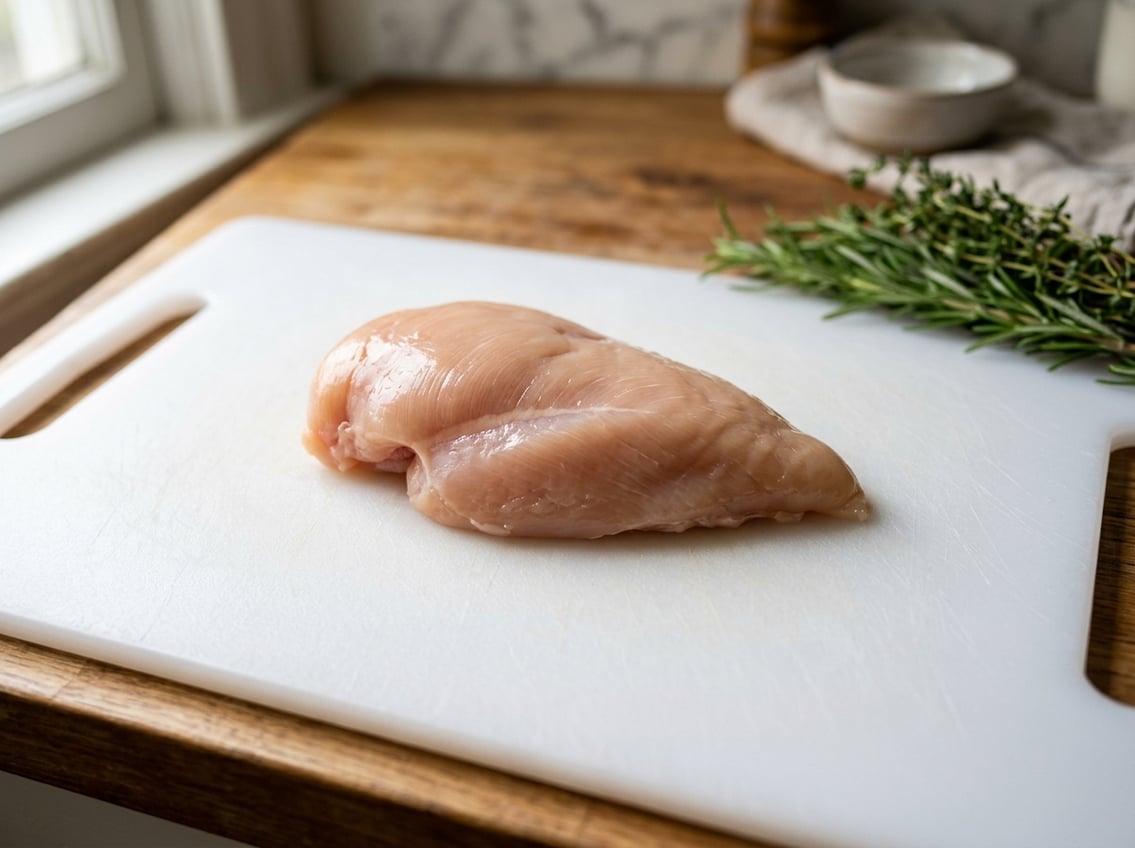
The chicken breast sits on the front of the bird, centered over the chest.
It is the thick, rounded area on either side of the breastbone and is the main source of white meat on a whole chicken.
How to Identify It on a Whole Chicken
On a whole chicken, look for the broadest meaty area between the neck and the legs.
The breast is usually covered by skin and lies above the rib cage, with the keel bone running down the middle.
The whole breast is the intact breast separated from the rest of the chicken, according to the National 4-H poultry parts identification guide.
A split breast is the whole breast cut in half parallel to the breastbone.
A breast with ribs keeps the rib cage attached.
How the Breast Connects to the Wings and Rib Cage
The breast connects closely to the wings and rib cage.
A breast quarter includes half of the breast with the wing and back portion attached, so the wing joint helps show where the breast ends.
The breast can look different depending on how the chicken was cut.
If the butcher leaves more bone in place, you may see more of the rib cage or back attached to the breast meat.
Pectoral Muscles, Tenderloin, and Breast Meat
The breast is made mostly of the pectoral muscles, especially the pectoralis major.
The pectoralis minor tucks underneath.
The smaller inner muscle is often sold separately as the tenderloin, which the poultry parts guide defines as the inner pectoral muscle against the keel bone.
The visible breast meat is what most shoppers mean when they ask for chicken breasts.
It is the largest white-meat portion on the bird and is the main cut used for boneless breast products.
How Breast Compares With Other Chicken Cuts
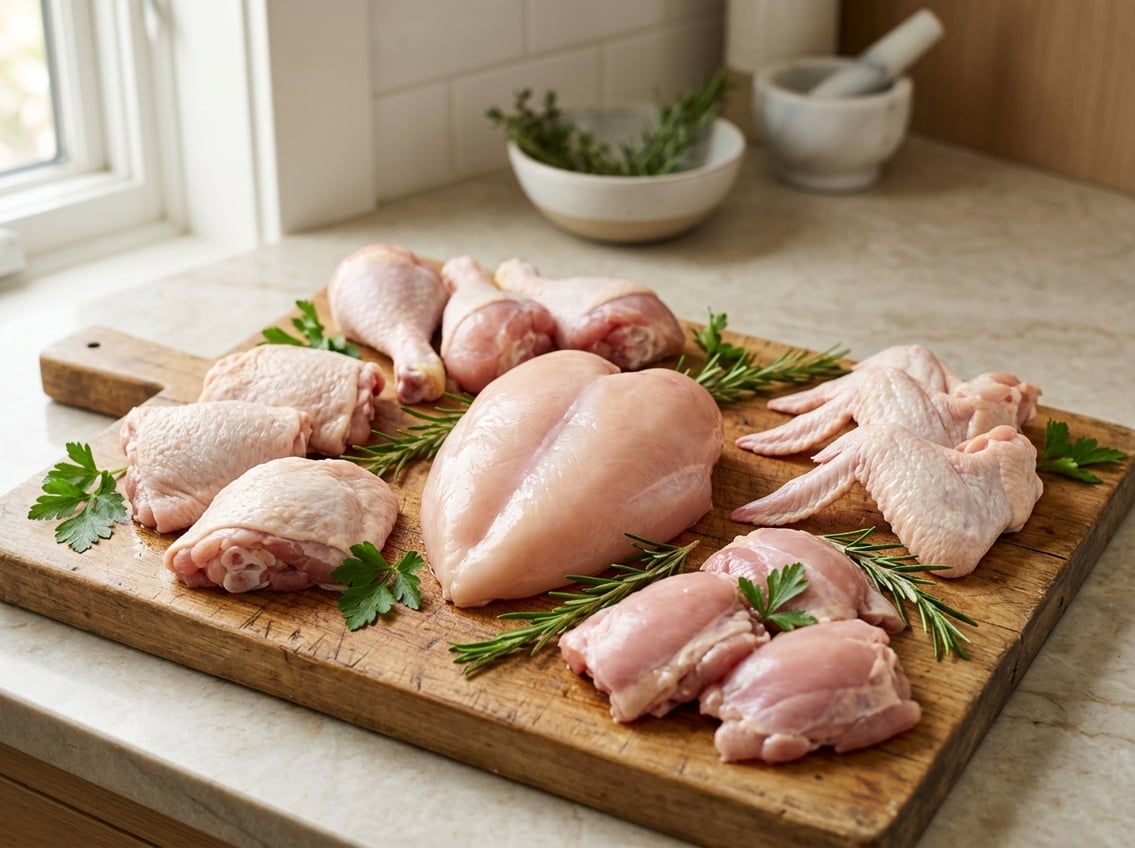
Chicken breast is lean and mild.
Other cuts bring more fat, stronger flavor, or different textures.
The best choice depends on whether you want quick cooking, richer taste, or a cut that stays juicy longer.
Breast vs Thigh and Drumstick
Compared with thigh and chicken thighs, breast has less fat and a lighter taste.
Thighs, drumstick, and drumsticks come from the leg, including the whole leg, whole leg portion, leg quarter, and leg quarters.
These are all part of the darker meat side of the bird.
Leg cuts are often more forgiving during cooking because the extra fat helps protect them from drying out.
Breast cooks faster.
Thighs and drumsticks often taste richer and stay moist with longer cooking.
Breast vs Wings and Wing Sections
Chicken wings are very different from breast in size, texture, and use.
A whole wing usually divides into a drumette, wingette (also called wing flat), and a wing tip.
Wings are common for buffalo wings and baked chicken wings, where skin and bone matter more than lean meat.
Breast gives you more usable meat per piece, while wings focus on skin, bone, and flavor.
White Meat and Dark Meat Differences
Breast is white meat.
Thighs, legs, and wings are commonly grouped as dark meat.
The difference comes from muscle use and fat content, which changes color, texture, and flavor.
White meat is usually leaner and milder.
Dark meat tends to be juicier and more flavorful, especially in braises, roasts, and dishes with longer cooking times.
Common Store Labels and Butcher Terms
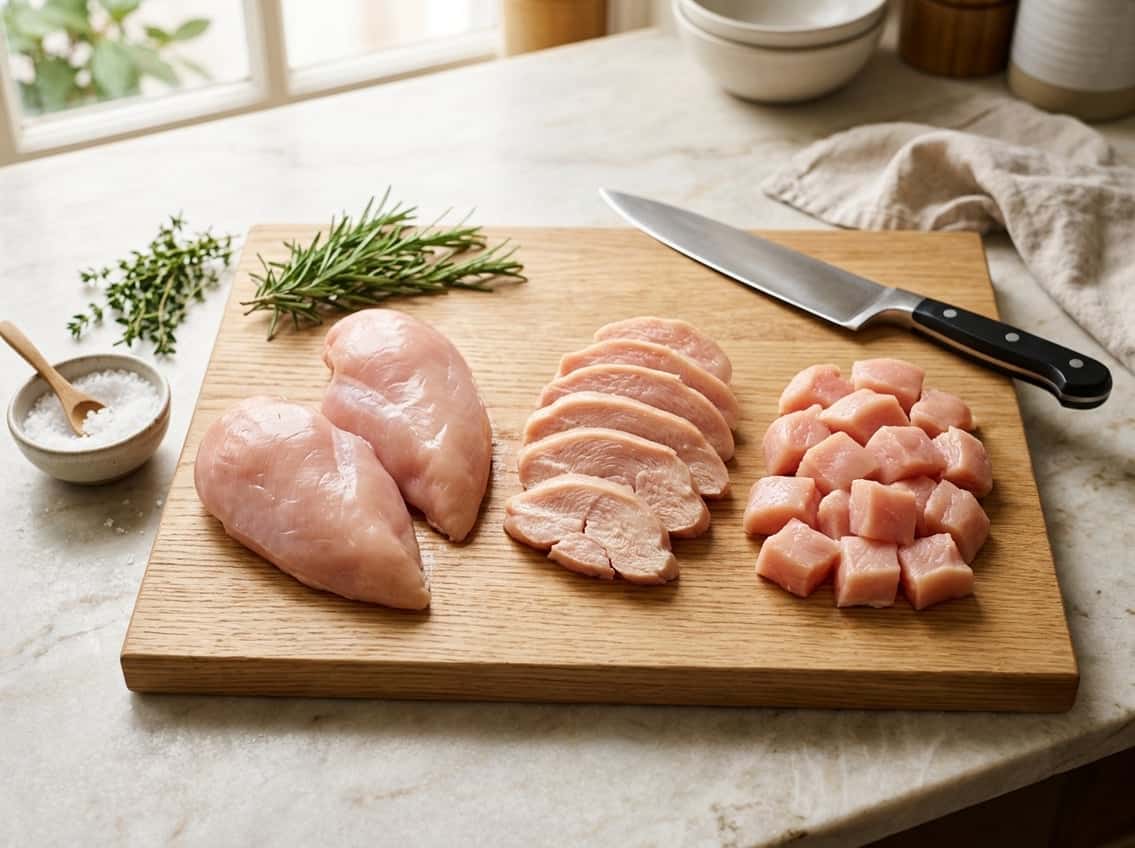
The label on the package tells you whether you are buying a full breast, a cut half, or a boneless piece.
Store names can vary, so it helps to know the basic terms before you choose from the meat display case.
What Boneless, Skinless, and Fillet Mean
Boneless breast means the butcher has removed the bones, and the skin may still be attached.
Skinless means the butcher has removed the skin.
Boneless, skinless means both are gone.
A breast fillet often refers to a boneless breast portion, and some shoppers use that term for smaller trimmed pieces.
The tenderloin may be attached or sold separately, since it sits on the inner side of the breast and is easy to remove.
Retail Cuts You May See in the Meat Display Case
You may see whole breast, breast with ribs, split breast, breast quarter, and breast fillet in the meat display case.
These terms describe how much bone and attached meat remain.
If the label mentions cartilage, the cut may still have part of the rib structure or connecting tissue attached.
A whole chicken can also be broken into these parts by the store or by a butcher, depending on how it is sold.
How to Butcher a Chicken for Breast Portions
To butcher a chicken for breast portions, start with a whole chicken and locate the breastbone.
Cut along both sides of the breastbone, then follow the rib cage to free the breast meat.
If you want boneless pieces, separate the meat from the bones after you remove the breast.
For a clean cut, use a sharp knife and steady pressure.
This is the same basic method when you butcher a chicken into common chicken parts and chicken cuts.
Best Uses, Nutrition, and What to Do With the Rest
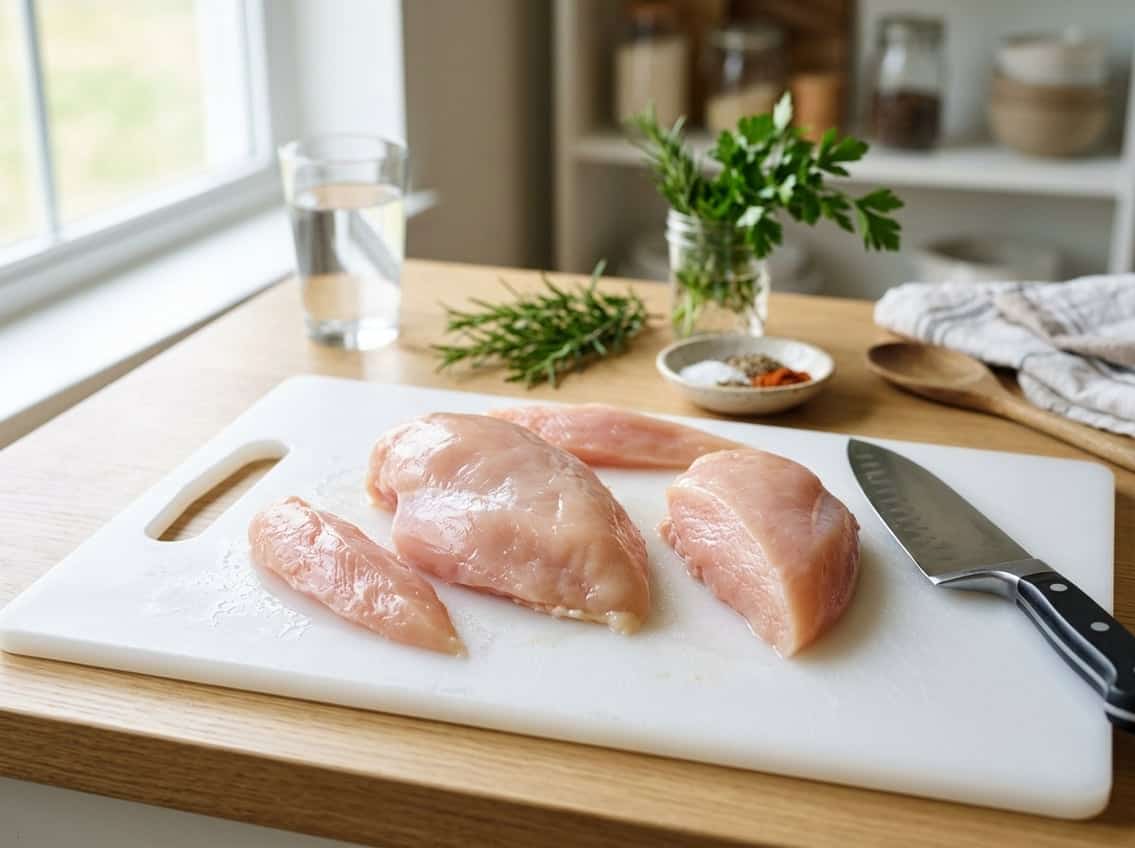
Chicken breast is a versatile ingredient because it cooks quickly and works in many recipes.
It also has a mild flavor, so it takes well to seasoning, marinades, sauces, and dry rubs.
Why Breast Is a Versatile Ingredient
You can grill, roast, sauté, bake, slice, or shred chicken breast with good results.
It fits simple weeknight meals as well as meal prep, soups, salads, pasta dishes, and sandwiches.
A plain breast can take on many flavors without competing with the dish.
That makes it one of the easiest cuts to use when you want a flexible main protein.
Nutritional Benefits of Chicken Breast
Chicken breast is known for lean protein and a lower fat level than many other cuts.
That makes it a common choice when you want a lighter meal with solid protein content.
Cooking method still matters.
A breaded, fried breast will not have the same profile as baked or grilled breast, so the nutritional benefits of chicken breast depend on how you prepare it.
Using Bones, Back, Tail, and Giblets for Stock
If you buy a whole bird, save the bones, back, tail, and giblets for chicken stock.
The back and neck carry lots of bone. The gizzard and other giblets add depth to soups and broth.
These parts bring rich flavor and collagen. Collagen helps create a fuller stock.
Broilers and heavy broilers provide meat. Hens, roosters, and turkeys also offer useful bones and tissue for stock-making.


