
How Chicken Breast Protein Works by Serving Size
Chicken breast protein offers an easy way to add high-quality protein to your meals. When you know the serving size, you can estimate your intake with much more confidence.
The protein in chicken breast depends mostly on weight, cooking state, and whether the cut is skinless or bone-in. Your serving size matters more than the label name alone.
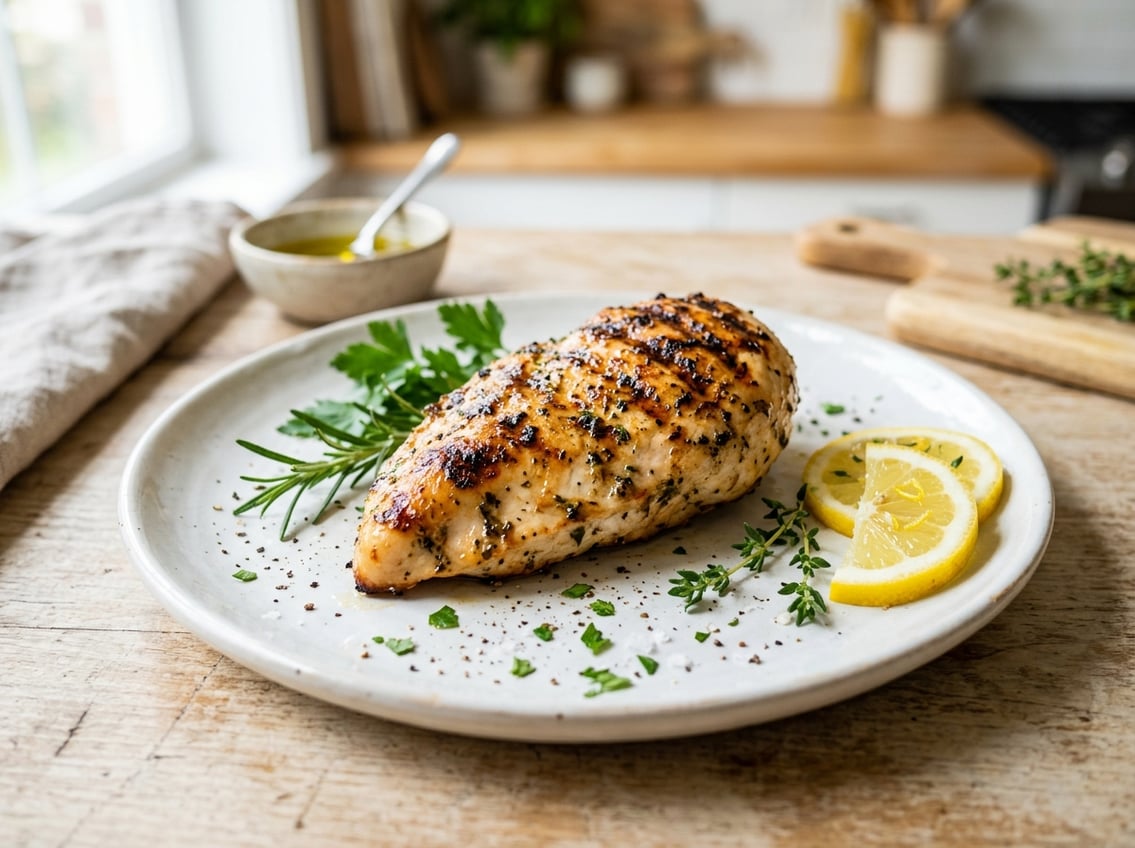
A standard cooked portion gives you a lot of protein for relatively few calories. That is why many people choose chicken breast for muscle gain, fat loss, and meal prep.
A MD-reviewed guide on chicken breast protein states that cooked chicken breast averages about 31 to 32 grams of protein per 100 grams. A 4-ounce cooked portion provides about 35 to 36 grams.
Protein Amounts by Common Serving Size
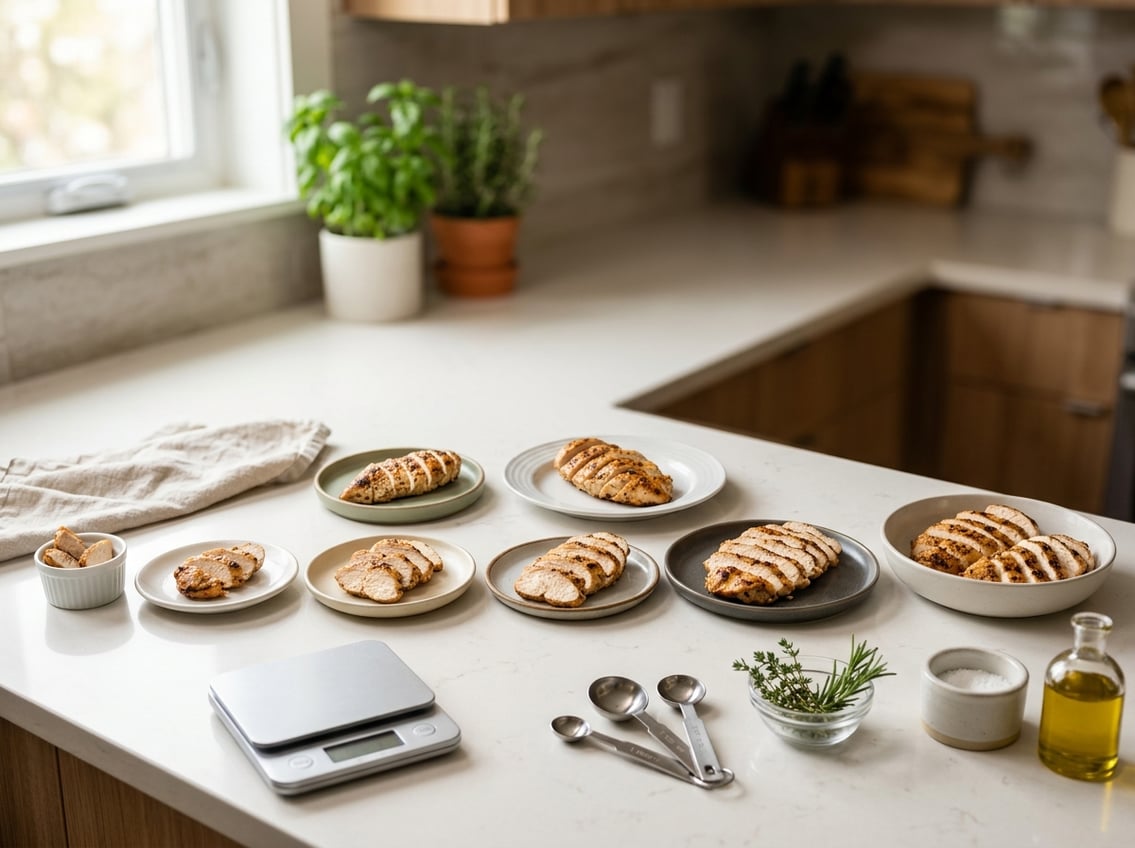
Chicken breast protein scales closely with serving weight. Cooked, skinless chicken breast is the most common reference point and gives you a strong amount of protein per bite.
Protein Per Ounce and Per 100 Grams
Cooked, skinless chicken breast gives you about 8.5 to 9 grams of protein per ounce. That works out to about 31 to 32 grams per 100 grams.
Raw chicken breast is lower by weight because it still holds more water. Raw portions usually show about 6 to 7 grams per ounce.
What a 3-Ounce, 4-Ounce, and 6-Ounce Portion Provides
A 3-ounce cooked serving provides about 24 grams of protein, which matches the common deck-of-cards portion size noted by MSN.
A 4-ounce cooked portion gives you about 35 to 36 grams. A 6-ounce cooked portion gives you about 52 to 54 grams, which is a large single-meal dose for many people.
How Much a Whole Breast Usually Delivers
A whole chicken breast can vary a lot in size, so the protein amount depends on the exact weight. A smaller breast may land near 35 to 45 grams, while a larger one can reach 70 grams or more once cooked.
If you buy chicken often, weigh it for the most accurate way to track protein in chicken breast. That matters more than guessing by shape alone.
What Changes the Numbers on the Label
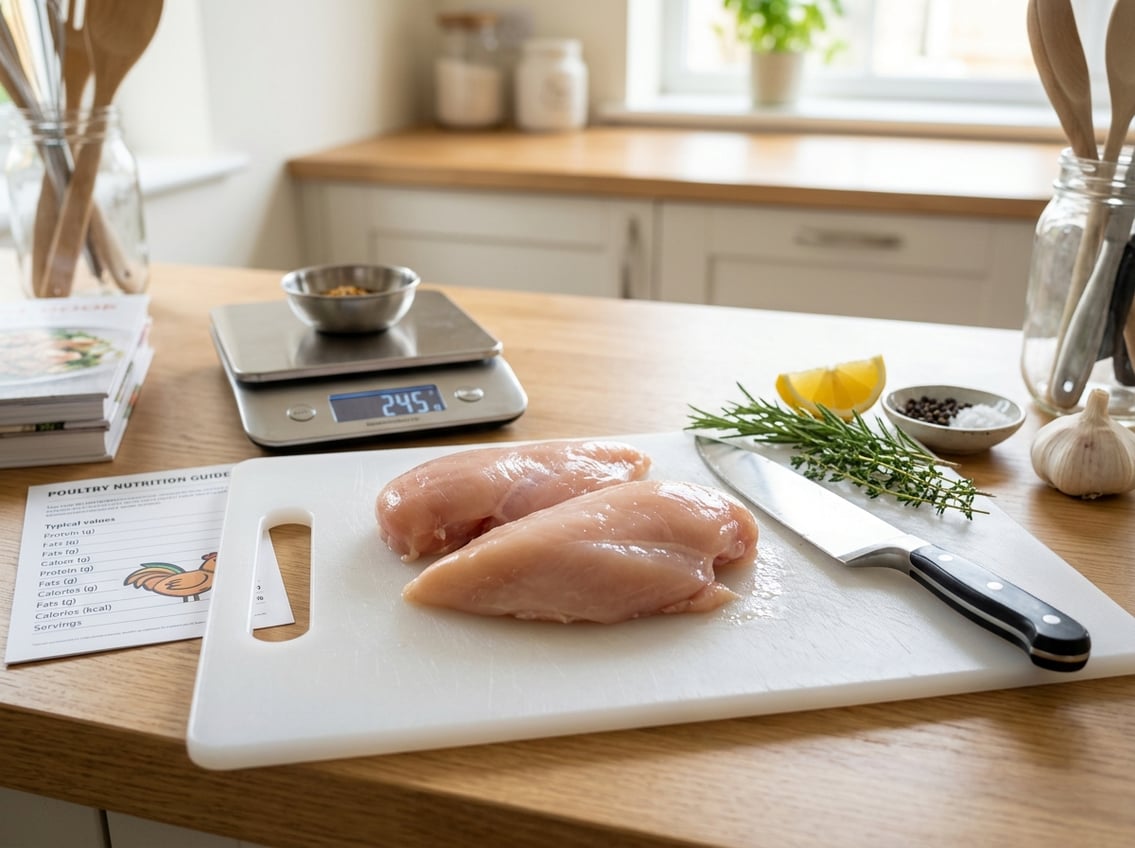
The label can look simple, but cooking, skin, and bone content change the protein count. Small differences in prep can change your serving weight without changing the actual amount of protein very much.
Raw vs. Cooked Weight and Water Loss
Cooking removes water, so cooked chicken weighs less than raw chicken. The protein stays in the meat and becomes more concentrated in a smaller piece.
A raw breast and a cooked breast can show different protein-per-ounce numbers for this reason. If you weigh chicken after cooking, use cooked values. If you weigh it raw, use raw values.
Skinless vs. Skin-On Nutrition Differences
Skinless chicken breast is the standard choice for lean protein because it keeps fat lower. Skin-on chicken breast still gives you protein, but it adds more calories and fat from the skin.
The protein in chicken breast stays fairly similar either way. The fat and calorie totals change more noticeably.
Bone-In Chicken Breast vs. Boneless Portions
Bone-in chicken breast contains less edible meat per pound because part of the weight is bone and connective tissue. The protein in chicken breast looks lower per ounce when the bone is included in the weight.
Boneless portions are easier to track because the full weight is edible meat. If you buy bone-in chicken breast, account for the yield, not just the package weight.
Why It Matters for Nutrition and Meal Planning
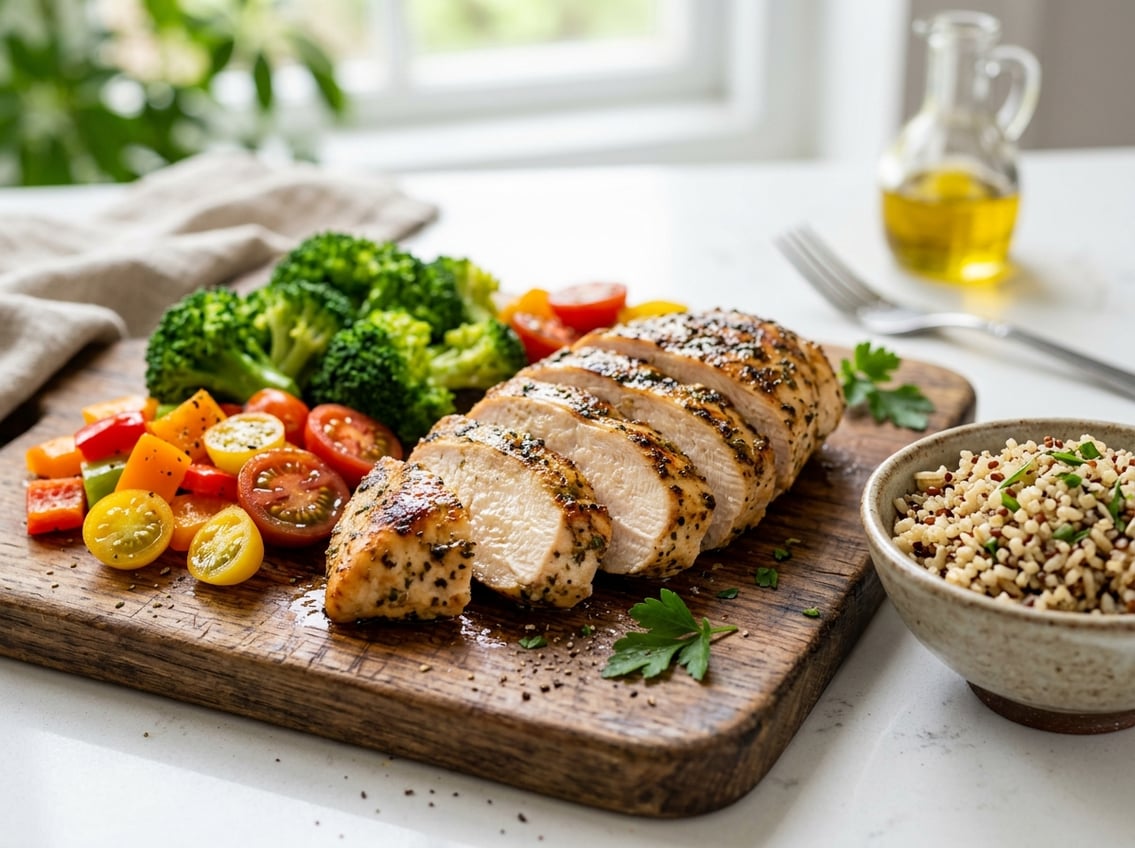
Chicken breast fits many meal goals because it is a lean protein with a predictable protein count. When you know the serving size, you can build meals around your protein target.
Using Chicken as a Lean Protein Source
Chicken breast is a strong option when you want more protein with less fat. The National Chicken Council describes chicken as a nutrient-dense, lean protein.
That makes it useful for lunch bowls, salads, wraps, and simple dinner plates. It also works well when you want to keep calories steady.
Matching Portions to Muscle Gain, Fat Loss, and Satiety
For muscle gain, larger portions help you reach protein targets without needing many snacks. For fat loss, chicken breast can help you stay full while keeping calories in check.
A 4-ounce to 6-ounce portion is a practical range for many meals. It gives you enough protein to support satiety and daily intake without making the meal too large.
Popular Meal Ideas Such as Chicken Caesar Salad
Chicken breast fits easy meals like rice bowls, pasta dishes, tacos, and grilled plates.
Chicken also works well in a chicken caesar salad. The chicken adds protein and the greens add volume.
If you want a simple pattern, pair skinless chicken breast with vegetables and a starch you can measure.
This approach makes your protein intake easier to plan from one meal to the next.


