
What Chicken Breast Contains: Nutrition and Benefits
You may already know that chicken breast contains mostly lean protein, along with a useful mix of vitamins and minerals. It is one of the simplest high-protein foods you can add to your meals.
Its nutrition changes a bit based on serving size, skin, and cooking method.

If you are trying to eat more protein, build balanced meals, or manage calories, chicken breast is worth knowing well. Its main strength is that it gives you a lot of protein for relatively few calories, with very little carbohydrate.
Core Nutrition in Chicken Breast

Chicken breast offers high protein and low fat. The exact nutrition facts change with portion size and whether the meat is skinless or cooked with added fat.
The basic pattern stays the same.
Calories, Protein, Fat, and Carbs
A skinless chicken breast is a classic lean protein. According to MasterClass’s chicken breast nutrition facts, a 4-ounce raw boneless skinless serving has about 110 calories, 26 grams of protein, 1 gram of fat, and 0 grams of carbohydrate.
Cooking changes water content, so nutrition facts for cooked chicken breast often look more concentrated per ounce than raw meat.
What a 3-Ounce Serving Provides
A 3-ounce serving is a common reference point in nutrition labels and meal planning. It usually provides about 25 grams of protein, with very little fat if the chicken is skinless and plainly cooked.
That amount fits easily into lunch or dinner.
Skinless vs. Regular Cuts
Skinless chicken breast is lower in fat than regular cuts with the skin on. Much of the fat in chicken sits in the skin, so removing it changes the nutrition profile more than changing the meat itself.
If you compare skinless and skin-on portions, the skin-on version gives you more calories and fat.
Vitamins, Minerals, and Amino Acids
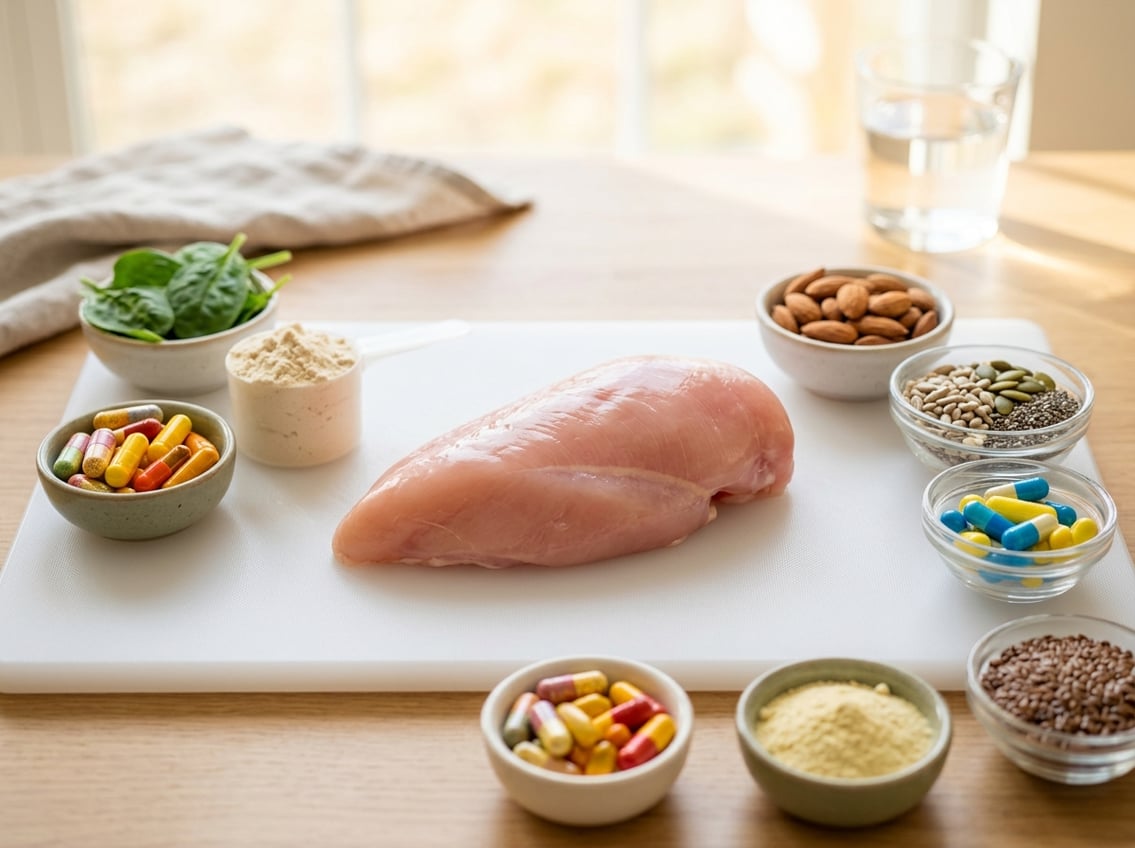
Chicken breast offers more than just protein. It contains B vitamins, selenium, phosphorus, and other nutrients that support normal body function.
Its protein quality is strong too, because it supplies the amino acids your body uses to build and repair tissue.
B Vitamins and Energy Metabolism
Chicken breast contains vitamin B6, niacin, and other B vitamins. These nutrients help your body turn food into energy and support the systems that use that energy every day.
A chicken nutrition fact sheet from the Ohio Poultry Association lists 0.6 mg of vitamin B-6 and 13.712 mg of niacin in a 3.5-ounce serving of cooked, skinless chicken breast.
Minerals That Support Bones and Immunity
Chicken breast contains selenium, phosphorus, iron, zinc, calcium, and small amounts of other minerals. Phosphorus and calcium help support bone health, while selenium and zinc play a role in immune function.
The same Ohio Poultry Association fact sheet lists 228 mg of phosphorus and 27.6 mcg of selenium in a 3.5-ounce cooked, skinless serving.
Protein Quality and Tryptophan
Chicken breast provides complete protein, which means it contains all essential amino acids. One of those amino acids is tryptophan, which your body uses for normal protein and neurotransmitter production.
This amino acid profile makes chicken breast useful for people who want high-quality protein in a simple form.
How Chicken Breast Supports Health Goals

Chicken breast fits many health goals because it is filling and flexible. You can easily pair it with vegetables, grains, or low-carb sides.
It works well when you want more protein without a large amount of fat or carbohydrate.
Muscle Growth and Recovery
Lean protein is important for muscle growth and recovery. Chicken breast gives you a strong dose of protein in a small serving, which makes it useful after workouts or during higher-protein eating plans.
Athletes and active adults often use cooked chicken breast in meals.
Satiety, Weight Management, and Weight Loss
Protein helps you feel full, so chicken breast can support satiety. When you feel satisfied after a meal, it may be easier to manage portion size and avoid extra snacking.
Chicken breast fits well into low-carb diets because it contains no meaningful carbohydrate.
Heart Health and Blood Pressure Considerations
Skinless chicken breast is often a better choice than fattier cuts when you are focused on heart health. It is naturally lower in saturated fat than many red meat options.
You can prepare it with simple cooking methods that avoid extra salt and oil. Choosing baked or grilled chicken breast instead of heavily processed or fried versions helps keep sodium and added fat lower.
Preparation Methods and Everyday Meal Uses

Chicken breast works in many meals because its mild taste takes on seasoning well. The cooking method you choose changes flavor, texture, and added fat more than it changes the basic nutrition facts.
Baked Chicken Breast and Grilled Chicken Breast
Baked chicken breast and grilled chicken breast are two practical options for everyday cooking. They keep the recipe simple and usually avoid the extra fat that comes with frying.
For juicier results, many cooks use moderate heat and watch the internal temperature closely. Guidance from The Real Simple chicken breast cooking guide and Texas Real Food’s chicken breast cooking tips emphasizes careful timing to keep the meat moist.
How Marinating Changes Flavor More Than Macros
Marinating chicken breast mainly improves taste and texture. It does not usually change the macronutrients much unless the marinade adds a lot of sugar, oil, or salt.
Herbs, citrus, garlic, yogurt, and spices all work well.
Using It in Salads, Wraps, and Meal Prep
You can add cooked chicken breast to a chicken Caesar salad, a chicken wrap, or simple meal prep containers.
It pairs well with leafy greens, vegetables, beans, rice, or potatoes.
If you want a quick weekly routine, cook several portions at once and store them safely for later meals.
Build meals around a measured serving of cooked chicken breast and add produce around it.


