
When Baking Chicken Breast: Time, Temp, and Juiciness
When you bake chicken breast, match time, temperature, and thickness so the meat cooks through without drying out.
A simple chicken breast recipe becomes a reliable weeknight meal when you control the oven heat and check the center at the right moment.
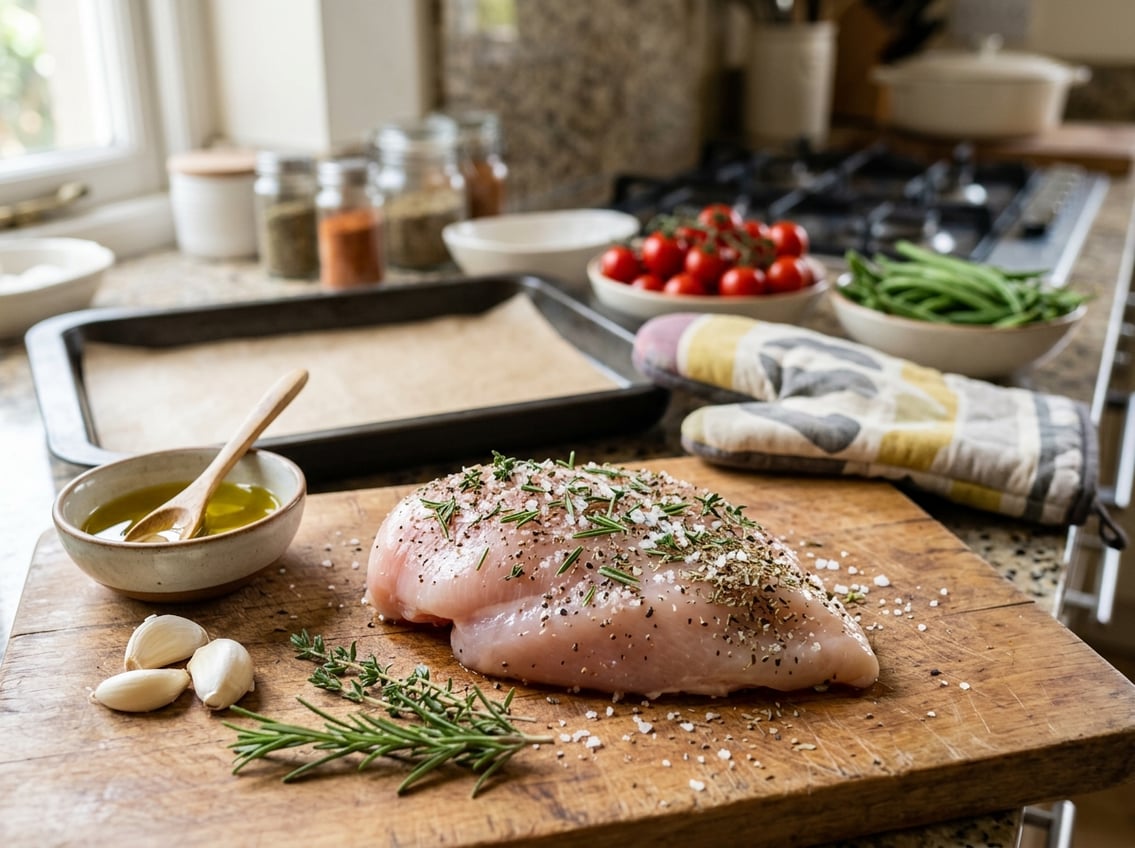
Aim for even thickness, a steady oven temperature, and use an instant-read thermometer so you stop cooking at the right time.
Once you know how to bake chicken breast well, you can use the same method for salads, wraps, grain bowls, and more.
Best Oven Temperature and Bake Time
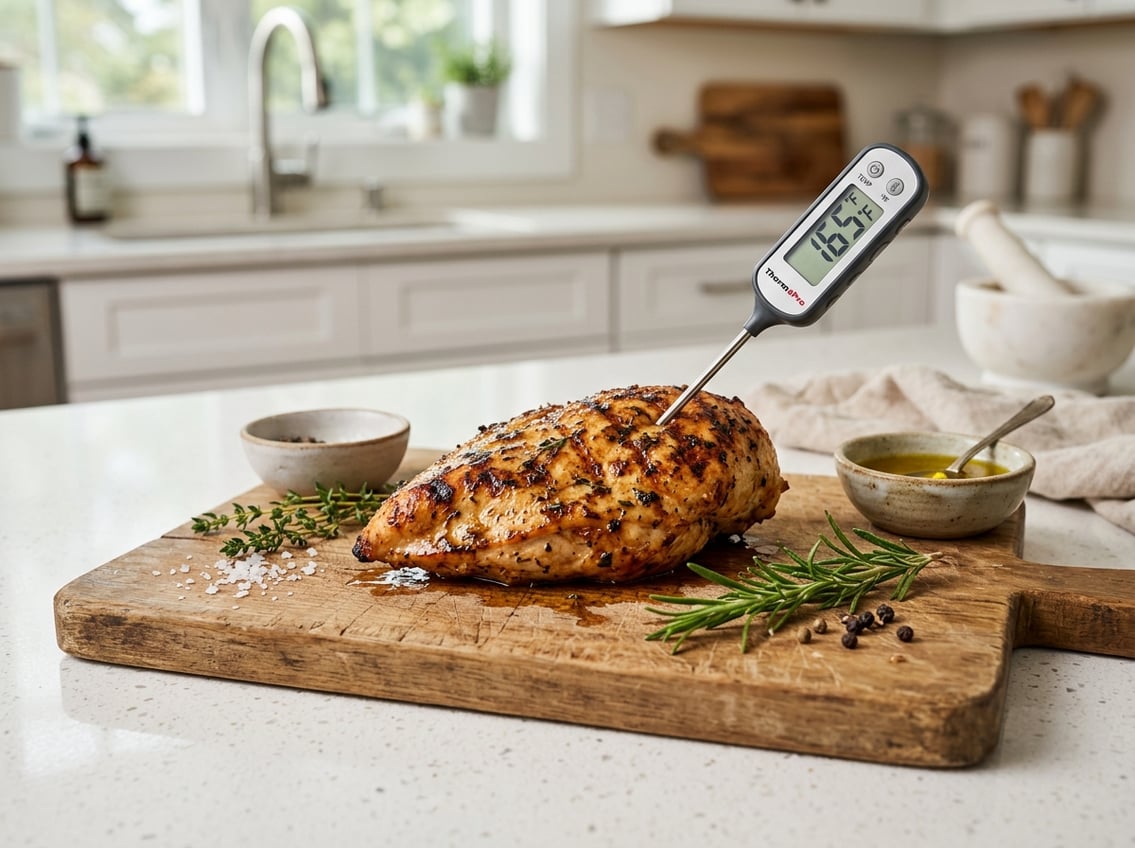
Choose the oven temperature based on how fast you want the chicken to cook and how much room you need for error.
For most boneless skinless chicken breast meals, a moderate oven gives you the best balance of moisture and doneness.
A reliable baked chicken breast method often uses 375°F, with stock, butter, or oil to help keep the meat moist.
If you want more browning and less cooking time, 400°F works well.
How Long to Bake Chicken Breast by Size and Thickness
Baking time depends more on thickness than weight.
Thin pieces can finish in about 15 to 18 minutes, while average boneless skinless chicken breasts often need about 20 to 25 minutes.
For thicker boneless skinless chicken breasts, expect closer to 25 to 30 minutes.
If you bake chicken breast that is uneven in size, use the thickest part to guide your timing.
Use a meat thermometer to check doneness.
An instant-read thermometer tells you when the center is done without guessing.
When to Use 375°F vs 400°F
Use 375°F for a gentler bake and more margin for moisture.
This works well for classic oven baked chicken breast or when you cook several pieces at once.
Use 400°F when the chicken pieces are thinner, you want a shorter cook time, or you want more surface color.
Many cooks choose 400°F for simple baked chicken when the breasts have been pounded to even thickness.
How to Tell It Is Done Without Overbaking
Check the thickest part with a meat thermometer.
Chicken breast is done when the center reaches 165°F.
Many recipes suggest removing it from the oven a little early and letting carryover heat finish the job.
Look for clear juices and meat that is opaque throughout.
If you cut and the center is still pink, put it back in for a few minutes and check again.
Steps for Juicy, Even Results
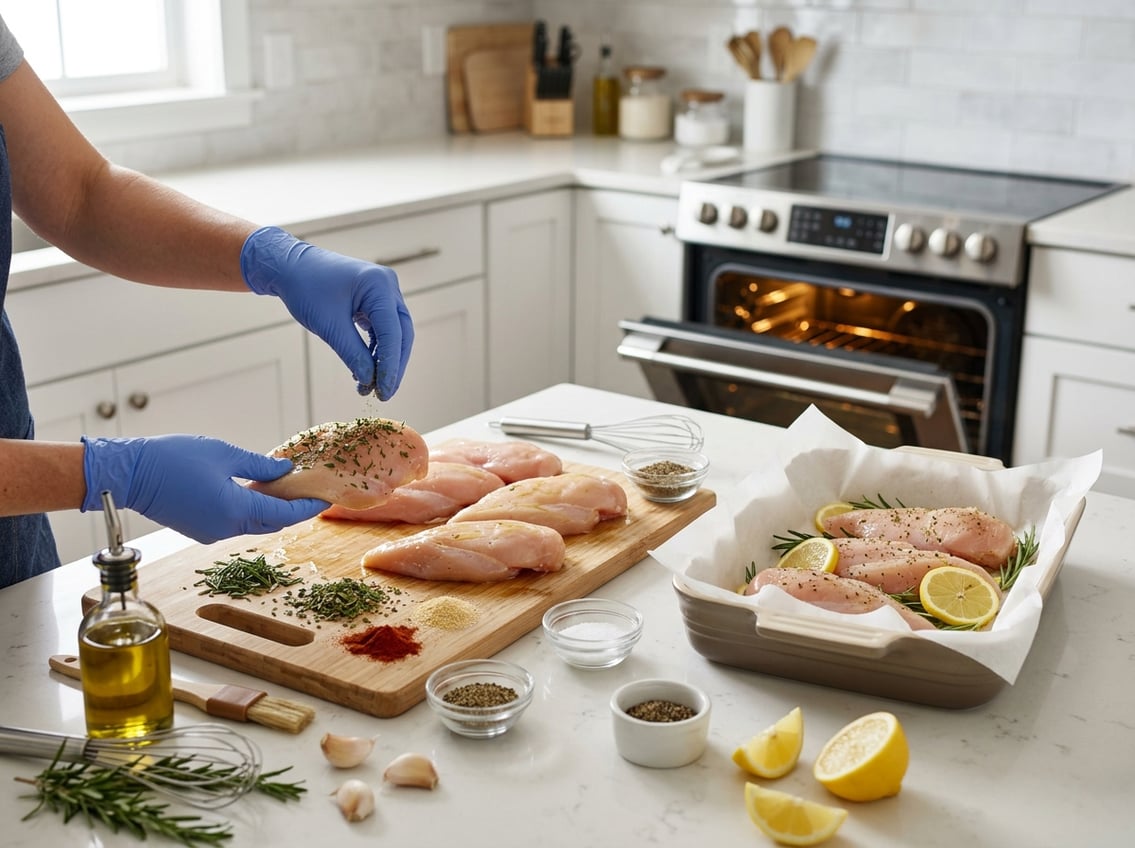
Juicy baked chicken breast starts before the pan goes in the oven.
Level the meat and season it well for better texture and flavor.
Aim for chicken that cooks evenly and stays tender.
These tips work whether you are making dinner for one or meal prepping for the week.
How to Prep the Pan and Chicken
Use a baking dish or sheet pan that gives the pieces space.
If the chicken breasts are crowded, they steam instead of bake.
Pat the chicken dry, then pound thicker ends so each piece is close to the same thickness.
This helps you avoid dry edges and undercooked centers.
For extra moisture, add a little olive oil, butter, broth, or a spoonful of pan juices before baking.
That helps baked chicken breast taste more like roasted chicken.
Seasoning Options for Better Flavor
Salt and pepper give a clean, classic result.
Garlic powder, onion powder, paprika, Italian seasoning, lemon zest, or dried thyme all work well.
A dry spice mix gives quick flavor, while a quick marinade gives more depth.
A little acid, oil, and salt help keep chicken juicy.
If you want a stronger crust, brush the top with mayo or yogurt before seasoning.
That keeps moisture close to the meat and adds color in the oven.
Why Resting Matters Before Slicing
Resting gives the juices time to settle back into the meat.
If you slice too soon, the juices run out and the chicken can seem dry.
Let baked chicken breasts rest for about 5 to 10 minutes before slicing.
This step helps keep the chicken juicy.
Mistakes to Avoid and Fixes That Help
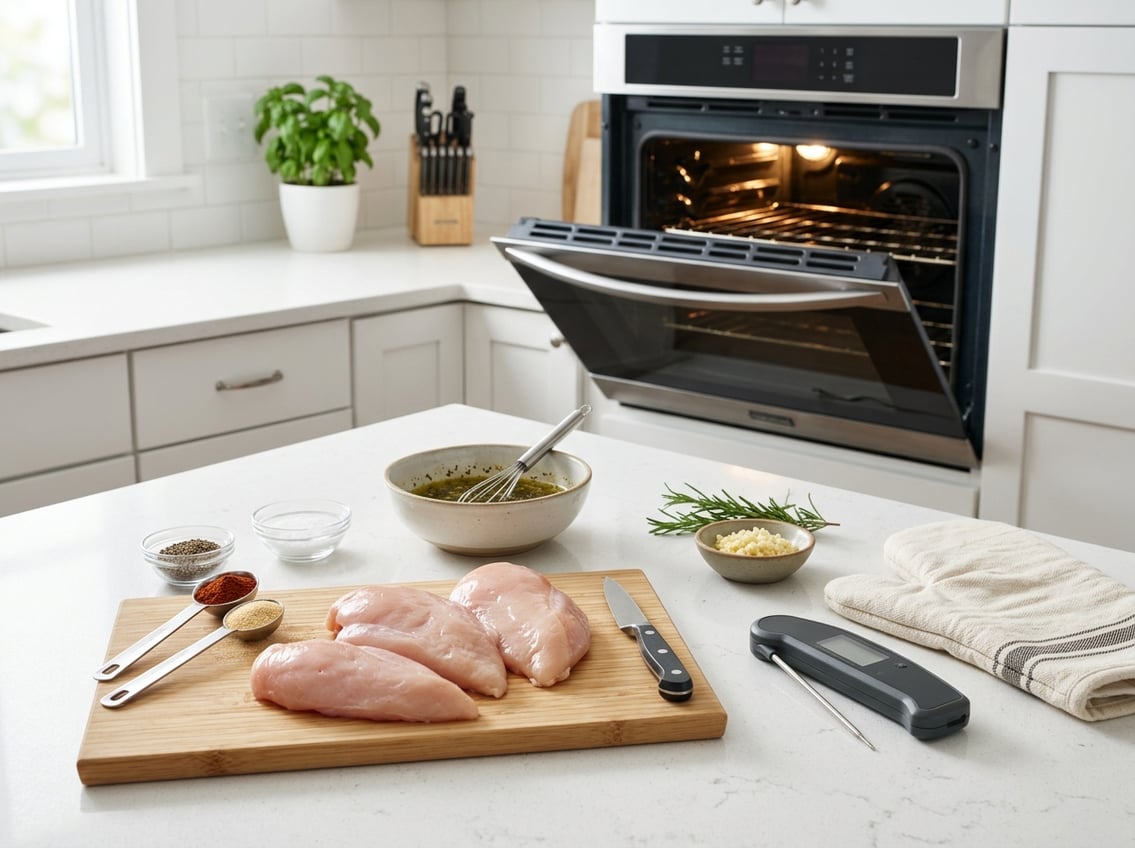
Guessing the time, using uneven pieces, and cooking past the safe temperature often cause problems.
You can keep the meat tender and make oven baked chicken breast easier to manage with a few simple tips.
A meat thermometer removes the guesswork and helps prevent dry chicken breasts.
Why Chicken Breast Dries Out in the Oven
Chicken breast dries out when you leave it in the heat too long or use pieces that are too thin in some spots.
Lean meat has very little fat, so even a short mistake can change the texture.
A hot oven is not the problem by itself.
Leaving the chicken in too long or skipping even thickness before baking causes dryness.
How to Rescue Overcooked Chicken
If your chicken is already dry, slice it thinly and serve it with sauce, gravy, or pan juices.
That helps balance the texture and makes the meat easier to eat.
You can also shred it and mix it with salsa, pesto, broth, or barbecue sauce.
As noted in Martha Stewart’s baked chicken breast guide, shredded dry chicken still works well in saucy dishes.
When to Pound, Cover, or Add Moisture
Pound the chicken when the thick end is much larger than the thin end.
That helps everything cook at the same pace.
Cover the pan with foil for part of the bake if you want to trap moisture.
Add broth, butter, or oil when you want a juicier baked chicken breast, especially for plain weeknight dinners.
Storage, Reheating, and Easy Ways to Use Leftovers
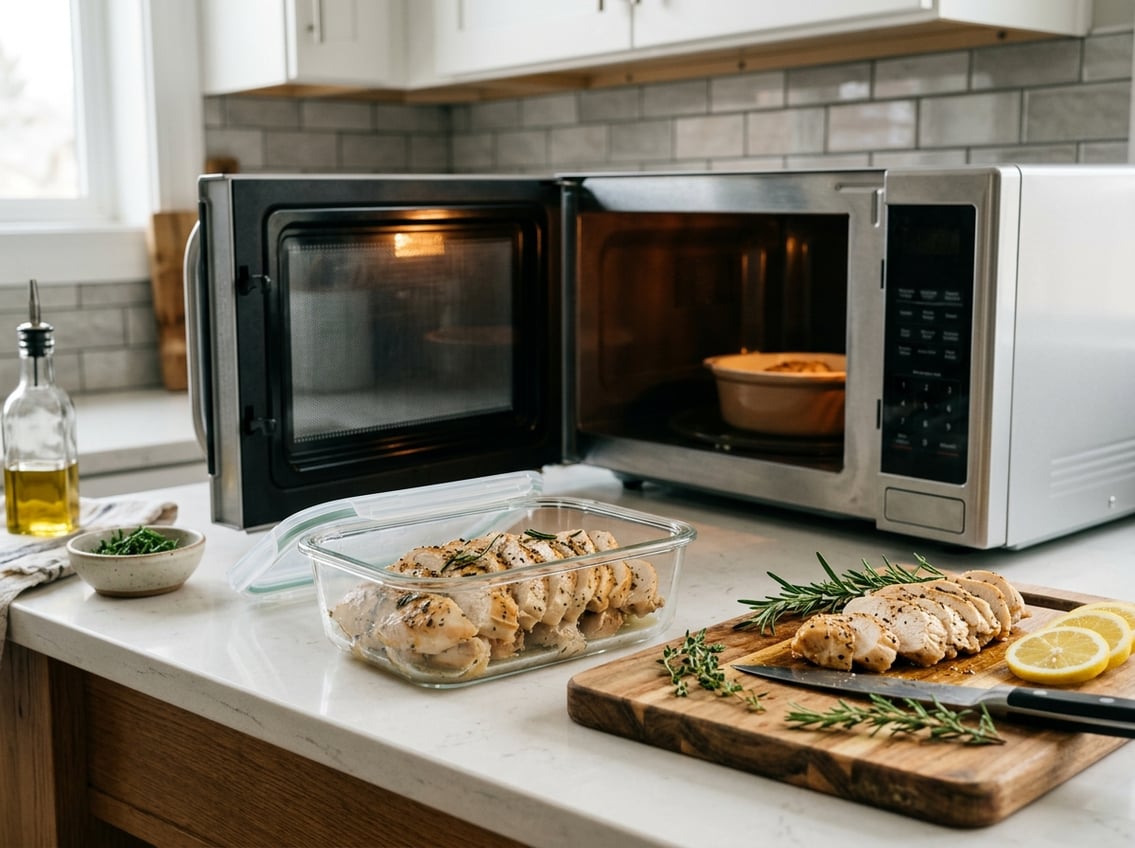
When you know how to store baked chicken, leftovers become useful instead of wasted.
The same baked chicken breast that served dinner can turn into lunch or a second meal with very little work.
Food safety matters, so cool the chicken fast and keep it cold.
Safe storage helps preserve texture for sliced or shredded chicken.
How to Store Baked Chicken Safely
Store baked chicken in a shallow airtight container once it is cool enough to handle.
Put it in the refrigerator within 2 hours of cooking, sooner if your kitchen is warm.
For longer storage, freeze sliced or shredded chicken in a freezer-safe bag or container.
Label it with the date so you can use it while the quality is still good.
Best Reheating Methods to Keep It Moist
Reheat chicken gently so it does not dry out.
The oven, stovetop, microwave, or air fryer can all work if you add a little moisture and stop as soon as it is hot.
For food safety, reheat leftovers to 165°F, as advised by Purdue Extension.
A splash of broth or water can help keep baked chicken breast from becoming tough.
Meal Ideas for Sliced or Shredded Leftovers
Add sliced chicken to a chicken Caesar salad, sandwiches, wraps, or grain bowls.
Try shredded chicken in chicken pot pie, soups, tacos, or pasta.
Season leftovers in a new direction, such as Greek chicken with lemon, oregano, cucumber, and feta.
A solid baked chicken breast base makes many chicken recipes easier to build.


