
What Causes Chicken Breast to Turn Stringy or Tough
Chicken breast texture changes for a few clear reasons, and most of them come down to heat, muscle structure, or production defects.
If you have ever asked what causes chicken breast to feel stringy, tough, or dry, the meat fibers tighten, lose moisture, or break down in an unusual way.
You can usually improve the result by cooking to the right temperature and handling the meat gently.
Learning how to spot texture problems before you buy or cook it can also help.
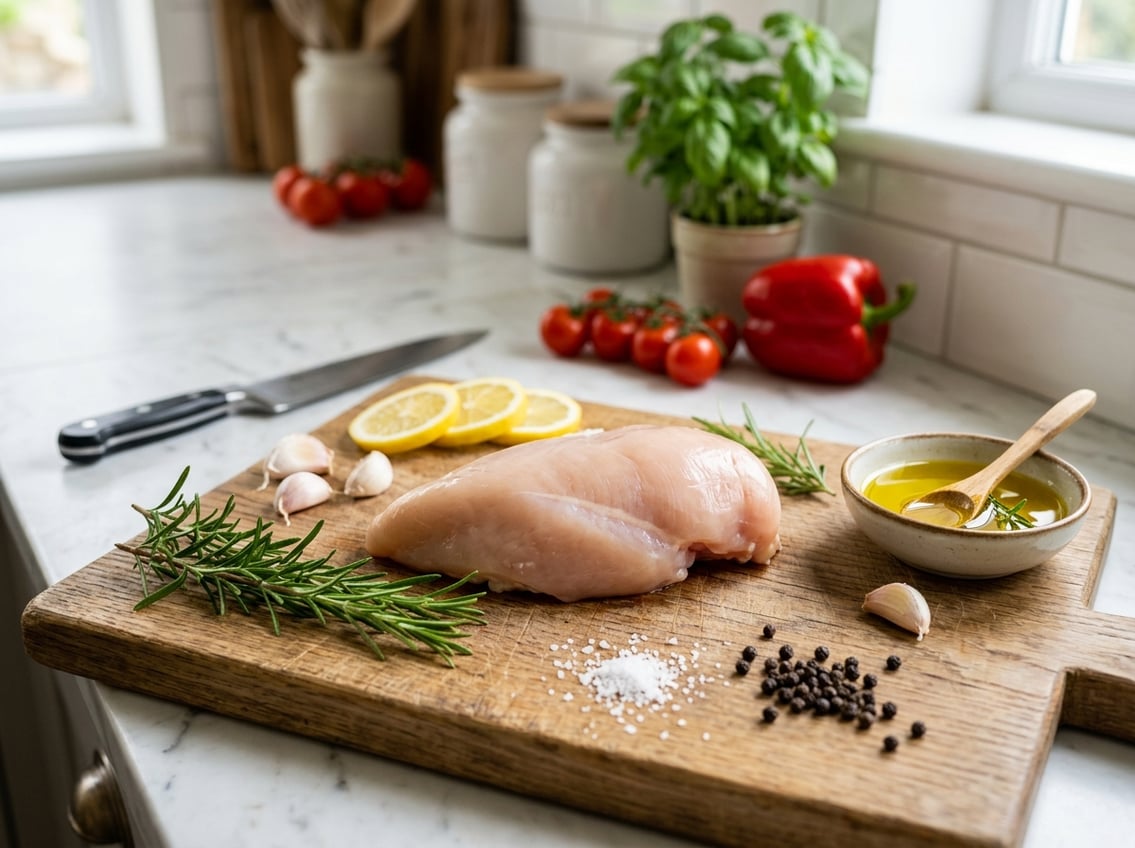
Raw chicken breasts can already show signs of trouble before they ever hit the pan.
If you have wondered why your raw chicken is stringy or noticed stringy fibers in the package, the issue may point to a texture defect in the meat itself.
In other cases, the problem starts in the kitchen, where cooking or handling makes the texture worse.
What Stringy, Mushy, or Tough Texture Usually Means
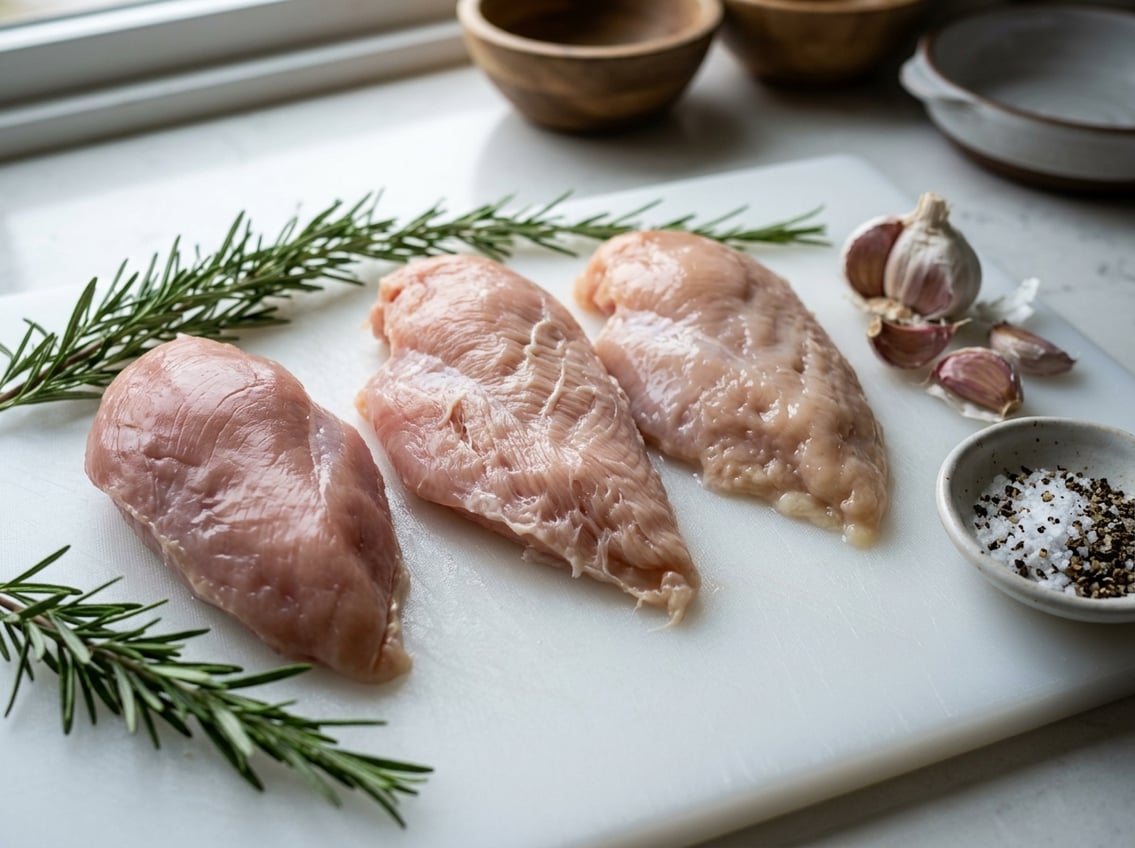
Stringy chicken, spaghetti meat, mushy breast, and woody chicken are not the same thing.
Each texture points to a different problem, from muscle defects to cooking errors.
The meat tells you a lot if you know what to look for.
How To Recognize Stringy Fibers in Raw and Cooked Meat
Stringy chicken breast often looks like it is splitting into thin strands.
In cooked meat, those strands may fall apart too easily or feel dry and fibrous.
In raw chicken breasts, visible striations, loose fibers, or a shredded look can mean the texture is already abnormal before cooking.
The Difference Between Spaghetti Meat, Mushy Breast, and Woody Chicken
Spaghetti meat chicken refers to a muscle defect, also called a myopathy, that makes the meat pull apart into soft strings.
A mushy breast feels soft, weak, and watery, while woody chicken feels dense and firm in a way that is not normal.
A tough chicken breast usually feels dry, tight, and hard to chew instead of soft or stringy.
Why Chicken Breast Texture Changes More Than Other Cuts
Chicken breast has very little fat and depends heavily on careful cooking to stay tender.
This makes chicken breast more likely to turn stringy or tough than darker cuts, which have more fat and connective tissue to protect them from drying out.
A juicy chicken breast depends on keeping the muscle structure intact and avoiding too much moisture loss.
How Muscle Structure and Poultry Production Affect Texture
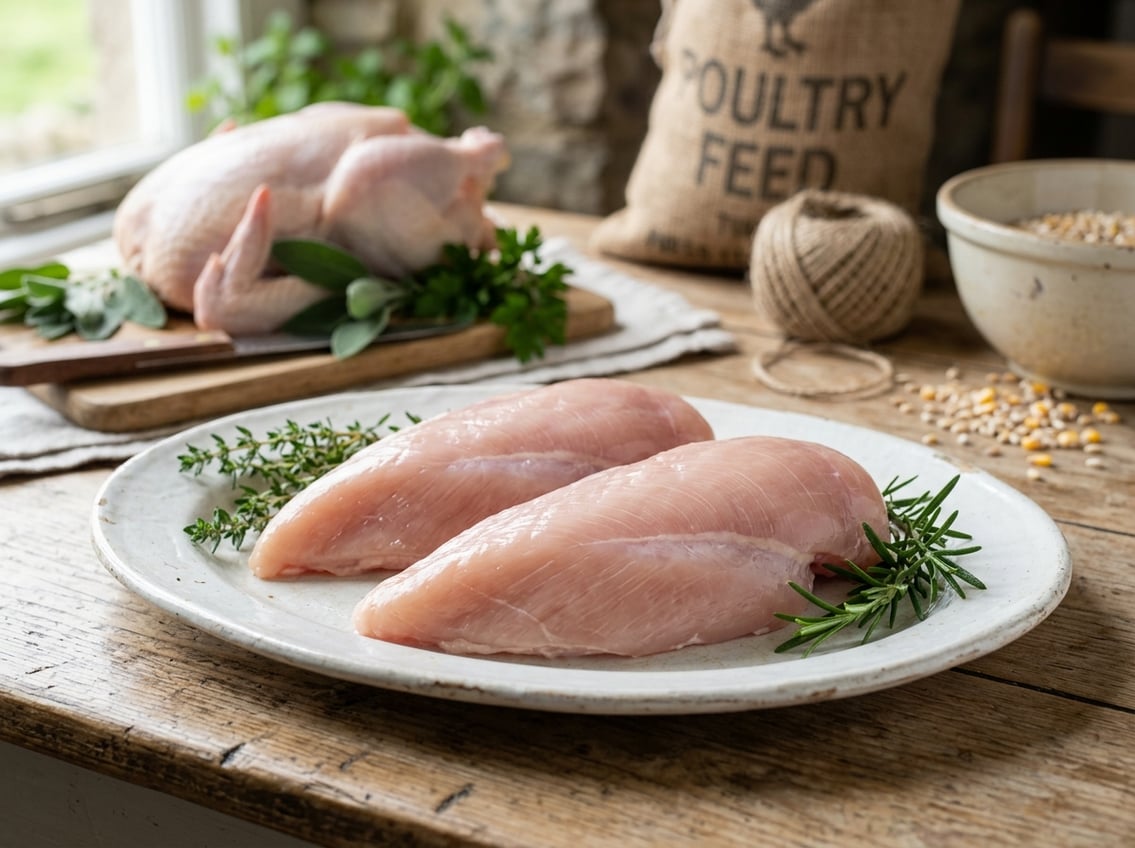
Some texture problems begin long before cooking.
Muscle fibers, connective tissue strength, and the way modern broiler chickens grow all affect how breast meat looks and eats.
How Muscle Fibers and Connective Tissue Shape Tenderness
The arrangement of muscle fibers and the strength of the connective tissue determine chicken breast tenderness.
When fibers are fine and evenly packed, the meat stays tender.
When they are damaged, swollen, or unusually separated, the breast can turn stringy or crumbly.
Why Fast-Growing Broiler Chickens Are Linked to Defects
Researchers have linked growth-related muscle problems to fast-growing broiler chickens, especially in the breast muscle.
A review in ScienceDirect on growth-related muscular abnormalities notes that these issues are common in high-yield birds.
Another study on white-striping chicken meat quality shows that affected breast meat can have different texture and quality traits than normal meat.
Why Commercial Chicken Has More Reported Texture Problems
Breeders select commercial chicken for rapid growth and large breast size, which can raise the chance of myopathy, spaghetti meat, and other muscle defect issues.
Organic chicken can still show texture variation, since farming method does not guarantee perfect breast texture.
Rapid growth and increased drip loss are common reasons commercial chicken shows more reported texture problems.
Cooking and Handling Mistakes That Make Breast Meat Worse
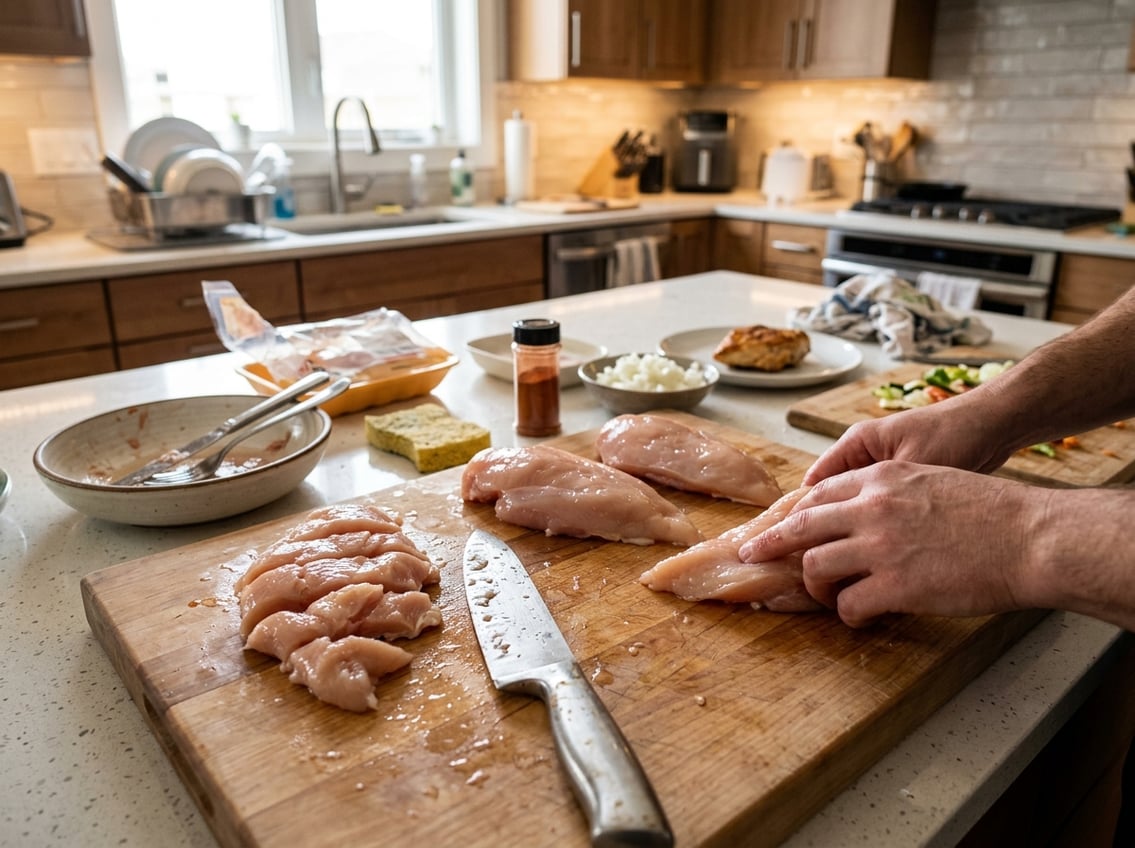
Even good chicken can turn tough if you cook or handle it the wrong way.
Heat, thawing, slicing, and marinating all affect muscle fibers and connective tissue strength.
Overcooking and Why a Meat Thermometer Matters
Overcooking is one of the main reasons chicken breast toughens.
As the meat heats past the safe point, the proteins contract and squeeze out moisture, which leaves the breast dry and tight.
A meat thermometer lets you stop at 165°F, which is the USDA-safe internal temperature and a practical target for juicy chicken breast, as noted in this chicken breast cooking guide.
How Freezing, Thawing, and Slicing Affect Texture
Freezing and thawing can change texture when ice crystals damage the meat structure.
Fast thawing on the counter can also leave the outside in poor shape before the center is ready.
After cooking, slicing against the grain gives you shorter fibers in each bite.
Cutting with the grain can make the breast seem tougher.
When Marinating Chicken Helps and When It Does Not
Marinating chicken can add surface flavor and a little tenderness, especially if you use salt, acid, or dairy in the marinade.
It cannot fix a badly cooked breast or any defects already in the chicken. If the meat is woody, stringy, or heavily damaged, marinating will not restore a juicy texture.


