
Whole Chicken Breast Macros by Serving Size
You can track protein, calories, and fat for whole chicken breast with much more accuracy when you match the serving size to the way you weighed the meat. A chicken breast can look like the same food on your plate and still log very different numbers in your app depending on whether you weighed it raw, cooked, bone-in, or skin-on.
If you measure chicken breast correctly, you can hit your protein goal without guessing or miscounting calories.
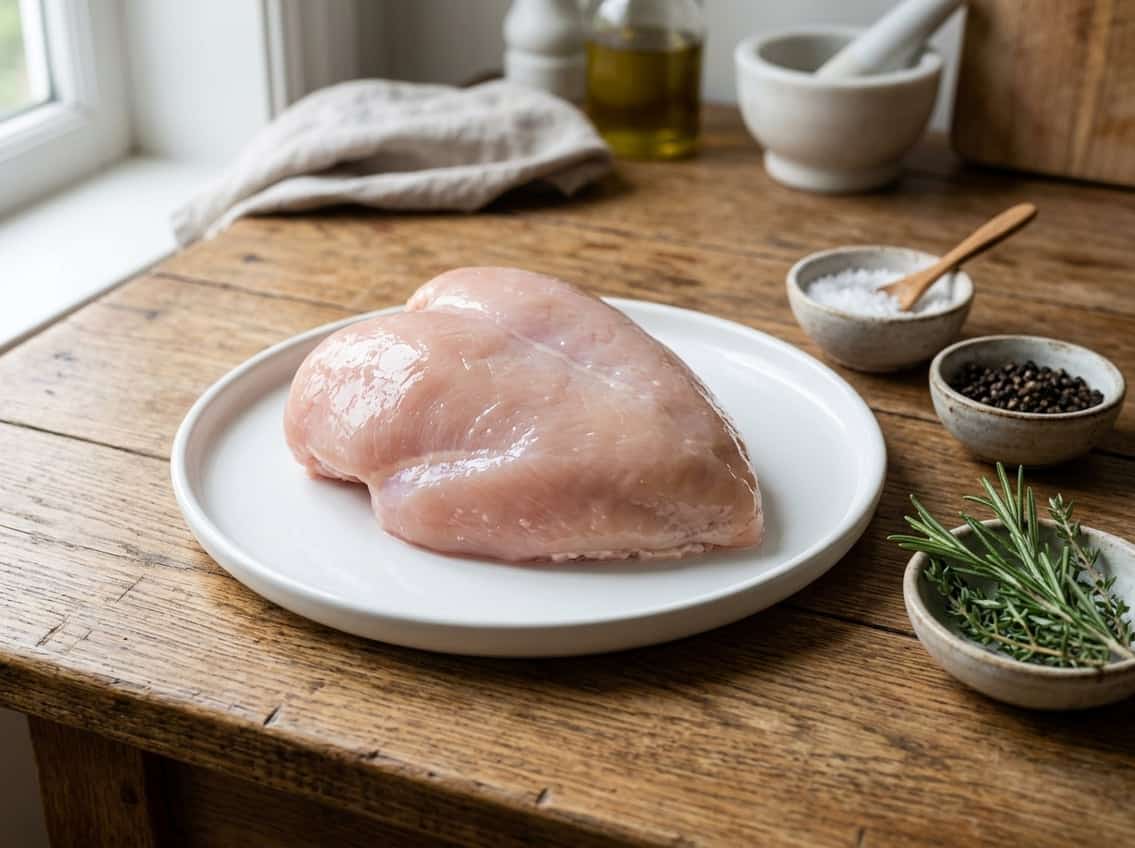
Chicken breast is a lean protein with little carbs and a high protein return for the calories. The main challenge is that chicken breast macros change with portion size and preparation.
A “whole” breast is not always the same weight, so your tracking needs to match the actual piece you ate.
Macros for a Whole Chicken Breast
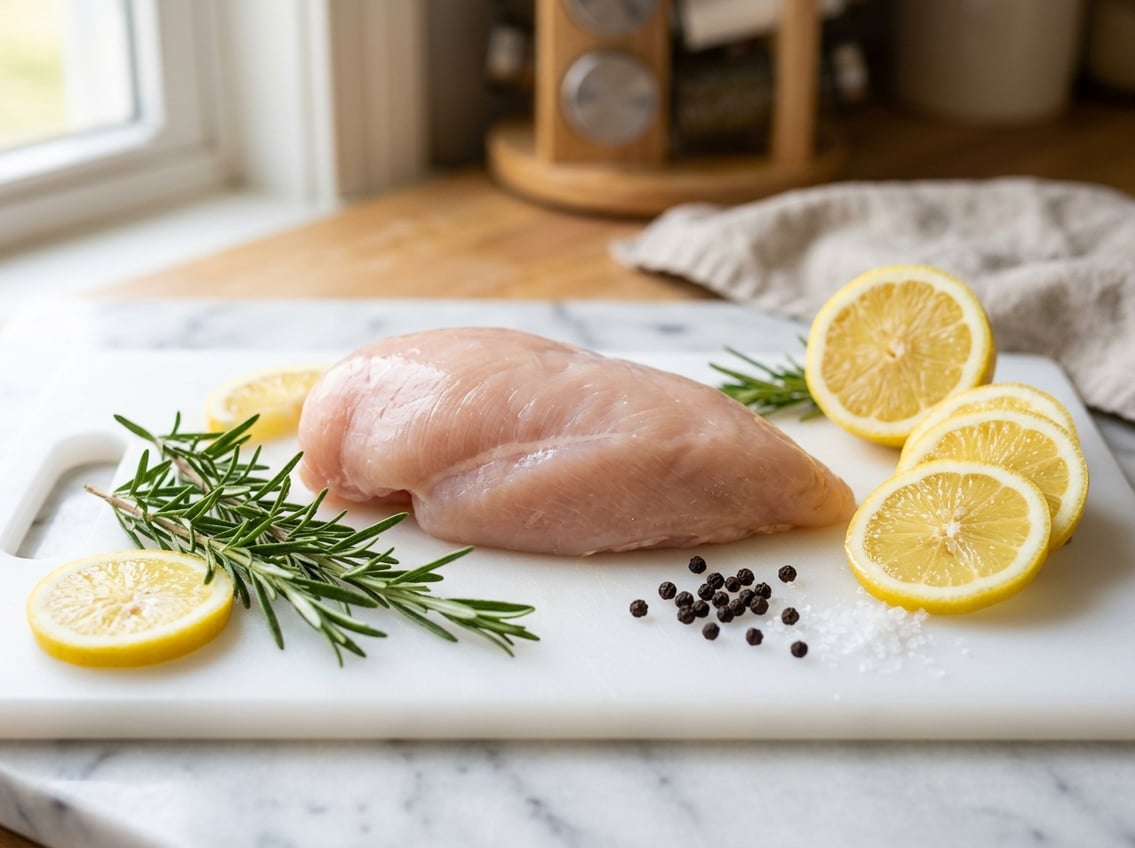
Chicken breast nutrition facts depend on size, but the core pattern stays the same: high protein, low fat, and almost no carbs. For boneless skinless chicken breast, you get about 23g of protein per 100g raw and about 31g per 100g cooked, according to a complete chicken breast macros guide.
A whole piece can range from a small 4 oz portion to a large 10 oz breast. The serving size matters a lot.
Average Protein, Calories, and Fat by Breast Size
For a typical boneless skinless chicken breast, these estimates are useful for logging:
| Serving size | Calories | Protein | Fat |
|---|---|---|---|
| 4 oz raw | 136 | 26g | 3g |
| 4 oz cooked | 187 | 35g | 4g |
| 6 oz raw | 204 | 39g | 4.4g |
| 6 oz cooked | 281 | 53g | 6g |
| 8 oz raw | 272 | 52g | 6g |
| 8 oz cooked | 374 | 70g | 8g |
Chicken breast loses water during cooking, which causes the weight to drop. The protein becomes more concentrated in a smaller cooked piece.
Protein Per 100g vs Per Piece
Per 100g is the cleanest way to compare chicken breast nutrition across brands and meal prep styles. Raw chicken breast usually contains about 23g of protein per 100g, while cooked chicken breast is closer to 31g per 100g because water has been removed.
Per piece is easier if you buy individual breasts. A large breast may give you close to 50g of protein, while a smaller one may give you much less.
What Counts as a Whole Breast in Nutrition Tracking
In nutrition tracking, a “whole breast” usually means one full breast half, not both sides of the bird. On the label or in your app, this is often listed as boneless skinless chicken breast or boneless skinless chicken.
If you track by weight, log the exact grams or ounces. If you track by piece, use an average weight only when you have no scale available.
Raw, Cooked, Bone-In, and Skin-On Differences
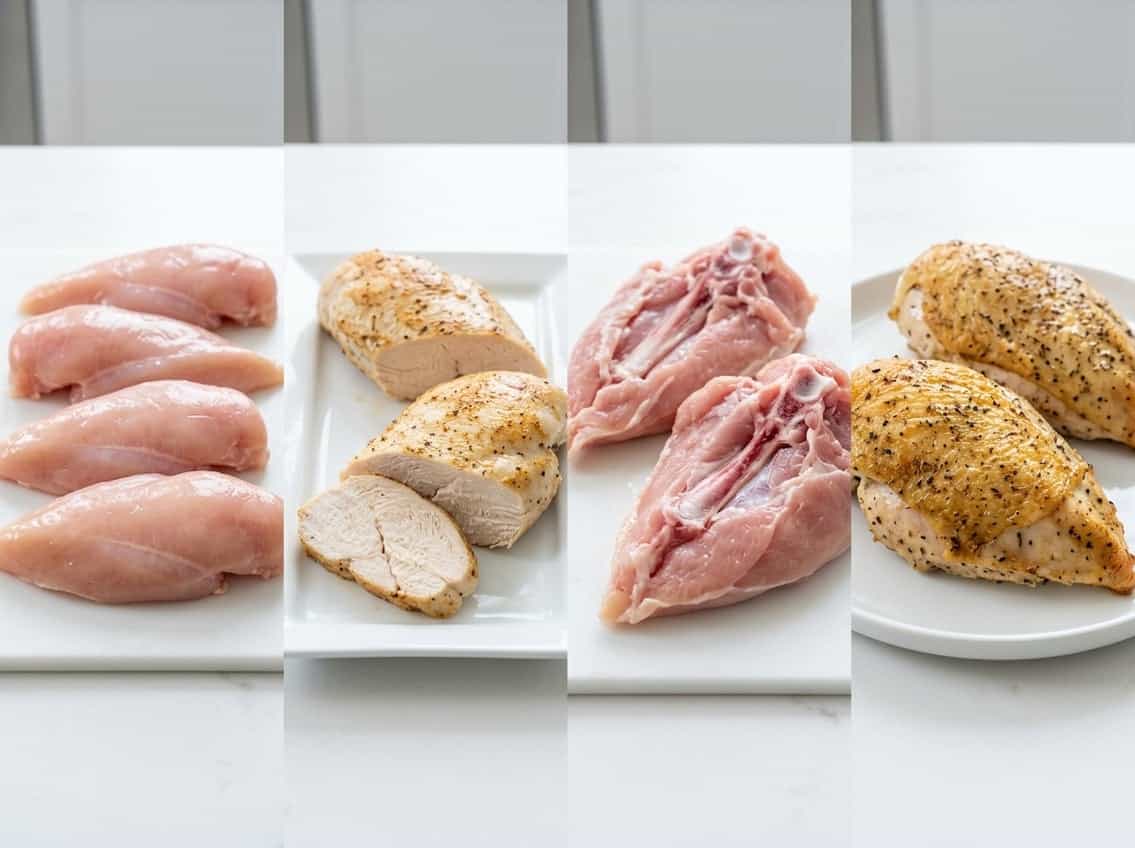
Chicken nutrition changes fast when you change the weight form or leave the skin on. Raw and cooked numbers are not interchangeable, and bone-in cuts include weight you do not eat.
Skin adds fat and calories in chicken breast, so the details matter if you want accurate logs.
Why Raw and Cooked Weights Do Not Match
Chicken breast loses water as it cooks, so the cooked weight is lower even though the total food is the same. A 6 oz raw breast may shrink to about 4.5 oz cooked, which means the calories and protein are now concentrated into a smaller piece.
You should log chicken breast as raw if you weighed it raw, and as cooked if you weighed it cooked.
Bone-In Chicken Breast Yield and Edible Portion
A bone-in chicken breast includes weight from the bone, so the edible portion is smaller than the package weight. A 10 oz bone-in breast may yield around 7.5 oz of meat, according to a macro tracking guide on chicken breast.
For exact chicken breast macros, remove the bone first or use a bone-in entry that matches your food.
How Skin Changes Calories and Fat
Skinless chicken breast is much leaner than skin-on chicken breast. In a 4 oz cooked serving, skinless breast is about 187 calories, 35g protein, and 4g fat, while skin-on breast is closer to 252 calories, 30g protein, and 14g fat.
The skin adds fat and calories, while protein changes less dramatically. If your goal is lean protein, remove the skin.
How Preparation Method Changes the Numbers
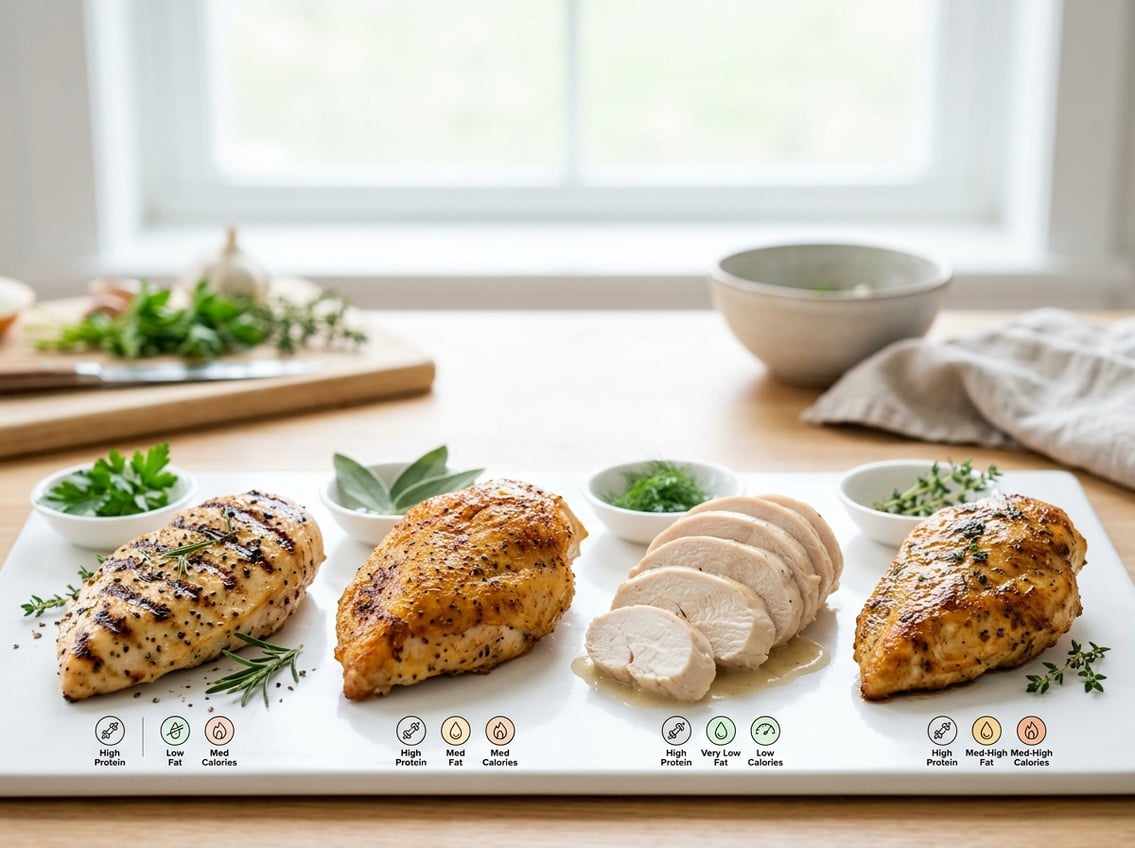
Cooking method changes chicken breast macros more than many people expect. Dry heat without added fat keeps the numbers close to the base chicken breast nutrition facts.
Oil, breading, and sauces add calories quickly.
Grilled Chicken Breast and Baked Chicken Breast
Grilled chicken breast and baked chicken breast are among the easiest options to track. When you cook them without oil, butter, or sauce, the macros stay close to the standard lean protein profile.
A 6 oz cooked plain grilled or baked breast is roughly 281 calories, 53g protein, and 6g fat, based on a chicken breast macro reference. Air frying without oil is similar.
Breaded Chicken and Fried Options
Breaded chicken adds carbs, and frying adds more fat. That changes the food from a lean protein into a higher-calorie meal.
A 4 oz cooked breaded and fried chicken breast can land near 340 calories, 28g protein, 15g carbs, and 18g fat. The breading and oil matter as much as the chicken itself.
How Mixed Dishes Affect Macro Tracking
Mixed meals make logging less exact because the chicken is only one part of the plate. A chicken caesar salad can include dressing, cheese, croutons, and skin-on chicken.
A chicken wrap adds tortilla calories, sauces, and sometimes cheese. For mixed dishes, log each ingredient when you can.
If you eat restaurant food, use the closest verified entry and assume a small margin of error.
Using Chicken Breast to Hit Protein Targets
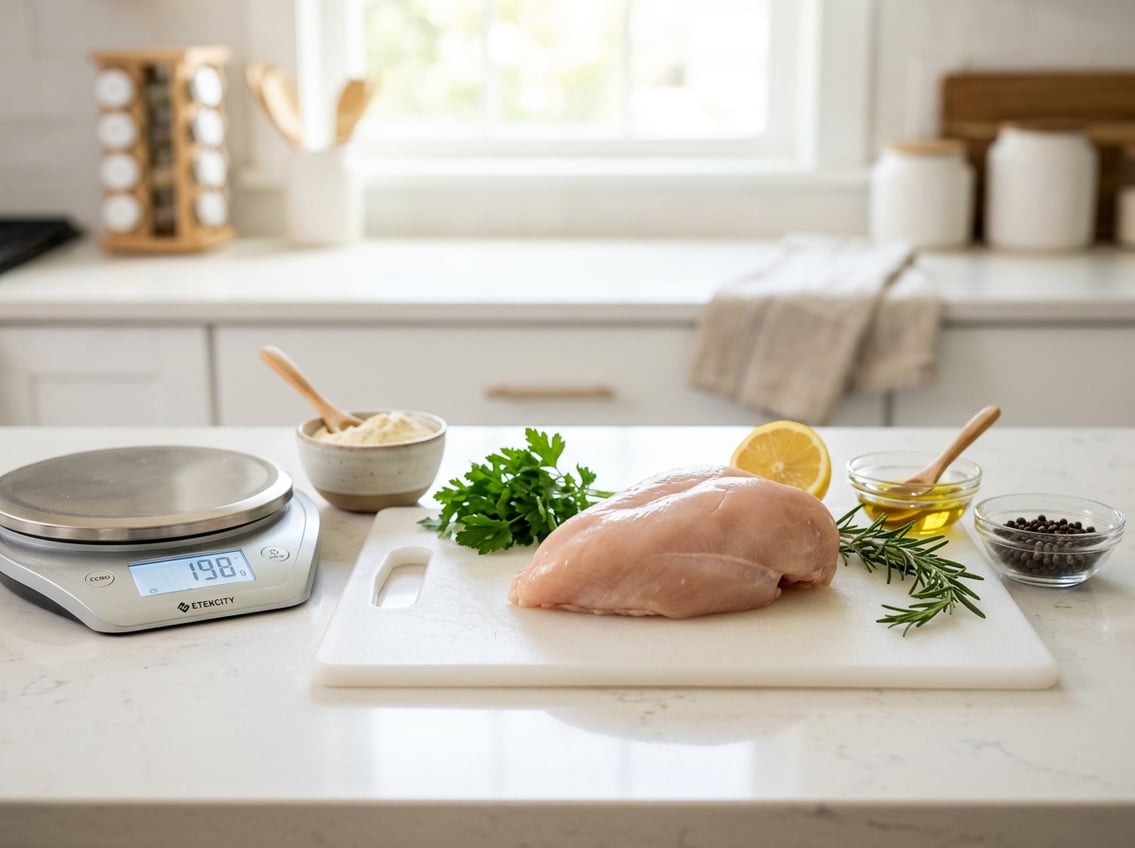
Chicken breast helps you reach daily protein goals without adding many carbs or much fat. It works well for muscle gain, fat loss, and general macro planning.
Estimating Servings for Daily Protein Goals
You can treat 4 oz cooked chicken breast as about 35g of protein. That means:
- 1 serving can cover a light protein snack
- 2 servings can give you around 70g protein
- 3 servings can push you near 100g protein
If you use raw weights, 4 oz raw gives you less protein than 4 oz cooked. Protein per 100g is useful here because it makes portion planning easier across different meals.
When to Use a Macro Calculator
A macro calculator helps when you are setting daily protein goals or planning meals for the week. It is useful if you are adjusting food intake for weight loss, muscle gain, or training changes.
Brands differ in moisture, trim level, and whether the breast is truly boneless skinless chicken breast or a different cut with added solution.
Best Logging Tips for Meal Prep and Tracking Apps
Weigh the raw chicken breast before cooking and log the raw weight. This method helps you track whole chicken breast macros accurately.
If you cook first, choose a cooked entry and weigh the finished food. In tracking apps, check that the entry clearly says raw or cooked, since chicken breast nutrition facts can differ a lot.
Match the entry to the weight state for better accuracy. This approach works better than guessing by appearance.


