
Whole Chicken Breast Temp Guide for Safe, Juicy Results
You use whole chicken breast temp as your main guide when you want chicken that is both safe and juicy.
Measure the chicken internal temperature with a thermometer instead of guessing by color or juices.
For a whole chicken, the breast needs to reach 165°F, or 74°C, to meet the safe minimum. You can often pull it a little early and let carryover cooking finish the job.
That small timing window helps you answer the real question, what temperature is chicken done, without drying out the lean breast meat.
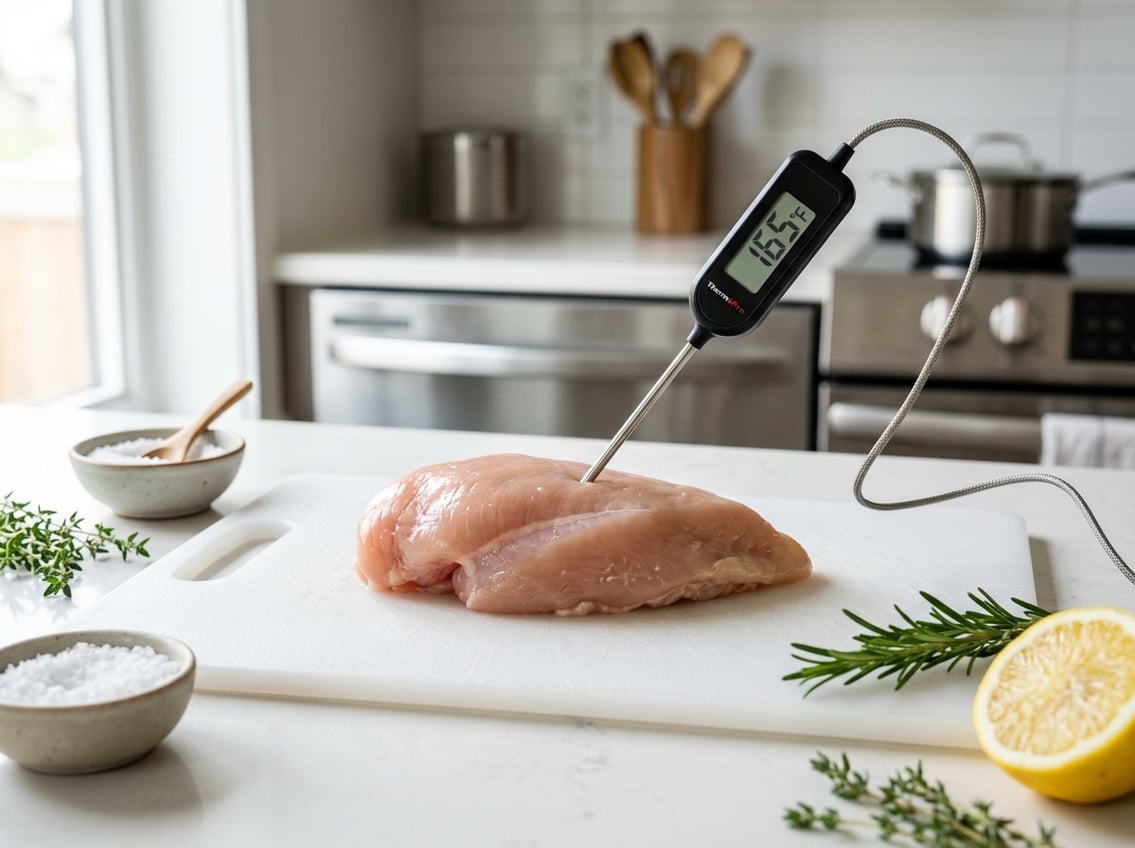
The goal is simple: safe, juicy chicken.
You need to know where to check, when to stop cooking, and how to let the bird rest after it comes off the heat.
Best Temperature for Breast Meat on a Whole Chicken
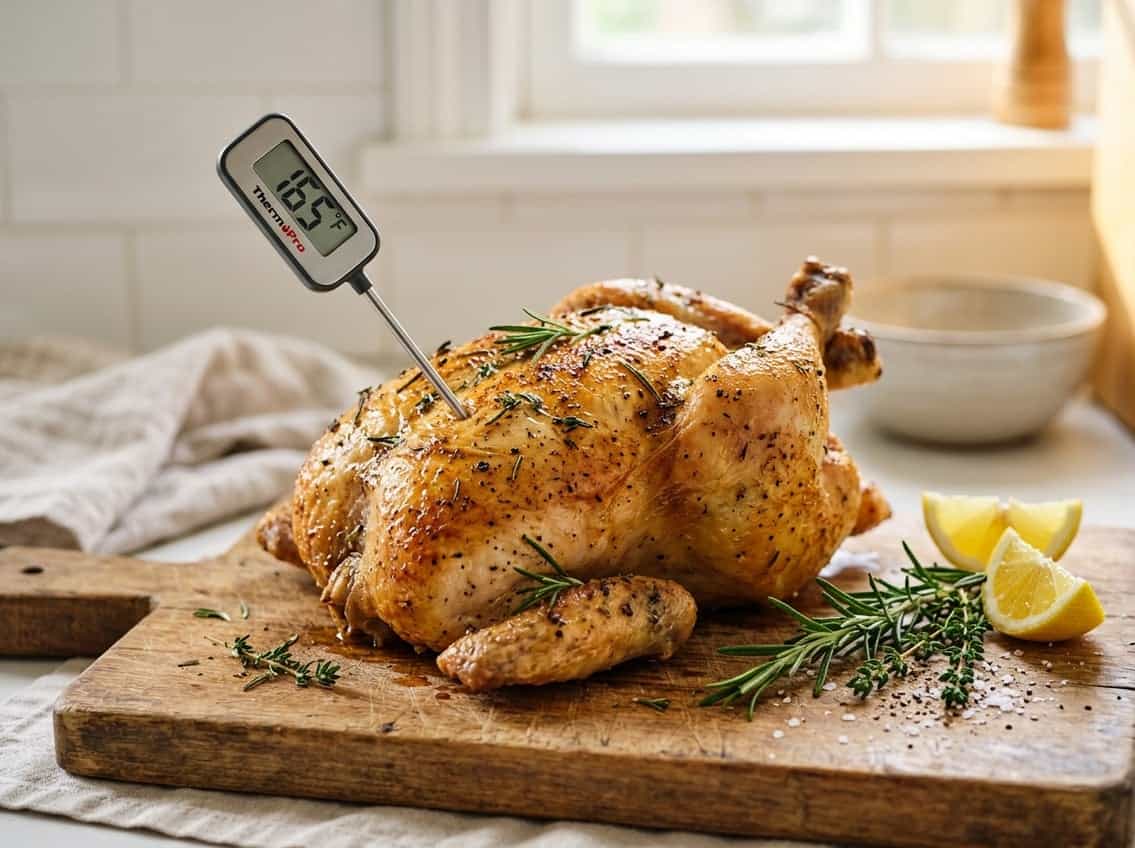
The breast is the leanest part of a whole chicken, so it dries out faster than dark meat.
Your best result comes from hitting the safe minimum internal temperature without pushing the meat too far past it.
According to the USDA standard in a chicken internal temperature guide, chicken is safe at 165°F / 74°C.
That is the minimum internal temperature for chicken you should use as your baseline.
The Safe Minimum: 165°F and 74°C
The breast meat on a whole bird is done when the thickest part reaches 165°F.
At that point, harmful bacteria such as salmonella and campylobacter are destroyed, and the chicken is safe to eat.
If you are checking a whole bird, the breast is only one part of the test.
The inner thigh also needs to reach the same safe point before you serve it.
Why Breast Meat Is Often Pulled Slightly Early
You can keep breast meat juicy if you remove it close to done and let it rest.
Many cooks pull it at about 160°F so the temperature can rise during resting and reach 165°F without extra heat.
The meat keeps cooking for a short time after it leaves the oven, grill, or pan.
That short rest helps you protect the texture of juicy chicken.
How Carryover Cooking Affects Final Doneness
Carryover cooking means the internal temperature keeps rising after the chicken comes off the heat.
In a whole bird, that rise is often enough to finish the breast without overcooking it.
If you wait until the breast is far above 165°F before resting, the meat can turn dry.
That is why the last few degrees matter so much when you check chicken internal temperature and ask what temperature is chicken done.
How to Check Temperature Accurately
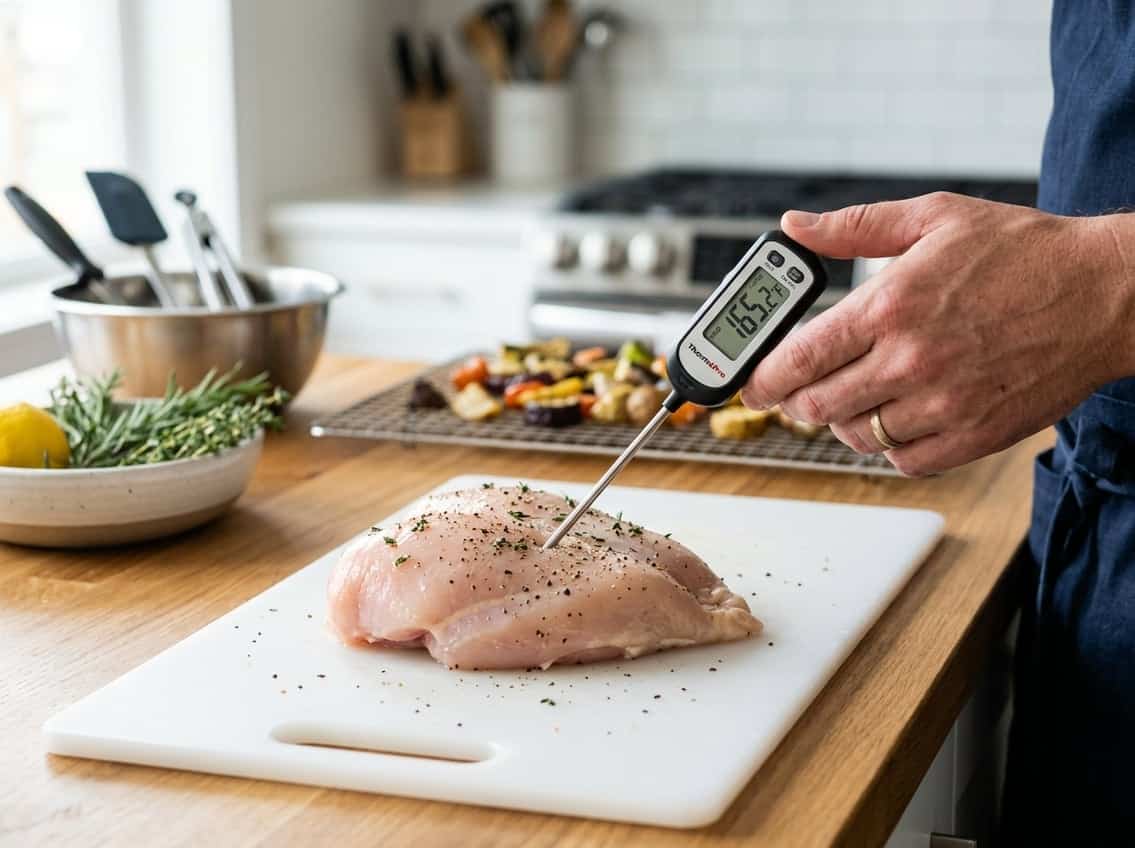
A good meat thermometer gives you a clear answer fast.
Whether you use an instant-read thermometer or a digital meat thermometer, the key is placing it in the right spot.
The right reading depends on using a meat thermometer correctly.
Placement matters more than brand name or price.
Thermometer Placement in the Thickest Part of the Breast
Insert the probe into the thickest part of the breast, since that area cooks slowest.
This gives you the most useful chicken internal temperature reading for a whole bird.
Aim for the center of the meat, not near the surface.
Surface readings can look done while the middle is still under temperature.
Why You Should Also Check the Inner Thigh
Check a whole chicken in two places: the breast and the inner thigh.
The thigh may cook at a different pace, and the breast can reach temperature before the rest of the bird is ready.
Checking both areas helps you avoid serving chicken that is safe in one spot but not another.
That matters any time you roast or spatchcock a whole bird.
How to Use a Meat Thermometer Without Hitting Bone
Bone can give a false reading because it heats faster than meat.
If your probe touches bone, the temperature may look higher than the chicken really is.
Slide the thermometer into the thickest meat and keep it away from bone and the pan.
A clean probe placement gives you a more accurate answer than guessing by feel or color.
Safety vs Texture Across White and Dark Meat
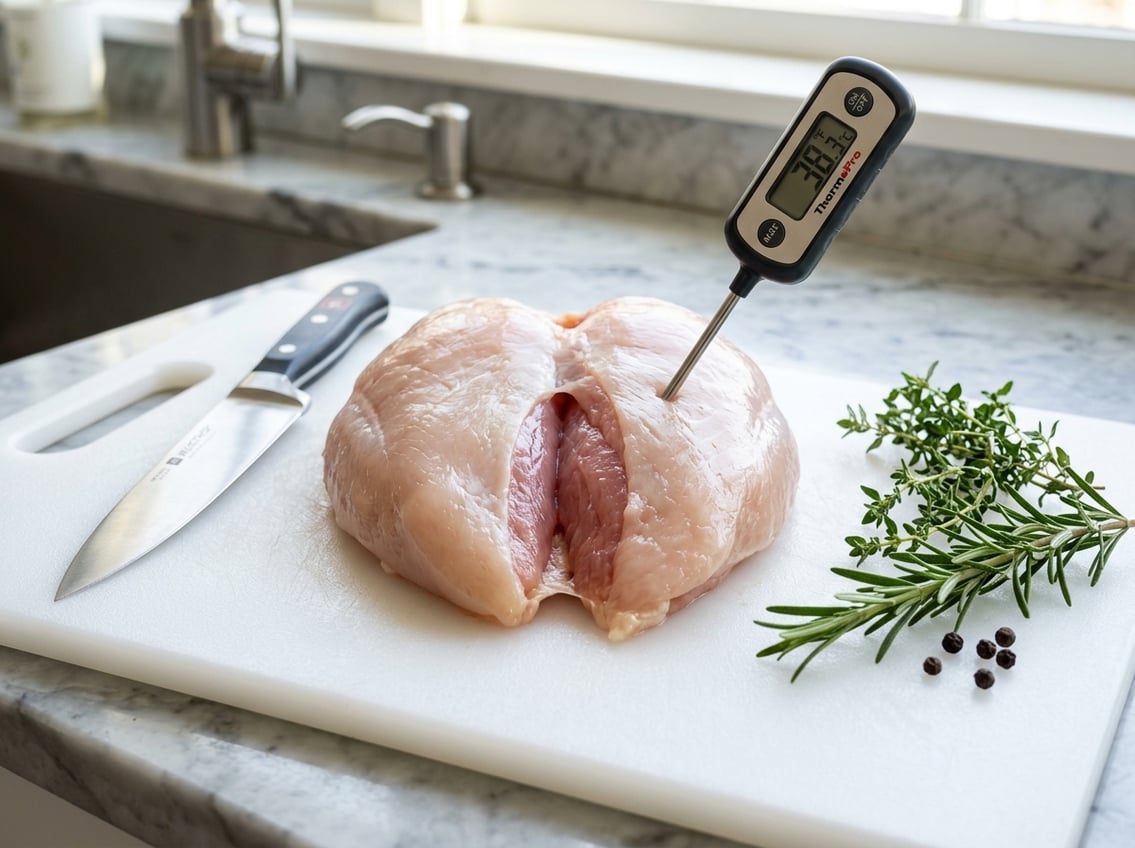
White meat and dark meat do not finish the same way.
The breast is lean and dries out sooner, while the thigh has more fat and connective tissue, so it can handle more heat and still stay tender.
That difference affects both safety and texture.
The same safe minimum internal temperature applies to the whole bird, yet the best eating point can vary by cut.
Why Breast Meat and Thigh Meat Finish Differently
Breast meat is delicate and cooks quickly.
Thigh meat has more connective tissue, so it often tastes better at a slightly higher temperature, even though 165°F is still the safety target.
A whole chicken needs more than one reading.
You want the breast to stay moist while the thigh gets hot enough to become tender.
What 165°F Means for Food Safety
At 165°F, chicken is safe to eat because harmful bacteria such as salmonella and campylobacter are destroyed.
That is the standard minimum internal temperature for chicken in the United States.
You do not need to hold chicken at that temperature for a long time once it reaches the mark.
If the temperature is accurate and the meat has rested, it is ready to serve.
For a helpful reference, the USDA-style chicken temperature chart shows the same safe target across chicken cuts.
Common Mistakes That Lead to Dry or Undercooked Chicken
Many people rely on color alone when cooking chicken. The meat can appear done while the center remains too cool, or it can look slightly pink and still be safe.
Some cooks stop too early without checking the thigh. Others cook far past 165°F out of fear.
Both actions work against juicy chicken. Use a thermometer and let the chicken rest briefly for the best results.


