
What Chicken Breast Temp for Safe, Juicy Results
What chicken breast temp gives you safe, juicy results? The short answer is 165°F, or 74°C, in the thickest part of the breast.
That is the safe minimum internal temperature for chicken breast, and you should trust that number instead of color, time, or guesswork.
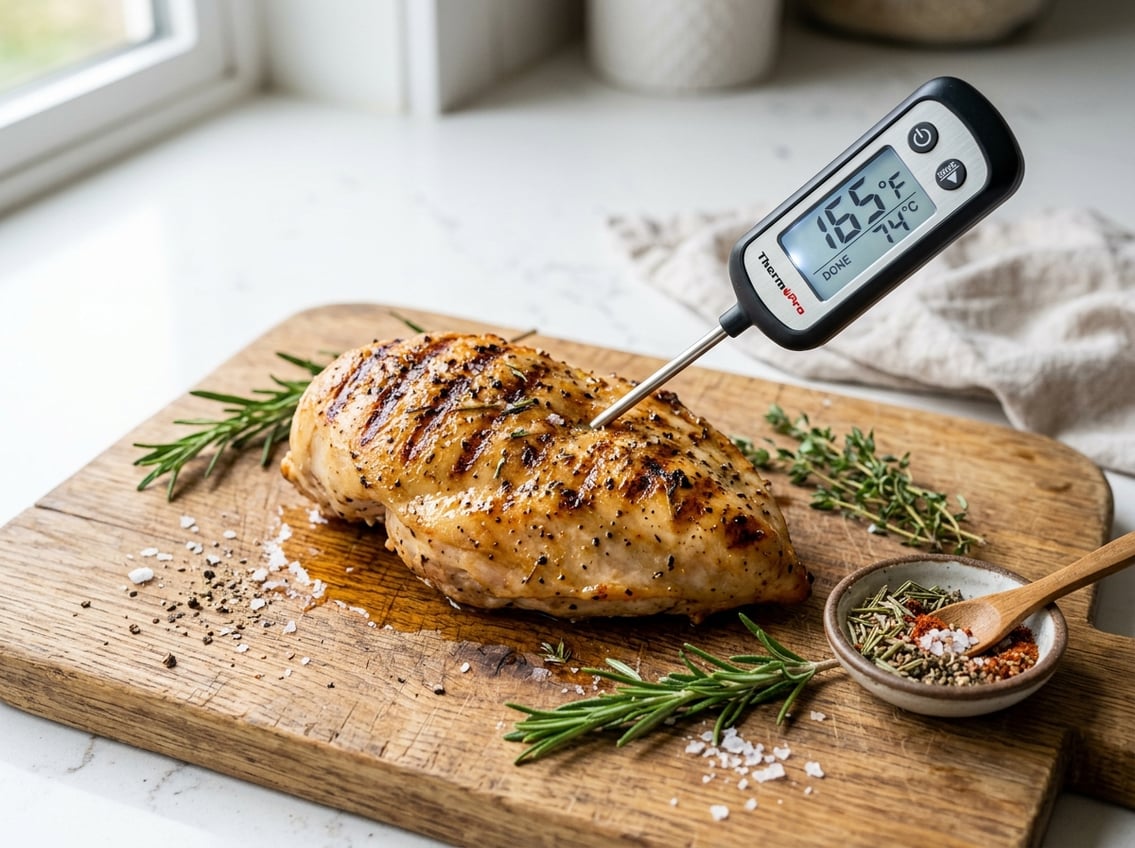
When you pull chicken breast at the right internal temperature, you reduce food safety risk and keep the meat from turning dry.
The key is using a thermometer correctly and knowing when to stop cooking so carryover heat can finish the job.
The Exact Temperature to Look For
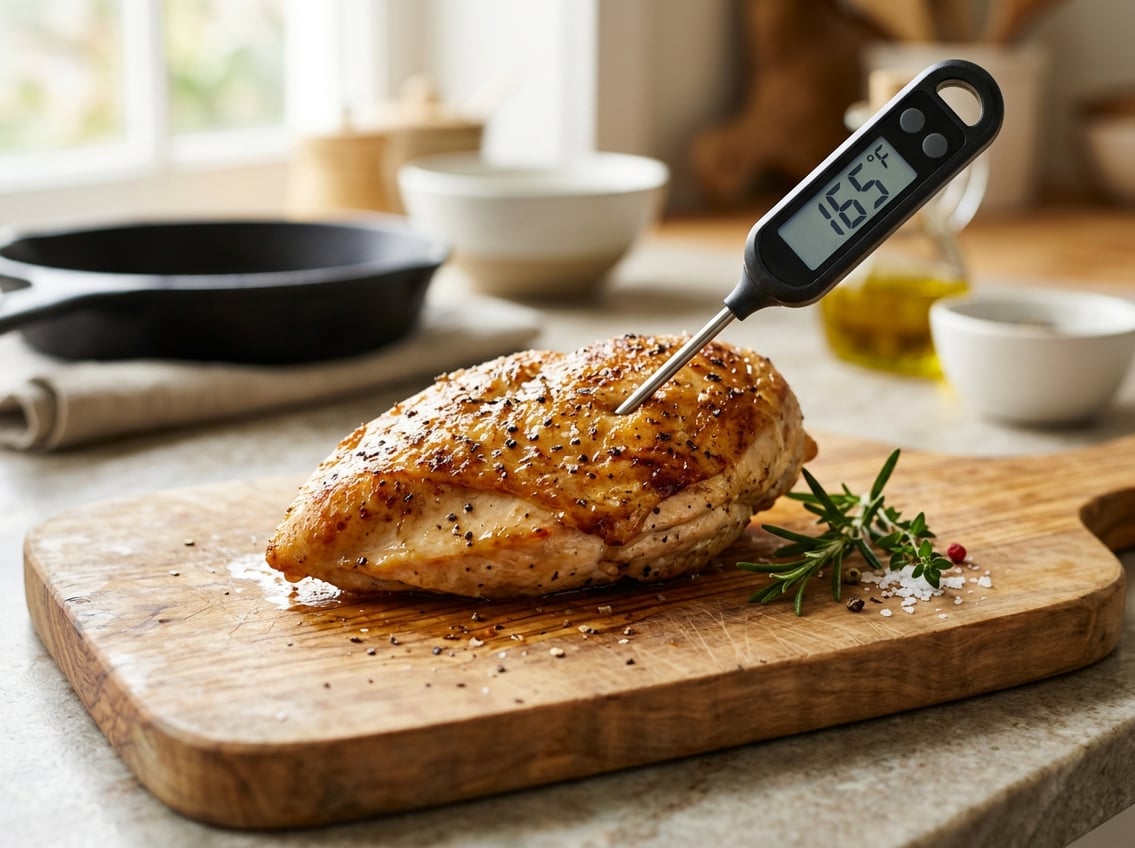
For chicken breast, the safe minimum internal temperature is 165°F (74°C).
That is the standard chicken cooking temperature used for home cooking in the U.S., and it is the point where the meat is considered safe to eat.
A chicken breast that reaches 165°F can still stay moist if you cook it carefully and rest it before slicing.
If you keep heating it far past that point, you move into overcooked chicken territory fast.
Why 165°F Is the Safe Minimum
165°F gives you a clear food safety target.
Most home cooks use this temperature because it is simple, direct, and reliable for chicken breast.
According to Allrecipes, chicken breast should reach 165°F for safe, juicy results.
A thermometer is the best way to confirm it.
That same rule matches common U.S. food safety guidance.
When to Pull Chicken Breast for Carryover Cooking
You can pull chicken breast a few degrees before the final target if the piece is thick and you plan to rest it.
The internal heat continues to rise after you remove it from the pan, grill, oven, or air fryer.
For many chicken breasts, pulling at about 160°F and resting for several minutes can bring the center up to 165°F.
This works best when the meat has enough time to hold heat, and you do not slice it right away.
Why Going Too Far Leads to Dry Meat
Chicken breast is lean, so it does not have much fat to protect it from heat.
Once the meat goes well past 165°F, moisture escapes more quickly and the texture turns dry and stringy.
That is why overcooked chicken often tastes chalky or rubbery.
A small temperature overshoot can change the texture a lot, especially in thinner pieces.
How to Check Doneness Accurately
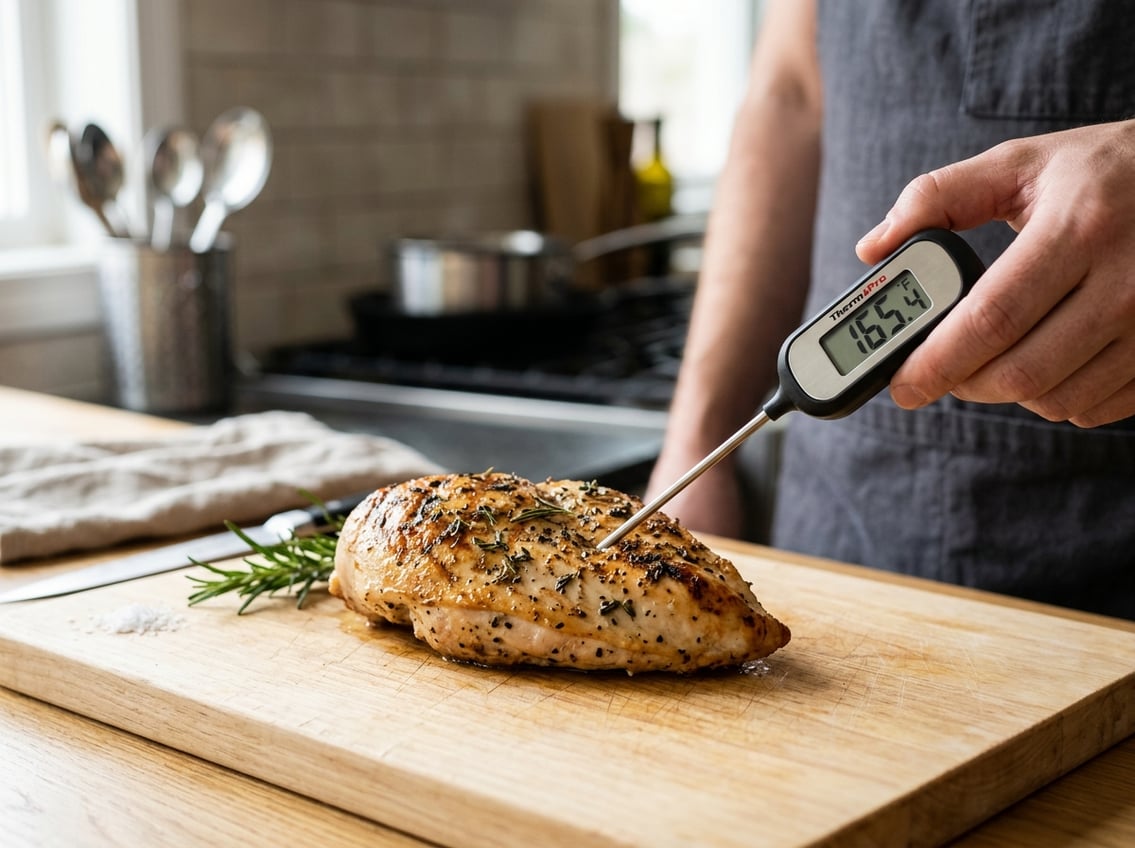
A good thermometer gives you a real chicken internal temperature reading, which is much more accurate than cutting into the meat.
Use it in the thickest part of the breast and check more than one spot if the piece is uneven.
Small mistakes with thermometer placement can give you a false reading.
Thin ends cook faster, while the thick center often needs more time.
Best Tools to Use
An instant-read thermometer is the most useful tool for chicken breast.
It gives you a quick reading, so you can check doneness without overcooking the meat.
A leave-in probe can also work for oven cooking, especially on larger pieces.
For most everyday cooking, an instant-read meat thermometer is easier and faster.
Thermometer Placement in Thick and Thin Breasts
Insert the thermometer into the thickest part of the breast, aiming for the center of the meat.
Do not let the tip touch the pan, grill grate, or air fryer basket, since that can raise the reading.
For thin chicken breasts, check from the side if needed so you stay in the center.
If one end is much thicker than the other, test both areas and use the lowest safe reading.
Common Temperature-Checking Mistakes
Do not guess based on clear juices or browned skin.
Those signs can look “done” before the center reaches a safe temperature.
Also avoid checking too close to the surface.
A surface reading can seem hot even when the middle is still undercooked.
Best Results by Cooking Method
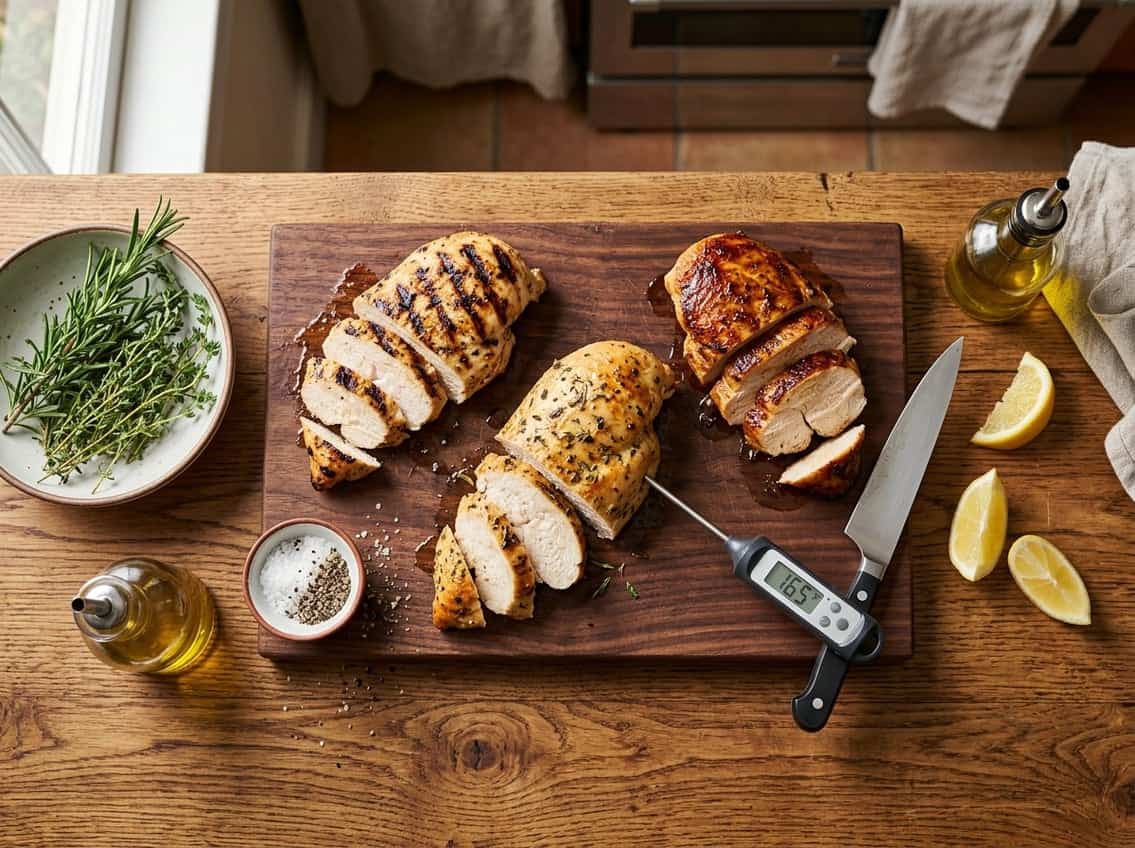
Each cooking method affects how fast the chicken reaches 165°F and how much moisture it keeps.
The best chicken cooking temperature for the appliance or pan should help you reach the safe point without drying out the meat.
A meat thermometer removes the guesswork and helps you stop at the right moment.
Baked Chicken Breast
For baked chicken breast, many cooks use a hot oven, around 375°F to 450°F, depending on thickness and timing.
Higher heat can brown the outside faster, while moderate heat gives you a little more control.
Bake until the center reaches 165°F, then rest the meat for a few minutes.
If the breasts are very thick, a lower oven temperature can help them cook more evenly.
Pan-Seared Chicken Breast
Start pan-seared chicken breast on medium-high heat to build color, then finish over lower heat or under a lid.
This helps the outside brown before the inside overcooks.
Use the thermometer near the end of cooking, since pan heat can climb fast.
Once the center hits 165°F, move the chicken off the heat and let it rest.
Grilled Chicken Breast
Use medium-high heat for grilled chicken breast because it cooks the meat quickly and adds flavor.
Thicker breasts may need indirect heat after searing so the outside does not burn before the center is done.
Check the temperature near the thickest part away from the bone or grill marks.
If you want juicy chicken, pull it as soon as it reaches the safe target.
Air Fryer Chicken Breast
Air fryers cook chicken breast fast, so a thermometer is especially useful.
The strong airflow can dry out lean meat if you leave it in too long.
Check early if the breasts are thin.
Once the chicken reaches 165°F, remove it and let it rest before slicing.
Safety, Texture, and What the Numbers Mean
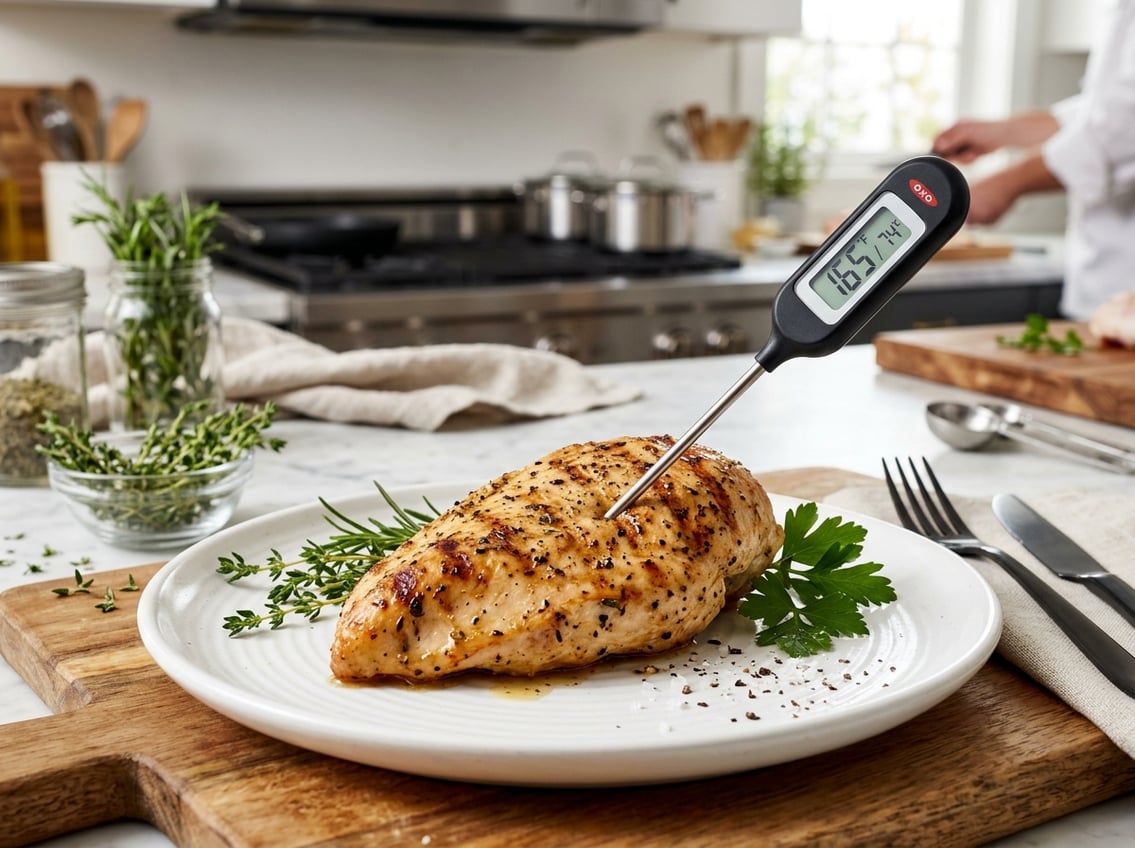
The numbers matter because they connect food safety with texture.
Chicken breast is safe at 165°F, and that is the point where you can serve it with confidence.
Color and juices can help you notice changes, yet they do not replace a thermometer.
The center can still be undercooked even when the outside looks finished.
Why Color and Juices Are Not Reliable
White meat does not always turn white at the same time the center becomes safe.
A breast can look done on the outside and still be below 165°F in the middle.
Clear juices are also not a guarantee.
The only accurate way to know the chicken internal temperature is with a thermometer.
How Campylobacter Is Reduced by Proper Cooking
Chicken can carry bacteria such as campylobacter, which is one reason safe cooking matters.
Reaching the safe minimum internal temperature helps reduce that risk to a level considered safe for home eating.
Food safety guidance focuses on temperature, not appearance.
Proper cooking is the part you can control.
Why 175°F and 180°F Apply More to Dark Meat
Cooks more commonly use higher targets like 175°F and 180°F for dark meat cuts such as thighs and drumsticks.
These cuts contain more connective tissue and fat, so they can handle and sometimes benefit from more heat.
Chicken breast is different.
If you cook breast meat to those temperatures, the meat is much more likely to become dry.


