
Why Flatten Chicken Breast for Better Cooking
Flattening chicken breast makes the meat cook more evenly, stay juicier, and finish faster. A thick chicken breast has a thick end and a thin end, so the thinner part can dry out before the center is ready.
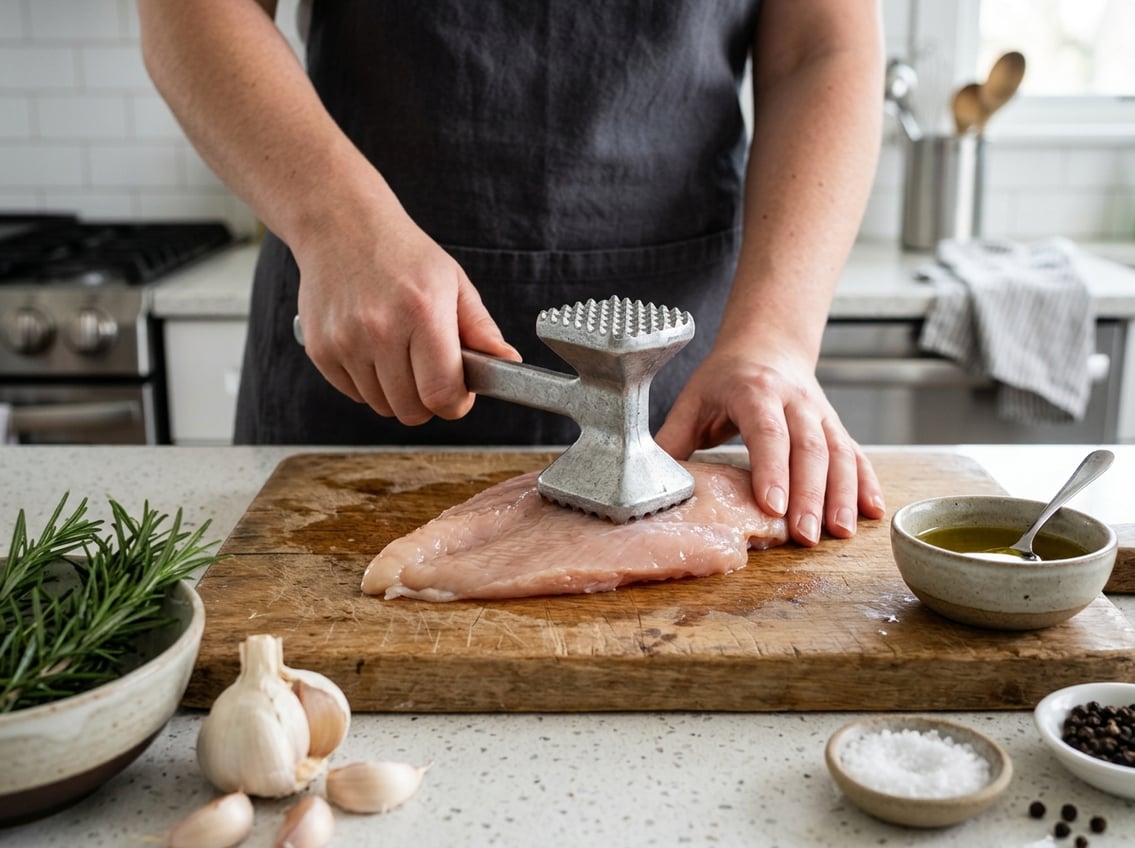
When you flatten chicken breast, you create a more even shape that helps you get better doneness and browning. You also get more reliable results in less time.
That simple step is useful for weeknight dinners and recipes that need a quick, tender cutlet. It gives your seasoning and breading more even contact with the meat, which improves the final dish.
How Flattening Improves Results
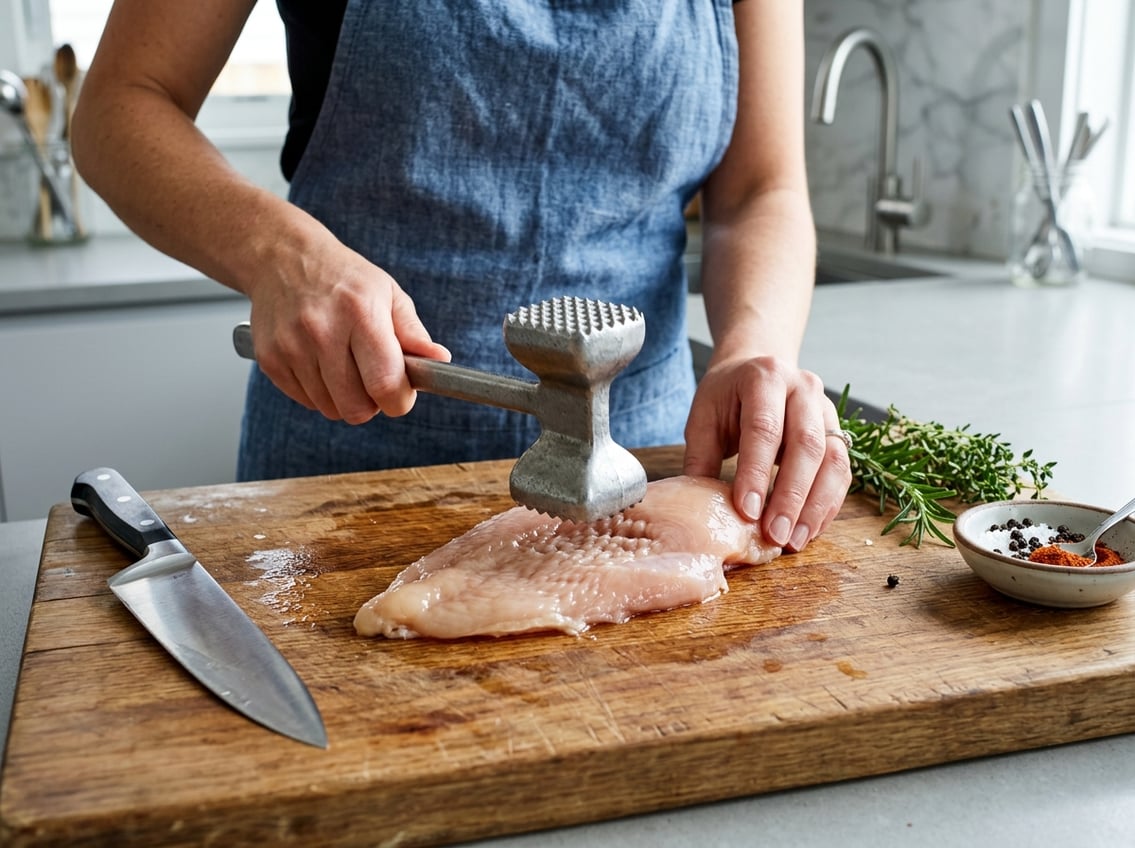
Flattening changes the shape of the meat, which affects how it cooks from edge to center. You get a more predictable result when you flatten chicken breast before cooking.
Promotes Even Thickness for Better Doneness
A chicken breast often has one thick side and one thin side. When you flatten chicken breast to a more uniform thickness, the meat cooks at a steadier rate.
That reduces the chance of getting one dry end and one undercooked end. A more even piece of meat is easier to judge by time and temperature.
Helps Create Evenly Cooked Chicken
Even thickness leads to evenly cooked chicken because heat reaches the center at a more consistent pace. This makes flattened chicken breast useful for pan-searing, baking, and grilling.
According to Phan Eats, flattening helps create a consistent thickness for tender, evenly cooked results.
Reduces Cooking Time Without Drying Out the Meat
Thinner chicken cooks faster, so you spend less time waiting for the center to finish. That shorter cooking time can help the outside avoid overcooking, especially in a hot skillet.
The key is not to make the meat too thin. A moderate flattening gives you speed without turning the chicken dry or tough.
Improves Texture, Browning, and Seasoning Coverage
A flatter surface contacts the pan, grill, or breading more evenly. That helps with browning and gives you better color on the outside.
It also helps salt, spices, marinade, and breading cover the meat more evenly. You get a more balanced bite from edge to edge.
Best Ways to Prepare Chicken for This Technique
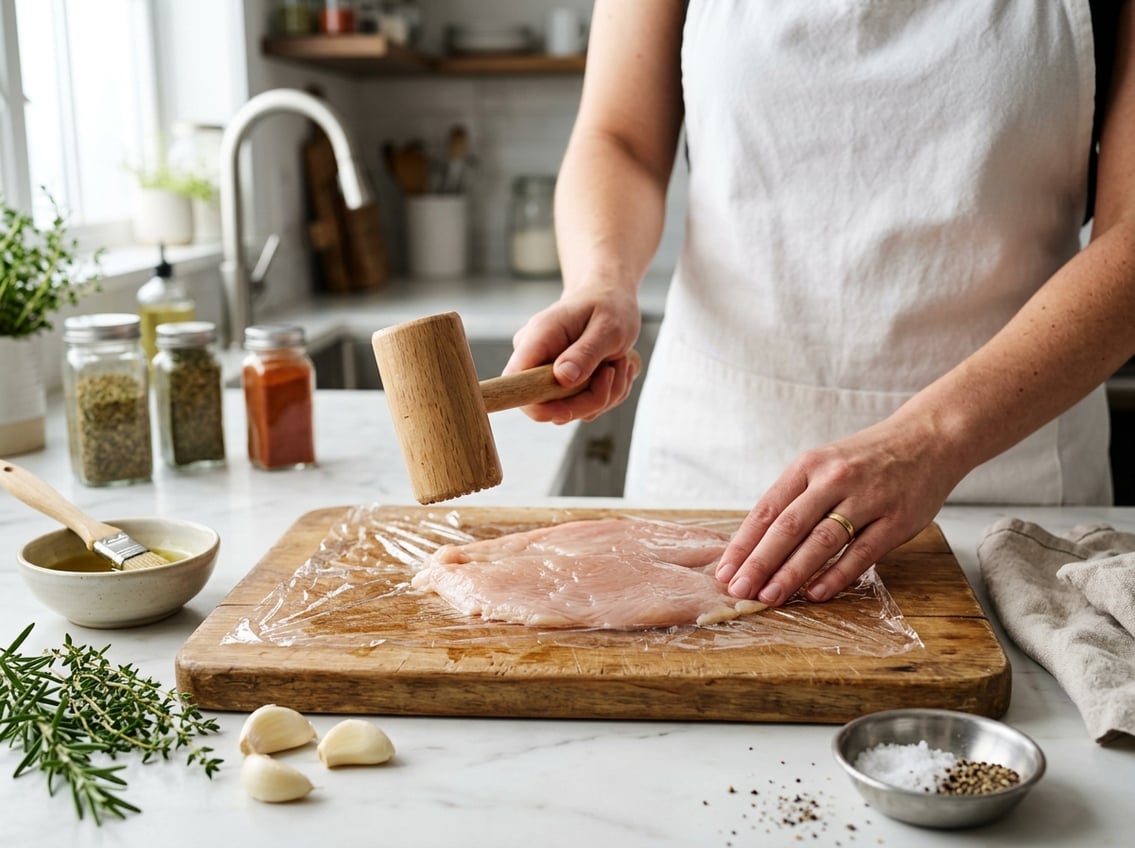
You do not need special equipment to flatten chicken breast well. The main goal is to keep the meat intact while making it a more even thickness.
Use a Meat Mallet the Right Way
Use the flat side of a meat mallet and start at the thickest part, pounding gently and moving outward as the meat spreads. A heavy, controlled tap works better than forceful strikes.
Phan Eats notes that a meat mallet is one of the easiest tools for this job, especially when you want a smooth cutlet.
Butterflying Before Pounding
Butterflying means slicing the breast horizontally so you open it like a book. This gives you a head start if the chicken is very thick.
After that, light pounding helps even out the remaining thicker spots. This method is useful when you want thinner cutlets without overworking the meat.
How Thin to Make Each Cutlet
For many recipes, about 1/4 to 1/2 inch thick works well. That range gives you quick cooking and still leaves enough thickness for moisture and structure.
If a recipe calls for chicken Parmesan or another breaded dish, aim for a cutlet that is thin and even, not paper-thin. You want a piece that cooks fast and stays tender.
Common Mistakes That Tear or Unevenly Thin the Meat
Pounding too hard in one spot can tear the chicken and make the edges too thin. Skipping the cover is another mistake.
A zipper bag or plastic wrap helps keep the meat in shape and reduces mess, as noted by Phan Eats.
Safety and Handling While Working With Raw Poultry
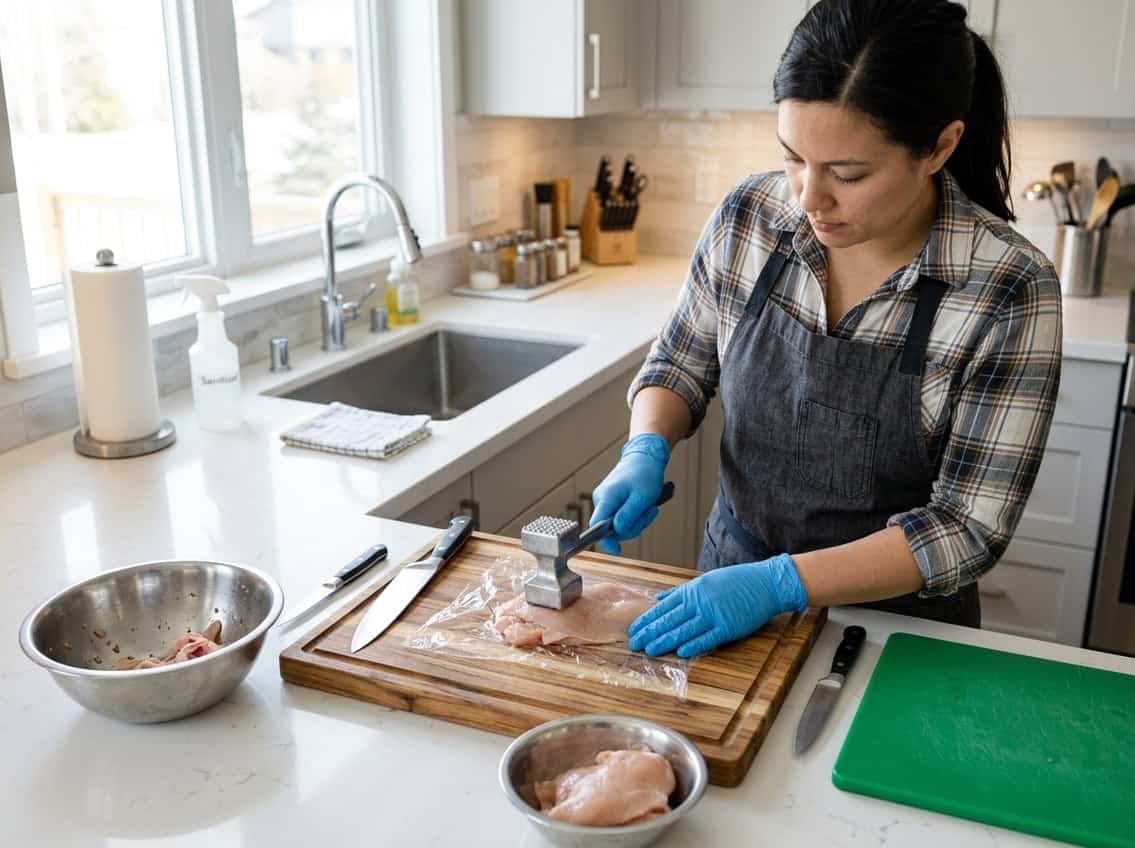
Raw poultry needs careful handling every time. Flattening can spread juices across your counter if you do not prepare your space first.
Wrap or Bag the Chicken Before Pounding
Place the chicken breast between plastic wrap or inside a resealable bag before using a meat mallet. This helps prevent splatter and keeps the surface cleaner.
It also reduces sticking and tearing. That makes the flattening process easier and safer to manage.
How to Prevent Cross-Contamination
Use a separate cutting board and clean your hands after handling raw chicken. The USDA warns that raw poultry juices can spread through hands, tools, and work surfaces, which raises the risk of cross-contamination, as noted in the Practice Safe Poultry Handling guide.
Keep raw chicken away from ready-to-eat foods. Never place cooked food on the same plate that held the raw meat.
Cleaning Boards, Tools, and Surfaces Properly
Wash your cutting board, meat mallet, knife, and countertop with hot soapy water after use. Dry them fully before putting them away.
If raw chicken touched the sink or nearby items, clean those areas too. Good cleanup is part of safe prep.
When This Step Makes the Biggest Difference
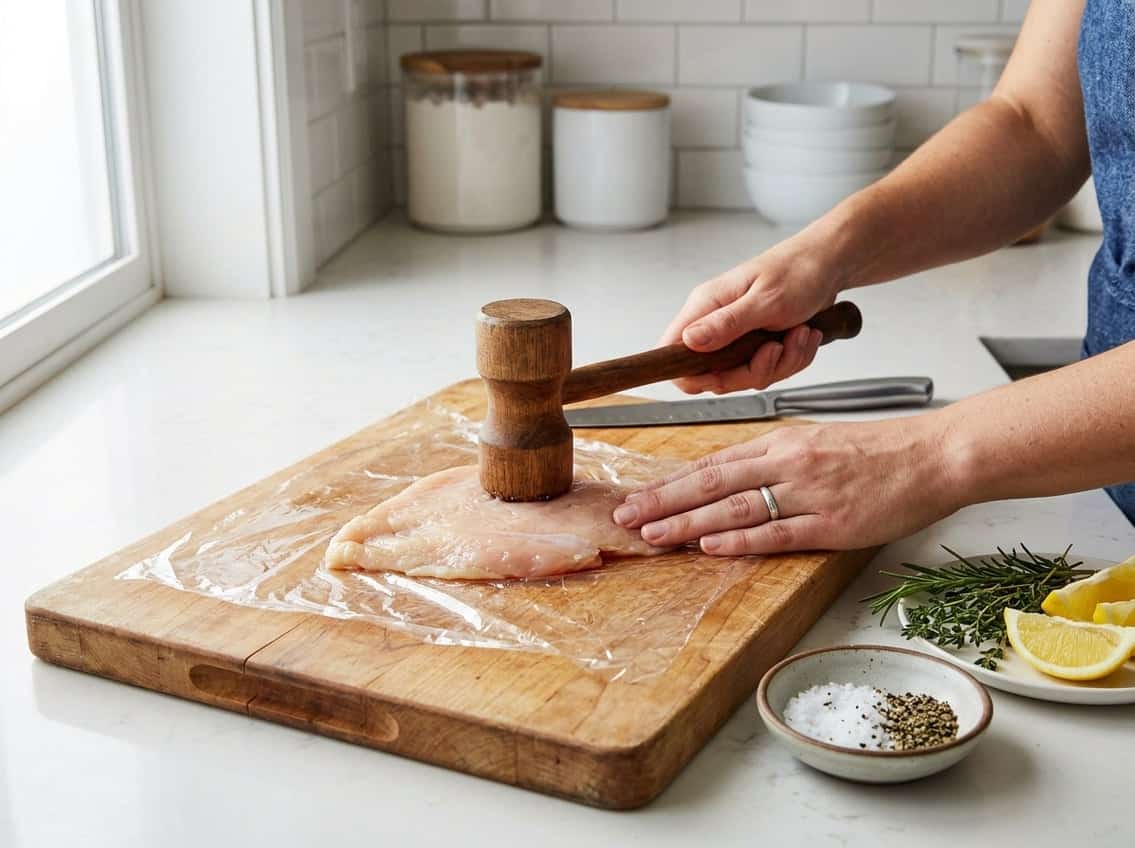
Flattening helps most when your recipe depends on quick, even cooking. It is especially useful when you want a browned outside and a juicy center.
Pan-Fried Cutlets and Quick Weeknight Dinners
Thin cutlets cook fast in a skillet, which makes them a strong choice for busy nights. You can season, bread, and cook them with less guesswork.
Flattened chicken breast works well for simple dinners with vegetables, pasta, or rice.
Baking and Grilling Thinner Pieces
Oven cooking and grilling both benefit from even thickness. A flatter piece is less likely to dry out on the edges before the middle is done.
For outdoor cooking, this also helps you manage flare-ups and hot spots more easily. The meat finishes at a steadier pace.
Recipes Like Chicken Parmesan and Stuffed Breasts
A thin cutlet cooks through evenly and is easier to bread for Chicken Parmesan. Flattened chicken breast also works well in stuffed dishes because even thickness helps the filling stay balanced.
Flattening creates a better base for recipes that need neat shaping. This simple step improves both texture and presentation.


