
How Is Chicken Breast Cooked, Chosen, and Kept Juicy
Cooking chicken breast seems simple, but the cut can turn dry fast if you miss the right heat, timing, or resting step.
You can choose, prep, and cook it in ways that keep it moist, mild, and easy to pair with almost any meal.
If you want a juicy chicken breast, use even thickness, the right cooking method, and stop at 165 F, followed by a short rest. These basics make a bigger difference than fancy ingredients.
They work for both simple and more complex chicken breast recipes.
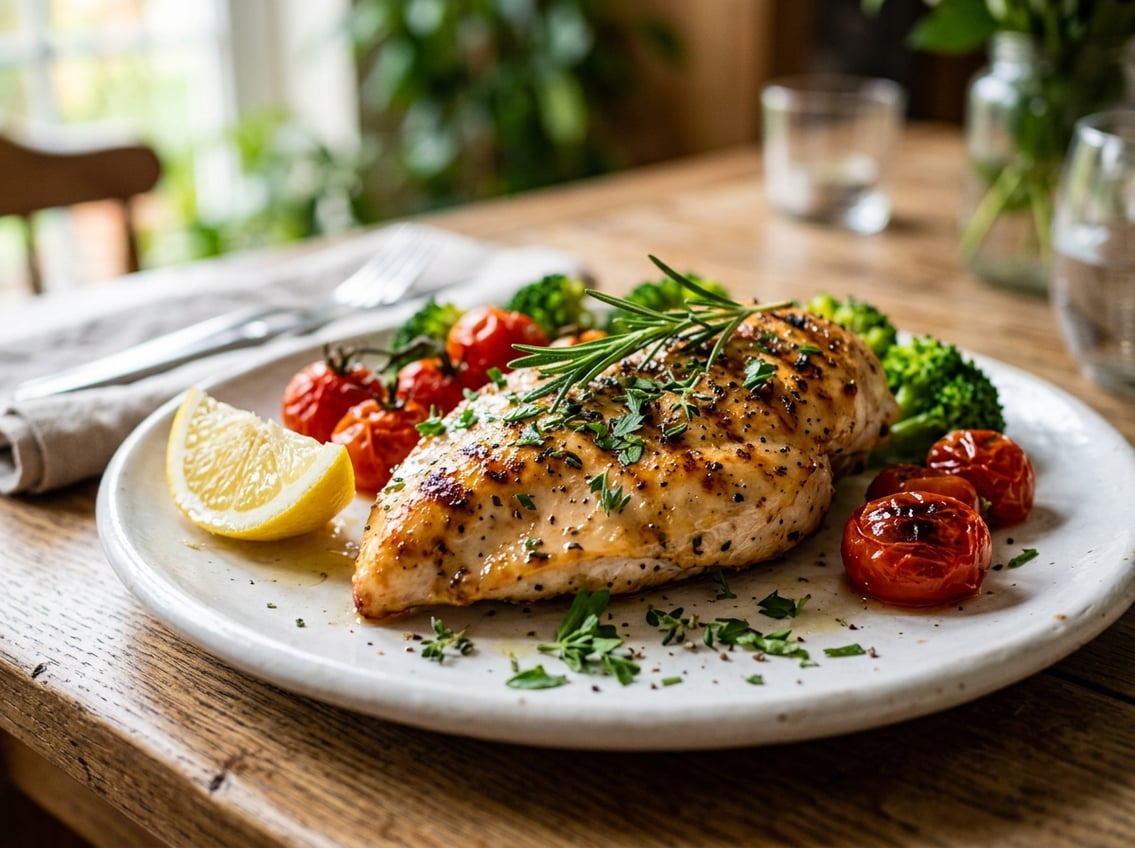
What Chicken Breast Is Like to Cook
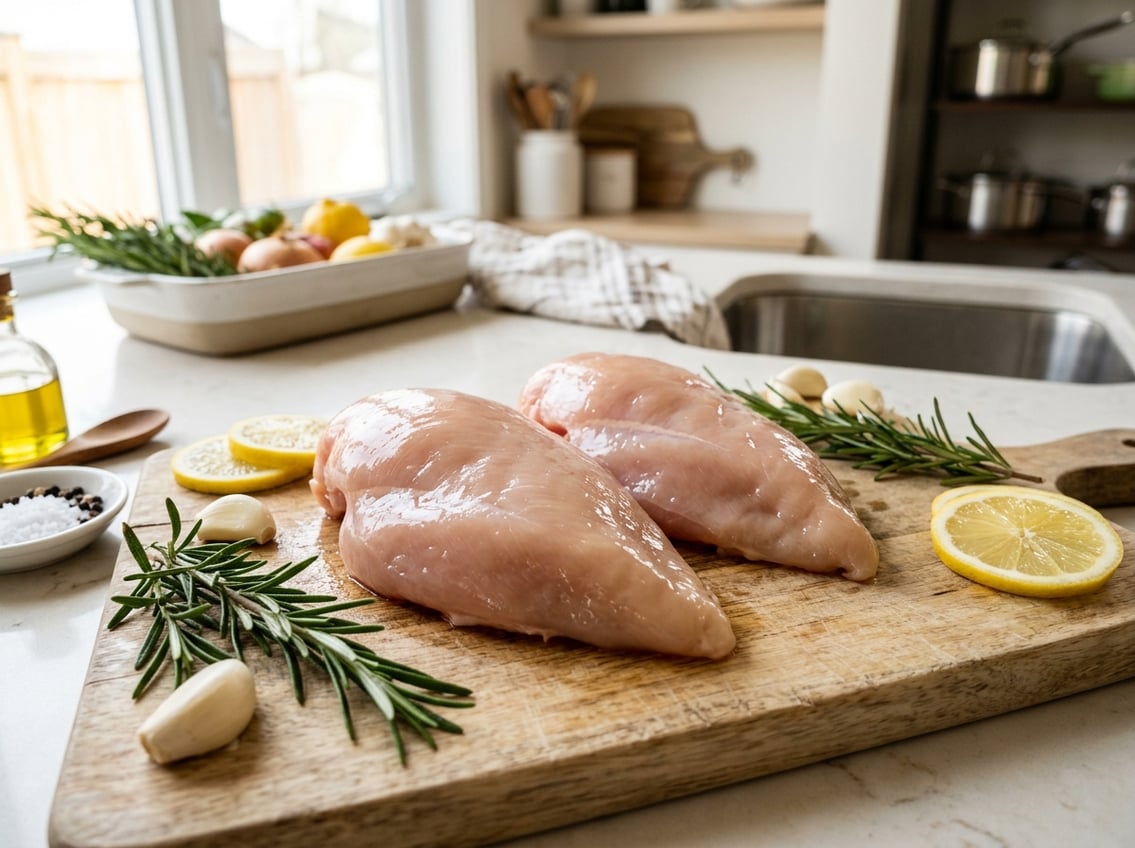
Chicken breast is lean, mild, and quick to cook, which is why it shows up in so many weeknight meals.
It gives you very little room for error, so a tender chicken breast depends on careful heat control and good prep.
Why It Cooks Fast but Dries Out Easily
Chicken breast has little fat, so it heats through fast and dries out if you leave it on the heat too long.
The thick-to-thin shape makes it tricky to cook evenly, especially with boneless skinless chicken breasts.
People cut, pound, or butterfly the meat before cooking to address that shape.
Smaller pieces and even thickness help the meat finish at the same time, making a juicy chicken breast more likely.
Boneless Vs. Bone-In and Skinless Vs. Skin-On
A boneless chicken breast cooks faster than a bone-in piece because the heat reaches the center more quickly.
Skinless cuts are easier to season and slice, while skin-on pieces can protect the meat from direct heat and add more flavor.
Most home cooks find boneless skinless chicken breast the most flexible option.
It works well for baking, grilling, pan-searing, or slicing for salads and wraps.
What Makes a Juicy and Tender Result
A juicy chicken breast starts with even thickness, enough seasoning, and a short cook time.
A meat thermometer helps you pull the chicken at 165 F without going past it.
Resting matters too.
Letting the meat rest after cooking helps the juices settle back through the cut, which keeps the chicken tender.
Best Ways to Prepare and Cook It
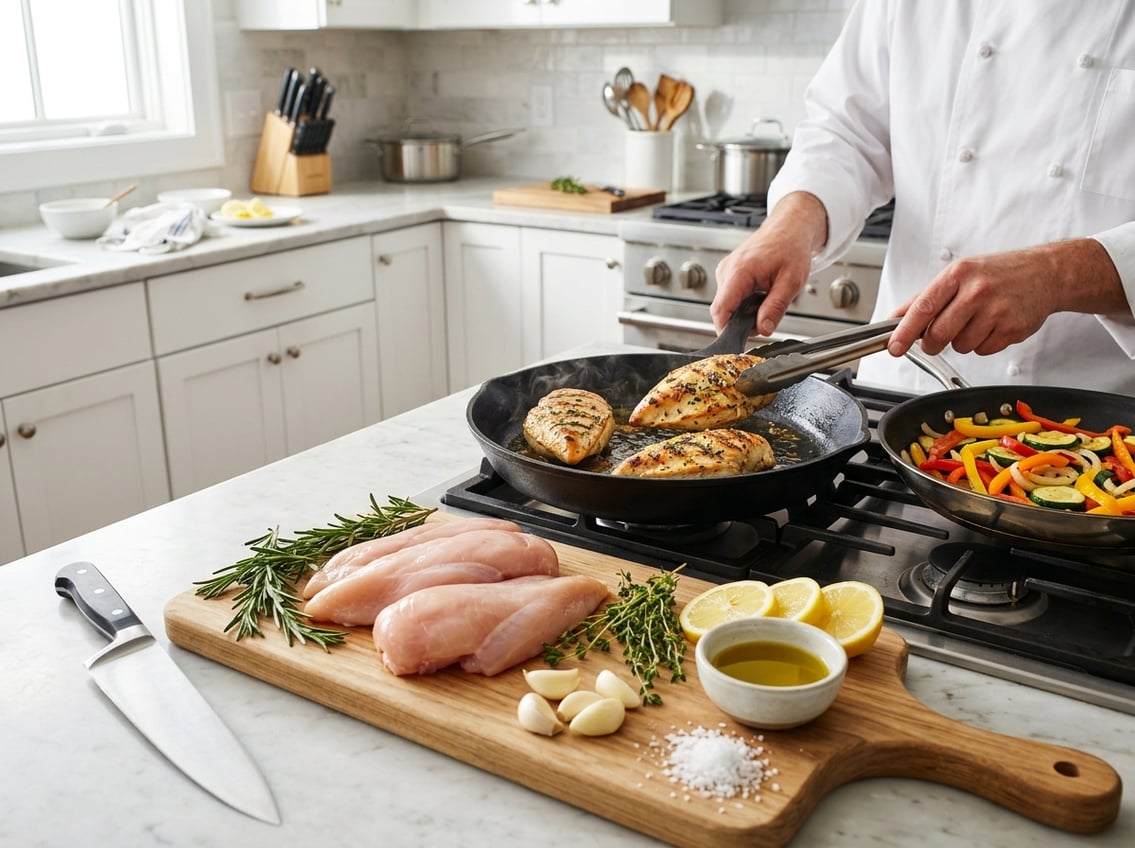
The best method depends on the texture you want and the time you have.
Aim for even heat, a safe internal temperature, and a brief rest before slicing.
How to Bake Chicken Breasts Without Drying Them Out
Start with a hot oven and a light coating of oil when you bake chicken breast.
Bake at 400 F for about 20 to 25 minutes, and check with a thermometer near the end so you can pull the meat as soon as it reaches 165 F.
Pound the thicker end so the whole piece is close to the same size.
You can also cover the pan loosely with foil for part of the bake, then rest the meat for about five minutes before cutting.
How to Grill Chicken for Even Browning
Oil the grates, preheat the grill to medium heat, and cook the chicken with the lid closed.
Grill chicken breasts for about 5 to 7 minutes per side, depending on size and grill heat.
Even thickness helps the outside brown at the same time the center reaches a safe temperature.
Pan-Searing, Poaching, and Resting for Better Texture
Pan-searing gives you fast browning and a crisp surface, especially when you start with a dry, evenly thick breast.
A skillet lets you cook chicken breast quickly on a weeknight.
Poaching is a gentler choice when you want plain cooked chicken for salads, soups, or shredded fillings.
Rest the meat after cooking so the juices stay inside the slices, which helps keep the chicken breast tender.
Seasoning, Sauces, and Popular Meal Ideas
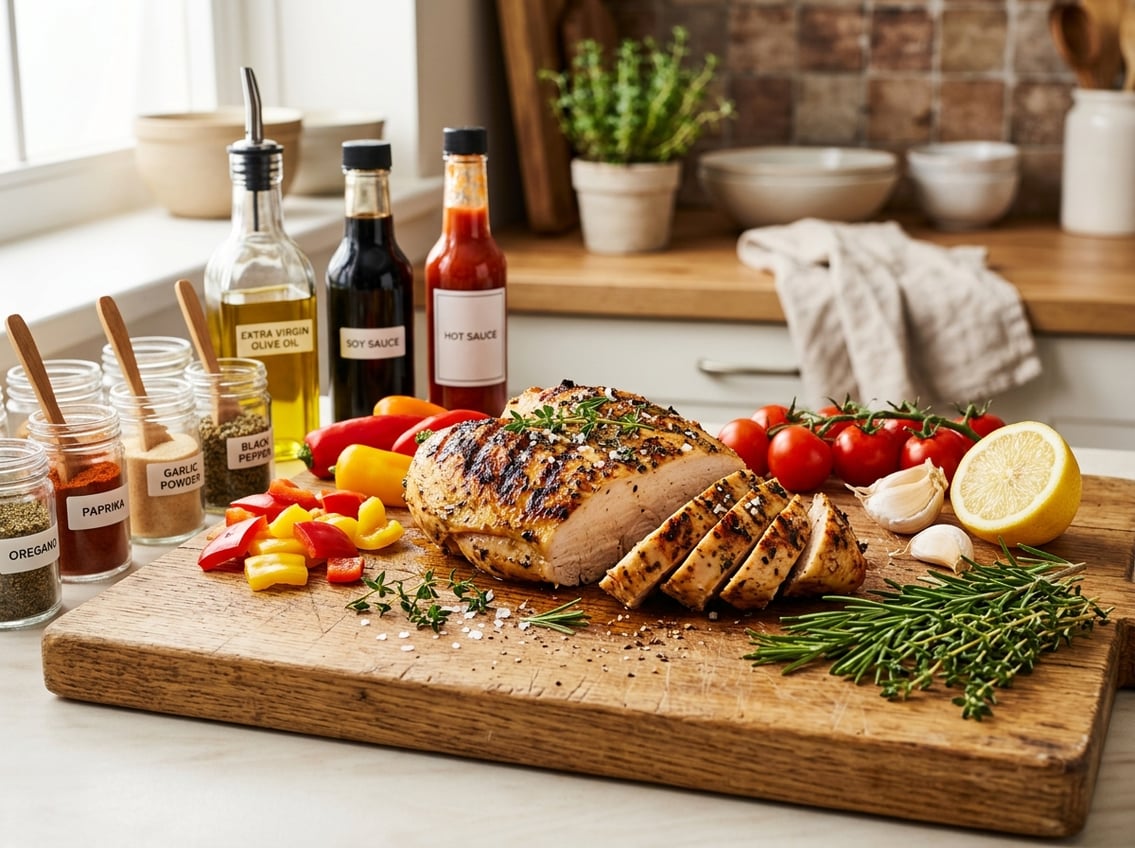
Chicken breast takes on flavor easily.
You can keep it simple with salt and pepper, or use seasoning blends, sauces, and sides.
Simple Seasonings, Brines, and Ranch-Based Flavor Options
A basic seasoning mix can go a long way.
Salt, pepper, garlic powder, paprika, and dried herbs are simple choices that work in many chicken breast recipes.
Ranch seasoning is another easy option if you want a familiar, savory taste.
Use it for ranch chicken, mix it into a dry rub, or combine it with oil or yogurt for a quick coating before baking or grilling.
Pan Sauces and Butter Sauce Pairings
Chicken breast pairs well with quick pan sauces because the meat is mild and lean.
A butter sauce can add richness after searing, and it works especially well when you deglaze the pan with broth, wine, or lemon juice.
Dishes like chicken marsala, chicken piccata, and chicken florentine use sauce to bring moisture and flavor to a cut that can taste plain on its own.
Where Chicken Breast Works Best in Everyday Recipes
Chicken breast appears in meals like chicken cordon bleu, chicken caesar salad, and chicken fajitas because you can slice it cleanly and pair it with many flavors.
You can also use it for sandwiches, grain bowls, pasta, and meal prep.
If you want more recipe ideas, you can check out roundups like easy chicken breast recipes for weeknight dinners and simple ways to cook chicken breast.
You can keep the cut useful by switching sauces, spices, and sides without changing the basic cooking method.


