
Whole Chicken Breast Nutrition by Serving and Cooking Method
You can use whole chicken breast nutrition to build a meal that is high in protein, low in carbs, and easy to fit into many eating styles.
A skinless chicken breast gives you a lot of protein for relatively few calories. The exact numbers change with breast size, weight method, and cooking style.
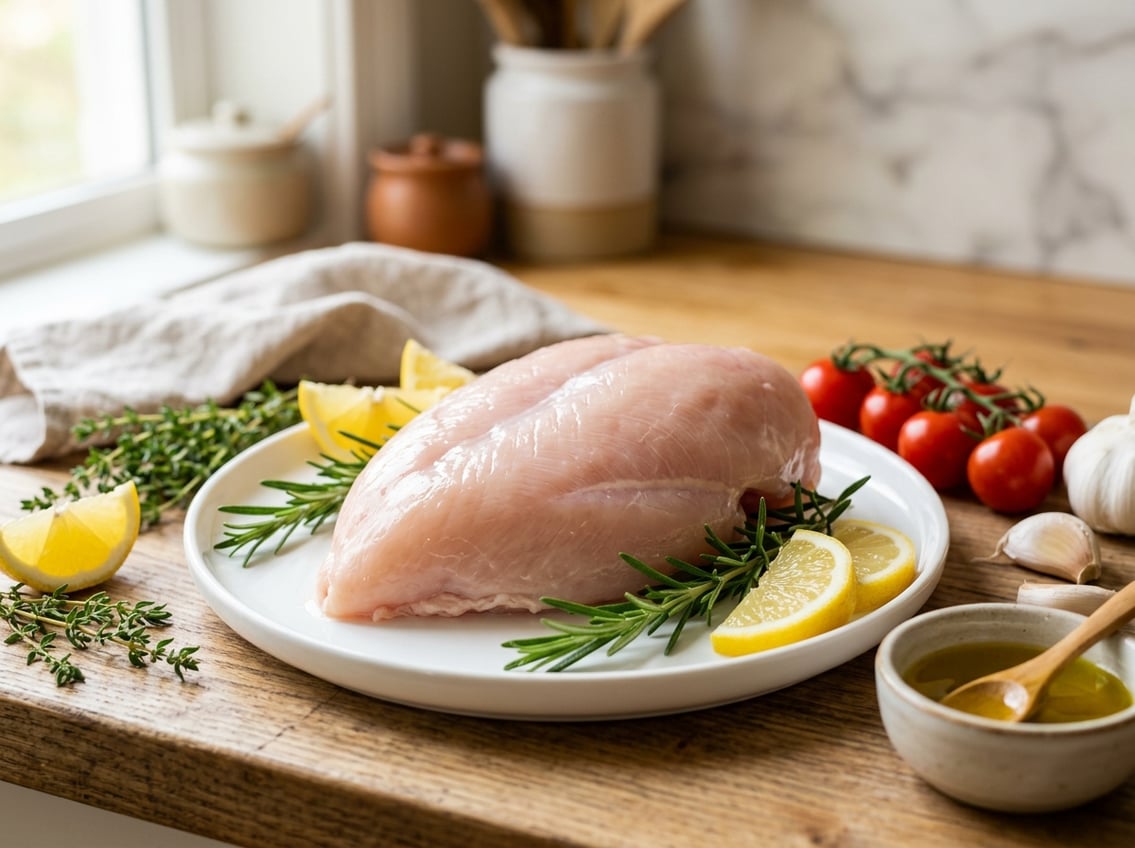
Most people in the U.S. get confused because chicken breast nutrition facts are often listed per 3 ounces, 100 grams, or one piece. These are not always the same amount of food.
Cooking changes the weight, so the same breast can look larger on the plate while weighing less on the scale.
Calories, Protein, and Fat in a Whole Breast
A whole chicken breast is one of the most common lean protein foods in chicken nutrition.
The exact calories in chicken breast depend on the size of the breast and whether it has skin, but the protein-to-calorie ratio is usually strong for a high-protein meal.

Typical Nutrition for One Whole Skinless Breast
One raw, skinless breast fillet weighing about 118 grams contains 142 calories, 27 grams of protein, and 3 grams of fat according to Eat This Much chicken breast nutrition facts. That is a strong protein package with very little carbohydrate.
For a cooked portion, Verywell Fit reports that 3 ounces of grilled, boneless, skinless chicken breast has 128 calories, 26 grams of protein, and 2.7 grams of fat.
That serving is smaller than many store-bought breasts, which is why your plate may look bigger than the standard serving size.
How Whole Breast Size Changes the Numbers
Chicken breasts vary a lot in size. A small breast may be close to a 3-ounce serving, while a large retail breast can be two or three times that amount.
If your breast is bigger, your calories in chicken breast and protein in chicken breast are also bigger, even when the food looks like the same cut.
Protein-to-Calorie Ratio and Lean Protein Value
Skinless chicken breast provides lean protein because most of its calories come from protein rather than fat. This helps you increase protein without adding many extra calories.
If your goal is muscle support, steady fullness, or calorie control, whole chicken breast nutrition gives you a strong balance of protein and modest fat.
Serving Size, Raw vs Cooked Weight, and Label Confusion
Chicken labels often confuse people because nutrition facts may refer to raw weight, cooked weight, or a standard portion size.
The same piece can also shrink during cooking, which changes the number on the scale even though the protein and calories stay tied to the original food amount.
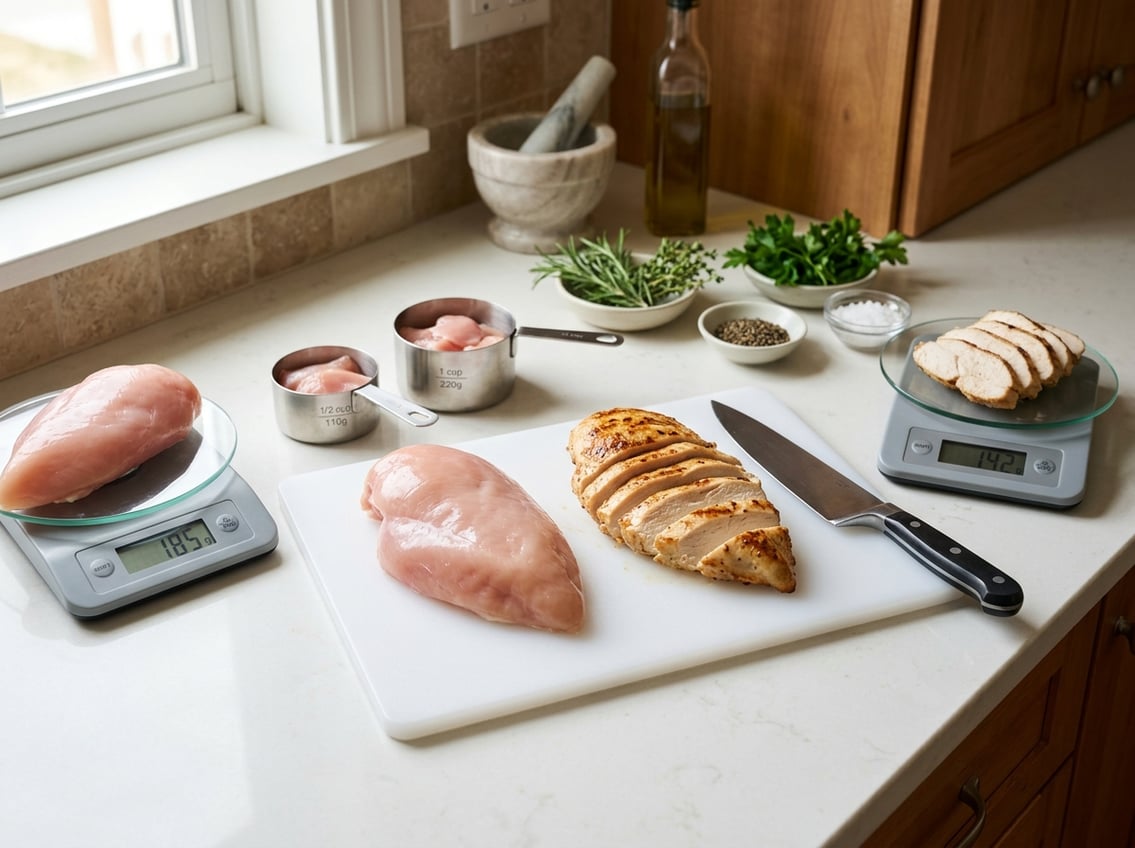
Why 3 Ounces, 100 Grams, and One Breast Show Different Values
A 3-ounce serving is a common nutrition label portion, while 100 grams is common on many food databases, and one breast depends on the actual size of the piece.
Chicken breast nutrition facts can look different from one chart to another because of these differences.
For example, FatSecret lists 100 grams of chicken breast at 195 calories, while Verywell Fit lists 3 ounces cooked at 128 calories.
These numbers use different portion sizes and cooking states.
Raw Weight vs Cooked Weight After Moisture Loss
Chicken loses water as it cooks, so cooked weight is lower than raw weight.
A raw 8-ounce breast can weigh much less after cooking, even though the total protein and calories do not disappear.
Raw weight is usually the better choice for tracking. MyFitnessPal community guidance notes that package nutrition info is usually based on raw meat.
Cooked portions are easier to misread because moisture loss changes the final weight.
How to Estimate Portions Accurately at Home
Weigh your chicken before cooking and use that number in your tracker if you want better accuracy.
If you only have cooked chicken, use a cooked-entry database and stay consistent with cooked weight every time.
A kitchen scale gives you the cleanest result.
Measuring cups are less reliable for meat because shape, trimming, and moisture all change the final portion.
How Cooking Method Affects Nutrition
Cooking method changes the nutrition of chicken breast mostly by adding or removing water, fat, and extra ingredients.
Baking and grilling usually keep chicken breast lean, while skin, oil, marinades, and breading can raise calories quickly.

Baked Chicken Breast Nutrition Changes
Baked chicken breast stays close to its natural lean profile if you do not add much oil or breading.
The calories usually rise only a little from the cooking process itself, since baking mainly removes water.
Seasoning with herbs, spices, lemon, or garlic adds flavor without changing the numbers much.
Grilled Chicken Breast Nutrition Changes
Grilled chicken breast is also a lean choice, especially when you remove the skin.
Verywell Fit’s grilled, boneless, skinless example shows that a 3-ounce serving can stay around 128 calories with high protein.
Grilling can add a small amount of fat if you brush oil on the surface or use marinades with sugar or oil.
The base chicken breast nutrition remains high in protein and low in carbs.
Skin, Oil, Marinades, and Breading
Skin adds fat and calories fast, so skinless chicken breast is the leaner option.
Oil, creamy marinades, and breading can change a low-calorie cut into a much richer meal.
For the cleanest calories, keep the skin off and use light seasoning.
If you want more flavor, choose a marinade with modest oil and watch the amount that stays on the meat.
Micronutrients and Practical Health Benefits
Chicken breast nutrition is not just about protein and calories.
It also gives you several important vitamins and minerals that support daily health, especially when you pair it with vegetables, grains, or beans.
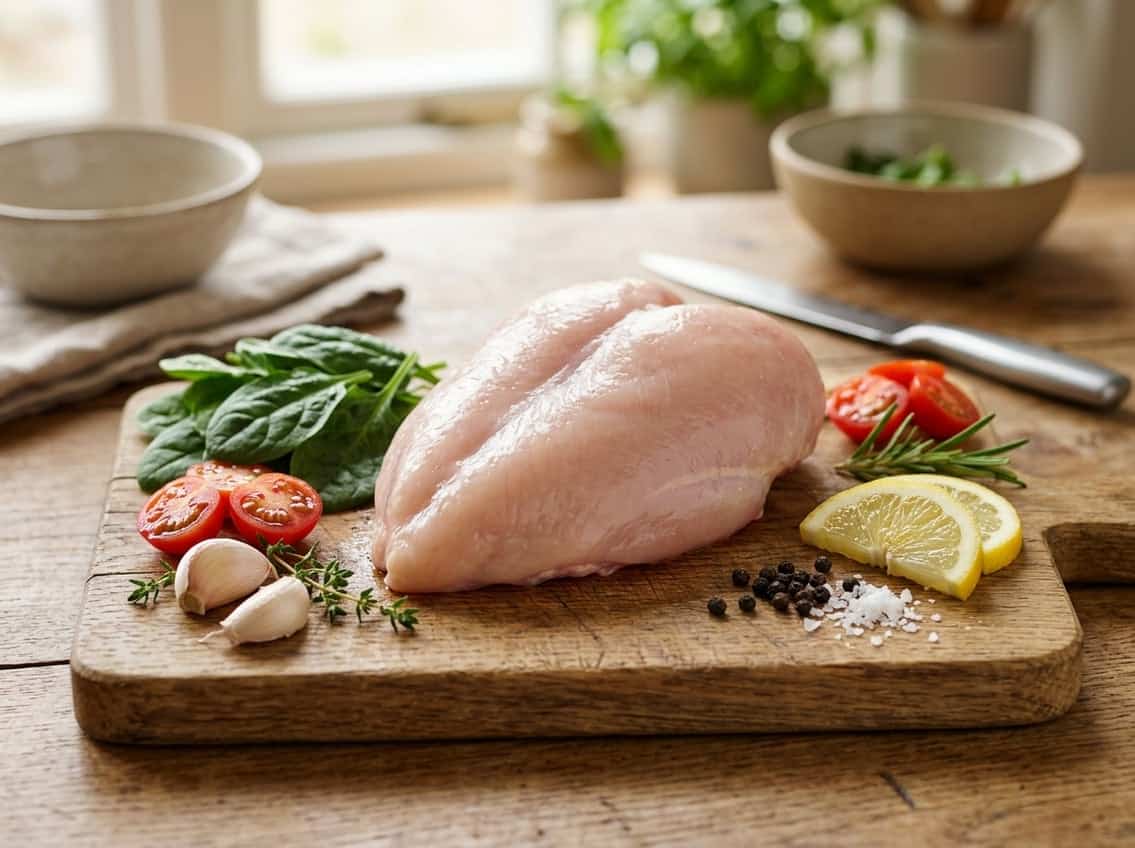
Key Vitamins and Minerals in Chicken Breast
Chicken breast provides B vitamins, selenium, phosphorus, and potassium.
According to Eat This Much chicken breast nutrition facts, a raw skinless breast is a good source of potassium and vitamin B6, and it also provides niacin and selenium.
These nutrients help support energy metabolism, nerve function, and antioxidant defense.
The exact amounts vary by cut and portion, but chicken breast is a reliable source of protein and several useful micronutrients.
Muscle Support, Satiety, and Weight Management
Protein in chicken breast helps maintain and repair body tissue, which is one reason people include it in fitness and weight-management meals.
Lean protein also tends to be filling, which may help you feel satisfied with fewer calories.
When Chicken Breast Fits Best in a Balanced Diet
Chicken breast works well when you want a simple, high-protein meal that does not add many carbs.
You can use it for meal prep, post-workout meals, and family dinners.
The mild flavor and easy-to-track nutrition allow it to fit into many diet patterns.
When you choose whole chicken breast with minimal added fat, you get a practical food that supports everyday eating and specific health goals.


