
How Chicken Breast Tender Stays Juicy and Tender
You can keep chicken breast tender when you control moisture, heat, and slicing from the start.
The easiest path to juicy chicken breast is a set of small steps that work together.
Prepare the meat well, cook it gently, and stop cooking at the right moment. This approach gives you tender chicken without turning it dry or rubbery.
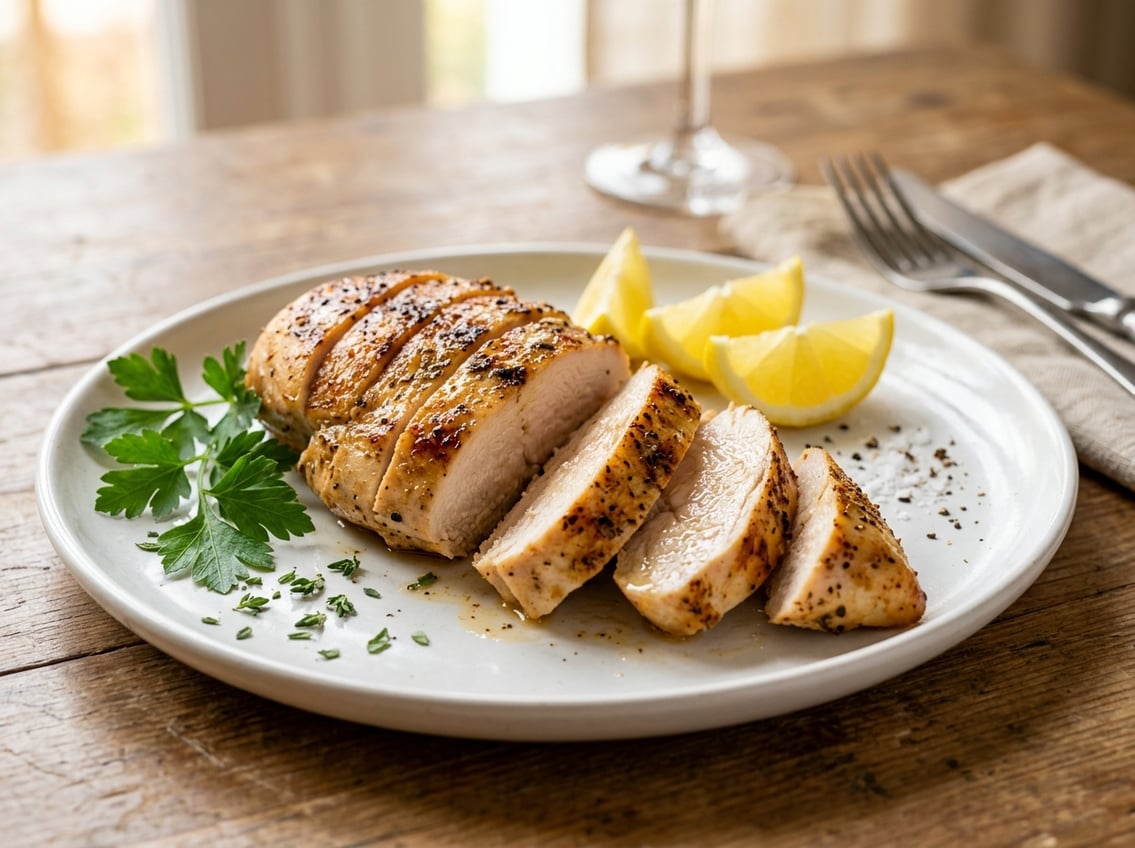
Chicken breast is lean, so it loses moisture fast if you skip prep or overcook it.
If you tenderize chicken breast before it hits the pan, you improve your chances at juicy chicken every time.
Make Chicken Breast Tender Before It Cooks
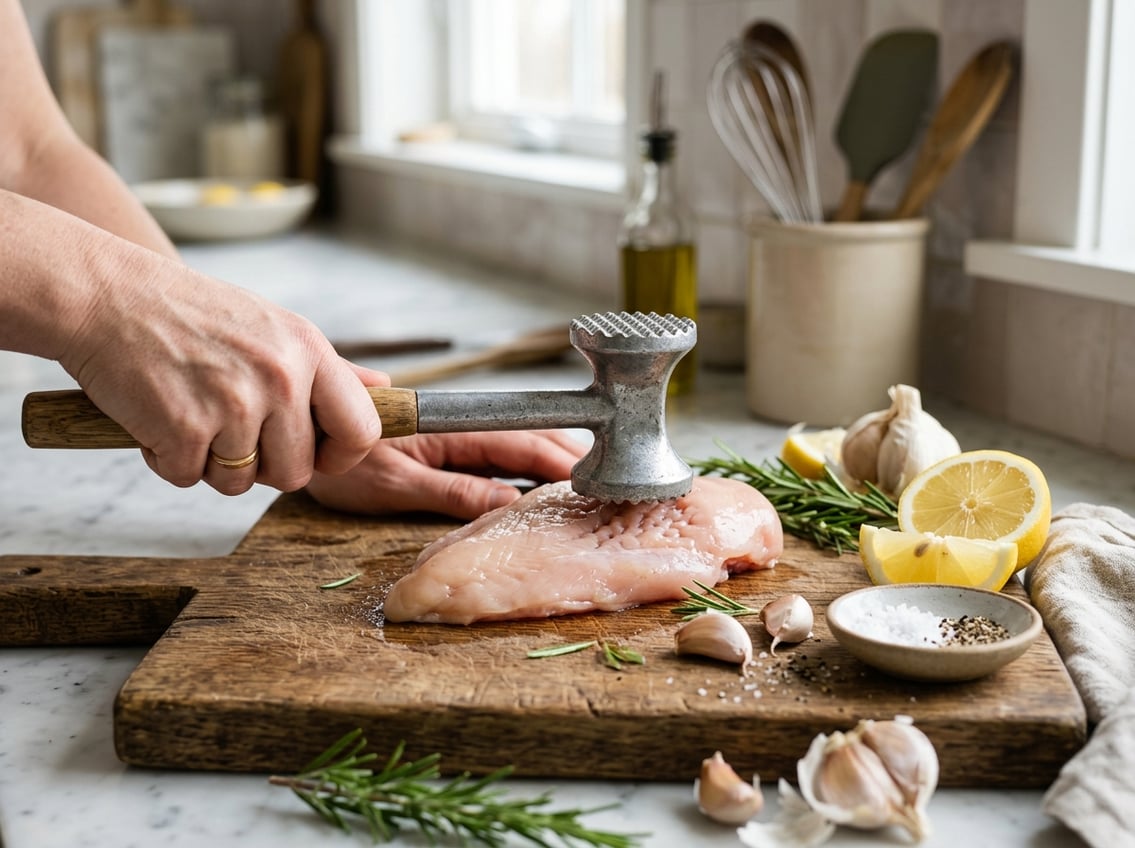
You get your first chance to improve texture before heat ever touches the meat.
Simple prep steps tenderize chicken breast, help it cook more evenly, and make each bite softer.
Pound to an Even Thickness
Use a meat mallet, rolling pin, or the heel of your hand to pound chicken breast to an even thickness.
Thin edges cook faster than thick centers, so evening them out helps the whole piece stay tender.
Pounding also loosens some of the muscle structure.
Keep the pressure light and steady.
Cut Against the Grain for a Softer Bite
Slice against the grain to shorten the muscle fibers, making the meat easier to chew.
A recent Allrecipes test on cutting chicken breast against the grain found that pieces cut this way were more tender and juicy.
You can also cut larger breasts into smaller pieces before cooking.
Smaller pieces give you more control and help the chicken cook more evenly.
Use Brining for Better Moisture Retention
Brining helps chicken hold onto moisture during cooking.
A simple saltwater brine seasons the meat and improves juiciness, which matters for lean cuts.
Keep the brine simple and short for chicken breast.
Even 15 to 30 minutes can help, as long as you do not overdo the salt.
Use Marinating to Loosen Muscle Fibers
Marinating adds flavor and helps tenderize chicken breast, especially when the marinade includes acid, dairy, or enzymes.
It also coats the surface, which can reduce the chance of dry texture.
Use marinade as part of a full method for tenderizing chicken, not as the only step.
Choose the Right Heat and Method

The cooking method matters as much as prep.
Fast, controlled heat usually works better than high heat that dries the outside before the center is done.
Covered Skillet Cooking for Fast, Juicy Results
A covered skillet traps steam and helps chicken breast cook through without losing as much moisture.
This works well when you want a quick dinner and a tender finish.
Use medium heat, not high heat, and keep the lid on long enough for the chicken to cook evenly.
A little oil or butter also helps the surface stay moist.
Baking Chicken Without Drying It Out
Baking can give you juicy chicken if you use moderate oven heat and check it early.
High heat for too long often leads to dry edges and a tough center.
Place the chicken in a shallow dish or on a lined baking sheet.
Avoid leaving it in the oven after it reaches the right temperature.
Poaching and Slow Cooking for Soft Texture
Poaching gives chicken breast a very soft texture because it cooks in gentle liquid heat.
Slow cooking can also produce tender chicken, especially when you need shredded chicken for soups, tacos, or sandwiches.
These methods work best when you want moist meat more than browned edges.
They are useful for recipes that call for a mild flavor and soft bite.
When Different Chicken Cuts Change the Outcome
Chicken breasts and chicken thighs behave differently.
Thighs have more fat, so they stay juicy more easily, while chicken breast needs more care to avoid drying out.
If you swap cuts in a recipe, adjust time and method as needed.
A recipe that works well for chicken thighs may not give the same result with chicken breast.
Prevent Dryness While Cooking and Serving
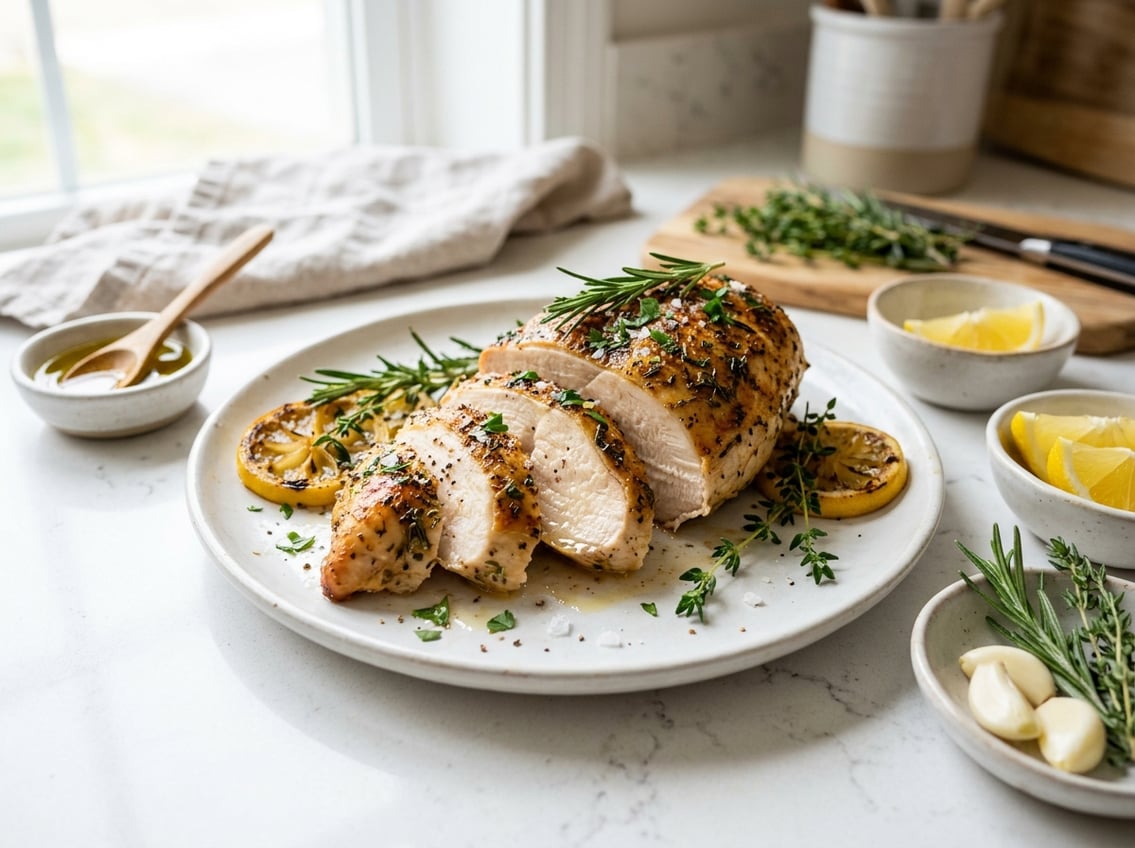
Protect the moisture you already built in with a few small habits.
These steps keep a tender chicken breast from turning dry after it leaves the heat.
Check Doneness With a Meat Thermometer
Use a meat thermometer to avoid overcooking.
Chicken should reach a safe internal temperature of 165°F in the thickest part.
Check early, since carryover heat can keep cooking the meat after it leaves the pan or oven.
That small timing gap is often where juicy chicken breast turns dry.
Rest Before Slicing or Shredding
Let chicken rest for several minutes before you slice it.
Resting gives the juices time to settle back into the meat instead of running out onto the cutting board.
If you cut too soon, even well-cooked meat can seem dry.
Common Mistakes That Make Chicken Rubbery
Overcooking is the biggest problem, followed by uneven thickness and cutting with the grain.
Very high heat, skipping rest time, and cooking straight from a cold, thick piece also hurt texture.
A few other mistakes are easy to avoid:
- Not salting or brining ahead of time
- Using heat that is too high for the cut
- Slicing too soon after cooking
- Leaving cooked chicken in a hot pan too long
Best Uses for Sliced and Shredded Meat
Sliced chicken breast works well in salads, grain bowls, wraps, and pasta dishes.
Shredded chicken fits soups, enchiladas, casseroles, and meal prep.
Using the right cut for the right dish helps keep chicken breast juicy.
This gives you more flexibility in everyday recipes.


