
Is Chicken Breast Boneless? Clear Cut Differences
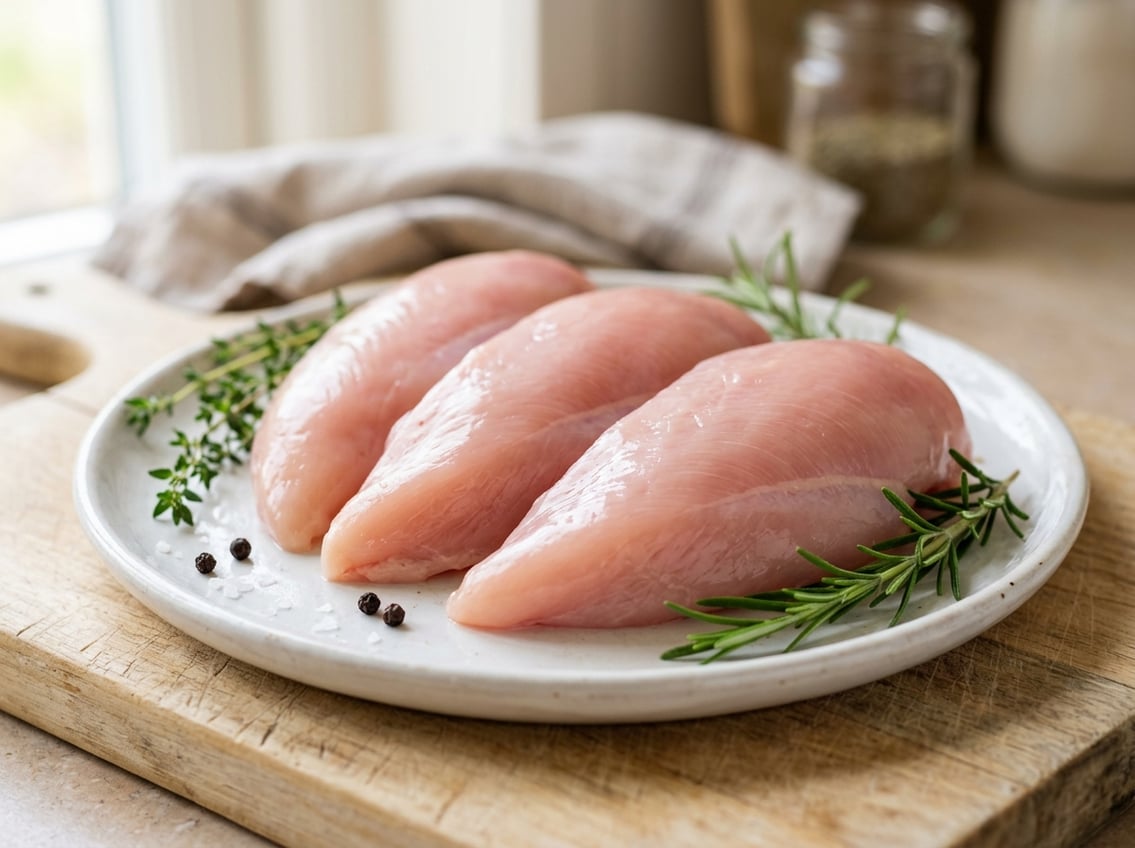
The phrase is chicken breast boneless refers to a cut that has had the bone removed, not to a separate kind of chicken.
In U.S. grocery stores, you usually see it sold as boneless chicken breast or boneless skinless chicken breast. This means the meat comes from the breast, and the bones, and often the skin, are gone.
If you want a simple answer, yes, the chicken breast you buy in most stores is boneless. The word “breast” still tells you the cut, while “boneless” tells you how it was processed.
That small label difference matters when you shop, cook, and plan a recipe.
A bone-in chicken breast behaves differently from a boneless chicken breast. The same is true when you compare boneless skinless chicken breast with other boneless chicken parts.
What The Label Actually Means
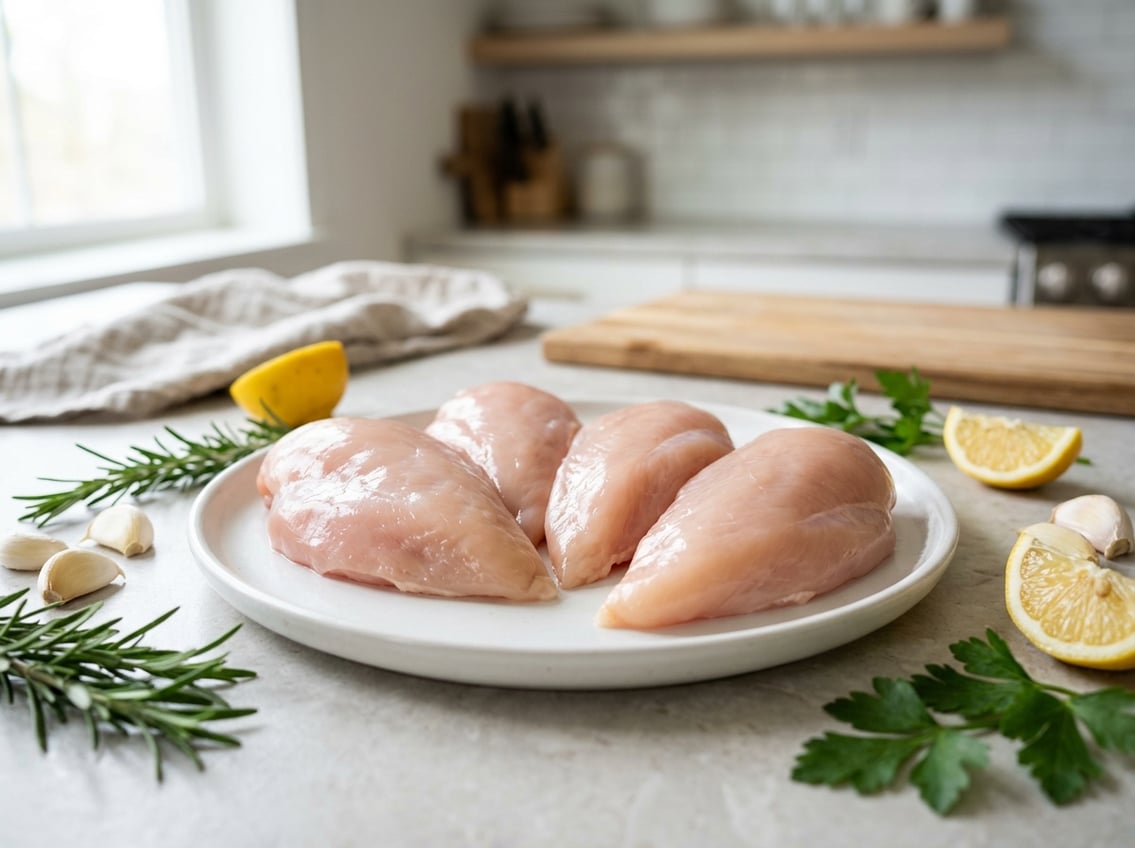
The label tells you two separate things: the cut and the processing.
Chicken breast names the part of the bird, while boneless tells you the bone has been removed.
Boneless chicken can also come from thighs, tenders, or other parts, not just the breast.
Chicken Breast Is A Specific Cut
A chicken breast is the meat from the front of the bird.
It is a common lean protein.
In stores, you may find bone-in chicken breast, boneless chicken breast, or boneless skinless chicken breast.
These are related, yet they are not the same product.
Boneless Refers To Bone Removal, Not The Cut
Boneless means the bone has been taken out during processing.
When the skin is removed too, you get boneless skinless chicken or boneless skinless chicken breast.
Why Boneless Chicken Is Not Always Breast
Boneless chicken is a broad label.
It can mean boneless chicken breast, boneless thighs, or other deboned pieces.
If you need breast meat for a recipe, look for the full phrase boneless skinless chicken breast or boneless skinless chicken breasts.
How To Choose The Right Option At The Store
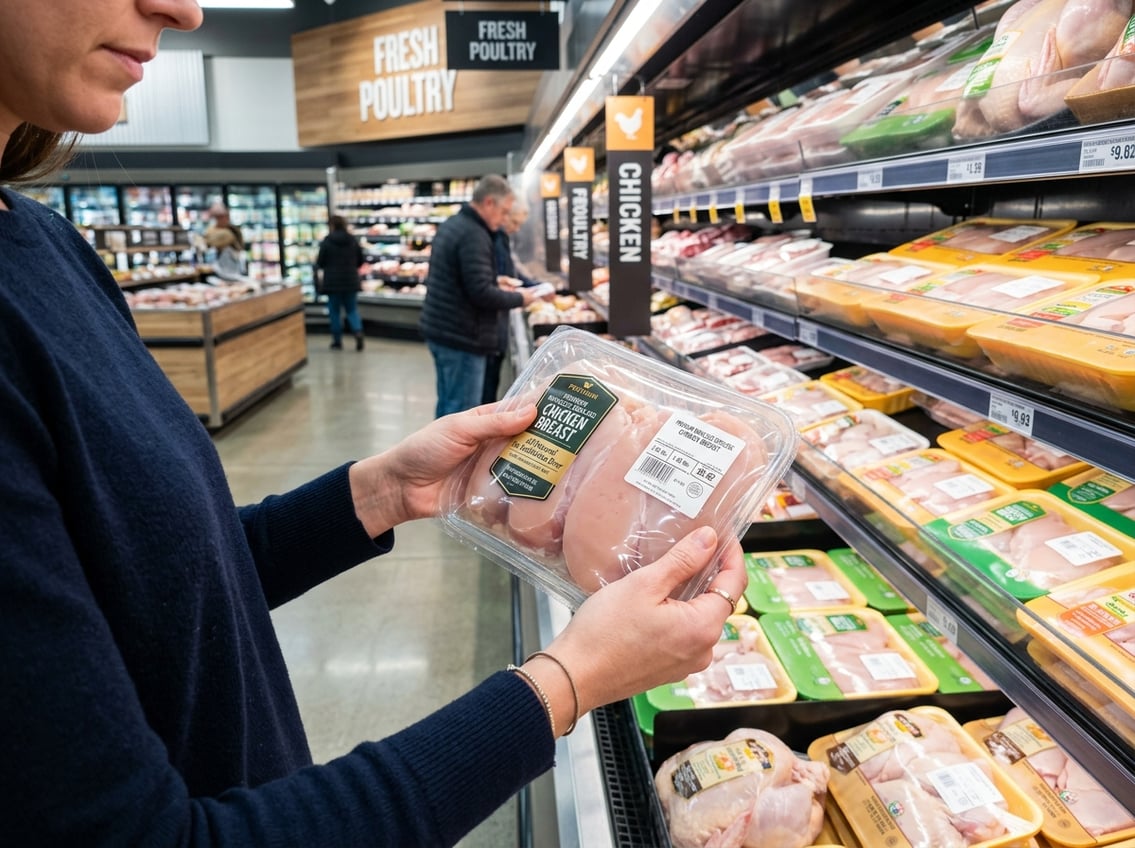
Your best choice depends on your recipe, your budget, and how much time you have.
Package labels can make it look like several products are the same, but the details change how you cook them and how much work you do at home.
Boneless Skinless Vs Bone-In Choices
Boneless skinless chicken breast cooks faster and is easier to slice, cube, or pound thin.
Bone-in chicken breast usually takes longer and can give you more flavor and a little more forgiveness in the oven.
For many home cooks, boneless works best for quick meals. Bone-in suits roasting and slower cooking.
When To Buy Cutlets, Whole Breasts, Or Thin-Sliced Pieces
Chicken cutlets are thin pieces, often sliced from a breast or pounded flat.
They are useful when you want fast, even cooking for breaded cutlets, sandwiches, or skillet meals.
Whole breasts give you more control over portion size.
Thin-sliced pieces save prep time on busy nights.
Packaging Terms That Commonly Cause Confusion
Words like “natural,” “fresh,” and “enhanced” do not tell you whether the meat is bone-in or boneless.
A label may say chicken breast while the package contains bone-in chicken breast, or it may say boneless chicken breast with skin removed.
Read the full product name, then check the package for whether it lists skin-on, skinless, or cutlets.
How Each Cut Cooks And Tastes
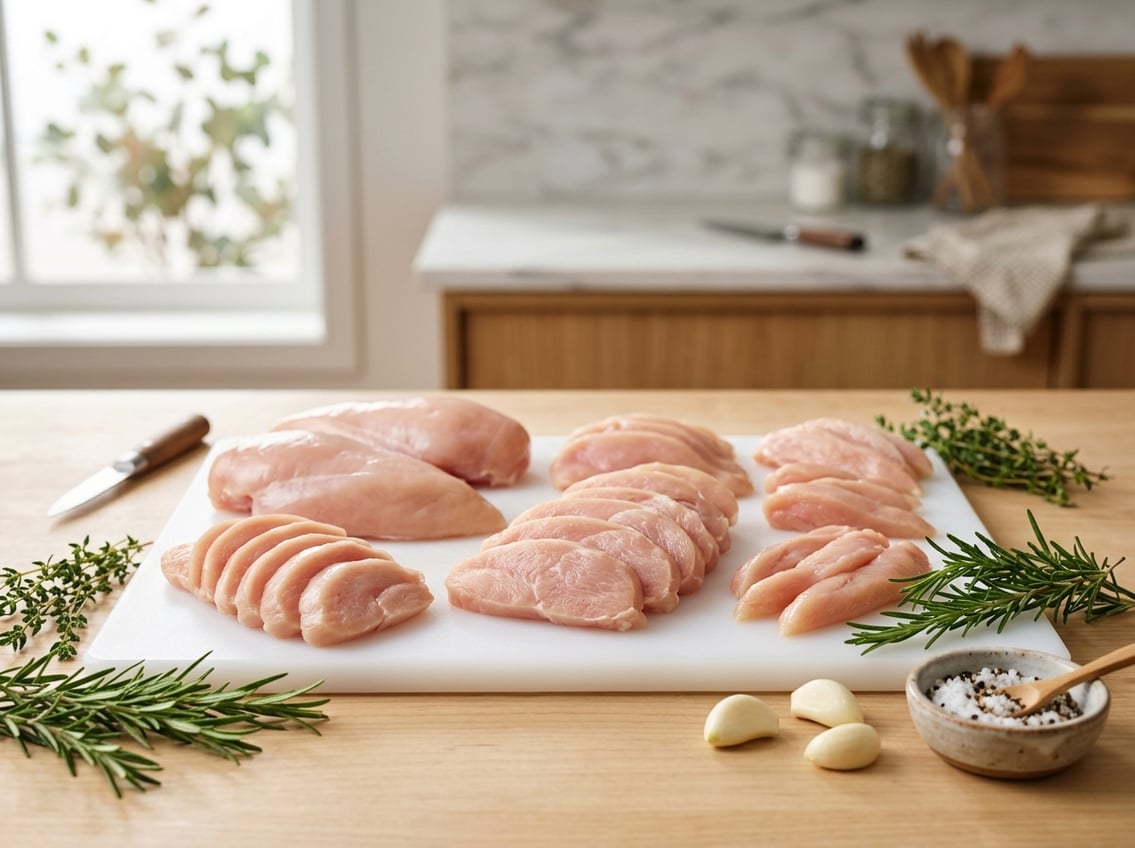
Boneless chicken breast cooks faster than bone-in chicken breast. This is useful when you want speed and steady timing.
The tradeoff is that lean meat can dry out if you cook it too long or at too high a heat.
Many cooks use the same basic ideas for how to cook chicken breast and adjust for thickness.
Why Boneless Breasts Can Dry Out Faster
Boneless skinless chicken breast has little fat and no bone to slow the heat.
The center reaches a safe temperature sooner, and it can go from tender to dry in a short window.
Bone-in chicken breast usually cooks more slowly, which gives you a wider timing range.
Brining And Marinating For Tender Results
A simple brine or marinade helps boneless chicken breast stay moist.
Chefs often recommend brining or marinating boneless, skinless breasts ahead of time. This is especially helpful before grilling or pan-cooking.
Best Methods For Juicy Weeknight Cooking
For quick meals, use medium heat and stop cooking when the thickest part is done.
A grilled chicken breast works well when you pound it to even thickness first.
Roasting, pan-searing, air frying, and baking also work well as long as you avoid overcooking this lean protein.
Popular Dishes That Usually Use This Cut
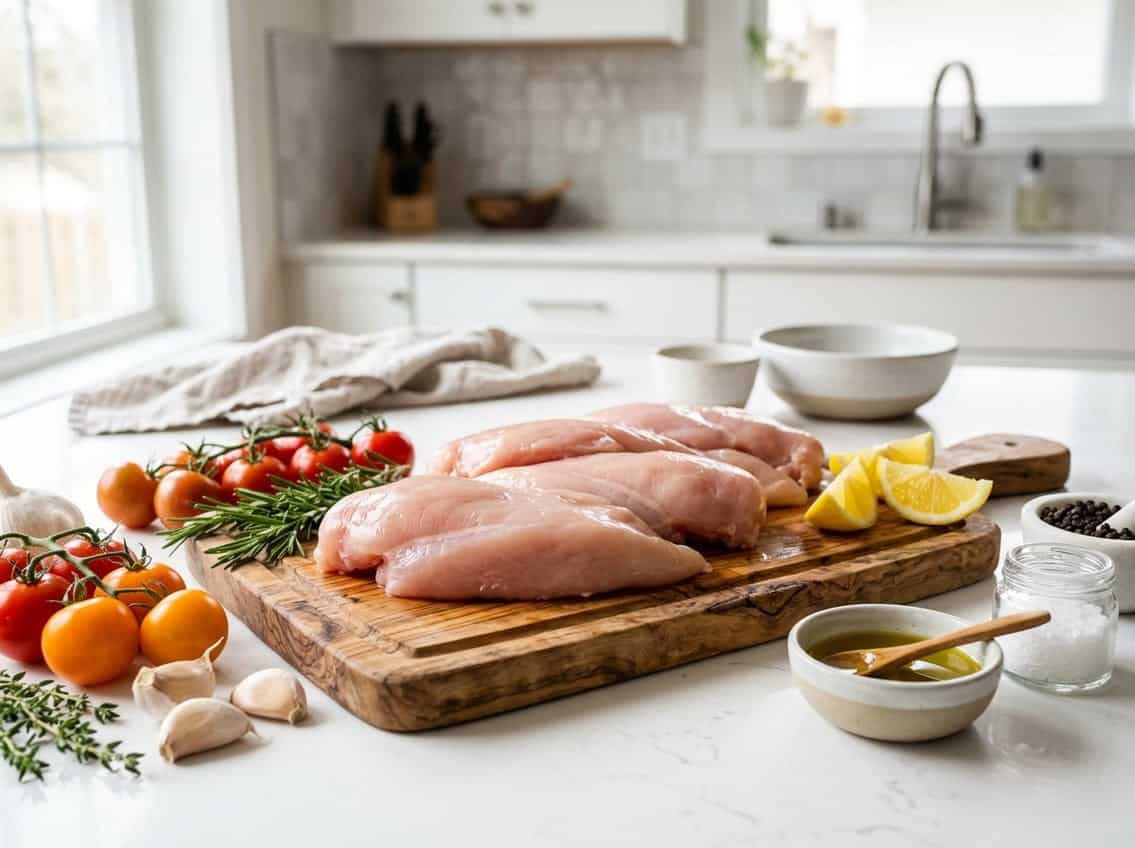
Boneless skinless chicken breasts are common in fast, familiar dinners because they are easy to slice and season.
They work especially well in recipes where sauce, breading, or marinade adds flavor.
Classic Skillet And Sauce Recipes
You often see chicken breast recipes like chicken piccata, chicken marsala, and chicken cordon bleu made with boneless pieces.
Thin, even cuts cook quickly in a skillet and soak up sauce well.
That makes them a practical choice for dishes with lemon, wine, mushrooms, or cheese.
Grilled, Breaded, And Fried Preparations
Boneless skinless chicken breasts are also common in grilled chicken breasts, chicken cutlets, and fried chicken-style dishes.
Cutlets are useful when you want crisp breading and a fast cook time.
If you want more structure in the pan or on the grill, a thicker breast or a lightly pounded piece works well.
Fast Dinner Ideas
For weeknight meals, boneless chicken breast fits chicken fajitas, simple stir-fries, salads, wraps, and pasta dishes.
These recipes work because the meat cooks fast and can take on strong seasoning.
When time is short, you can easily keep chicken breast on hand.


