
Is Chicken Breast Tough? Causes and Fixes
If you keep asking is chicken breast tough, the short answer is that it can be, especially when you cook it too long, cook it unevenly, or start with a breast that is already low in moisture.
You can prevent most tough chicken breast problems with a few basic habits.
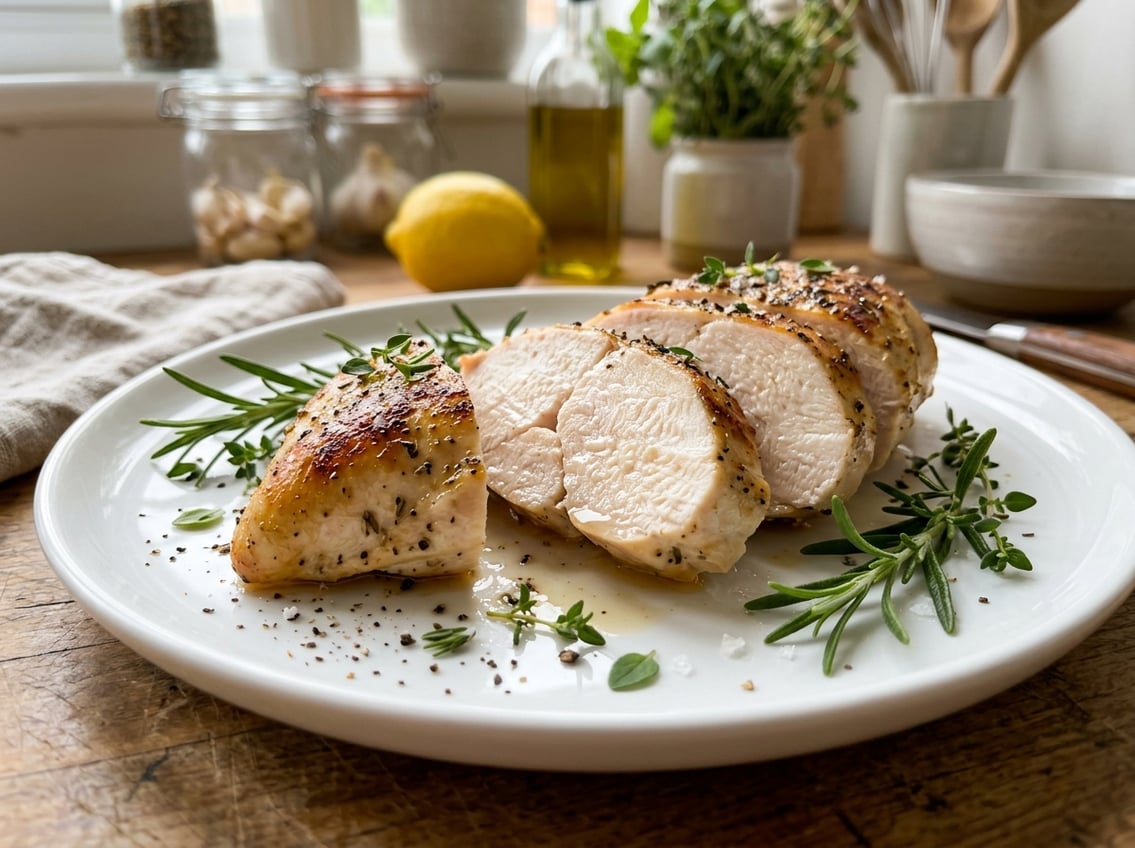
When you cook chicken breast to the right temperature, rest it briefly, and prep it well before cooking, you can get a juicy chicken breast instead of a dry, rubbery one.
The issue is usually not the cut alone, it is the cooking method and handling.
Chicken breast is lean, so it gives you less room for error than darker cuts.
If your boneless chicken breasts have turned out tough, the cause is usually easy to spot once you know what to look for.
What Usually Makes Chicken Breast Chewy or Dry
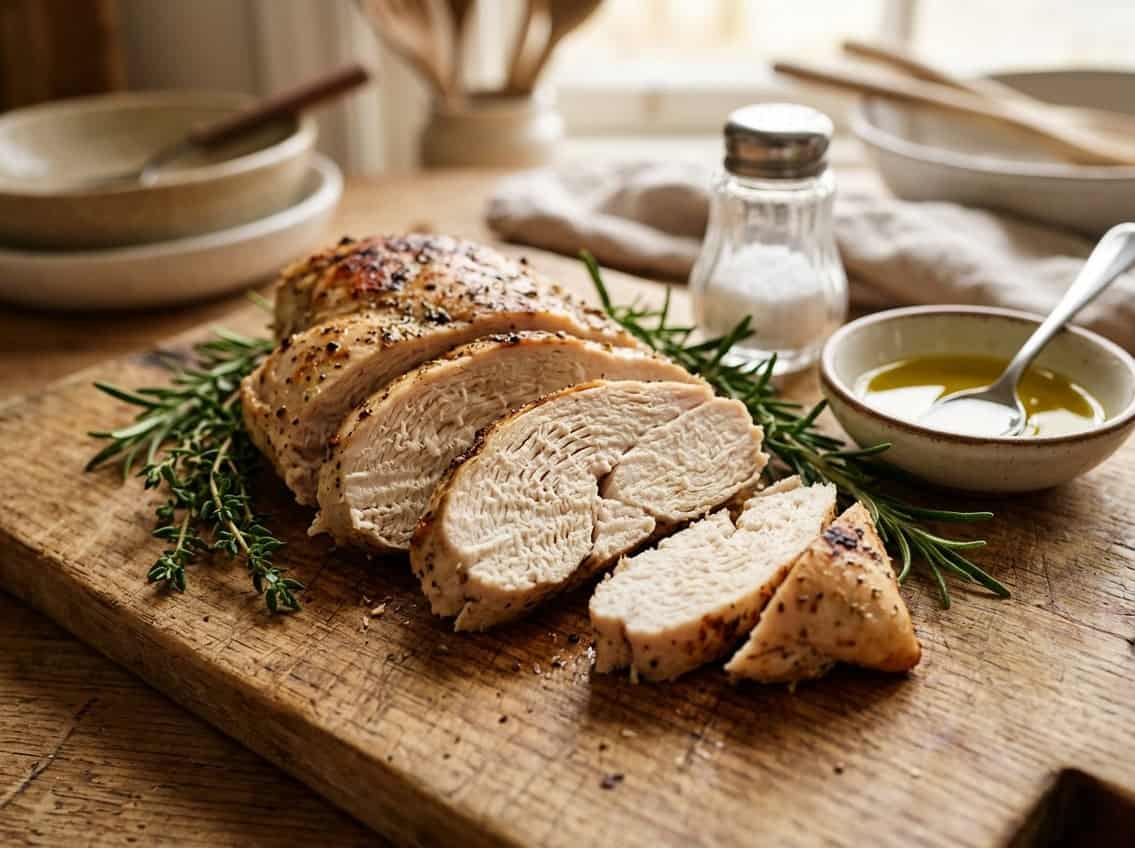
Most chewy chicken problems come from heat and moisture loss.
A dry chicken breast can feel stringy, firm, or rubbery, and those textures often point to how you cooked it rather than the chicken itself.
Overcooking and Rubbery Texture
Overcooking is the most common reason chicken breast turns dry and rubbery.
Because chicken breast is lean, it cooks fast, and a few extra minutes can push the proteins past the point where they stay tender.
A chicken breast can go from just done to tough quickly.
If you cook chicken breast at high heat for too long, the juices leave the meat and the texture tightens.
Undercooking and Unsafe Texture Cues
Undercooking can also create a rubbery chicken feel, and it can be unsafe.
A chicken breast that is still soft and slippery in the middle may not have reached a safe internal temperature.
Aim for a safe internal temperature of 165°F when you cook chicken breast.
According to guidance on tough chicken breast, cooking to the correct temperature helps you avoid both food safety risks and unpleasant texture.
Uneven Thickness and Fast Moisture Loss
Boneless chicken breasts are often thicker on one end and thin on the other.
That means the thin part can dry out before the thicker part is fully cooked.
When heat hits uneven pieces, the outside often loses moisture too fast.
If you want better results, start with even thickness so the whole piece cooks at the same pace.
How to Cook It So It Stays Tender and Juicy
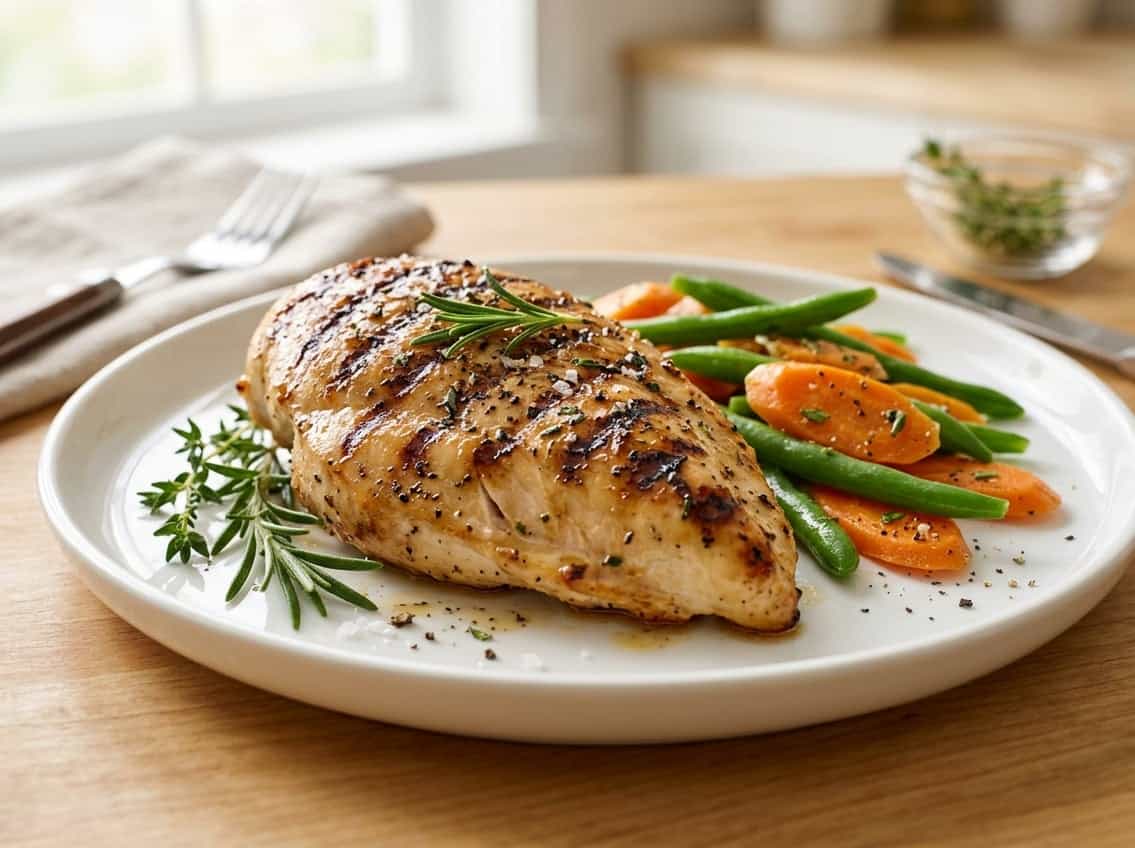
Tender chicken breast depends on control.
You want enough heat to reach a safe internal temperature, yet not so much that the meat dries out before it is done.
Using a Meat Thermometer and Carryover Cooking
A meat thermometer gives you the most reliable result.
Insert it into the thickest part of the chicken breast and stop cooking when it reaches 165°F.
Carryover cooking matters too.
The temperature keeps rising after you remove the chicken from the heat, so pulling it a little early can help you keep juicy chicken instead of overcooked meat.
Choosing Gentler Heat and Better Cooking Methods
Gentler methods are often easier for chicken breast.
Baking at moderate heat, poaching, steaming, or a controlled pan-sear can help you cook chicken breast more evenly than very high heat.
Many chefs also prefer bone-in, skin-on pieces when they want a more forgiving result, as noted by Simply Recipes.
The extra moisture protection can make it easier to get a juicy chicken breast.
Resting and Slicing for Better Texture
Rest the chicken for several minutes after cooking.
This gives the juices time to settle back into the meat instead of running out the moment you cut it.
Slice across the grain when possible.
That shortens the muscle fibers and helps chicken breast feel softer to eat.
Prep Techniques That Improve Tenderness Before Cooking
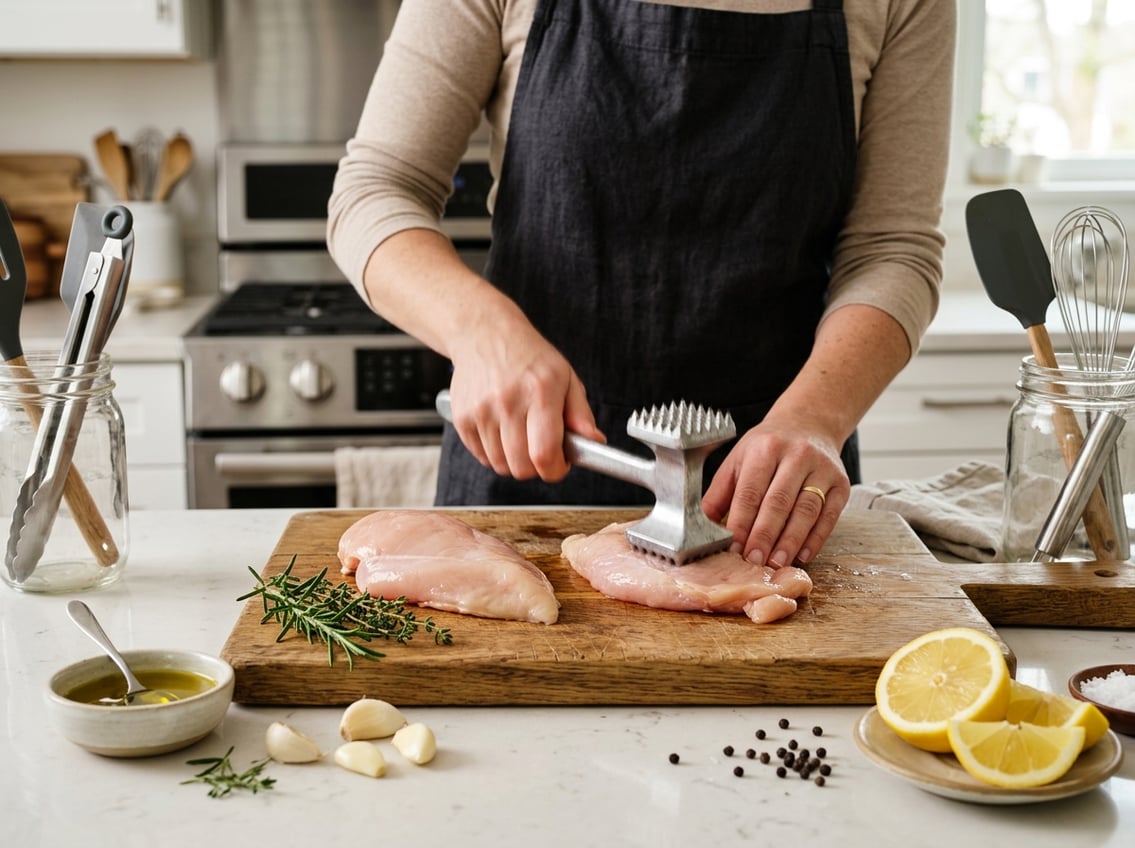
Good prep can make chicken breast easier to cook well.
Simple steps like flattening, salting, and marinating can improve moisture retention and give you a better texture before the pan or oven even heats up.
Pounding Chicken Breast to an Even Thickness
A meat mallet helps you flatten thick spots so the breast cooks evenly.
Light pounding between sheets of plastic wrap or parchment can reduce the chance that one part dries out before the rest is done.
Do not smash it too thin.
The goal is an even piece, not a torn one.
Brining and Marinating for Moisture Retention
Marinating chicken breast can add flavor and help with tenderness, especially when the marinade includes salt, acid, or dairy.
Dry brining, which uses salt before cooking, can also help the meat hold moisture better.
If you are looking for a simple approach, salting ahead of time is often enough.
More complex marinating methods can add extra flavor, which is useful for plain chicken breast.
When Tenderizing Helps and When It Does Not
Tenderizing techniques work best with standard boneless chicken breasts that are simply a bit dry or thick.
A meat mallet, brine, or marinade can help you tenderize chicken when the main issue is texture from cooking or prep.
These methods will not fix every problem.
If the chicken itself has a quality defect, or if it was already overcooked, the results will still be limited.
When the Problem Is the Chicken Itself
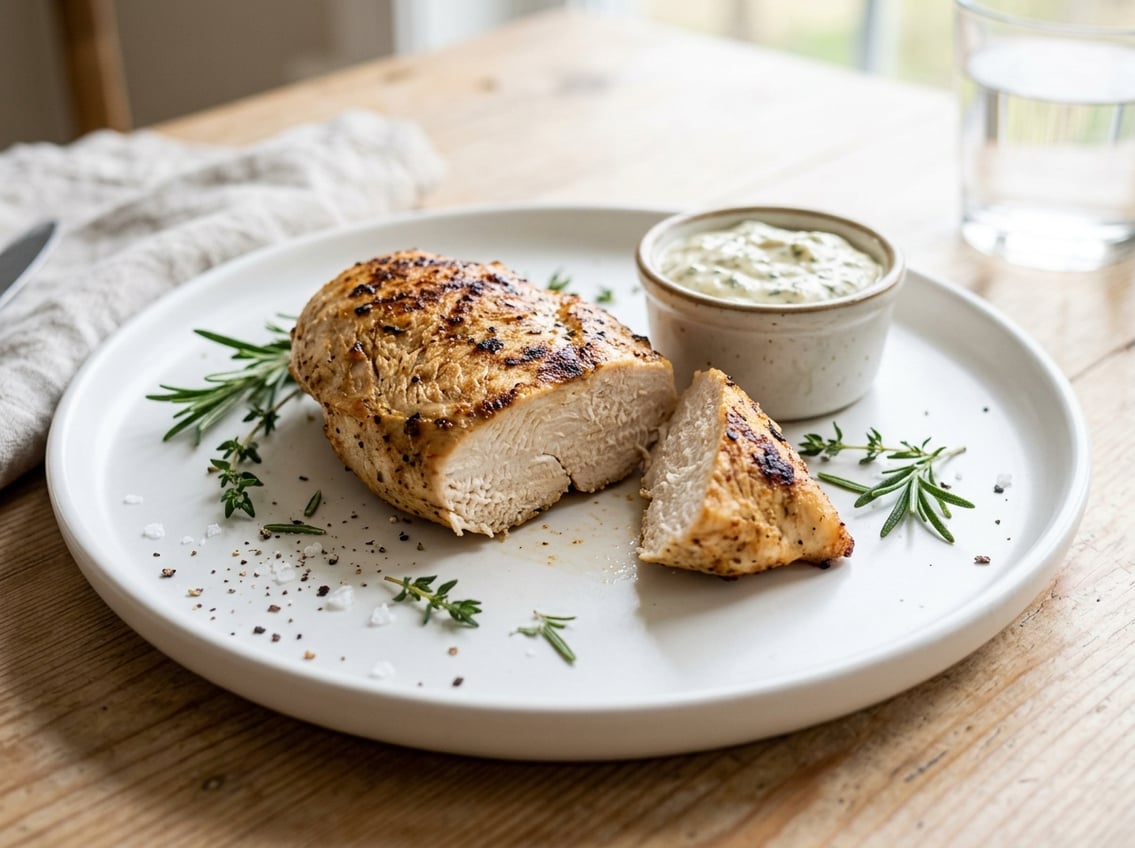
Sometimes tough chicken breasts are not your fault.
The bird, the cut, or the way it was processed can affect texture before it ever reaches your kitchen.
Woody Breast and Other Quality Defects
Woody breast is a known texture defect that can make chicken feel firm, stringy, or dense.
It is not the same as undercooked chicken, and cooking it correctly may not fully solve the problem.
If a breast feels unusually hard in the package, or stays oddly tough after careful cooking, quality may be the reason.
That is one case where you may not be able to fully fix tough chicken breast.
Poor Quality Chicken vs. Organic Chicken
Poor quality chicken can come from processing, handling, or the bird’s muscle condition.
Organic chicken is not automatically more tender, although some shoppers prefer it for other reasons.
The label alone is not a guarantee of texture.
What matters more is the specific piece, its thickness, and how you cook it.
How to Fix Tough Chicken Breast After Cooking
If you already cooked the chicken and it came out tough, slice it thinly and serve it with sauce, broth, or gravy.
This adds moisture and makes the texture easier to eat.
You can also chop it for soup, salad, tacos, or casseroles.
These dishes hide dryness better than serving the breast whole.


