
Is Chicken Breast Dry? Causes and How to Keep It Juicy
If you keep asking is chicken breast dry, the short answer is that it can be, especially when you cook it too long or too hot. Chicken breast is lean, so it does not have much fat to protect it from drying out.
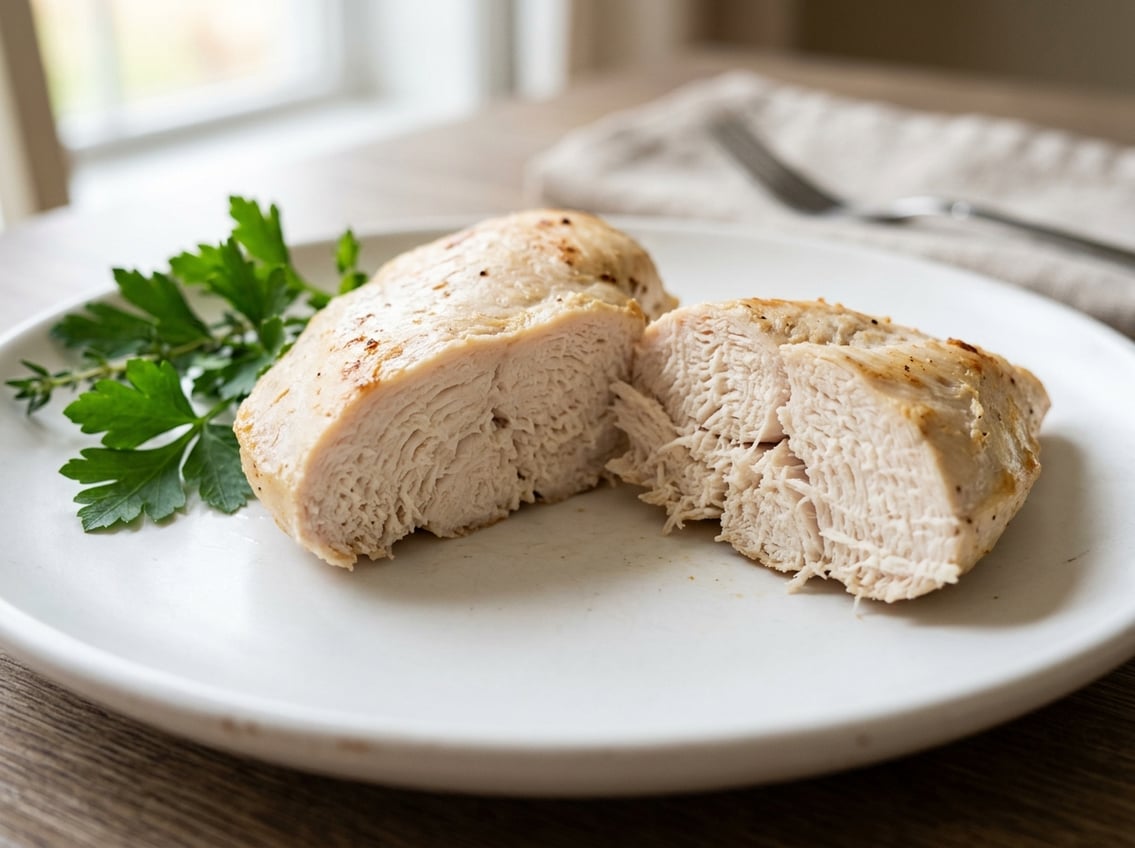
You do not have to settle for tough meat. If you use the right temperature, stop cooking at the right moment, and let the chicken rest, you can keep chicken breast juicy and tender.
A few small changes in how you choose, prep, and cook chicken breast can make a big difference in texture and flavor.
Why Chicken Breast Dries Out So Easily
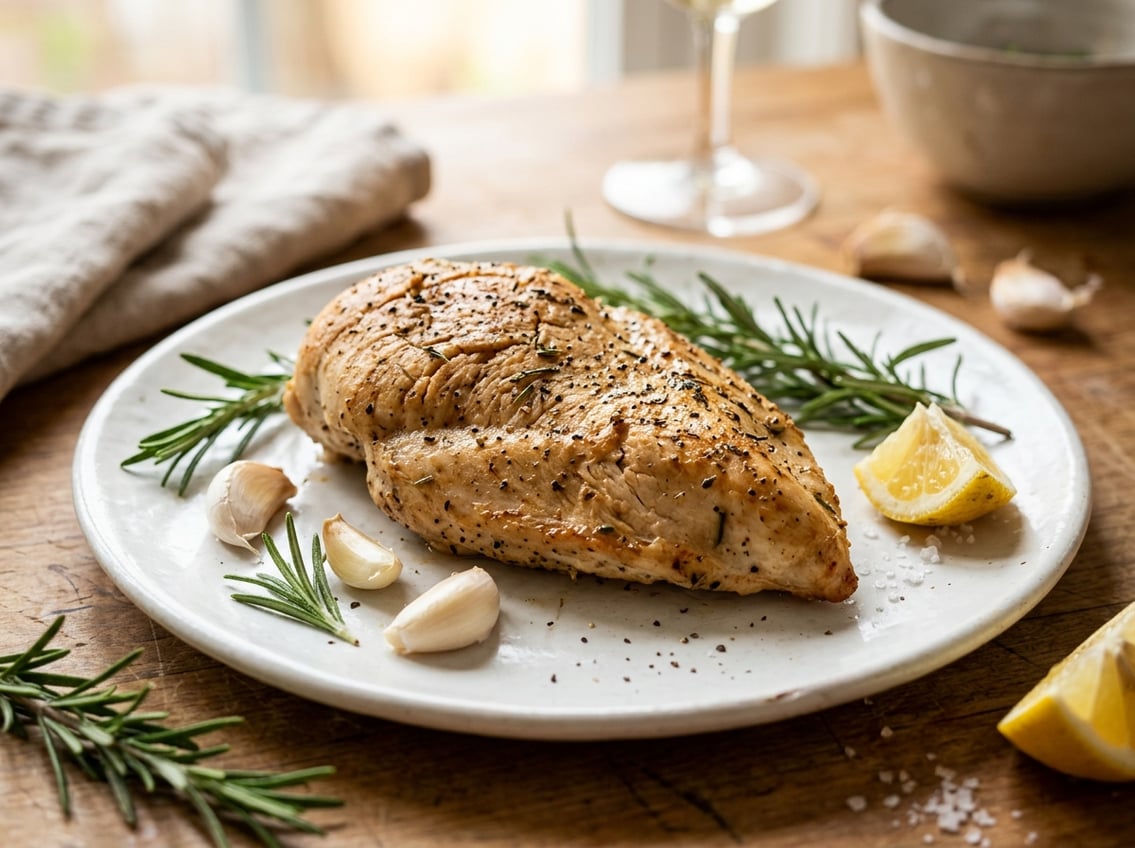
Chicken breast dries out because it is naturally lean and sensitive to heat. Once the meat goes past the point you need for safe cooking, it loses moisture fast, so you need to manage heat carefully.
Why Lean White Meat Loses Moisture Faster
Chicken breast is a lean cut with very little fat. Fat helps protect meat from drying as it cooks, so skinless chicken breast has less built-in backup.
As the meat heats, muscle fibers tighten and push moisture out. A tender chicken breast can turn stringy if you cook it too far.
How Overcooking Tightens Proteins
Heat changes the proteins in chicken. At the right point, the meat is firm and juicy.
At too high a temperature or too long a cooking time, the proteins tighten too much and squeeze out liquid. That is the main reason chicken breast can seem dry even when it is seasoned well.
As Chicken Obsessed explains, once lean muscle climbs past its safe temperature, liquid inside the fibers gets pushed out.
Why Uneven Thickness Leads to Dry Spots
Chicken breasts are often thicker on one end and thinner on the other. The thin side reaches doneness first, while the thick side still needs more time.
If you keep cooking to finish the thick end, the thin end often dries out. Flattening the breast or trimming it into even thickness helps keep the whole piece closer to the same doneness.
How to Cook It So It Stays Juicy
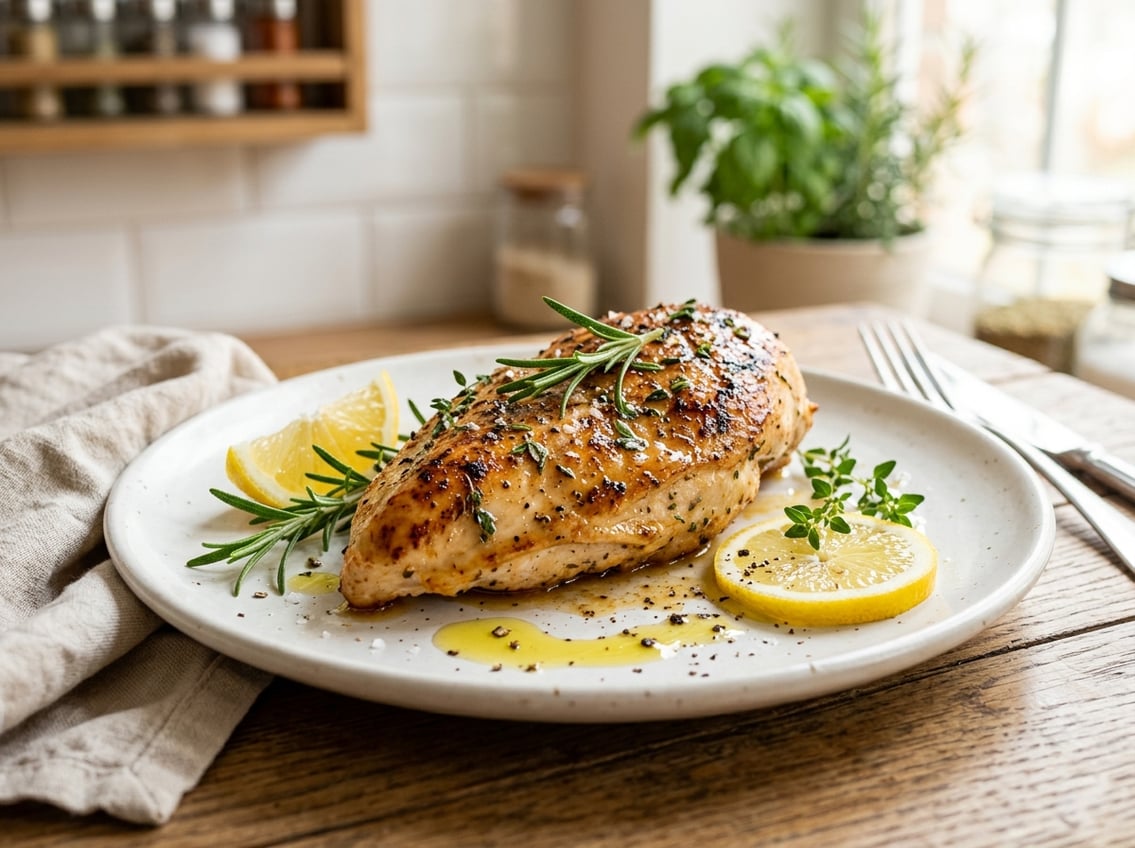
You can keep chicken breast juicy if you control the heat and the timing. The goal is to cook the meat just enough, then let residual heat finish the job while the juices settle back in.
Use a Thermometer Instead of Guessing
A thermometer takes the guesswork out of cooking chicken breast. Check the thickest part and do not rely only on color, since color can mislead you.
A thermometer gives you a clear stopping point. This helps you avoid dry chicken and keeps the meat closer to juicy chicken breast texture.
Pull It Early and Let Residual Heat Finish
Residual heat keeps cooking the meat after you remove it from the oven or pan. You should pull chicken breast a little before it reaches the final safe temperature.
According to Real Simple’s chicken breast tips, pulling it from the oven just before the final temperature and letting it rest helps keep it tender and flavorful.
Cook at Moderate Heat for Better Moisture Retention
Very high heat can brown the outside fast while leaving you with dry chicken breast inside. Moderate heat gives you more control and helps the meat cook more evenly.
This matters when you cook chicken breast in the oven or on the stovetop. It is usually better to go a little slower than to rush the process.
Pound or Trim for Even Cooking
If one side is much thicker, pound it gently or trim it so the breast is more even. This helps the whole piece cook at the same rate.
Even thickness is one of the easiest ways to get juicy chicken breasts without overcooking the thinner parts. It also makes timing more predictable.
Prep Choices That Improve Moisture and Texture
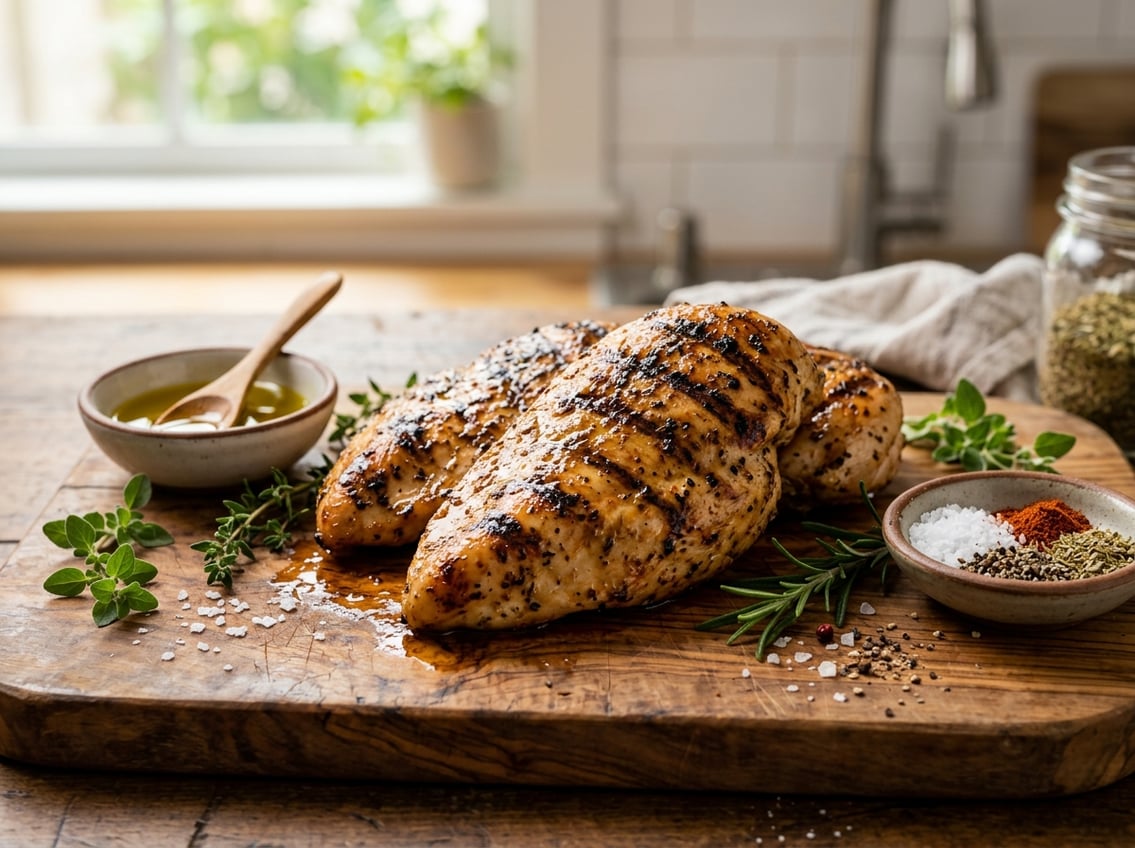
Good prep can improve both taste and texture before the chicken even hits the pan. Simple steps like salting ahead, choosing the right package, and using marinade when it makes sense can help a skinless chicken breast stay more tender.
Dry Brining and Salting Ahead
Salting chicken ahead of time gives the salt time to work into the meat. This can improve seasoning and help the surface hold moisture better during cooking.
You do not need a long soak. Even a short rest after salting can make a difference in a juicy chicken breast.
When Marinades Help and When They Do Not
Marinades are useful for adding flavor, and they can help the surface feel more tender. They do not fully fix dryness inside the meat.
If your marinade is mostly oil, it may help with browning and flavor, not deep moisture. For chicken breast, salt and proper cooking temperature usually matter more than a long marinade.
Choosing Better-Quality Chicken at the Store
The package you buy affects the final result. Some chicken breasts are injected with brine, which adds water weight that can cook off later.
If you want a cleaner taste, look for air-chilled chicken. Real Simple notes that air-chilled chicken breasts can help prevent dryness because you are buying meat, not added water that evaporates during cooking.
That can make your chicken breast feel more like actual chicken and less watery after cooking.
Best Cooking Methods for Reliable Results
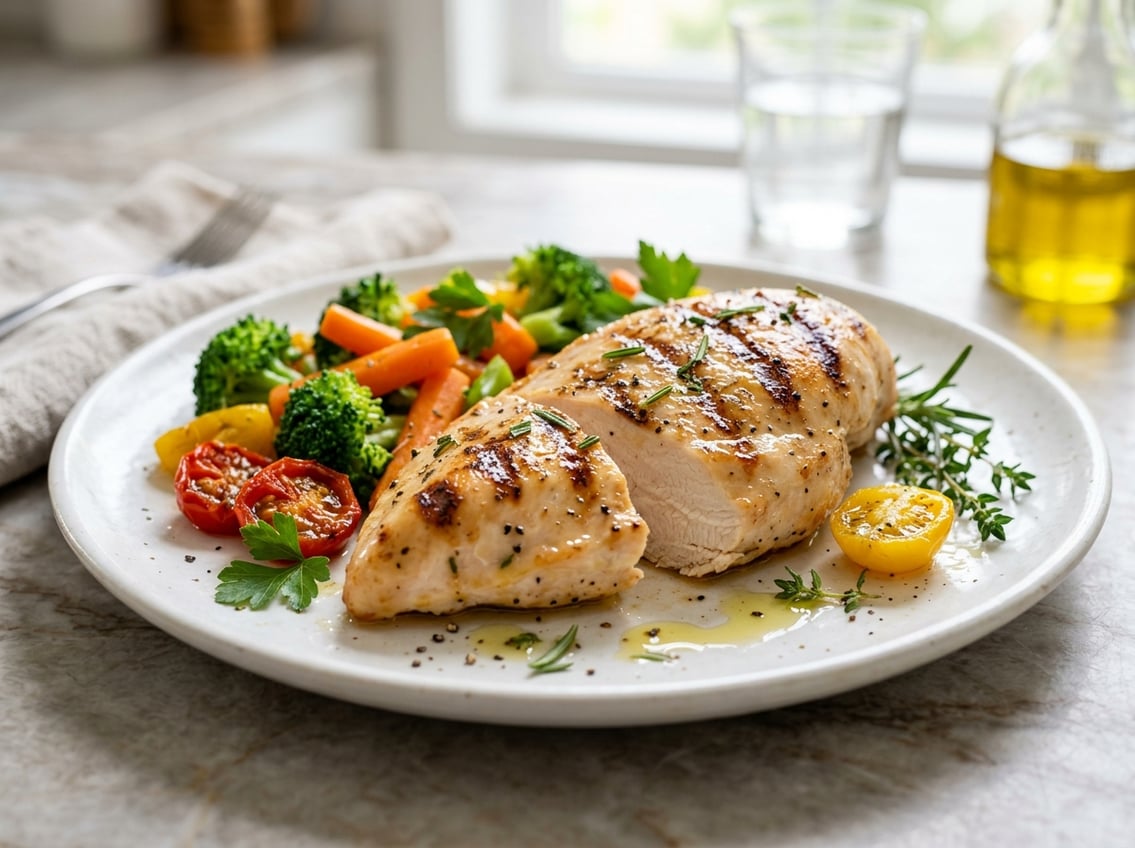
Some methods are more forgiving than others when you cook chicken breast. If you want juicy chicken breasts with less stress, choose methods that give you even heat and better control over doneness.
Oven Roasting for Everyday Cooking
Oven roasting is a steady, practical way to cook chicken breast. It works well when you use moderate heat, an even thickness, and a thermometer.
Roasting also makes it easier to cook multiple pieces at once. That is useful for meal prep or family dinners when you want a tender chicken breast with less hands-on time.
Pan Cooking Without Drying the Center
Pan cooking can give you great browning, as long as you do not use too much heat. Sear the outside, then lower the heat or finish gently so the center does not overcook.
This works especially well for thinner pieces. A quick rest after cooking helps the juices settle before slicing.
Poaching and Sous Vide for Maximum Tenderness
Poaching uses gentle heat to help chicken breast stay moist.
Sous vide gives you more control because you set the water temperature.
Both methods take more time than pan cooking.
They are reliable ways to make juicy chicken breast.


