
Whole Chicken Breast Calories by Size and Cooking Method
Whole chicken breast calories depend on size, whether the meat is raw or cooked, and whether the skin is on.
A skinless chicken breast is usually one of the simplest ways to get a high-protein meal without a lot of extra calories.
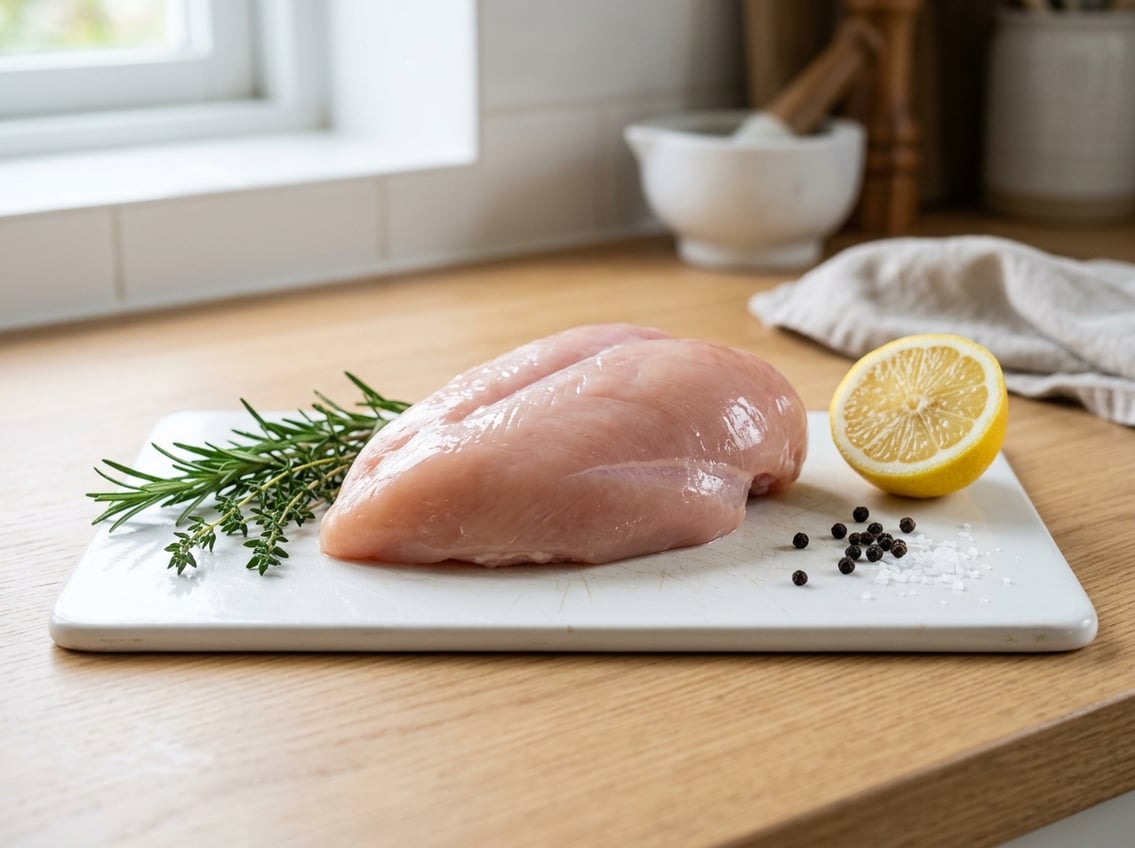
A cooked, skinless chicken breast has about 165 calories per 3.5 ounces, with a strong amount of protein and very little carbohydrate.
Chicken breast fits many eating styles, from calorie control to muscle-building plans.
Portion size and cooking method change the calorie count, so you should read the label or weigh the meat for accuracy.
Calorie Count by Portion Size

You can track chicken breast calories more easily when you compare weight, not just the number of pieces.
Nutrition facts also change between raw and cooked meat, since cooked portions lose water and weigh less.
Calories Per 100 Grams and Per 3.5 Ounces
A common reference point is 165 calories per 100 grams, or 3.5 ounces, of cooked, skinless chicken breast.
That serving provides about 31 grams of protein, which is why many people use chicken breast in meal planning.
Eat This Much lists 142 calories per 118 grams for one skinless breast fillet, reflecting natural size differences.
See the chicken breast nutrition facts for the full breakdown.
How Many Calories Are in One Whole Breast
One whole chicken breast can vary a lot in calories because “whole breast” is not one fixed weight.
A smaller breast may land near 140 to 180 calories if it is skinless and cooked, while a larger breast can reach 250 calories or more.
If you are tracking calories, weigh the chicken for a more accurate number.
Raw vs Cooked Weight and Why Numbers Change
Raw chicken breast contains more water, so it weighs more before cooking.
When you grill, bake, or roast it, the meat loses water and becomes denser, so the calorie count per ounce appears higher even though the total calories stay close to the same.
This is why a raw breast and a cooked breast can show different numbers on food trackers, even when the actual piece is the same size.
Protein and Nutrition Profile
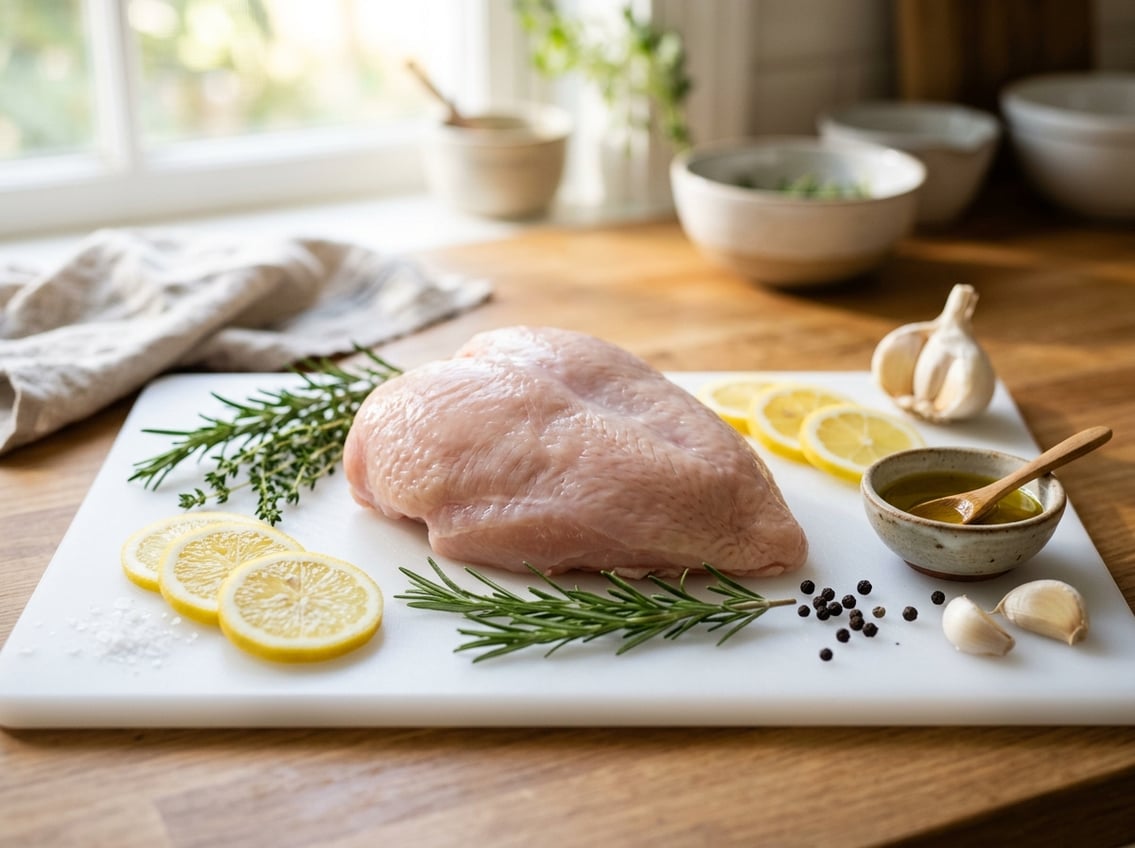
Chicken breast gives you a lot of protein with relatively few calories.
The meat is also a complete protein, so it supplies all essential amino acids your body needs from food.
Why It Is Considered Lean Protein
Skinless chicken breast is one of the clearest examples of lean protein.
It is low in fat compared with many other cuts of chicken, so more of the calories come from protein rather than fat.
Complete Protein and Essential Amino Acids
Chicken breast contains all nine essential amino acids.
These amino acids support muscle repair, tissue maintenance, and many other body functions.
Key Vitamins and Minerals in Skinless Meat
Skinless chicken breast also gives you several useful nutrients.
According to the Eat This Much chicken breast nutrition facts, it provides potassium, vitamin B6, niacin, phosphorus, selenium, and choline.
These nutrients support energy use, nerve function, and normal metabolism.
How Cooking Method Changes the Numbers

Cooking changes calories in chicken mostly by adding fat or removing water.
A plain grilled chicken breast and a plain baked chicken breast are very close in calories, while skin, oils, sauces, and breading can raise the total quickly.
Grilled Chicken Breast vs Baked Chicken Breast
Plain grilled chicken breast and baked chicken breast are both low-calorie choices when you use skinless meat.
A cooked, skinless breast often stays near 165 calories per 100 grams, whether grilled or baked.
Added oil, glaze, or butter usually makes the bigger difference, not the cooking method itself.
Skin On vs Skinless Comparisons
Skin adds fat and calories in chicken breast.
A skinless breast stays lean, while chicken cooked with the skin on can be much higher in calories even before you add any sauce.
If you want the lowest calorie option, choose skinless chicken breast.
Sauces, Oils, and Breadings That Add Calories
A light coating of oil, a creamy sauce, or a breaded crust can change the calorie count a lot.
Fried chicken breast and heavily sauced recipes are no longer comparable to plain grilled chicken.
If you are counting calories, measure added fats the same way you measure the meat.
Best Ways to Use It in Meals

Chicken breast works well when you want meals that are filling, simple, and high in protein.
It fits weight loss plans, athletic meal prep, and balanced lunches that need more protein without too many extra calories.
Weight Loss and High-Protein Meal Planning
Chicken breast is useful for high protein meal planning because it helps you stay full while keeping calories in check.
Pair it with vegetables, beans, or whole grains for a balanced plate.
Grilled chicken, baked chicken breast, or shredded chicken breast all work well in meal prep containers.
How It Compares With Other Chicken Cuts
Compared with thighs, wings, and skin-on cuts, chicken breast is usually the leanest choice.
That gives it an edge when you want lean protein with fewer calories per bite.
Dark meat can still fit your diet, but the calorie count is usually higher because it contains more fat.
What to Know About Chicken Caesar Salad and Similar Dishes
A chicken Caesar salad can be a smart meal or a calorie-heavy one, depending on the extras.
The chicken itself often stays lean. Dressing, croutons, cheese, and skin-on pieces can raise the total fast.
Wraps, sandwiches, and pasta dishes that use grilled chicken breast follow the same idea.


