
Non Dry Chicken Breast Cooking Guide
You get a non dry chicken breast by focusing on moisture, even cooking, and the right finish temperature.
Keep the meat from tightening too much while still cooking it safely.
If you control thickness, seasoning, heat, and rest time, you can cook juicy chicken breast with steady results instead of guessing.
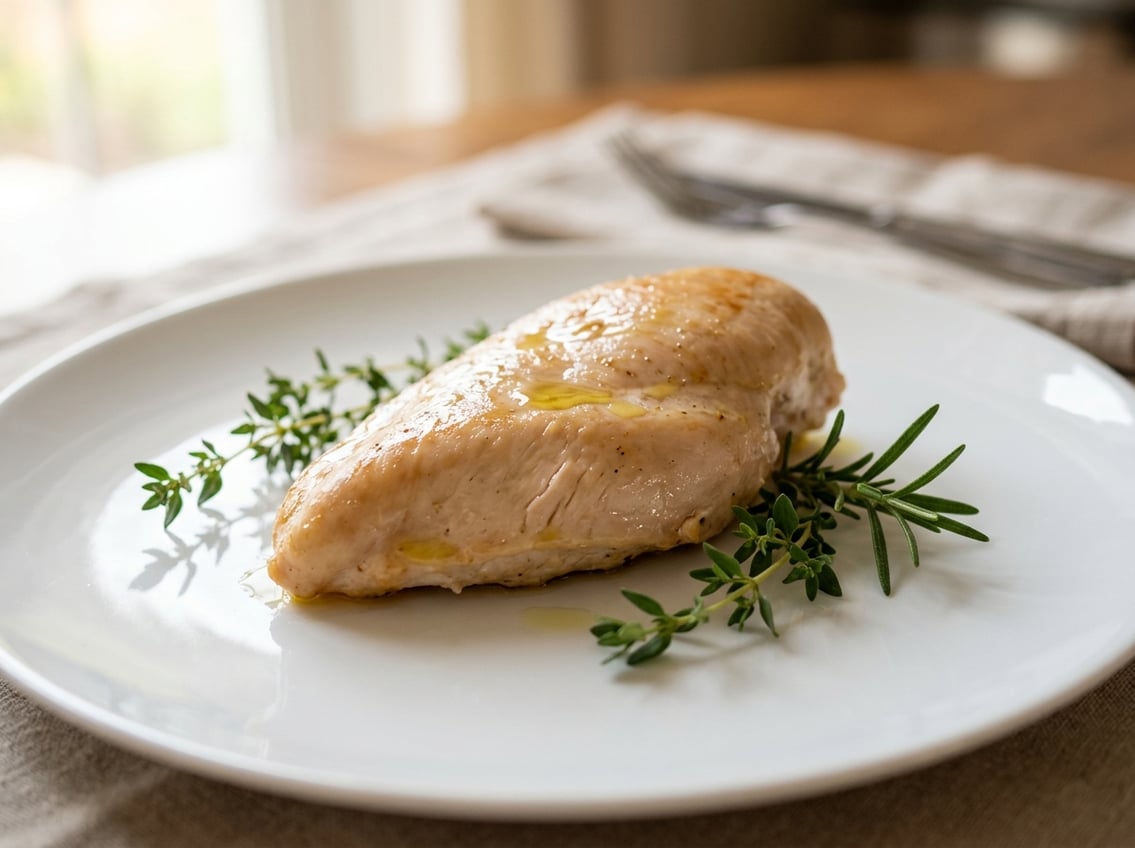
You do not need a hard recipe to make this work.
Once you know how to cook chicken breast the right way, you can avoid dry chicken in the oven, skillet, air fryer, or poaching liquid.
What Keeps Chicken Breast Moist
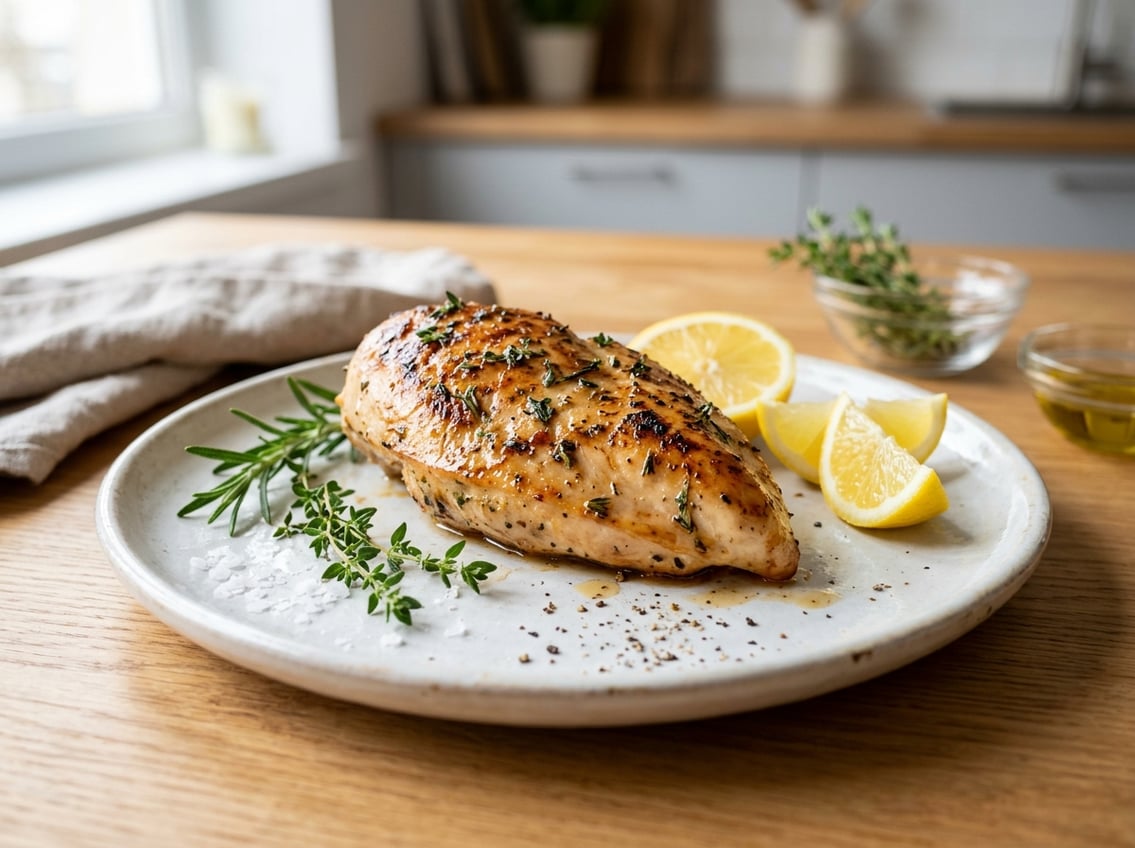
Boneless skinless chicken breasts dry out because they are lean and cook fast.
To keep tender chicken breasts, use even thickness, some salt, enough fat on the surface, and a careful pull temperature.
Why Lean White Meat Dries Out Fast
Boneless skinless chicken breasts have very little fat, so they lose moisture quickly when the heat runs too high or the cooking time goes too long.
As a chef noted in Simply Recipes, the breast muscle tightens as it cooks, which squeezes out juice.
A dry pan, a hot oven, or a few extra minutes can turn a good piece of chicken into a tough one.
Your goal is not just to cook it through, but to stop at the right point.
Choose Even-Sized Boneless Cuts
Even-sized boneless chicken breasts cook at the same rate, so the thinner edge does not dry out before the thicker end is done.
If one side is much thicker, pound it lightly or slice it into cutlets.
Uniform thickness gives you a better chance at juicy chicken breast every time.
Brining, Seasoning, and Oil Basics
A short brine helps boneless chicken breasts hold on to moisture.
Salt seasons the meat inside and can improve texture, while a light coating of oil helps the surface brown without sticking.
For a basic brine, use salt and water for 30 minutes to 2 hours, then pat the chicken dry before cooking.
Add dry seasoning after brining, and use enough oil to coat the surface lightly.
The Right Pull Temperature and Rest Time
A digital thermometer gives you the most reliable result.
According to Simply Recipes, many cooks pull chicken at about 155°F to 160°F, then let carryover heat finish the job while it rests.
Rest the meat for 5 to 10 minutes after cooking.
That pause keeps the juices inside the chicken instead of spilling out when you cut it.
Best Cooking Methods for Reliable Results
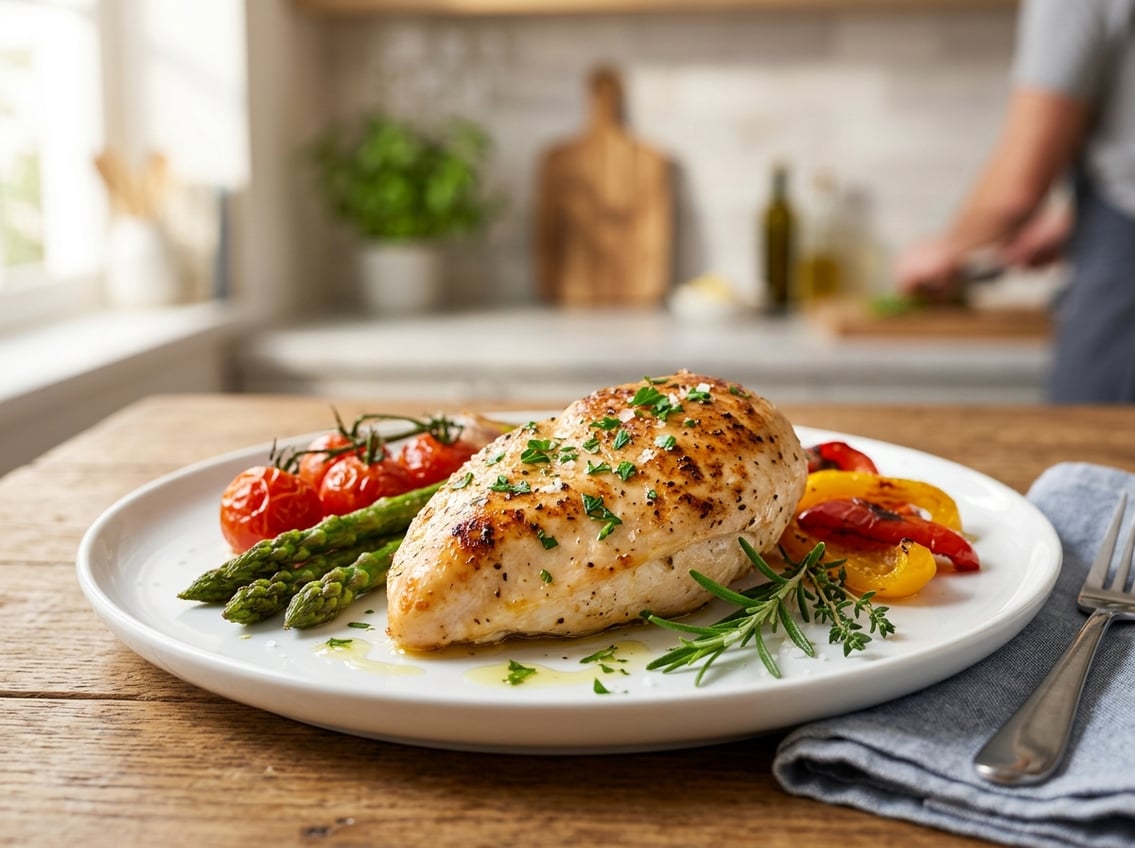
The best method is the one that lets you control heat and timing.
When you cook chicken breast with even thickness and a thermometer, you can get juicy baked chicken, a good skillet sear, fast air fryer results, or a clean poach for meal prep.
How to Bake Chicken Breast Evenly
To bake chicken breast, set the oven to a moderate temperature and place the breasts on a lined sheet pan.
Brush them with oil, season well, and bake until the thickest part reaches your target temperature.
Use a thermometer instead of relying on color alone.
A lower oven temperature often gives you more control and a juicier result.
Skillet Searing Without Overcooking
A skillet works well when you want color and flavor fast.
Sear the chicken over medium heat, then lower the heat or finish briefly in the oven if the breasts are thick.
Do not keep turning the meat over and over.
A steady cook gives you better browning and makes it easier to avoid dry chicken.
Air Fryer Timing for Fast Weeknights
The air fryer can make a quick weeknight meal, as long as you do not overcook the chicken.
Use a light oil coating, preheat if your model needs it, and check the internal temperature early.
Air fryers cook with strong circulating heat, so thin chicken breasts can finish fast.
Start checking a few minutes before the timer ends to protect the juicy chicken breast texture.
Poaching for Salads, Soups, and Meal Prep
Poaching is one of the gentlest ways to cook chicken breast.
Keep the liquid at a low simmer, not a hard boil, so the meat stays soft and even.
This method is useful for salads, soups, and meal prep because it gives you plain, tender chicken that you can season later.
It also works well when you want to cook chicken breast ahead of time without extra browning.
Flavor Variations That Stay Juicy
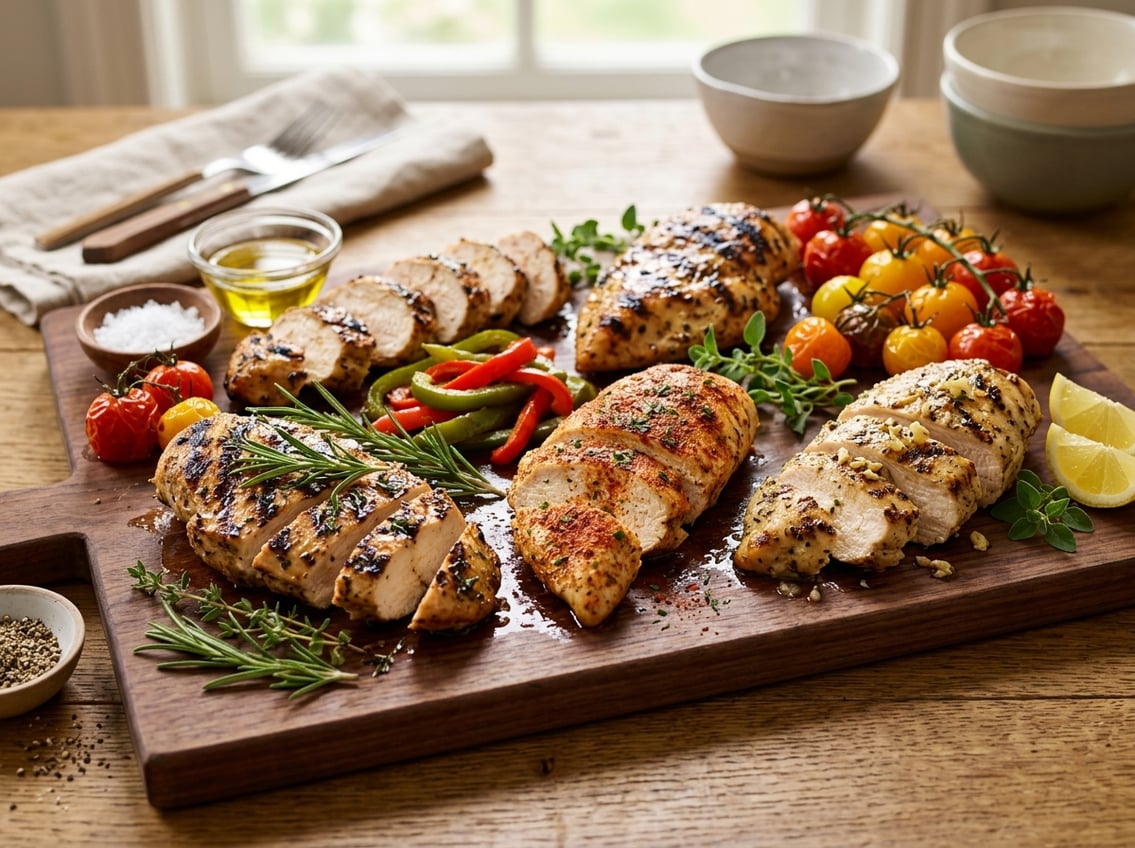
Strong flavor does not need dry meat.
The best chicken breast recipes use seasoning, sauce, or toppings that add taste without forcing the chicken to cook too long.
Simple Herb and Garlic Seasoning
A simple mix of salt, pepper, garlic powder, onion powder, and dried herbs works well on chicken breast recipes.
Add a little oil first so the seasoning sticks and the surface browns better.
This is a good base when you want juicy chicken breast without a heavy sauce.
It also pairs well with vegetables, rice, or pasta.
Lemon Garlic Chicken for Bright Flavor
Lemon garlic chicken gives you a fresh, clean flavor that works in the oven or skillet.
Use lemon zest, garlic, olive oil, and a modest amount of lemon juice so the acid adds brightness without making the meat mushy.
If you want extra flavor, add the lemon after cooking as well.
That keeps the chicken breast texture tender while still giving you a strong citrus taste.
Chicken Parmesan Without Dry Meat
Chicken parmesan can stay juicy if you keep the cutlets thin, cook them quickly, and add sauce near the end.
Overbaking breaded chicken is a common reason it turns dry.
Use a light layer of sauce and cheese, then bake just until everything melts and the chicken is done.
If the cutlets are very thick, pound them first so they cook evenly.
When Baked Chicken Thighs Are the Better Option
Sometimes baked chicken thighs make dinner easier. They have more fat, so they stay moist longer.
You get a wider margin for error with thighs. If you still want chicken breast, use the methods above to keep it tender.


