
Is Chicken Breast Processed? What Counts and What Doesn’t
Whether chicken breast is processed depends on what happens to it. A plain chicken breast that is only cut, cleaned, chilled, or frozen is not the same as processed meat.
Once someone adds curing, smoking, heavy salting, preservatives, or shapes it into a new product, the answer changes.
Plain fresh or frozen chicken breast is usually an unprocessed meat. Chicken breast products with added salt, preservatives, or major processing steps are processed.

That distinction matters when you shop or cook. In the U.S. market, “chicken breast” can mean anything from a raw, skinless cut to a sliced deli product with sodium, sugar, and preservatives.
If you want the least processed option, you need to know which steps count as simple handling and which ones make chicken breast processed meat.
What Counts as Processed Meat
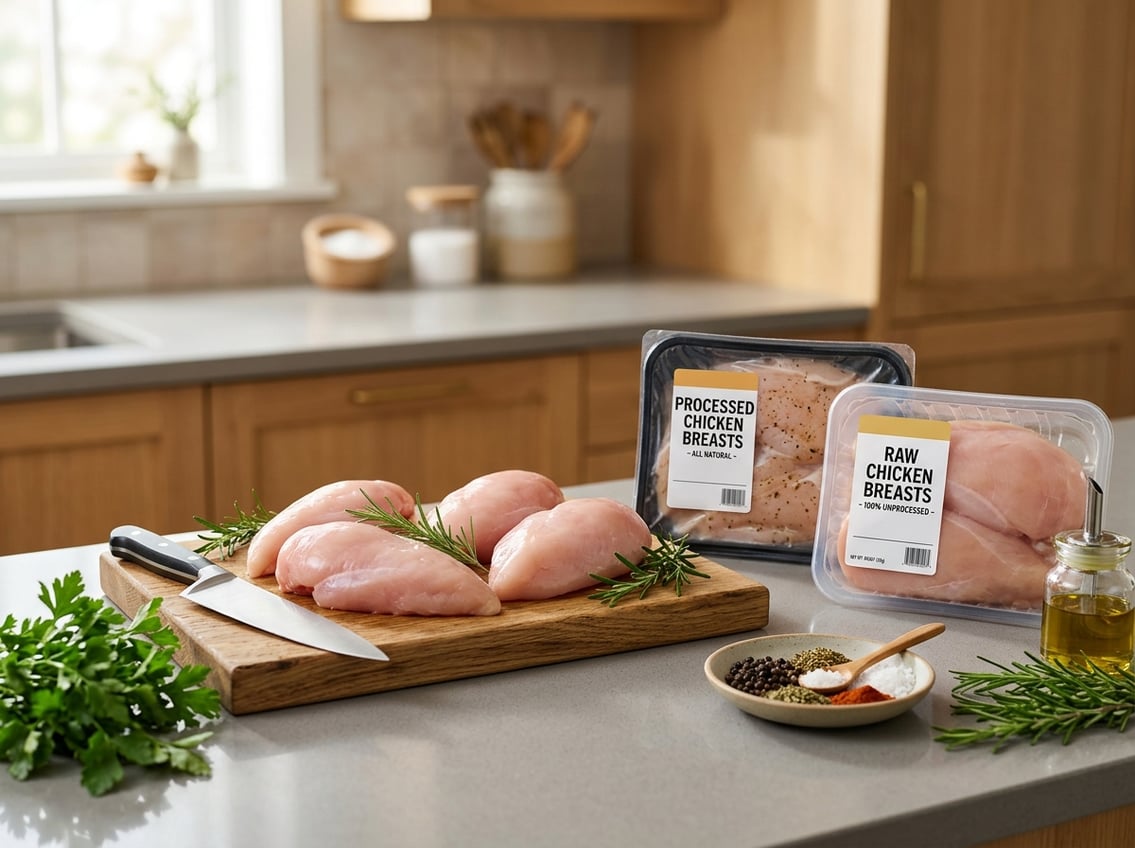
Processed meat usually means someone has changed the meat to last longer, taste different, or hold a certain texture. That often involves salt, preservatives, smoking, curing, or other added treatments.
The key idea is that the meat is no longer just a plain cut from the animal.
How Salting, Smoking, Curing, and Preservatives Change Meat
Salting, smoking, and curing change both the flavor and the storage life of meat. Cured meats often contain nitrates and sodium nitrite because they help preserve color and slow spoilage.
Added preservatives can extend shelf life even more. Salted and smoked meats are usually grouped with processed meat because someone has transformed them, not just handled them.
Why Basic Slaughtering, Cutting, and Cleaning Are Not the Same Thing
Slaughtering, cutting, and cleaning prepare meat for sale. These steps do not automatically make meat processed like curing or smoking do.
A fresh chicken breast that someone trims and packages is still usually treated as fresh chicken, not processed meat.
Where Fresh and Frozen Poultry Usually Fit
Fresh chicken and frozen chicken often fit into the unprocessed meat category when they do not contain added preservatives or flavoring. Freezing is a storage method, not a transformation into a new meat type.
Frozen chicken breast is often still considered unprocessed chicken breast. The label and ingredient list matter more than the cold storage.
When Chicken Breast Stays a Whole-Food Option

Chicken breast can stay a whole-food option when it is sold plain, with no added preservatives and no curing or heavy seasoning. It is naturally lean, with very little fat.
Fresh Chicken Breast vs Frozen Chicken Breast
Fresh chicken breast and frozen chicken breast are both often acceptable whole-food choices. Freezing does not turn the meat into processed chicken breast.
Check the package for a short ingredient list. If the product only says chicken breast, that is usually a good sign.
What Makes Unprocessed Chicken Breast Different From Deli Meat
Unprocessed chicken breast is a plain raw cut you cook yourself. Deli meat is different because it often goes through brining, smoking, seasoning, or slicing for ready-to-eat use.
That extra handling can turn it into processed chicken breast, especially when salt, added preservatives, or curing agents appear on the label.
When Brines, Marinades, or Additives Start to Matter
Brines and marinades can push chicken toward processed chicken if they add a lot of salt, sugar, or preservatives. A long ingredient list is a warning sign.
If the package includes phosphate blends, sodium-based curing ingredients, or other additives, you are not looking at the simplest form of chicken breast. The more the product changes the meat’s flavor, moisture, and shelf life, the more processed it becomes.
Which Chicken Products Are Clearly Processed
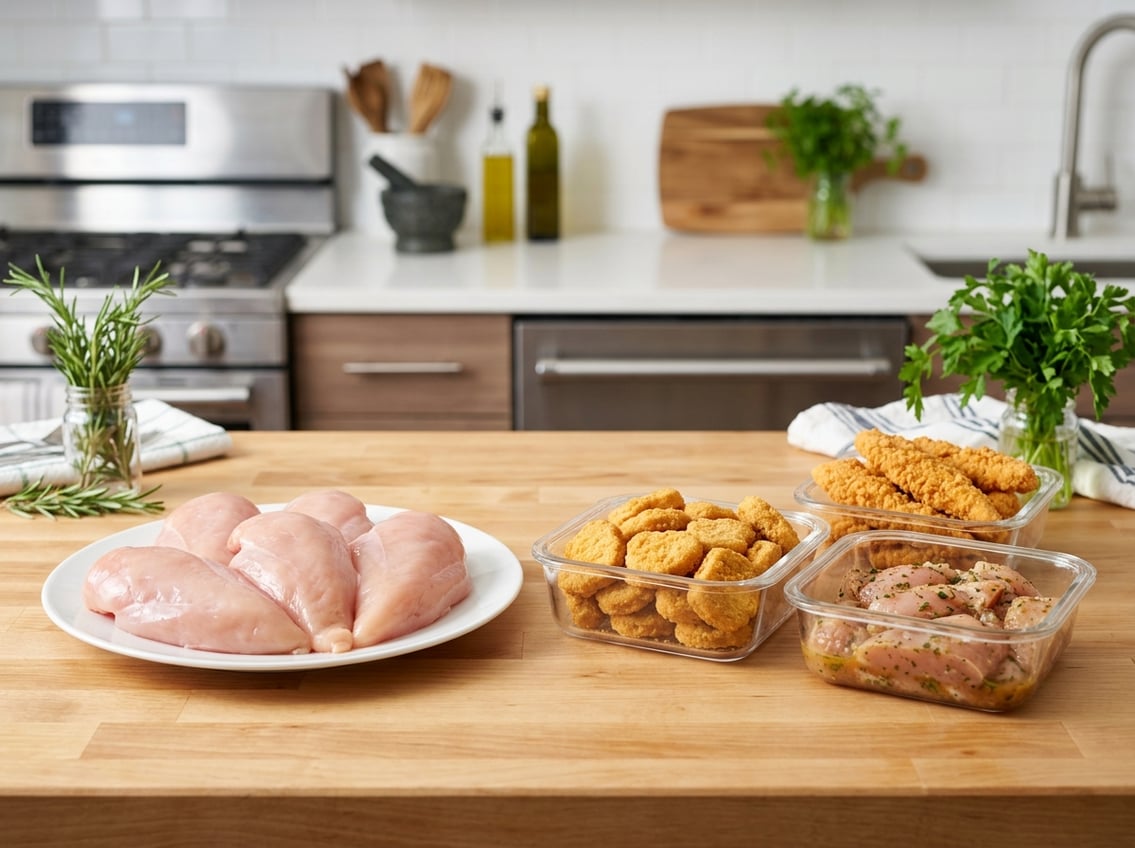
Some chicken products are clearly processed because they are shaped, blended, seasoned, or preserved. These items often include extra salt, sugar, nitrates, sodium nitrite, or other preservatives that change both the food and its shelf life.
Chicken Nuggets, Cold Cuts, and Hot Dogs
Chicken nuggets are usually made from chopped chicken mixed with breading, binders, and seasonings. That makes them processed chicken products.
Cold cuts and chicken hot dogs are even clearer examples. Producers make them for convenience and storage, not as simple whole-food cuts.
Chicken Sausage and Other Formed or Ground Products
Chicken sausage is processed because the meat is ground, mixed, seasoned, and stuffed into a new form. Ground chicken can be less processed than sausage, yet it still sits closer to processed chicken than a whole breast if it is blended or seasoned.
Plain ground chicken is different from a sausage link with salt, sugar, preservatives, and curing ingredients.
How Chicken Carcass Recovery and Ground Meat Are Used
Workers use chicken carcass recovery to pull usable meat from the chicken carcass after the main cuts are removed. That meat may then go into nuggets, sausage, patties, or other formed products.
Once someone reworks the meat into a new product, it is no longer the same as a plain breast. If the label includes preservatives or sodium nitrite, the product is clearly processed.
Health and Label Checks Before You Buy

Your best buying tool is the label. Check sodium, saturated fat, sugar, and preservatives first, since those ingredients often show how far a product has moved from plain chicken breast.
Sodium, Saturated Fat, Sugar, and Preservatives to Watch
High sodium is one of the biggest signs of a more processed chicken product. Sugar can also show up in marinades, glazes, and deli items.
Watch for added preservatives and curing ingredients like nitrates and sodium nitrite. These are common in foods such as bacon, hot dogs, and cold cuts, and they can appear in chicken products too.
How Antibiotics and Ingredient Lists Affect Buying Decisions
Antibiotics are a separate label issue from processing, but many shoppers still look for them when comparing products. The more important step is reading the ingredient list and checking whether the product is truly just chicken breast.
A short ingredient list usually points you toward unprocessed chicken breast or a simpler choice. A long list often means a more processed chicken product.
Simple Swaps Toward Less Processed Choices
Choose plain fresh or frozen chicken breast instead of breaded or deli-style items.
Cook it yourself with herbs, spices, and a small amount of salt so you control what goes in.
When you want a packaged option, compare labels and pick the one with the shortest ingredient list and the lowest sodium.


