
How Does Chicken Breast Stay Juicy and Tender?
You keep chicken breast juicy and tender by controlling heat, thickness, seasoning, and resting time. The cut is lean, so the margin for error is small. This is why chicken breast turns out so differently from one kitchen to the next.
You get the best results when you cook chicken breast to a safe temperature without pushing it much past that point. Letting the juices settle back into the meat also helps.
A few simple steps before and during cooking can make a plain chicken breast taste much better.
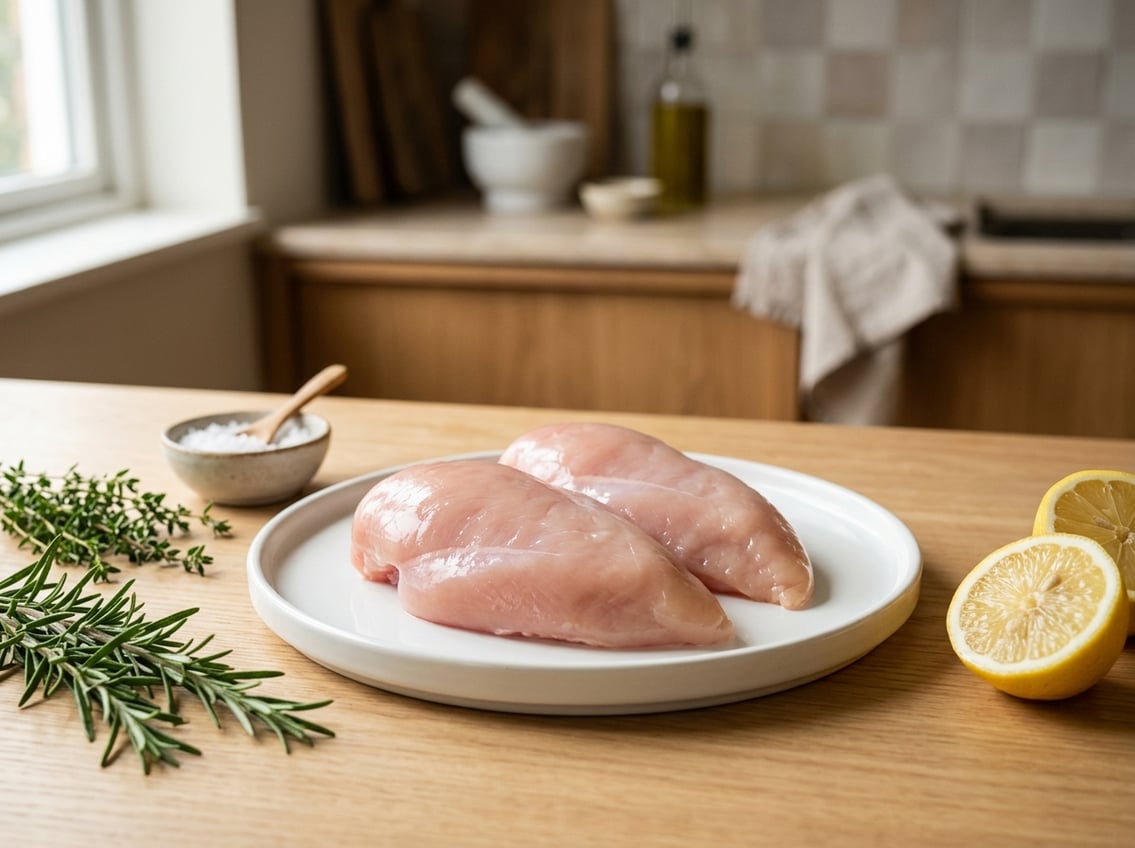
What Changes Texture and Moisture
Chicken breast has less fat to protect it from drying out. As the meat heats, its proteins tighten and squeeze out water.
Overcooked chicken can turn dry, stringy, or chewy. The shape matters, since a thick end and thin end do not cook at the same speed.
A skinless or boneless chicken breast cooks faster than a bone-in piece. Skin-on chicken breast holds more surface moisture during cooking.
The cut you choose changes both timing and texture.
Why Lean White Meat Dries Out So Fast
Lean meat has little fat to buffer heat. Once the temperature rises too far, moisture leaves quickly and the muscle fibers tighten.
A boneless skinless chicken breast can go from tender to dry in a short time. The goal is to stop cooking at the right point.
How Thickness Affects Even Cooking
A thick breast needs more time than a thin one. Uneven pieces often leave you with one dry edge and one underdone center.
Flattening the breast to a more even thickness helps it cook at the same rate. This step helps chicken breasts cook more evenly in a skillet, oven, or on a grill.
It also makes it easier to get a tender result instead of a tough one.
Why Resting Time Matters After Heat
When you pull chicken off the heat, the juices are still moving. If you slice it right away, more moisture runs out onto the board.
A short rest gives the meat time to settle, so the juices stay inside. Even five minutes makes a real difference.
How Bone and Skin Change the Outcome
Bone-in pieces usually cook a little more slowly and can stay moist better than boneless pieces. The bone helps moderate heat, which gives you a wider window before the meat dries out.
Skin adds another layer of protection and flavor. Skin-on chicken breast can brown nicely and protect the meat below, especially when you roast or pan-cook it.
Prep Steps That Improve Juiciness
Good prep can make a plain breast much more forgiving. Salt, moisture, and even thickness all help you start with a better base.
A brine helps when you want more moisture retention, while a marinade adds flavor and can help the surface stay more tender. When you buy chicken breasts, look for pieces that are similar in size so they cook at the same pace.
When to Use a Brine
Use a brine when you want a simple way to improve moisture in plain chicken. Salt helps the meat hold onto water better during cooking.
A short brine is especially helpful for a boneless skinless chicken breast you plan to roast, grill, or pan-cook. It is one of the most reliable ways to get a juicy chicken breast.
When a Marinade Makes More Sense
A marinade makes more sense when your main goal is flavor. Acid, oil, herbs, and spices can coat the surface and help keep the meat from tasting plain.
Marinades do not fix overcooking, so they work best alongside careful heat control.
They are useful when you want a tender chicken breast for salads, wraps, or bowls.
How to Flatten and Season for Better Results
Place the breast between sheets of plastic wrap or parchment and pound the thick end until it is closer to the same thickness as the thin end. That helps the whole piece finish at the same time.
Season both sides with salt and pepper before cooking. A boneless skinless chicken breast also benefits from a light coat of oil so the surface browns instead of turning dry.
How to Buy Better Chicken Breasts
Choose chicken that looks pink and fresh, with no gray spots or dull color. Pieces that are close in size are easier to cook evenly.
If possible, look for breasts that feel firm and are not sitting in excess liquid. Good size and color give you a better chance at a tender chicken breast.
Best Cooking Methods for Reliable Results
The best way to cook chicken breasts is to use even heat and stop at the right internal temperature. Baking, pan-cooking, and roasting can all work well if you watch the timing.
Use a thermometer instead of guessing. That matters more than any single recipe.
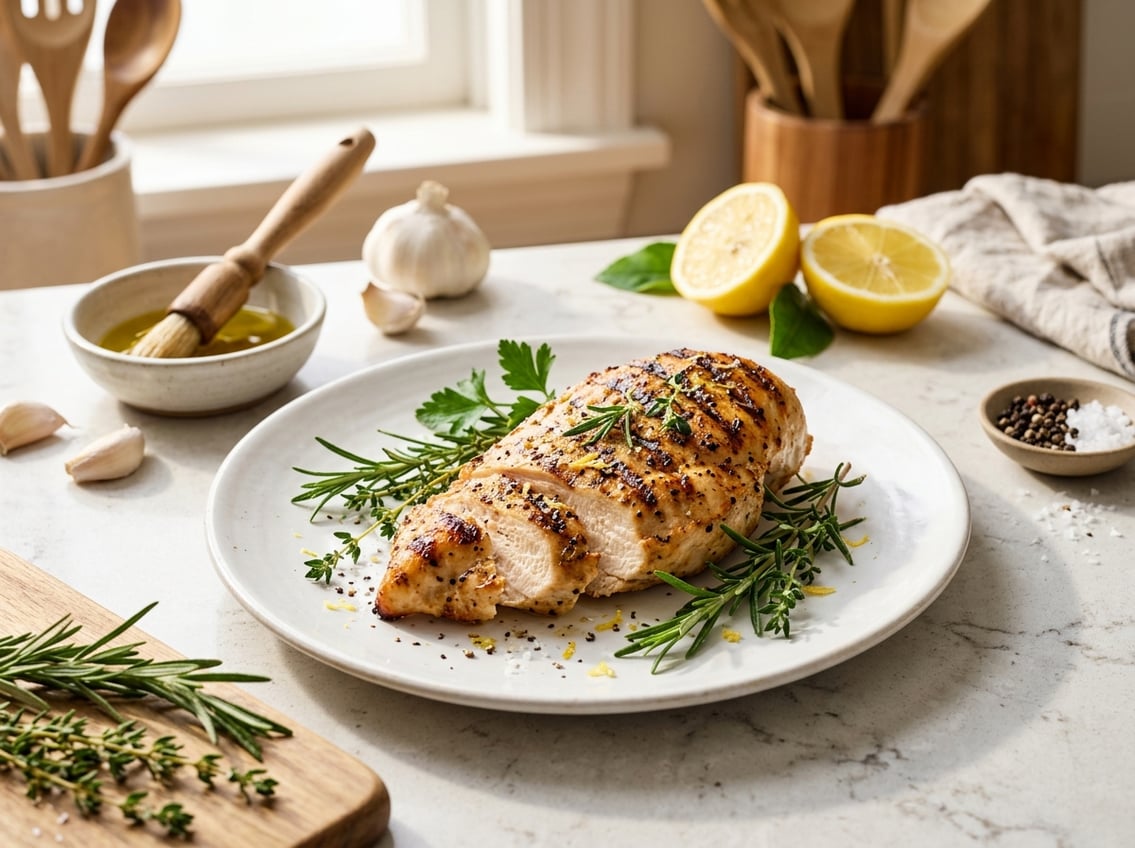
How to Bake Chicken Breasts Without Drying Them Out
Start with a hot oven and lightly oiled chicken. Bake at 400 F for about 20 to 25 minutes, then check for 165 F at the thickest part.
This method works well because it avoids long exposure to heat. You can tent the meat loosely with foil after baking to help hold moisture.
Pan-Cooked Chicken Breast for Fast Weeknights
A skillet gives you quick browning and good control. Flattened chicken breast cooks more evenly in a pan, which helps prevent a dry edge and raw center.
Use medium heat, a little oil, and turn the meat only once if possible.
Roasted and Bone-In Options for More Flavor
Roasting works well when you want more flavor from browning and a little more forgiveness from the cut. A roasted chicken breast with skin and bone often stays moister than a thin boneless piece.
If you want to bake chicken breasts for guests or meal prep, bone-in pieces give you a little more buffer against overcooking.
Why an Instant-Read Thermometer Matters
An instant-read thermometer removes guesswork. You do not need to cut into the meat, which keeps juices inside.
Chicken breast is safe at 165 F, and that number matters more than color alone. Pull them as soon as they hit temperature, then let them rest for a few minutes.
When to Choose Other Cuts or Uses
Chicken breast is mild and easy to pair with many flavors. It is not always the best choice, especially when you want richer taste, a forgiving texture, or a dish that needs more fat.
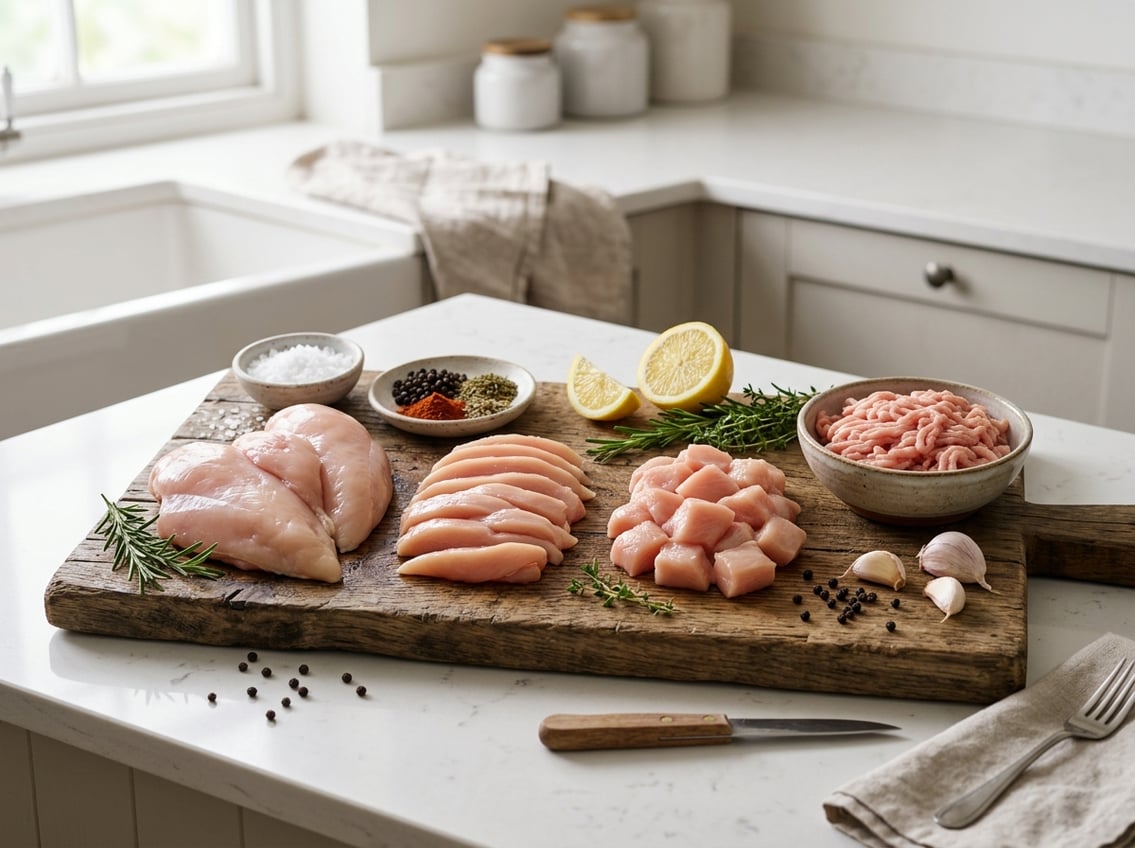
When Chicken Thighs Are the Better Choice
Chicken thighs are a better fit when you want more flavor and a wider cooking window. They contain more fat, so they stay moist more easily.
If you often worry about dry breast meat, thighs can be the easier cut for stews, braises, and richer pan sauces.
Best Uses for Cooked Breast in Other Dishes
Cooked chicken breast works well in chicken salad, wraps, soups, tacos, and grain bowls. Sliced or shredded breast also fits well in chicken parmesan and similar sauced dishes.
A baked chicken breast gives you a mild base that picks up seasoning, dressing, or sauce easily. That makes it practical for meal prep.
When Breast Is a Poor Fit for Fried Preparations
Breast can work for fried chicken. Yet the lean meat often dries out if the coating cooks too long.
Hot oil can easily overcook thin pieces. If you want a fried result, use even thickness and careful timing.
Add enough seasoning to carry flavor. In many cases, thighs or tenders make frying easier than a plain chicken breast.


