
Is Chicken Breast Skinless? What Shoppers Should Know
You may ask is chicken breast skinless because the answer depends on how the cut was prepared and labeled at the store. In most U.S. grocery stores, chicken breast is sold without skin, especially when it is packaged as a boneless, skinless cut.
Chicken breast is often skinless when you buy it, but not every package is the same. You should check the label and look at the meat before you cook it.
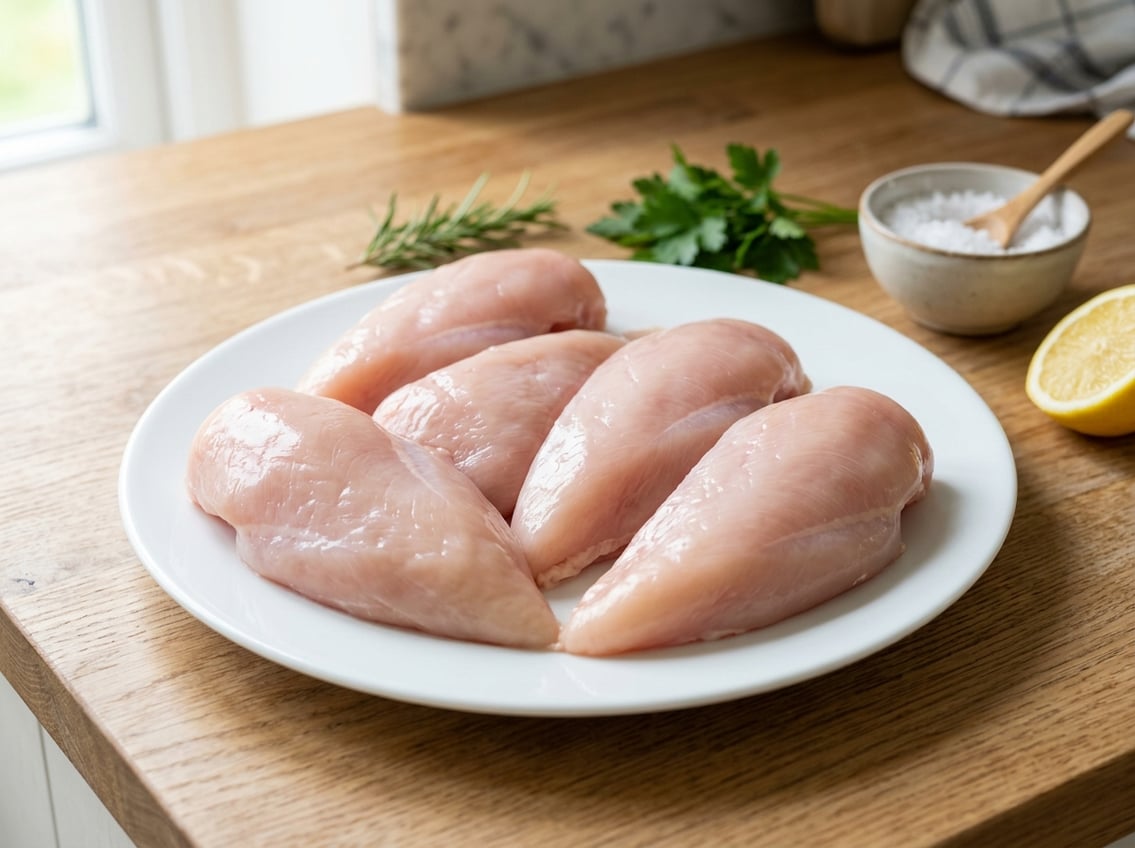
Skin changes fat content, texture, and cooking results. If you want lean protein for easy weeknight meals, skinless chicken breast is a common choice.
If you want more flavor and a richer finish, skin-on cuts may work better.
What Skinless Really Means at the Store
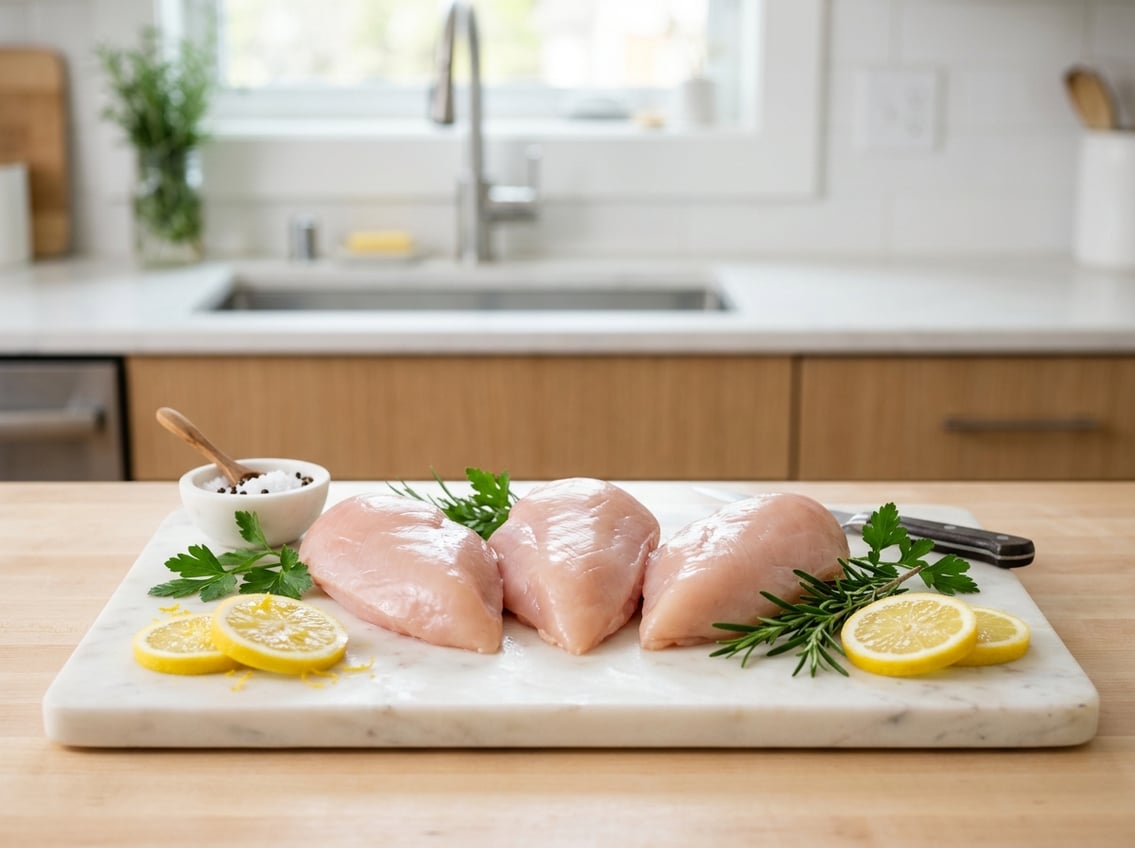
At the store, skinless means the visible outer skin has been removed from the chicken breast. The cut may still have a small amount of fat, connective tissue, or skin near the edges.
Many packages use the phrase boneless skinless chicken breast or boneless skinless chicken breasts, which tells you the meat has no bones and no skin. Some stores also sell boneless skinless chicken in trays, family packs, or value packs.
A plain boneless chicken breast may still be skinless in most cases, but the label should confirm it.
How Chicken Breast Is Usually Sold
In the U.S., stores commonly sell chicken breast as boneless and skinless because many shoppers want a lean, easy-to-cook cut. That format also fits meal prep, fast cooking, and simple seasoning.
You may still find skin-on breasts at butcher counters, in specialty stores, or in some whole bird cuts. A package that says only “chicken breast” is not always enough to know whether the skin is on.
Naturally Skinless vs Processed Skin Removal
Chicken breasts come from the breast muscle of the bird, and workers remove the skin during processing for most retail packs. The cookedbytaste article on skinless chicken breast preparation notes that workers may remove the skin by hand or machine.
The result is still skinless meat, even if processing removed the skin before packaging.
Boneless, Skinless vs Other Chicken Breast Cuts
A boneless skinless chicken breast is the easiest version for most home cooks, since it trims away two common prep steps. A boneless chicken breast may still include skin if the package does not specify otherwise.
Skin-on breasts, split breasts, and bone-in cuts cook differently and usually have more flavor from the skin and bone. Skinless breasts are leaner, while skin-on cuts can brown more deeply and stay moist longer during roasting.
How to Tell if a Package Has Skin On or Off
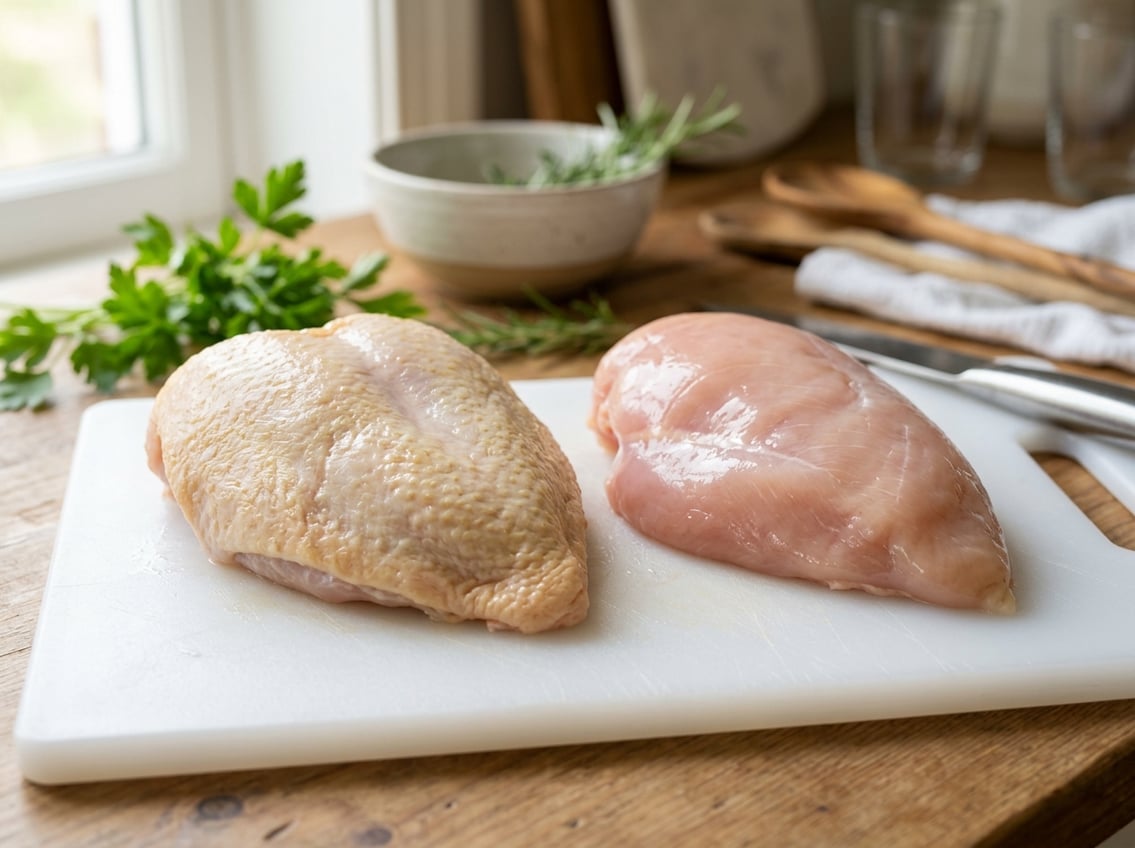
You can usually tell from the label, the look of the meat, and the shape of the cut. When the packaging is unclear, a quick visual check helps you avoid surprises at home.
Labels and Terms to Look For
Look for these terms on the front or back of the package:
- Boneless skinless chicken breast
- Boneless skinless chicken breasts
- Skinless chicken
- Skinless chicken breast
- Skinless chicken breasts
If the label says only “chicken breast,” check for more details in the product name or the fine print. A package that lists “skin-on” or “with skin” is not skinless, even if it has been trimmed neatly.
Visual Signs of Skinless Chicken
Skinless chicken breast usually looks pale pink to light peach, with a smooth surface and no loose outer layer. Skin-on chicken has a thicker white or yellowish layer attached on one side, often with a more uneven edge.
The package may also show a photo. If the image displays a glossy layer over the meat, that is usually skin.
A skinless breast should look like exposed meat all around.
When Small Skin Remnants Can Still Appear
Even a package labeled skinless may have tiny bits of skin near the edge or where trimming was imperfect. That can happen during mechanical processing or retail cutting.
Small scraps do not usually change how you cook the chicken. Many cooks trim them off before seasoning.
If you want a clean presentation, inspect the breast before cooking and remove any visible pieces.
Nutrition, Health, and Why Many Buyers Choose It
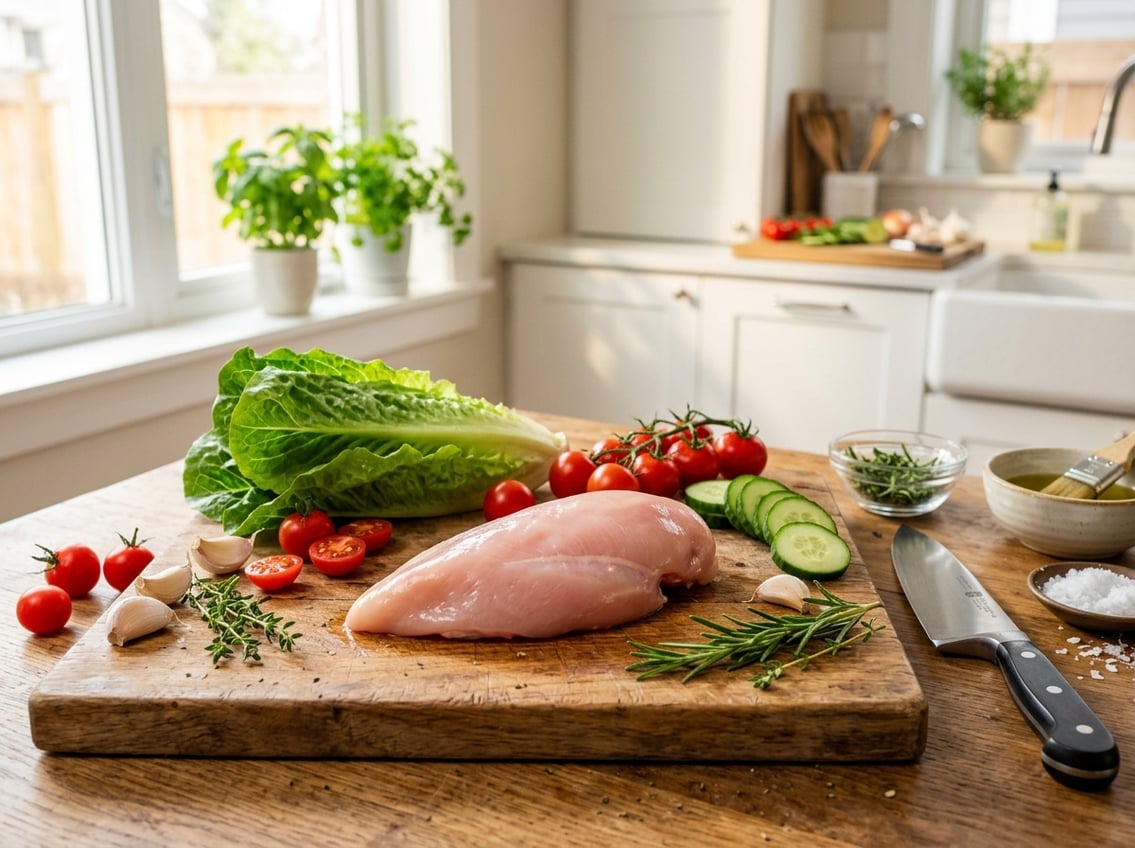
Skinless chicken breast is popular because it gives you a lot of protein with less fat than skin-on cuts. That makes it a common pick for people who want simple meals with strong nutrition value.
It also works well in many diets, from high-protein plans to lighter family dinners. The main trade-off is a drier texture if you cook it too long.
Benefits of Skinless Chicken
The biggest benefits of skinless chicken are lower fat and a leaner meal. Many shoppers reach for skinless chicken breast when they want a lighter protein option.
It also gives you flexibility. You can season it many ways, pair it with vegetables, or use it in soups, salads, and skillet meals.
Lean Protein and Calorie Differences
Chicken breast is widely seen as a lean protein because it has a high protein-to-fat ratio. Removing the skin lowers fat and usually lowers calories as well.
That makes skinless chicken breast useful for calorie-conscious meals, sports diets, and meal prep. It still gives you protein for muscle repair and satiety without the extra fat from skin.
Trade-Offs Compared With Skin-On Cuts
Skin-on chicken can taste richer and often stays moister during roasting or pan cooking. Skinless breasts cook faster and are easier to portion, but they can dry out if overheated.
If you want more flavor, you may need to add marinade, sauce, or careful seasoning. If you want simpler nutrition and easier prep, skinless chicken breast is usually the better match.
Best Uses in Everyday Cooking
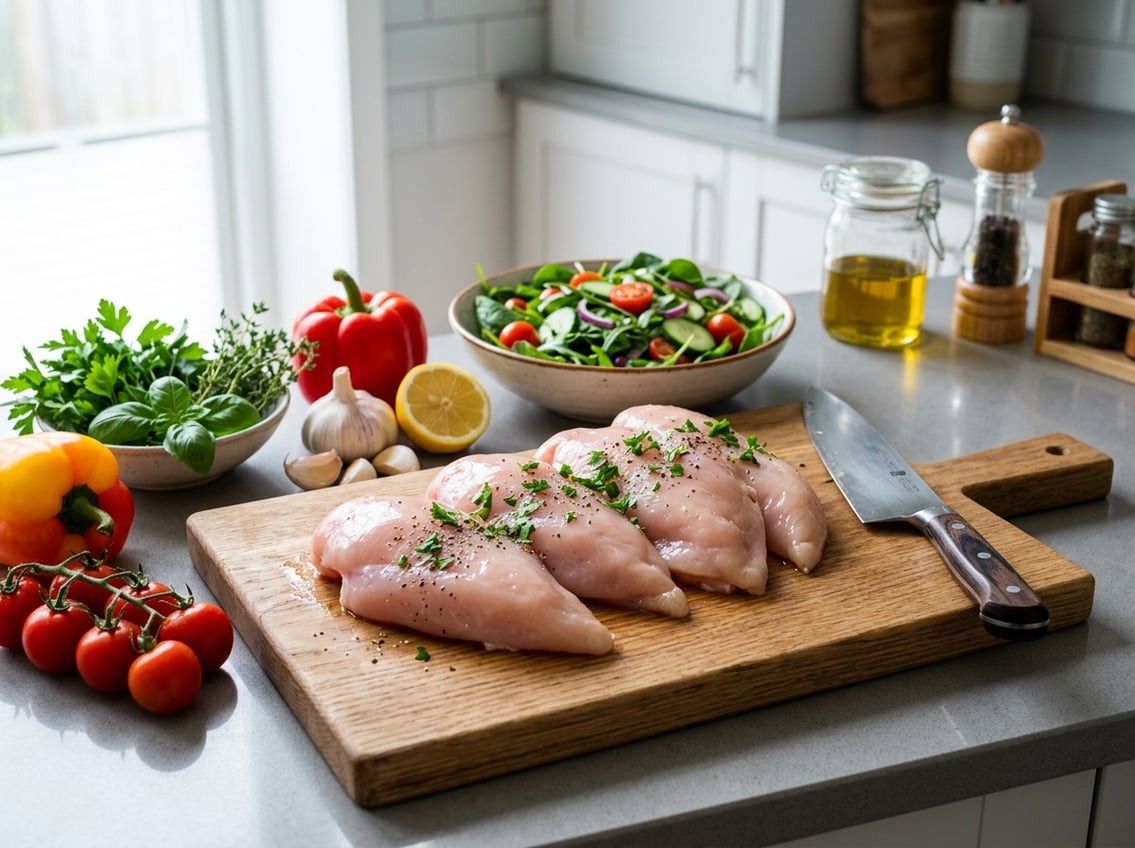
Skinless chicken breast fits many quick meals because it cooks fast and takes on flavor well. It works best when you use the right heat and avoid overcooking.
Cooking Methods That Work Best
Great methods include grilling, baking, poaching, sautéing, and air frying. A grilled chicken breast can be a simple main dish, while poached chicken stays tender for salads and sandwiches.
For thin cutlets, quick skillet cooking works well. For thicker breasts, gentle oven heat helps you cook the middle without drying the outside.
Popular Dishes Made With Skinless Breasts
Skinless breasts show up in many everyday dishes, including chicken fajitas, chicken marsala, chicken piccata, marry me chicken, and chicken cordon bleu.
They also work in classic chicken breast recipes and many boneless skinless chicken breast recipes.
You can also bread and fry them, though that changes the nutrition profile. Fried chicken is usually less lean once it is breaded and cooked in oil.
How to Keep Chicken Breast Juicy
Pound the chicken to an even thickness. Cook it over modest heat and use a thermometer if possible.
Pull the chicken from the heat when it reaches 165°F in the thickest part. Let the meat rest for a few minutes before slicing so the juices stay inside.
Brine, marinate, or coat the chicken with sauce to help retain moisture. These methods work especially well for boneless skinless chicken breasts in quick weeknight meals.


