
Is Chicken Breast Tender? What Affects Texture
You may ask, is chicken breast tender? It can be, but the texture depends on how you handle it before and during cooking.
Chicken breast is naturally lean. High heat or long cooking times can quickly turn it from tender to dry.
When you want tender chicken breast, use even thickness, controlled heat, and retain enough moisture to keep the meat from tightening up. These steps separate a soft, juicy chicken breast from one that turns chewy.
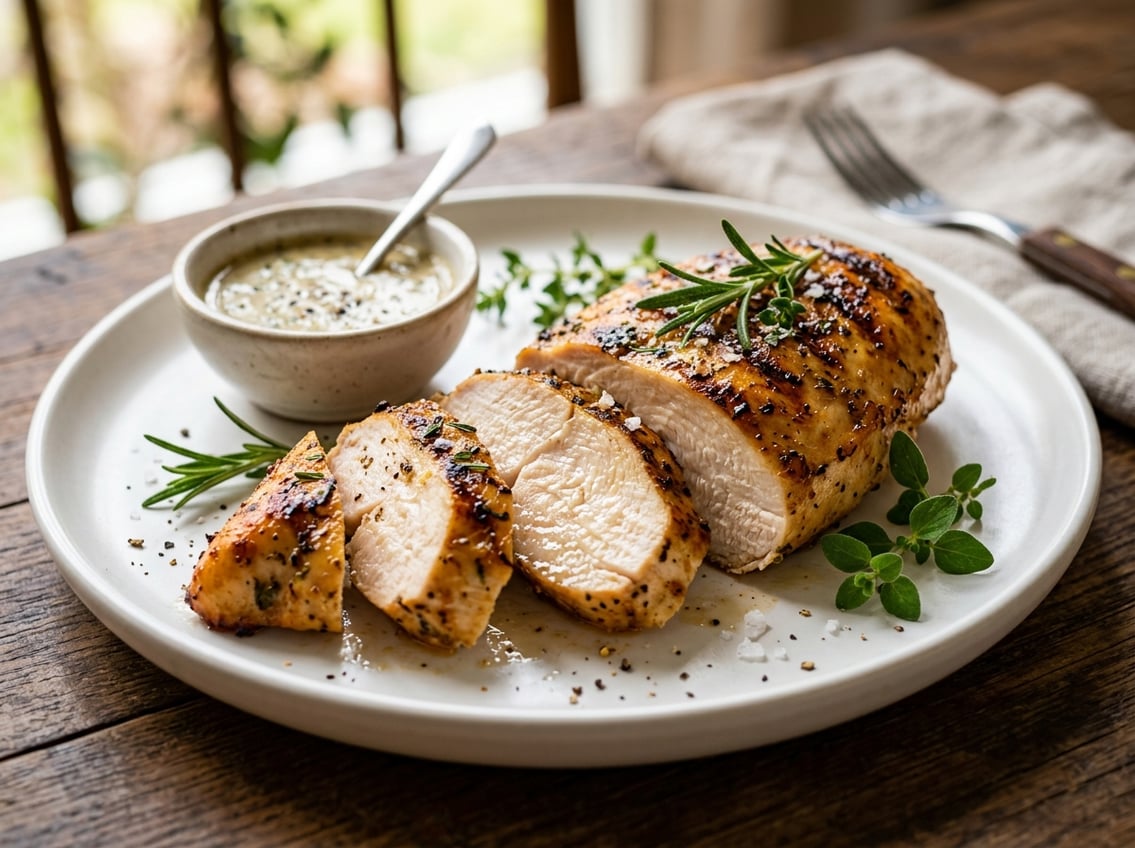
Tender results are possible with simple methods. A few basic changes to how you cook chicken breast can make a noticeable difference in both bite and juiciness.
What Makes Chicken Breast Feel Tender or Tough
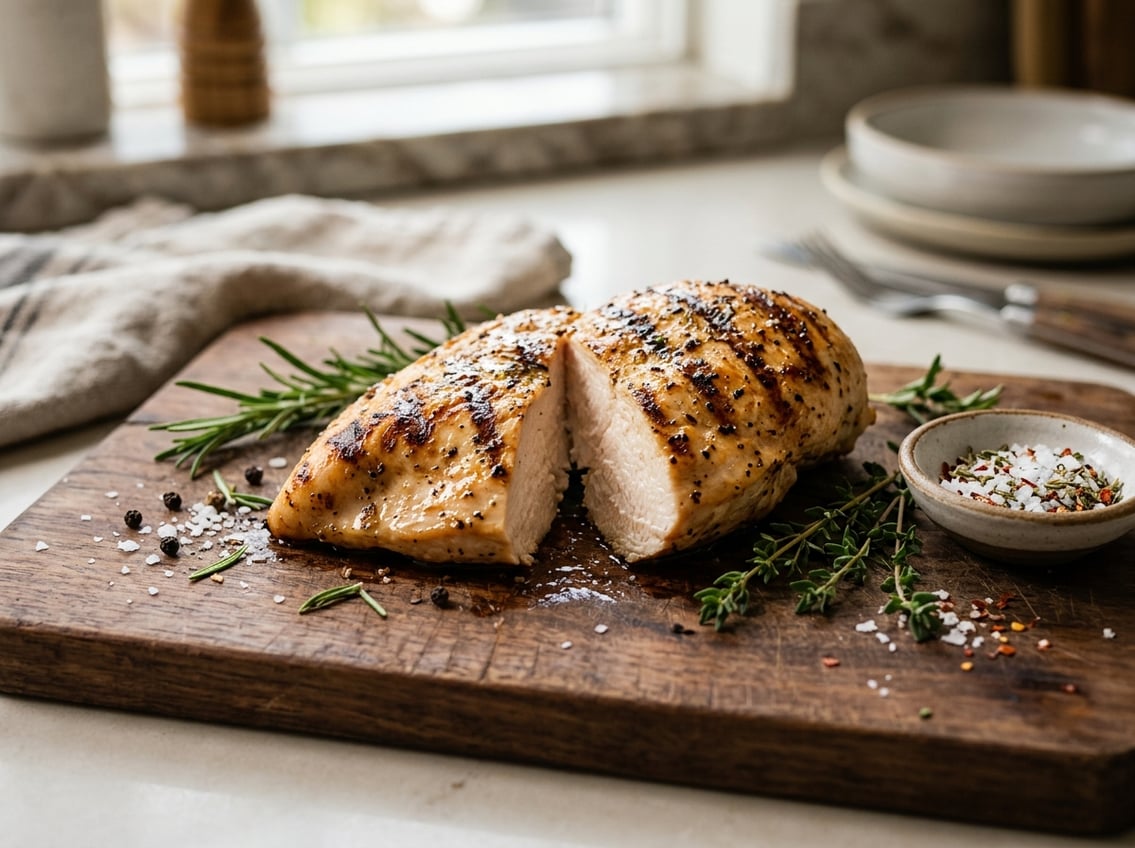
Balanced cooking creates tender chicken breasts. The meat texture changes based on moisture loss, heat exposure, and the shape of the piece.
Why Lean Meat Dries Out Faster Than Dark Meat
Chicken breast has less fat than dark meat. Less fat means less protection against drying.
Fat carries flavor and gives meat a softer feel. Lean meat can seem firm once the moisture leaves.
Juicy chicken breasts need more careful cooking than thighs. A lean cut gives you less room for error.
How Overcooking Changes Texture
Overcooking tightens the proteins in chicken breast and pushes out moisture. The meat may be safe to eat, but it can feel dry, stringy, or rubbery.
The Kitchn’s method uses covered, gentle cooking to help the meat finish more evenly and stay moist.
How Thickness and Muscle Fibers Affect Bite
A thick end and a thin end on the same breast cook at different speeds. The thin side often dries first while the thick side is still coming up to temperature.
Muscle fibers also affect the bite. If you slice with the grain, the fibers stay long and can feel tougher.
If the meat is uneven or very dense, it can seem less tender even when fully cooked.
Best Ways to Keep It Juicy and Soft
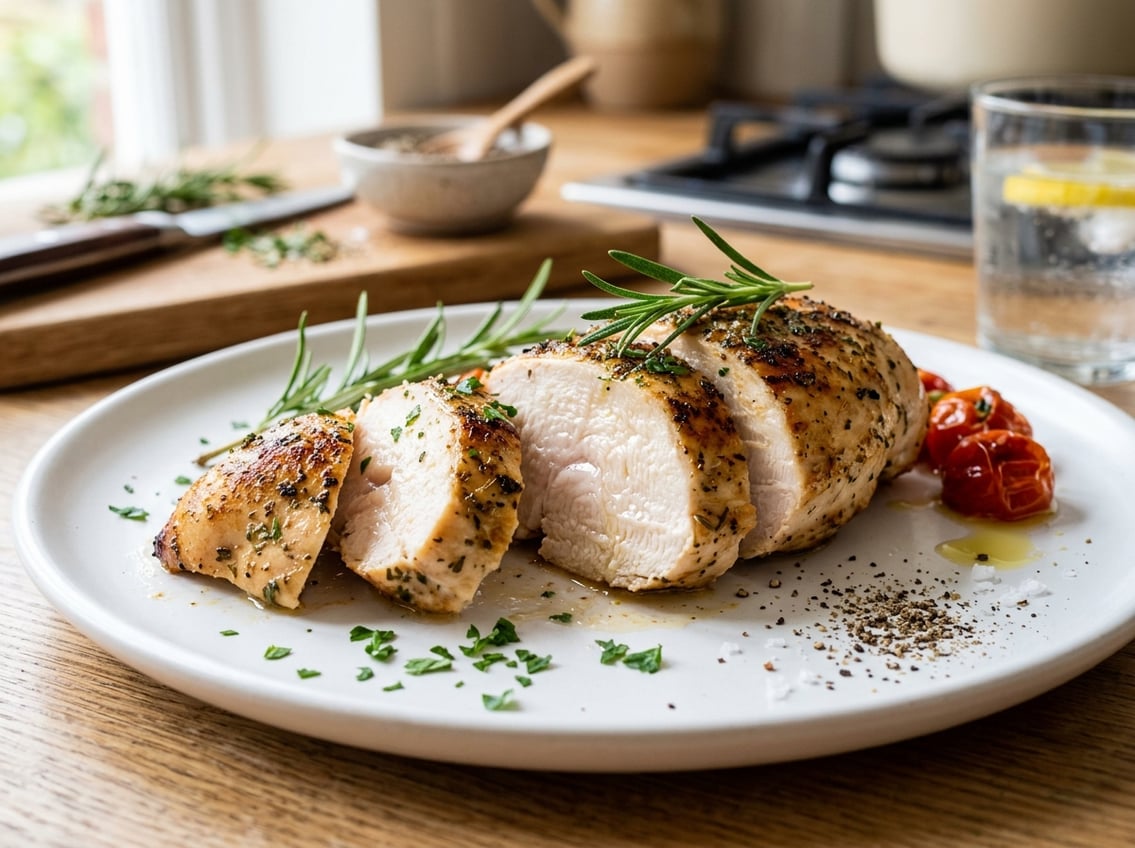
You can improve texture before the chicken even hits the pan. Small prep steps help tenderize chicken breast and protect it from drying out.
Pound to an Even Thickness Before Cooking
Pounding helps the chicken cook at a steady rate from edge to edge. This reduces the risk of one part drying out while another part is still catching up.
Use a meat mallet, rolling pin, or the bottom of a heavy pan. Aim for even thickness, not a thin, flattened cutlet unless your recipe needs it.
Brining and Marinating for Better Moisture
A short saltwater soak helps chicken breast hold more moisture during cooking. According to The Kitchn’s chicken breast method, even a quick brine can improve juiciness.
Marinades add flavor and help the surface stay softer. A simple mix with salt, oil, and mild acid works well for many chicken breast recipes.
Keep marinating times moderate so the texture does not turn mushy.
Slice Against the Grain After Resting
After cooking, let the chicken rest before slicing. Resting gives the juices time to settle, which helps keep each bite moist.
Cut across the grain, not with it. Shorter fibers are easier to chew, so the meat feels more tender right away.
Cooking Methods That Give Better Results
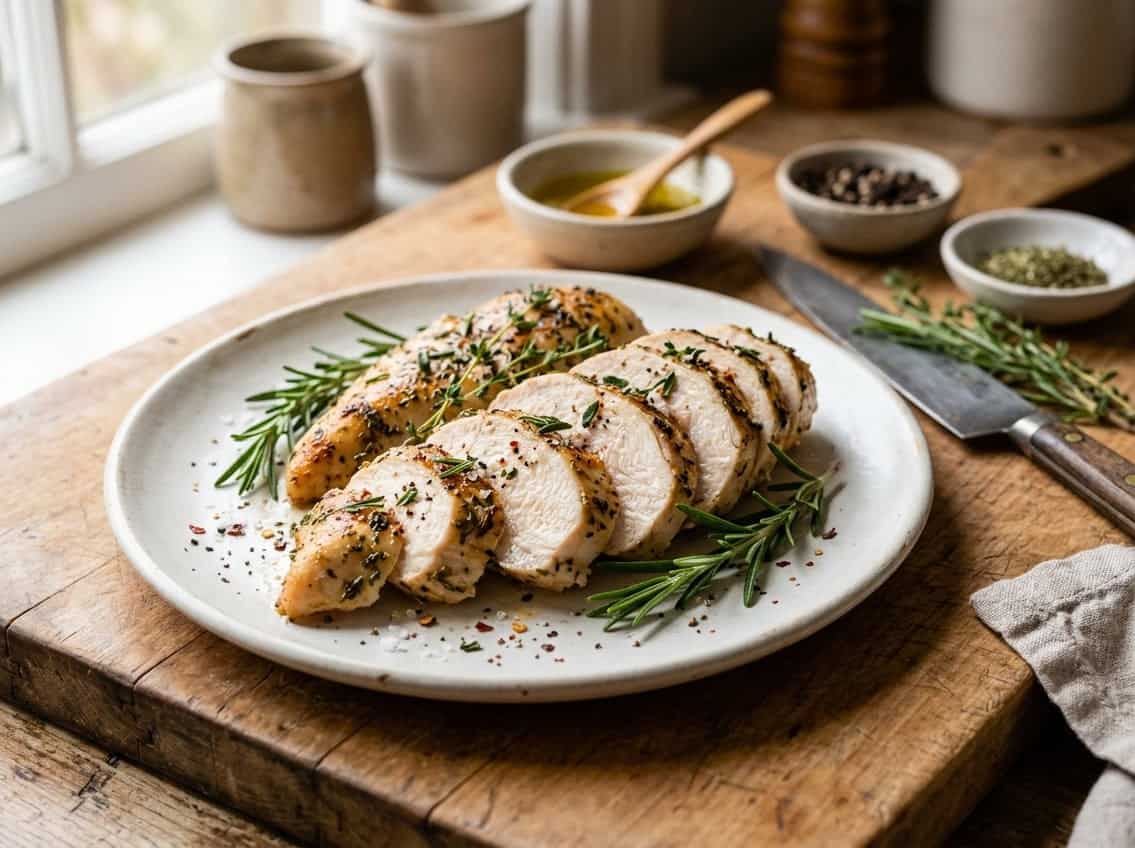
Methods that control heat and moisture give the best results. Good technique matters more than adding a lot of extra ingredients.
Skillet Cooking With a Lid
A skillet with a lid can give you tender chicken breasts by using quick browning followed by gentle covered cooking. Trapped steam helps finish the meat without drying the outside too fast.
This approach works well for a simple dinner when you need reliable results. It also suits weeknight meals where you want a fast cooking time and a moist center.
Baking Without Drying It Out
Baking works well if you avoid high heat and remove the chicken when it reaches the right temperature. A covered dish or a light coating of oil helps protect the surface.
For many chicken breast recipes, oven baking is a good fit when you cook more than one piece at a time. Keep the pieces similar in size so they finish together.
Using Temperature Instead of Guesswork
The most reliable way to avoid dry chicken is to check the internal temperature.
Guessing by color alone can lead to overcooking.
A thermometer removes guesswork.
If you want juicy chicken breast, pull it when it reaches a safe internal temperature.
Let the chicken rest before serving.


