
Is Chicken Breast Healthy? Nutrition, Benefits, and Best Ways
Is chicken breast healthy? Yes, it usually is, especially when you choose skinless chicken breast and cook it with little added salt, sugar, or saturated fat.
It is a lean protein that gives you a lot of nutrition for relatively few calories. This makes it fit well into many healthy eating patterns.
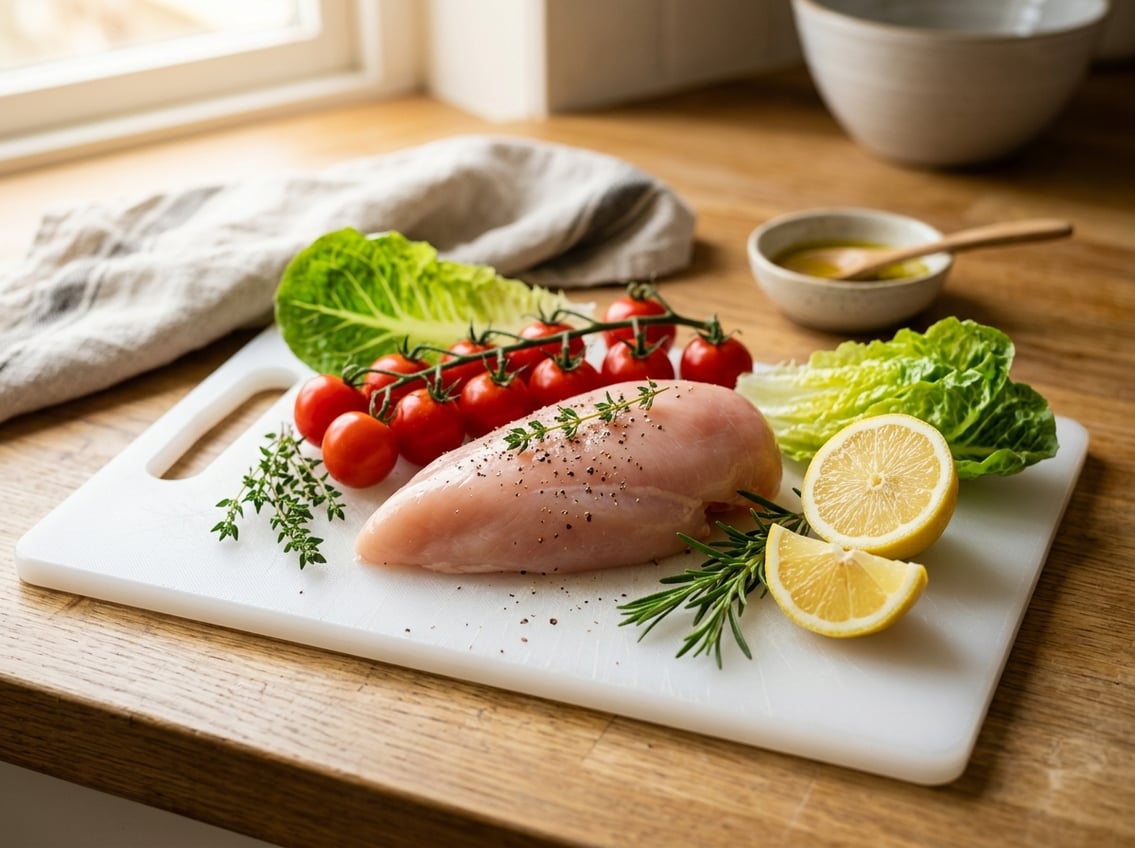
If you want a high-protein food that is easy to cook, filling, and versatile, chicken breast is one of the best everyday choices.
It works well for weight control, muscle support, and heart-conscious meals when you prepare it in healthier ways.
Chicken breast comes from the breast area of the chicken. Compared with many other animal proteins, it is naturally low in fat and high in protein.
The main question is not whether chicken breast is healthy at all, but how healthy it is once you factor in cooking method, portion size, and what you serve with it.
Chicken Breast Nutrition at a Glance
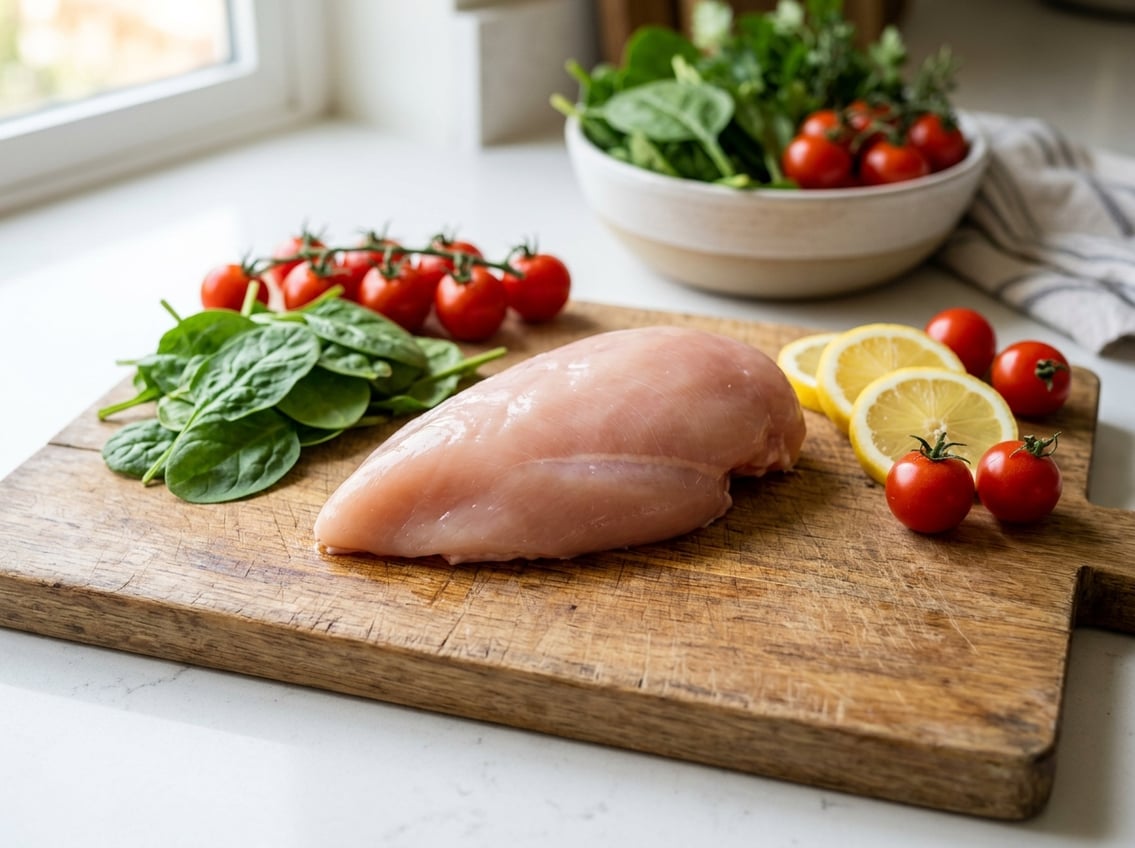
Chicken breast nutrition gives you lots of protein, very little carbohydrate, and a modest amount of fat.
Skinless chicken breast is a popular choice because it keeps calories and saturated fat lower while still giving you a filling portion of white meat.
Calories, Protein, and Fat Breakdown
A 3-ounce serving of cooked skinless chicken breast contains about 128 calories, 26 grams of protein, 3 grams of fat, and 1 gram of saturated fat, according to EatingWell’s chicken breast nutrition breakdown.
It also has no carbs, which makes it easy to fit into many meal plans.
That protein-to-calorie ratio is a major reason many people use chicken breast as a lean protein staple.
You also get small amounts of nutrients like B vitamins, choline, zinc, and iron.
Skinless vs. Skin-On Differences
Skinless chicken breast is the lighter option.
If you leave the skin on, you add more calories and fat, including more saturated fat, so the same serving becomes less lean.
That does not make skin-on chicken breast unhealthy in every case.
It just changes the nutrition profile, which matters if you are watching calories or trying to limit saturated fat.
How Chicken Breast Compares With Chicken Thighs
Chicken thighs are also nutritious, but they are usually higher in fat and calories than chicken breast.
That extra fat can mean more flavor and a juicier texture, while chicken breast stays the leaner option.
If your goal is a higher-protein, lower-fat meal, chicken breast is usually the better pick.
If you want more richness and do not mind a little extra fat, thighs can still fit into a balanced diet.
What Makes It a Smart Protein Choice
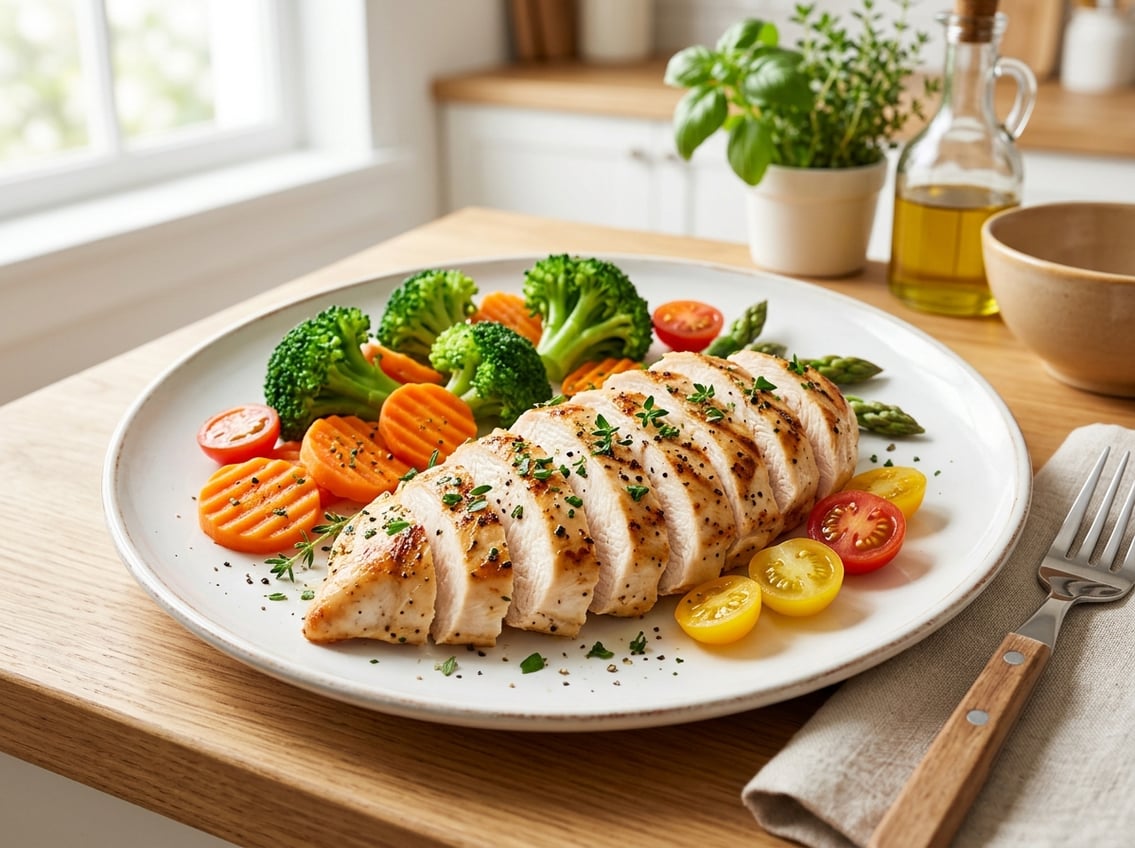
Chicken breast stands out because you can easily portion, season, and pair it with vegetables, grains, and legumes.
It can help you feel full, support your training goals, and keep meals lighter than many other protein choices.
Satiety, Weight Management, and Muscle Support
Protein helps you stay full longer, which can make it easier to manage appetite.
Research summarized by EatingWell notes that higher protein intake may support weight loss, partly because protein improves satiety.
Chicken breast also supports muscle maintenance and recovery.
Its high-quality protein supplies all essential amino acids, which matters if you exercise regularly or want a simple way to meet protein needs.
Heart Health and Lower Saturated Fat Considerations
Lean poultry fits well in heart-conscious eating plans.
The American Heart Association includes lean poultry in a heart-healthy pattern, and chicken breast is lower in saturated fat than many red or processed meats, according to EatingWell’s review of chicken breast health benefits.
Choosing chicken breast instead of heavily processed meats can help you keep meals lighter.
It also pairs well with vegetables, whole grains, beans, and healthy fats.
When Preparation Can Make It Less Healthy
Certain cooking methods can make chicken breast less healthy.
Breading, deep-frying, or covering it in heavy sauces can add a lot of calories, fat, and sugar.
High-heat cooking can also create more advanced glycation end products, compounds that form when protein and fat are exposed to very high temperatures.
You do not need to avoid grilled chicken entirely, but gentler cooking methods are often a better choice for everyday meals.
Best Cooking Methods for a Healthier Plate
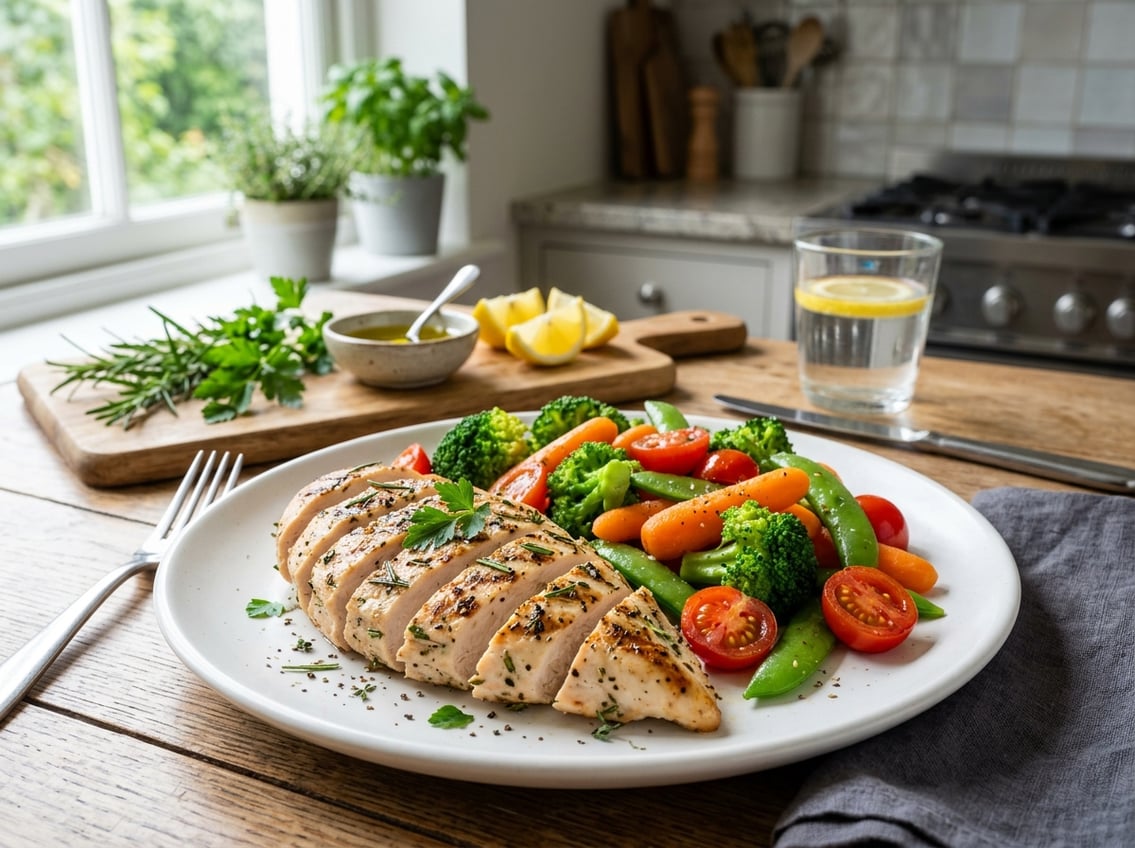
Simple cooking methods and balanced sides usually make the healthiest chicken breast meals.
Grilling, baking, poaching, and pressure cooking keep the protein lean while giving you room to control seasoning and sauce.
Grilled, Baked, Poached, and Instant Pot Options
Grilled chicken breast is a popular option because it cooks fast and works with many flavors.
Baked chicken breast is also easy for weeknights, especially when you season it with herbs, citrus, garlic, or spices.
Poaching keeps the meat moist with very little added fat.
Instant pot chicken can also be a smart option because it cooks quickly and can help the meat stay tender.
High-Heat Cooking Risks and How To Reduce Them
Very high heat can increase advanced glycation end products, especially when the chicken gets charred.
To reduce that risk, avoid overbrowning, flip the meat often, and use moderate heat when possible.
Marinating can also help.
Acidic ingredients like lemon juice, vinegar, or yogurt may reduce surface browning while adding flavor, making healthy chicken breast recipes more practical for daily cooking.
Safe Handling, Storage, and Internal Temperature
Handle raw chicken safely to prevent foodborne illness.
Keep raw poultry separate from ready-to-eat foods, wash your hands and tools, and refrigerate leftovers promptly.
Cook chicken breast to an internal temperature of 165°F, measured with a food thermometer.
Store cooked chicken in the refrigerator within 2 hours, or within 1 hour if the room is very warm.
Healthy Ways To Add It to Your Meal Rotation
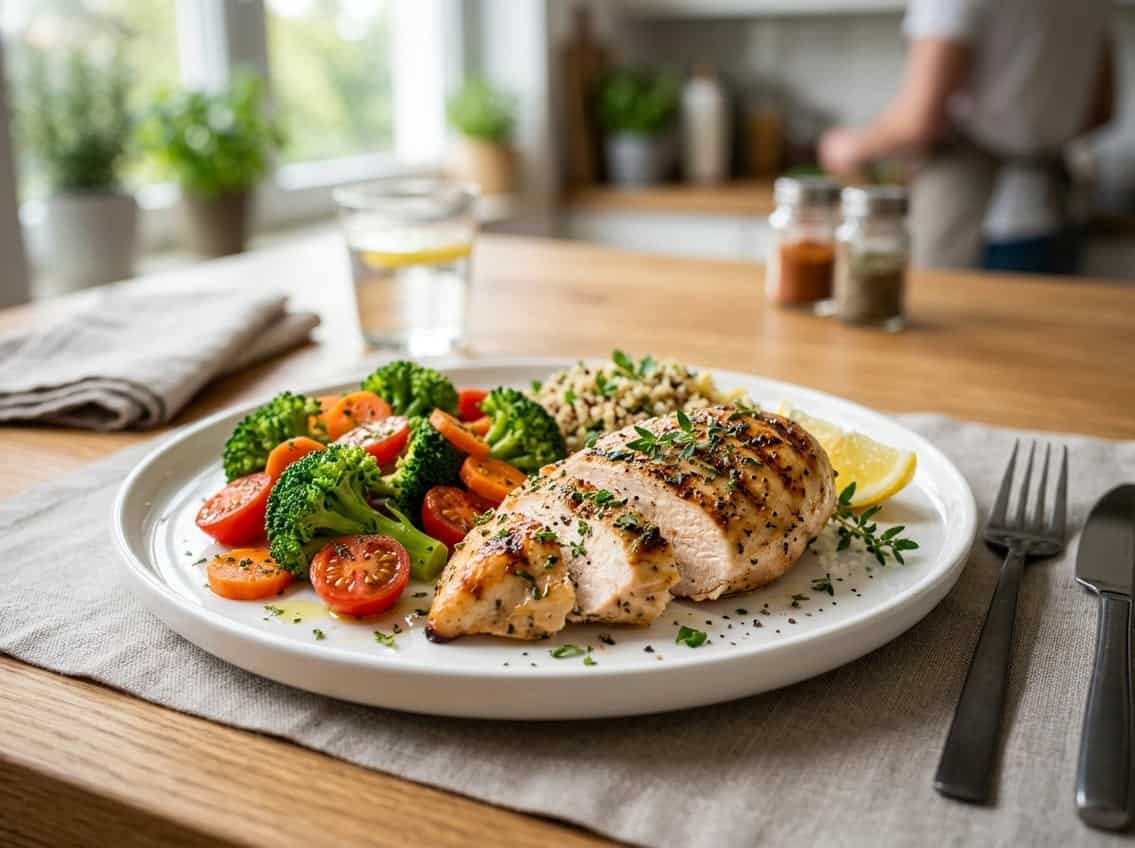
You do not need complicated recipes to keep chicken breast interesting.
A few dependable meal formats can give you variety without making dinner heavy or difficult.
Easy Weeknight Meals and Sheet Pan Ideas
Sheet pan chicken is one of the easiest ways to cook a full meal at once.
You can roast chicken with broccoli, peppers, onions, carrots, or potatoes on one pan for less cleanup.
Chicken fajitas, shredded chicken tacos, and chicken stir-fry are also good weeknight options.
They are simple, fast, and easy to customize with salsa, rice, beans, or extra vegetables.
Balanced Bowls, Salads, Pasta, and Vegetable Pairings
Chicken breast works well in balanced bowls with grains, greens, and a healthy sauce.
You can also slice it over salads or pair it with roasted vegetables for a lighter plate.
For pasta, keep the portion of pasta reasonable and use vegetables to add bulk.
Chicken pasta can stay balanced when you choose a tomato-based sauce or a lighter olive oil dressing instead of a heavy cream sauce.
If you want a lower-carb side, spaghetti squash is a practical swap.
Flavorful Recipe Styles To Keep It From Getting Boring
Healthy chicken breast recipes do not need to taste plain.
Simple ingredients like lemon, herbs, olives, and feta give Mediterranean chicken strong flavor.
You can grill chicken breast with spice rubs.
Try honey mustard chicken with a lighter sauce, or maple-glazed chicken breast with a modest amount of glaze.
Baking chicken parmesan and keeping the cheese and sauce portions sensible makes it a healthier option.
For more ideas, browse healthy chicken breast recipes to see how flexible chicken recipes can be.


