
What Chicken Breast Temperature for Juicy, Safe Results
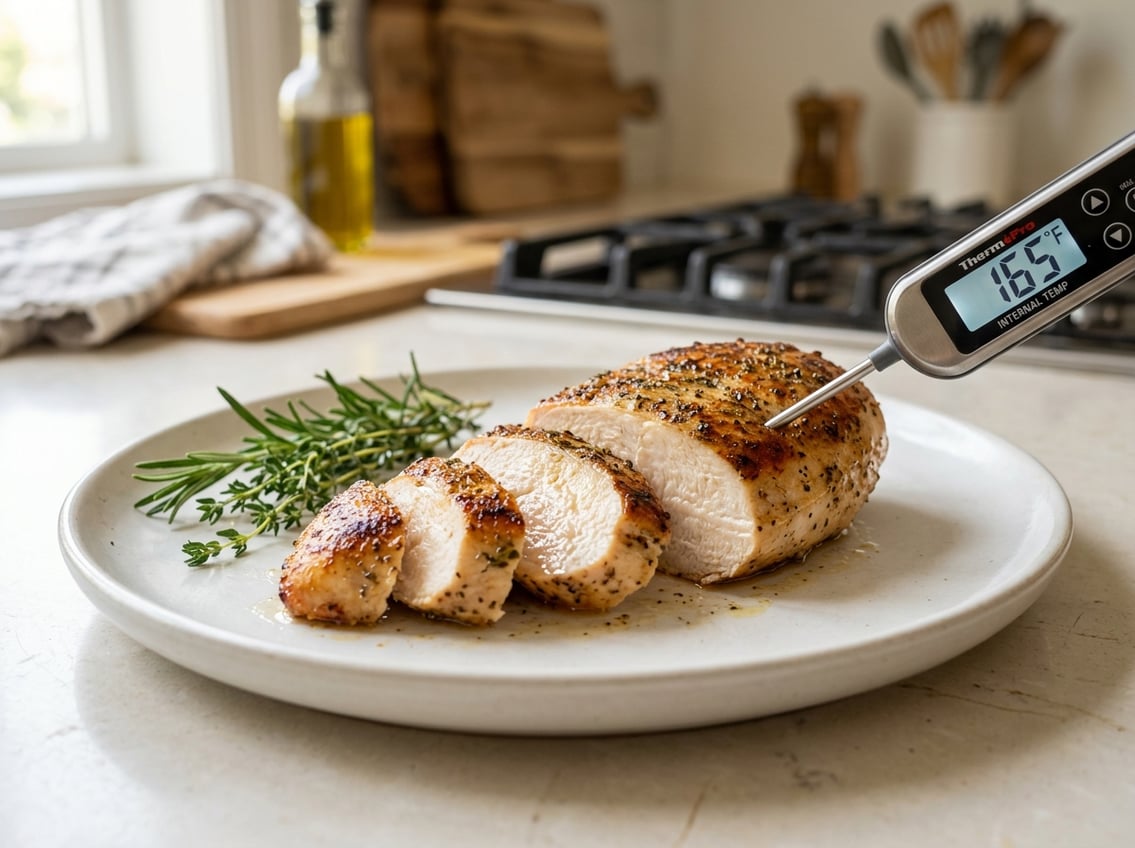
If you want safe and juicy results, cook chicken breast to 165°F at the thickest part. That reading gives you a clear food safety target and helps you avoid dry, stringy meat.
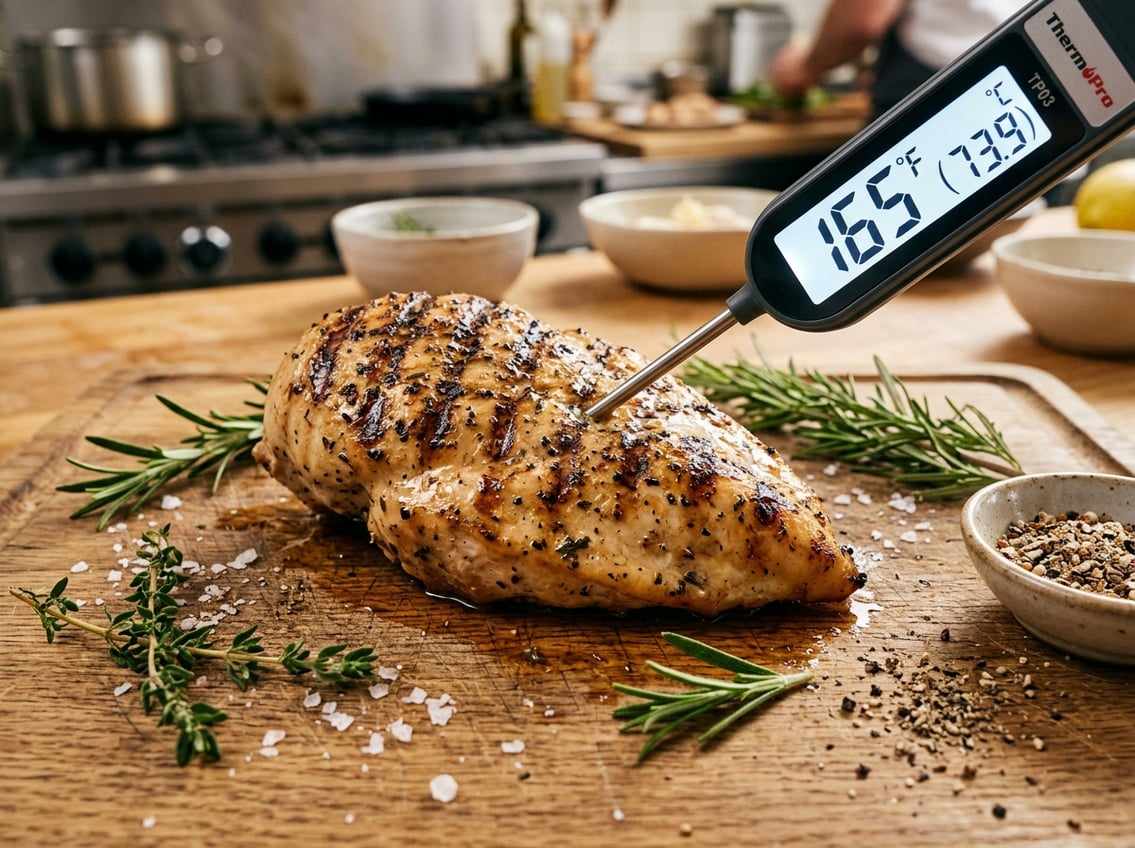
The right chicken internal temperature matters because chicken breasts are lean, heat up fast, and dry out quickly once they go past their target. If you want better texture and less guesswork, use the right cooking temperature, a reliable thermometer, and give the meat a little carryover time after cooking.
The Right Internal Reading for Breast Meat
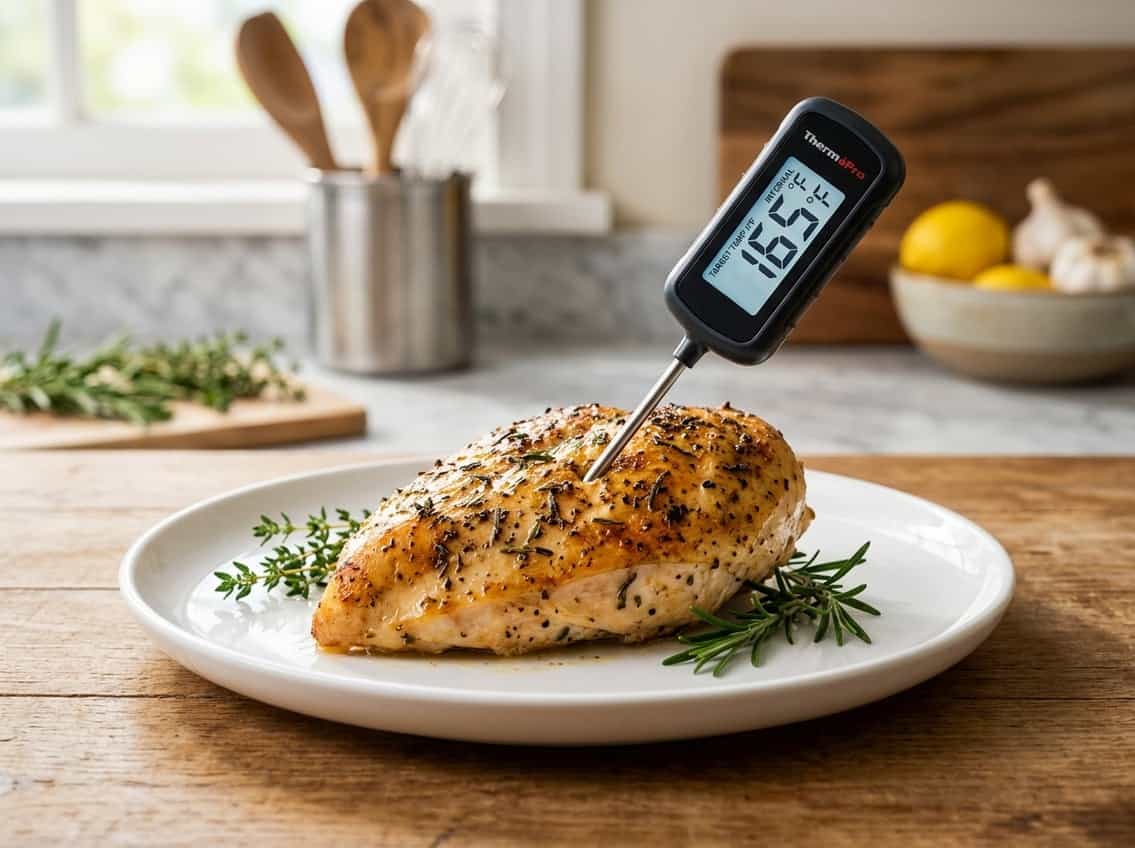
Chicken breast is one of the easiest cuts to overcook. Because it is lean, it loses moisture quickly.
Your target temperature and pull point matter a lot for juicy chicken and safety.
165°F as the Safe Baseline
For food safety, 165°F is the standard internal temperature for chicken breast. At that point, harmful bacteria such as salmonella are no longer a safety concern when you measure the temperature in the thickest part.
You can use that number for baking, roasting, grilling, or pan cooking.
When to Pull at 160–162°F for Carryover Cooking
You can pull chicken breast from the heat a few degrees early if you let it rest. Residual heat cooks the meat after it comes off the burner or out of the oven.
Many cooks aim for 160 to 162°F before resting. The goal is to reach 165°F after rest, not to serve undercooked chicken.
Why White Meat Dries Out So Easily
Chicken breast has less fat than dark meat, so it has less built-in moisture. It also cooks unevenly because one end is often thicker than the other.
The thinner part dries out first. Even a short delay can matter.
A few extra degrees of heat can move the meat from tender to chalky.
How to Measure Doneness Accurately
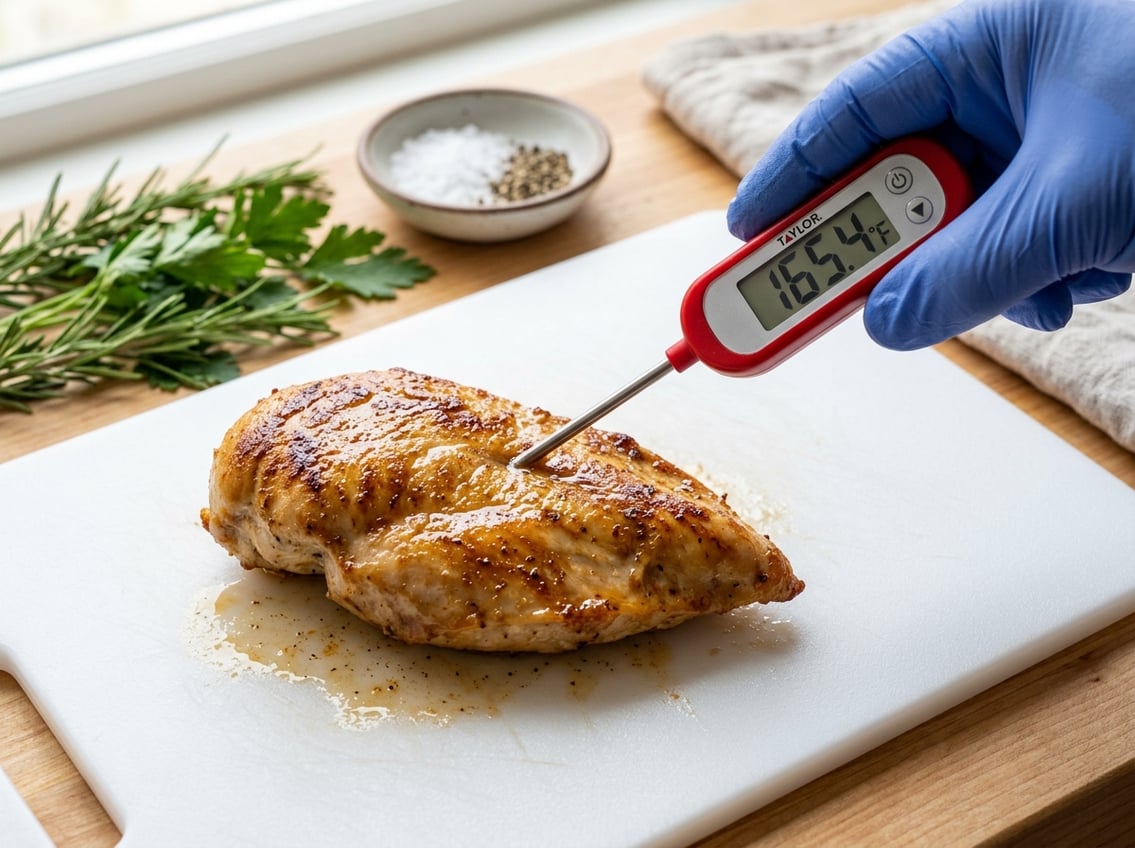
To use a meat thermometer well, place it correctly and read the temperature in the thickest part. Color alone does not give reliable food safety results.
A good instant-read thermometer removes the guesswork.
Best Spot to Check the Thickest Part
Insert the probe into the center of the thickest part of the breast. If the breast is uneven, check the deepest point of the thickest section.
For the most accurate result, avoid touching bone if you are cooking bone-in pieces. Bone can make the reading higher than the meat really is.
Why to Use a Meat Thermometer Instead of Color
Chicken can look done before it is actually safe. Juice color and surface browning can change from heat, seasoning, or marinade, while the center still sits below a safe temperature.
Using a meat thermometer gives you a direct food safety check. That is more dependable than cutting into the meat and losing juices.
Instant-Read Thermometer Tips for Reliable Results
An instant-read thermometer works best when you check near the end of cooking. Let the reading settle for a few seconds.
Take more than one reading if the breast is large or uneven. Keep the tip clean and calibrated if your model allows it.
A fast, accurate tool makes chicken safety much easier to manage.
Cooking Methods That Keep It Tender
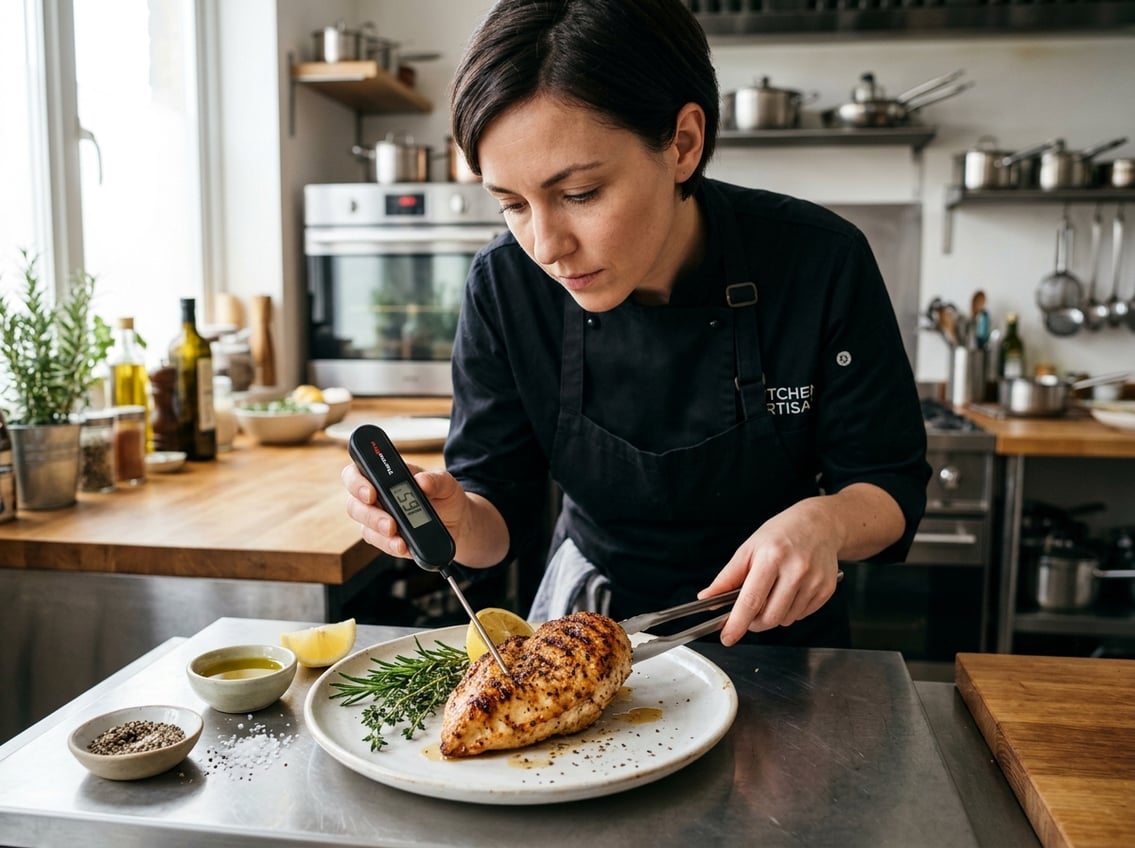
The best chicken cooking temperature depends on your method. The same rule applies: cook until the center reaches the right temperature, then stop.
Gentle heat, good timing, and resting all help you avoid overcooking chicken.
Oven Roasting and High-Heat Baking
High heat can give you a better exterior while still keeping the center juicy. Allrecipes recommends roasting chicken breasts at 450°F for 15 to 18 minutes or baking them at 375°F for 30 to 35 minutes until they reach 165°F internally.
If you choose a hotter oven, watch closely because breast size affects timing. A thicker piece may need more time, while a thin one can dry out quickly.
Pan Cooking and Grilling Timing Basics
On the stovetop, medium-high heat works well for chicken breast. A common approach is a few minutes per side, then a temperature check near the end.
For grilling, steady medium-high heat helps brown the outside without burning it. Lids, flare-ups, and uneven grill zones can change timing, so the thermometer matters more than the clock.
Sous Vide Chicken for Precision
Sous vide chicken gives you the tightest control over doneness. You cook the sealed breast in a water bath at a set temperature.
Finish it with a quick sear for color and texture. This method is useful when you want very consistent results.
It reduces the chance of overshooting the final chicken cooking temperature.
Safety and Temperature by Cut
Chicken safety changes a little by cut, because breasts cook faster than thighs and drumsticks. Whole birds also need more care, since the breast and leg meat can finish at different times.
How Breasts Compare With Thighs and Drumsticks
Chicken breasts are best known for drying out, while thighs and drumsticks have more fat and connective tissue. That extra fat helps dark meat stay moist at higher heat.
The ideal chicken internal temperature can differ by cut. Breasts are usually taken to 165°F, while dark meat often benefits from a higher final temperature for texture.
What Changes When Roasting a Whole Chicken
When roasting a whole chicken, the breast and thigh do not always finish together. The breast often reaches its safe point sooner, while the thighs may need more time to become tender.
If you want the whole bird to cook evenly, place the thermometer in both the breast and the innermost part of the thigh. That helps you manage food safety without drying out the white meat.
Why Pink Color Is Not a Reliable Signal
Pink meat does not always mean unsafe chicken. White meat does not always mean it is done.
Smoking, marinades, and cooking method can all affect color. The safest rule is still temperature.
If you want a reliable answer to what chicken breast temperature is done, use a thermometer instead of color, juices, or appearance alone.


