
Why Chicken Breast Stringy: Causes and Fixes
You may wonder why chicken breast has a stringy texture even when you cook it the same way every time.
Stringiness can come from the bird itself, the way the meat was processed, or the way you cooked it.
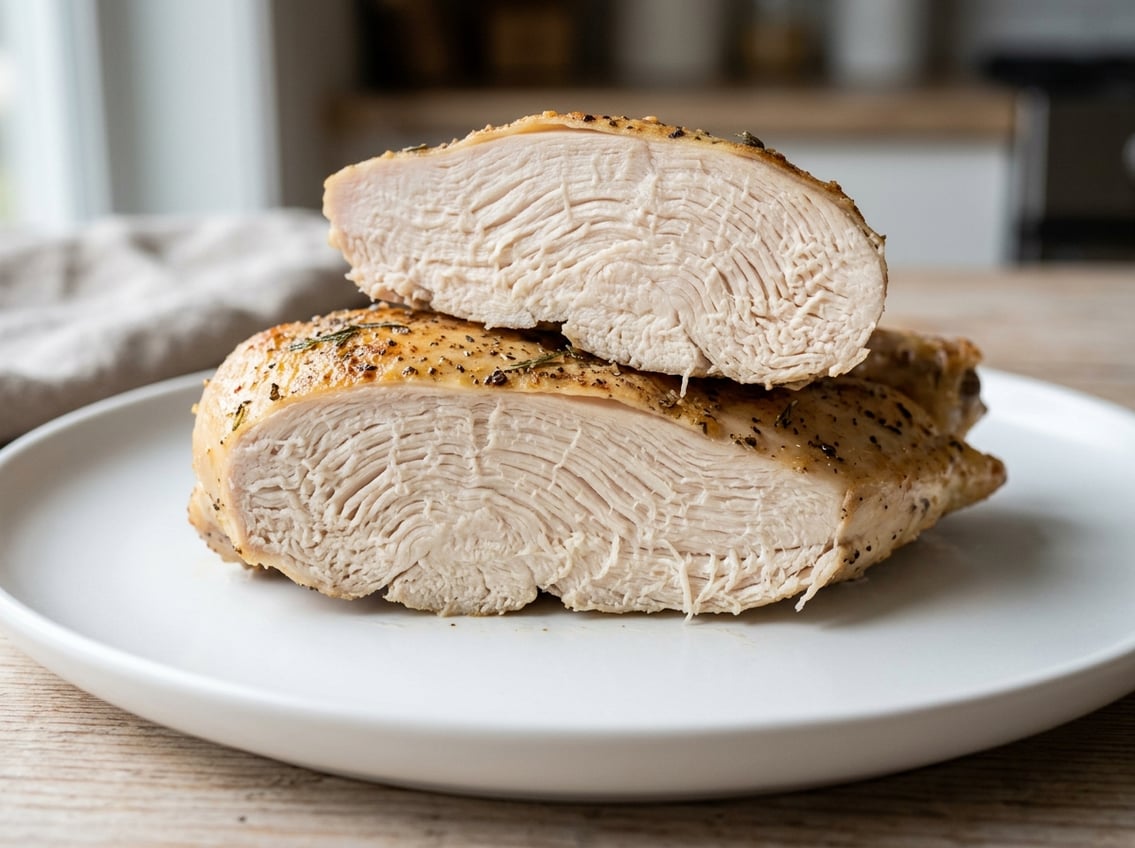
In many cases, muscle fibers separate or tighten, causing the stringy texture. This can happen due to a texture defect, overcooking, or both.
Chicken breast is naturally lean, so it shows texture problems more easily than darker cuts.
If you have heard the term “spaghetti meat,” that is the most common name for this defect.
What Stringy Chicken Breast Usually Means
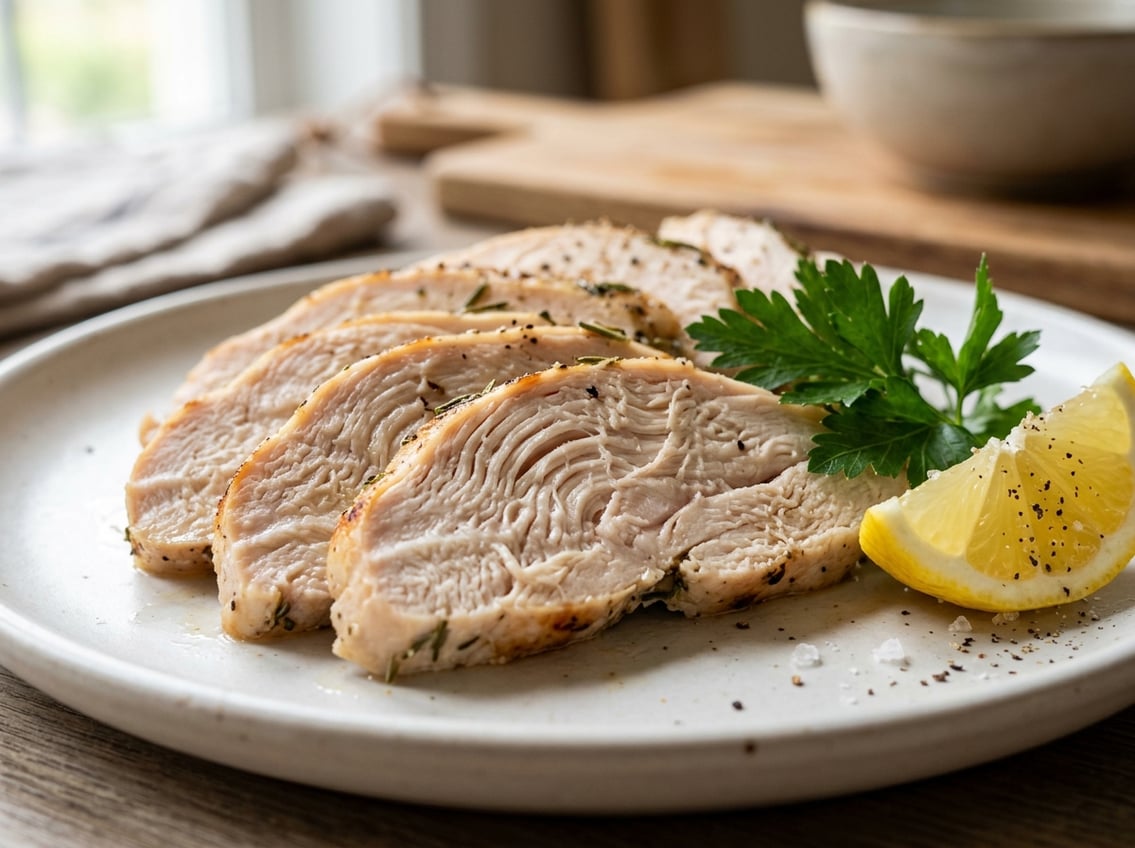
Stringy chicken breast usually points to a visible change in texture, not just normal grain.
It can look like spaghetti meat or, in some cases, seem mushy or woody before cooking.
How To Tell Normal Muscle Grain From A Texture Defect
Normal raw chicken has a mild, even stringy appearance. The muscle grain should look like fine lines that stay together, not loose strands that separate when you touch them.
If you are asking why your raw chicken is stringy, look for these signs:
- The surface looks split into obvious fibers
- The meat feels soft, mushy, or unusually fragile
The breast may tear apart with very little pressure or look uneven across the same piece.
A normal chicken breast should look firm and compact. A texture defect often looks ragged or fibrous before cooking and may become more obvious after heat is applied.
Spaghetti Meat Vs Woody Chicken
Spaghetti meat and woody chicken are not the same thing.
Spaghetti meat usually looks soft, split, and stringy, while woody chicken tends to feel dense, hard, and rubbery.
Both affect chicken texture and can make chicken breast tough to eat.
Spaghetti meat is linked to weak structure between muscle bundles, while woody chicken is tied to a different muscle quality issue that makes the meat feel firm and dry.
Why Raw Chicken Can Look Stringy Or Mushy
Raw chicken can look stringy when the muscle bundles start to separate.
It can also look mushy if the structure has broken down during processing, chilling, or handling.
That does not always mean spoilage. The meat may have a defect that shows up more clearly after cooking, especially in lean breast meat.
What Causes The Fibers To Pull Apart Or Turn Tough
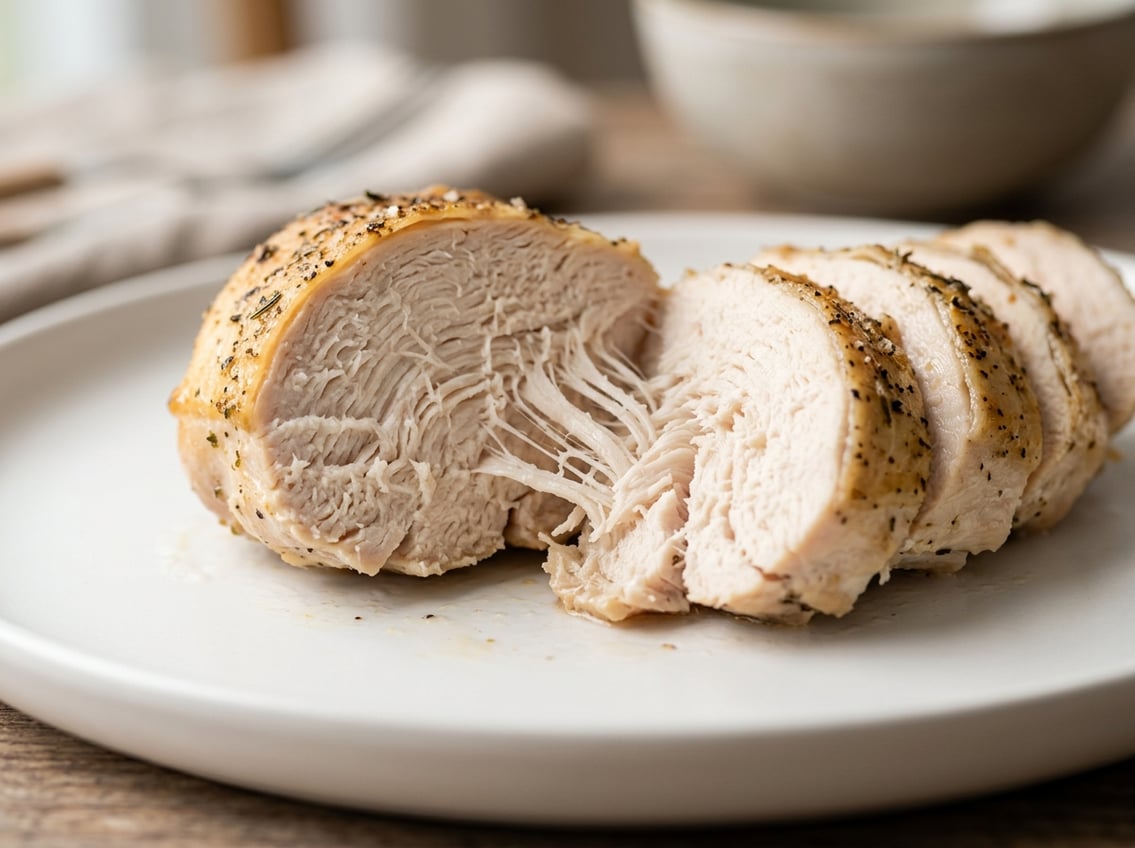
Weak support in the meat and heat changes during cooking are the main causes.
Muscle fibers, myofibrils, connective tissue, and moisture all work together, so when one part fails, the texture changes fast.
Weak Connective Tissue In Fast-Growing Birds
In spaghetti meat chicken, the connective tissue can be too weak to hold the muscle bundles together.
Research has linked this defect to fast-growing birds, where the breast muscle expands faster than its support structure can keep up.
That is one reason some chicken breast cuts split into visible strands.
The meat is still chicken, but its internal structure is less stable than normal.
How Muscle Fibers And Myofibrils Change During Cooking
When you cook chicken, muscle fibers and myofibrils contract.
This is normal and helps cooked chicken firm up.
The problem starts when the contraction is too strong or too fast. The fibers squeeze out moisture, the meat gets drier, and the texture turns stringy.
Overcooking, Excessive Shortening, And Moisture Loss
Overcooking is one of the most common reasons chicken breast toughens.
High heat, long cook times, and carryover cooking all push the fibers past the point where they stay tender.
Cooking beyond the safe finished temperature can dry out breast meat and increase stringiness.
When the fibers shorten too much, the meat loses water and turns firm, dry, and harder to chew.
Is It Safe To Eat And When Should You Skip It
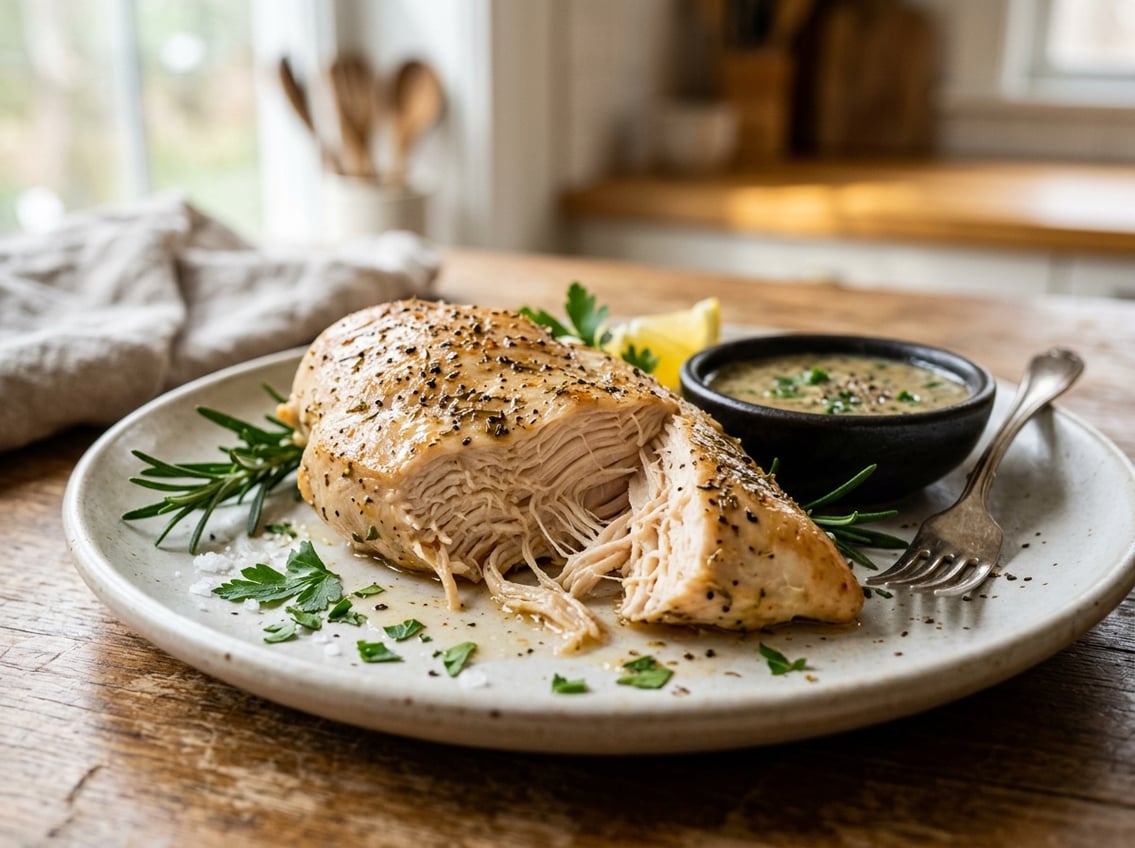
Stringy chicken is often a texture issue, not a safety issue.
The main question is whether the meat shows signs of spoilage or only a strange texture.
Texture Problems Vs Signs Of Spoilage
If the chicken has an off smell, a slimy surface, gray-green color, or a sour taste, skip it.
Those are spoilage signs.
If it only looks like spaghetti meat or feels mushy, it may still be safe if it was handled and cooked properly.
Texture defects do not always mean the food is unsafe.
What Spaghetti Meat Changes In Taste And Nutrition
Spaghetti meat can change the eating experience.
Severe cases may have more drip loss, a drier bite, and a softer structure.
That can affect how juicy chicken tastes after cooking.
The meat may also seem less pleasant to chew, even when the flavor is still mild and normal.
When To Use It In Cooked Dishes And Processed Recipes
If the chicken is safe but texturally weak, use it in dishes where the texture matters less.
Shredded chicken, soups, stews, casseroles, tacos, and processed recipes such as nuggets or patties can hide some of the stringiness.
If the piece is only mildly stringy, slicing it thin against the grain can also help.
If the texture is extreme, you may prefer to skip serving it as a plain chicken breast.
How To Buy And Cook For Better Texture
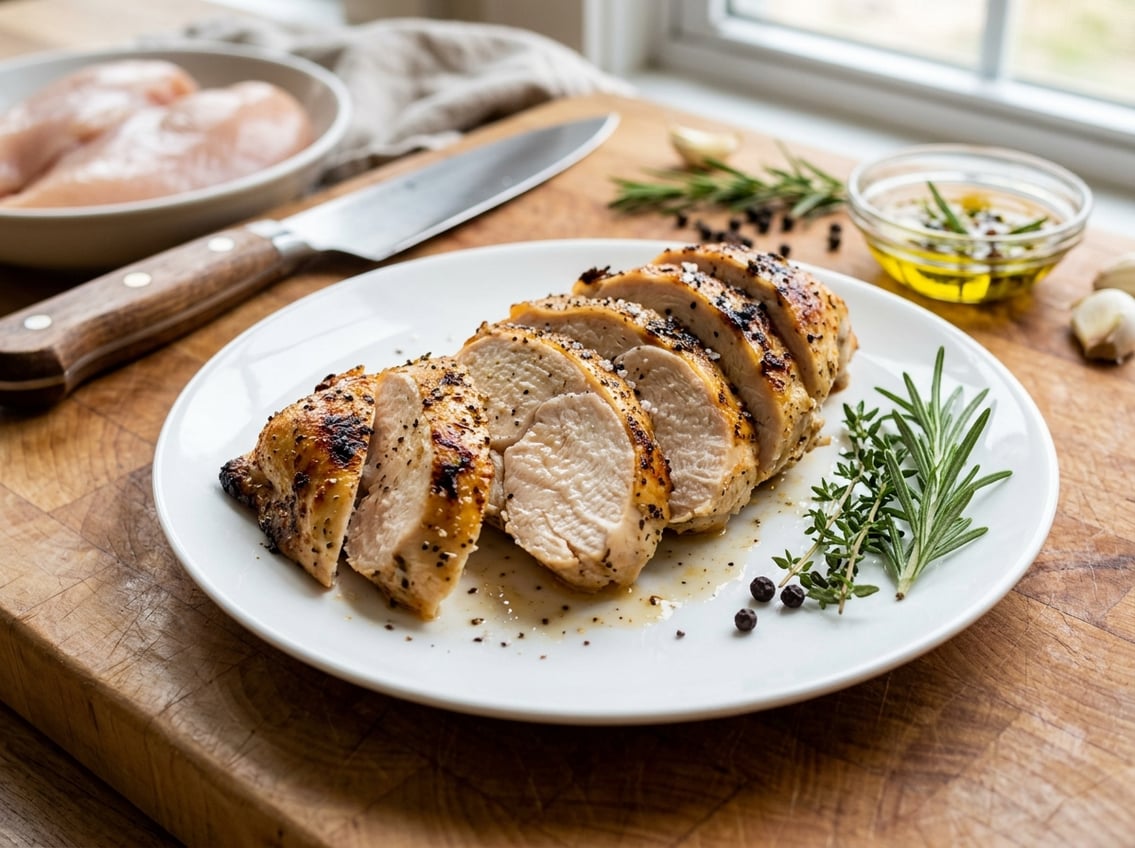
You can lower the risk of tough chicken breast with smarter buying choices and better heat control.
Small changes at the store and in the kitchen make a real difference.
What To Look For When Buying Chicken Breast
Choose chicken breast that looks firm, even, and moist without being slimy.
Avoid pieces that look split, overly pale, or oddly fibrous before cooking.
If you want a better chance at tender chicken, some shoppers prefer smaller breasts and organic chicken labels.
Guidance on avoiding spaghetti meat at the store also points to smaller, slower-grown birds as a better bet.
How A Meat Thermometer Prevents Dry Results
A meat thermometer is one of the easiest tools for better texture.
It helps you stop cooking at the right moment instead of guessing.
Pull chicken when it reaches the safe finished temperature, then let carryover cooking finish the job.
That short rest period can keep juicy chicken from turning dry and stringy.
Simple Techniques For More Tender Chicken
Use gentle heat when possible. Brining, marinating, and moderate roasting help keep chicken breast tender.
A few reliable habits help:
- Cook to temperature, not time
- Rest the meat before slicing
Slice against the grain. Avoid repeated freezing and thawing.
Use lower heat for thicker breasts. These steps can greatly improve tenderness in everyday cooking.


