
Is Chicken Breast Halal? How to Tell for Sure
You may ask is chicken breast halal because the cut itself is not the main issue; the source and processing are. Chicken breast can be halal, since chicken is generally permissible in Islam, but it only stays halal when it comes from a bird that someone slaughtered and handled according to Islamic dietary laws.
Halal status depends on what makes chicken halal, not just on whether it is plain chicken meat. In the U.S., you need to check how it was slaughtered, whether handlers kept it separate from non-halal products, and whether a trusted halal certification backs the claim.
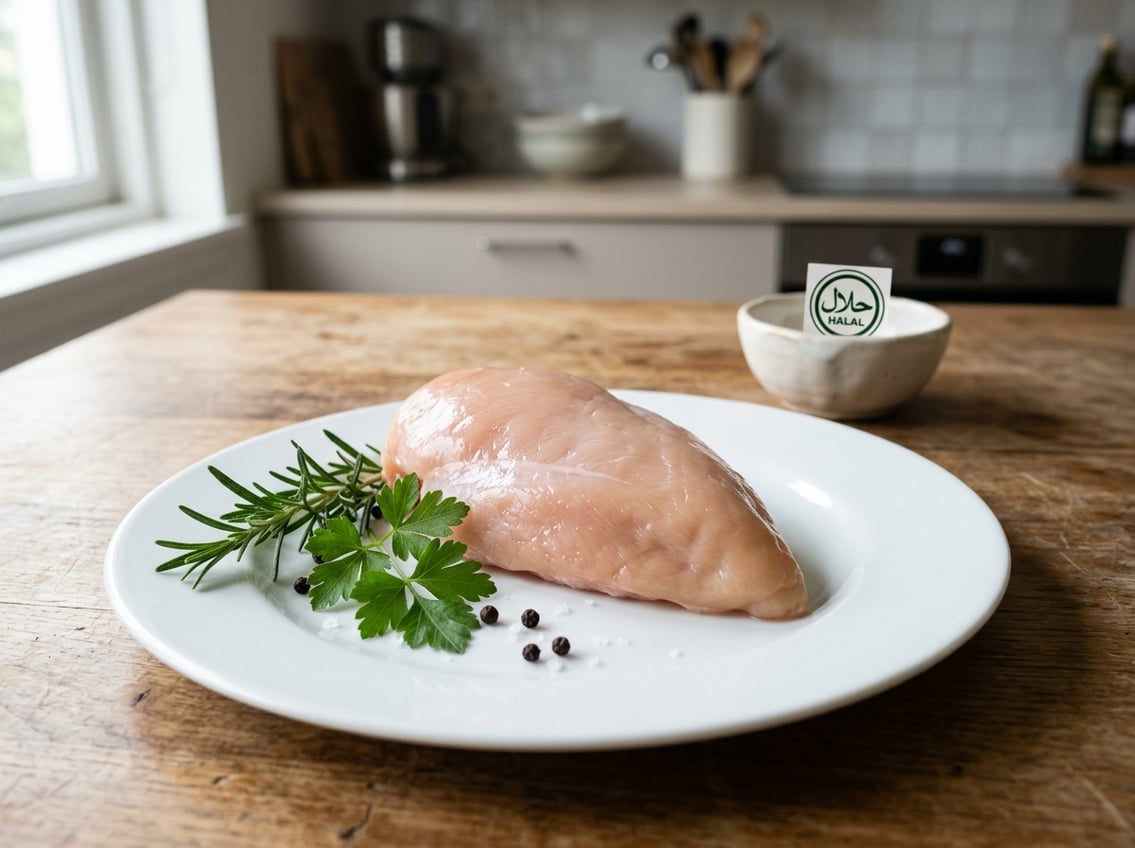
If you buy packaged chicken breast, the label matters. A “chicken breast” package with no halal mark may still be fine in some cases, but you cannot assume it is halal without checking the slaughter method and the halal standards behind it.
When Chicken Breast Is Permissible
Chicken breast is permissible when the chicken itself is halal and someone has processed the meat under halal principles. The animal, slaughter, handling, and packaging all need to fit halal guidelines.
Chicken is a halal poultry animal by nature, so the meat is allowed in Islamic dietary laws when prepared correctly. That does not mean every chicken breast in a store is halal by default.
A plain breast cut can come from a bird that someone slaughtered in a non-halal way, or it may have been processed on shared equipment. The meat can also lose halal status if it is mixed with haram ingredients or contaminated during packaging.
Islamic dietary laws require that the bird be alive and healthy at the time of slaughter, and that blood be drained properly. These rules are part of what makes chicken halal, along with avoiding contamination after slaughter.
The chicken must not come from forbidden methods of death, such as dying before slaughter. As noted in a halal chicken guide, the animal’s treatment, slaughter, and handling all matter for halal food.
The slaughter method is what changes chicken from ordinary poultry into certified halal meat. A bird that is halal in type can still be non-halal if the slaughter does not meet halal principles.
You should not judge chicken breast by appearance alone. The final ruling depends on whether the slaughter followed halal guidelines and whether the processing stayed separate from non-halal food.
The Slaughter and Handling Standards That Matter

Halal slaughter involves more than a quick cut. The person doing the slaughter, the words said, the way blood is drained, and the way handlers manage the meat after processing all matter.
Zabiha and dhabiha both refer to halal slaughter, with slight differences in how people use the terms. In practical terms, they refer to the same basic Islamic method for making meat halal.
You may also see these terms used on packaging or in halal certification materials. When a product claims zabiha, you still need to check whether the claim comes from a real halal certification process.
Halal slaughter usually requires a sharp cut to the throat, windpipe, and main blood vessels so the blood can drain. The slaughter is done with religious intent and with the proper naming of Allah.
A trusted halal slaughter process also avoids rough handling and limits stress on the bird. For a broader explanation of certification and plant controls, see the halal slaughter and certification overview.
Halal compliance does not stop at the knife. After slaughter, the meat needs clean equipment, separate storage, and careful labeling so it does not contact non-halal products.
That matters for chicken breast because boneless cuts move through many steps before they reach the shelf. If handlers use shared machines, trays, or storage areas, the halal status may be questioned unless the facility maintains strict halal compliance.
How to Identify a Trustworthy Product in Stores
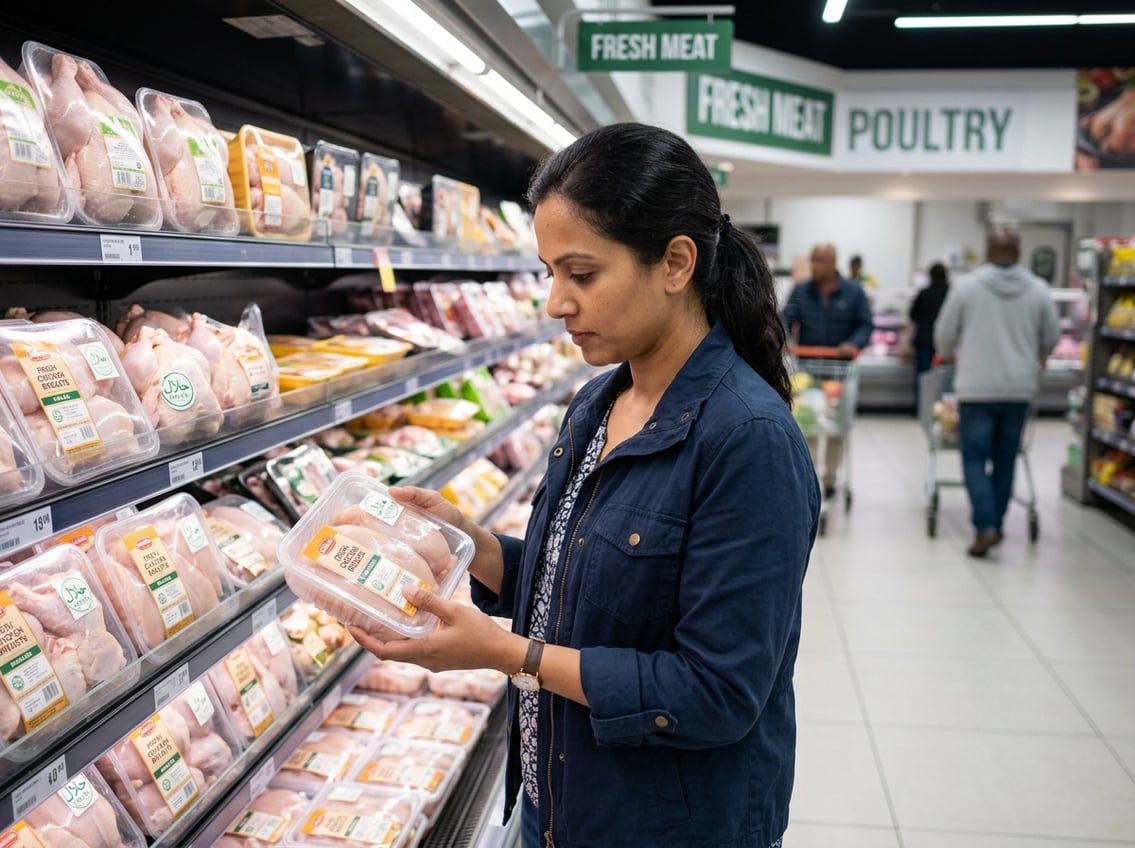
Store labels can be helpful, but they are not all equal. You need to read the halal certification label, check the logo, and separate real halal claims from general marketing claims like fresh, natural, or humanely raised.
A reliable label should name the certifying body and show a clear halal certification mark. In the U.S., shoppers often look for labels linked to groups such as IFANCA, since a real certification process should be traceable.
If the package only says “halal style,” “Muslim friendly,” or something similar, that is not enough. You want a certified halal statement that can be tied to a known halal certification process.
Halal certification logos can show that a product was reviewed by a certifier, but the logo alone is not enough if you do not know the certifier. You should confirm that the logo is current and that the brand still follows the listed standards.
A logo can tell you that a claim exists. It cannot tell you, by itself, whether the store has handled the product correctly since it left the plant.
“Certified halal” means the product should have passed a halal review, while “USDA inspected” only means it met U.S. meat inspection rules. Those are not the same thing.
“Ready to cook” is also not a halal claim. It only tells you the product has been trimmed, packaged, or prepared for home use.
Claims like antibiotic-free, cage-free, and humanely raised may matter to you for health or animal welfare reasons. They do not prove halal status.
A chicken breast can be antibiotic-free and still not be halal. If halal status matters to you, treat those claims as extra details, not proof.
Where Shoppers Commonly Get Confused
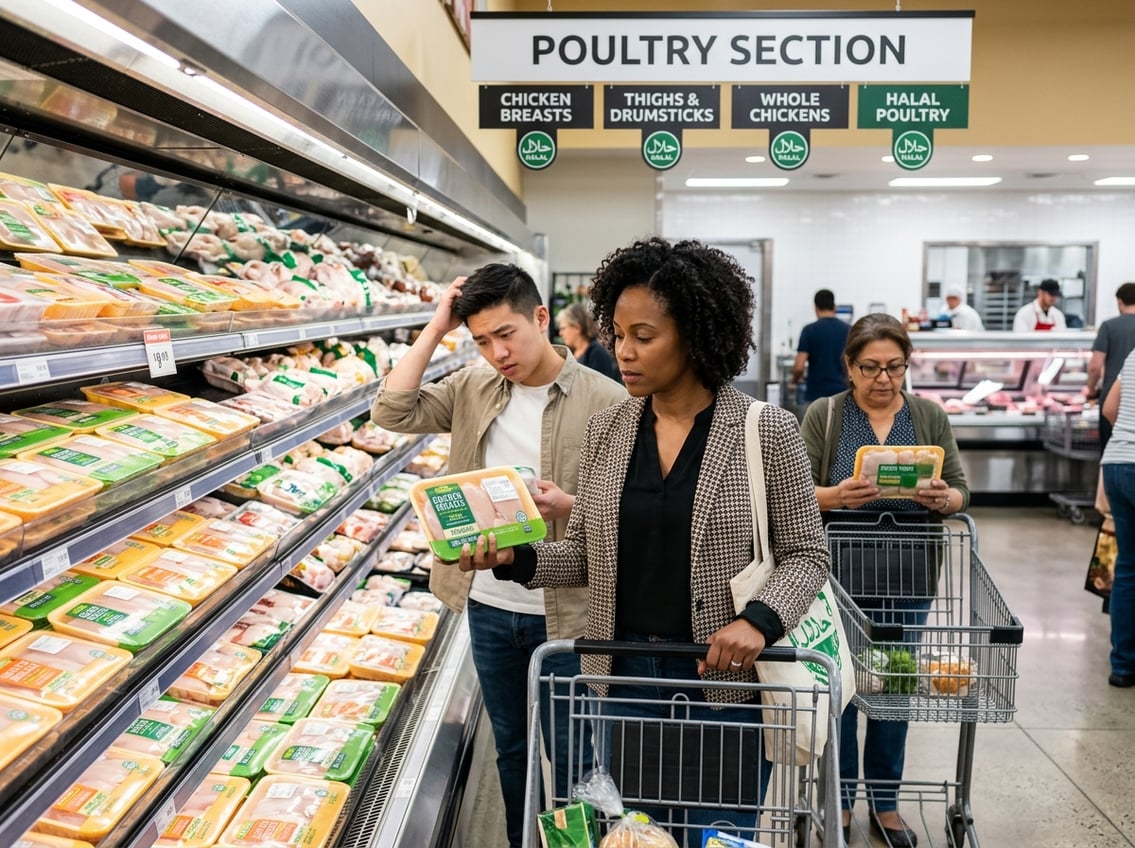
A lot of confusion comes from seeing ordinary chicken breast and assuming it is acceptable because it is “just chicken.” The real issue is what makes chicken halal, which is usually invisible on the package unless certification is clear.
Chicken breast without certification may still be questionable because you cannot verify the slaughter method from appearance alone. The bird may have been processed in a non-halal facility or on shared equipment.
That is why many shoppers treat uncertified chicken as doubtful unless they can confirm the source. A halal checker note also points out that missing certification and slaughter details create uncertainty.
Halal markets often focus on halal compliance and may know their suppliers well. Mainstream grocers may carry certified halal chicken, but they also sell standard poultry next to it, which can make shopping less clear.
If you shop at a halal market, you still need to check the label. If you shop at a large store, the burden of identification is usually higher because the display may include both halal and non-halal meat.
How to Ask Brands or Retailers the Right Questions
You can ask simple, direct questions. For example, ask if the chicken breast is certified halal.
Ask who the certifier is. You can also ask if it was zabiha or dhabiha slaughtered.
Find out if it was processed on shared equipment. If the staff cannot answer, contact the brand using the package information.
The answer should match the halal certification label and the halal standards claimed on the box.


