
How Should Chicken Breast Feel When Cooked? Key Signs
You can tell a lot about how chicken breast should feel when cooked by touch, not just by color.
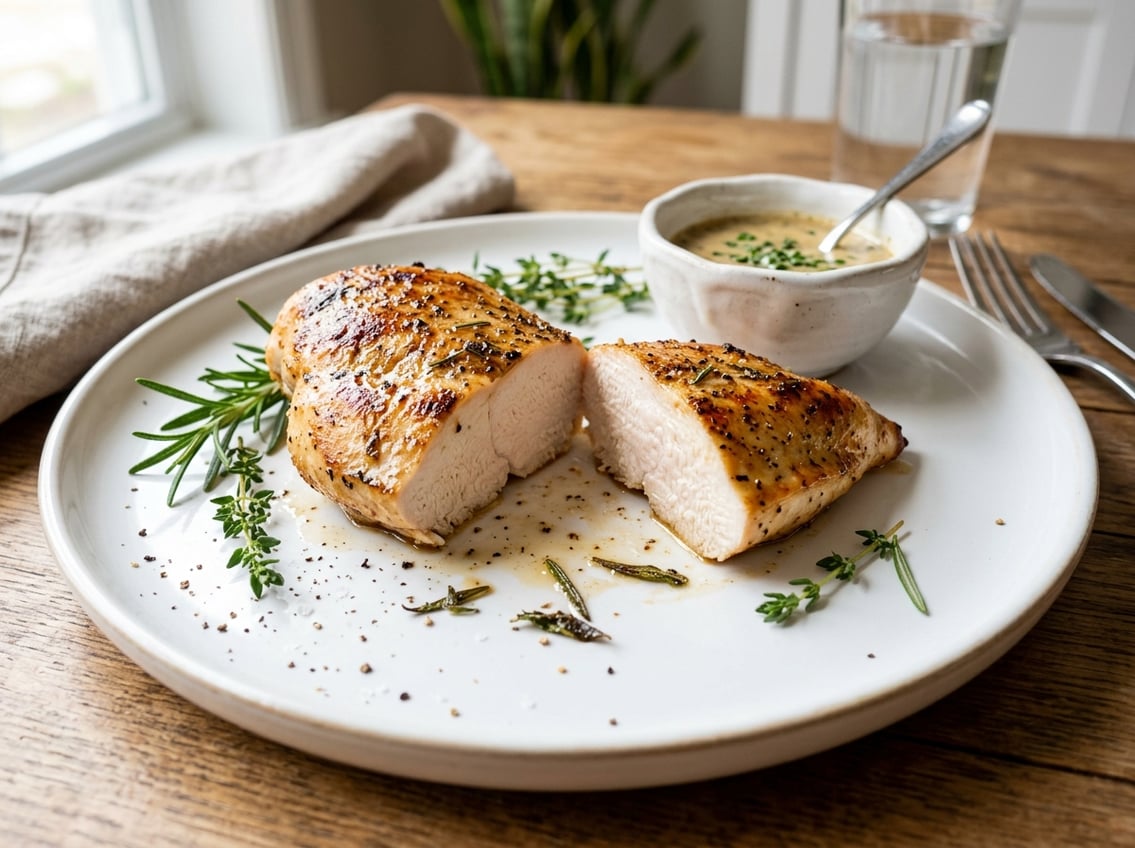
A properly cooked chicken breast feels firm, slightly springy, and moist, not soft, squishy, or dry.
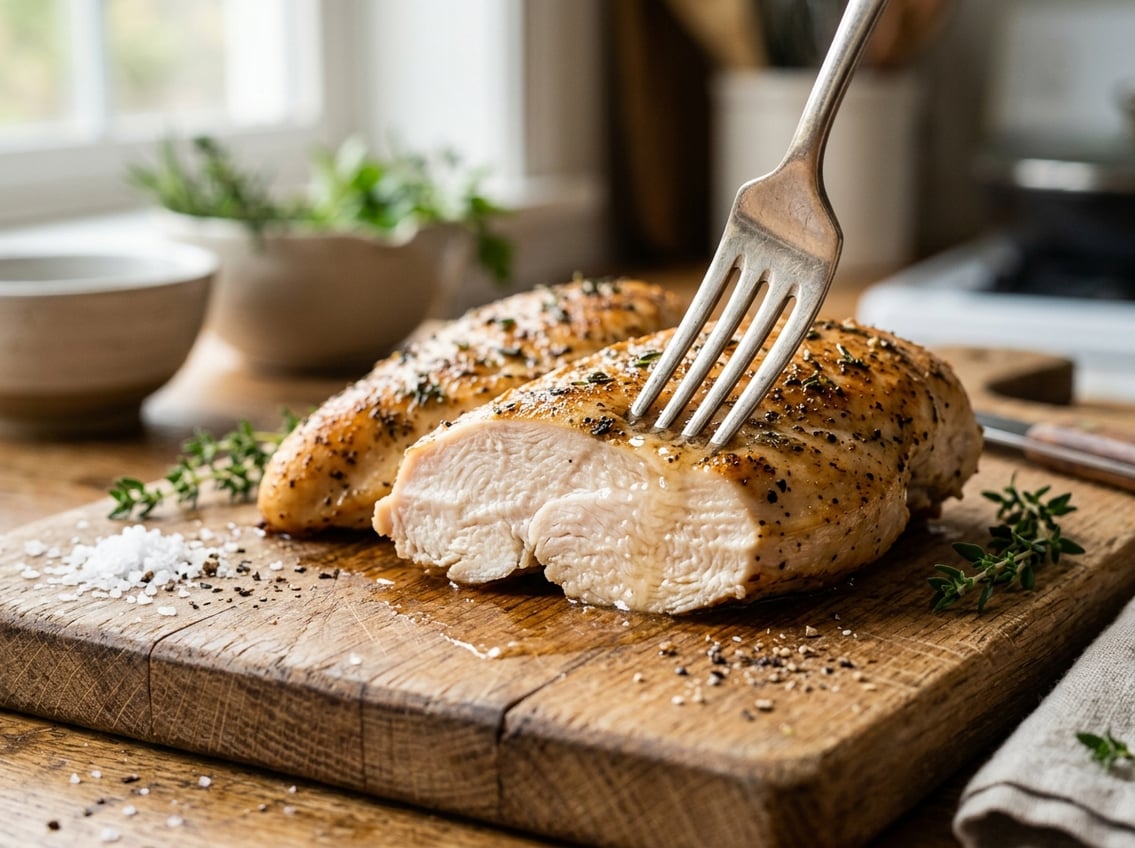
If your chicken breast feels firm with a little bounce in the center, you are usually close to perfectly cooked chicken.
That feeling works best when you pair it with a temperature check.
Touch alone can be misleading.
Chicken can look done on the outside while still being undercooked inside.
It can also feel firm and still be a little dry from overcooking.
Knowing the right texture helps you cook with more confidence and avoid guesswork.
What Properly Cooked Chicken Breast Feels Like
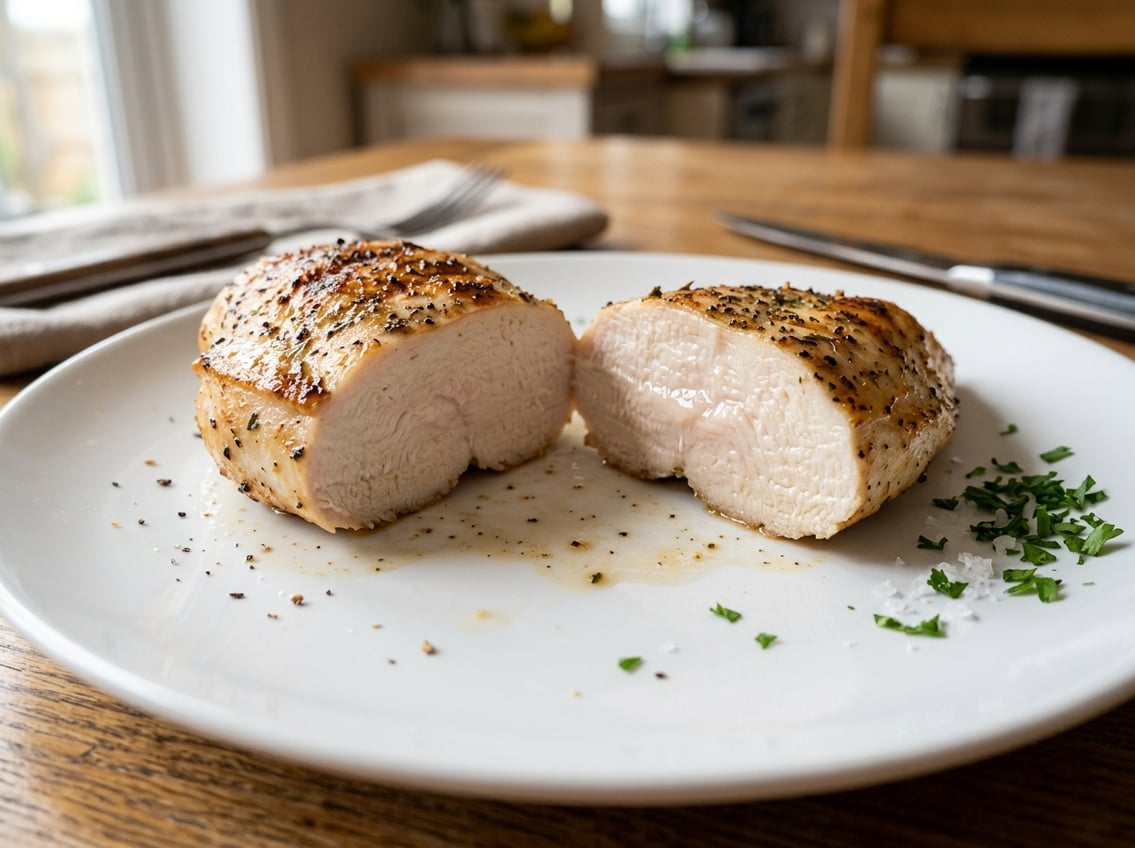
Properly cooked chicken breast has a specific feel that shows up in your fingers and in the bite.
You want a balance of firmness, light spring, and moisture.
That is the texture of cooked chicken when it is at its best.
Firm but Slightly Springy to the Touch
A cooked chicken breast should press down a little and spring back.
It should not feel loose, raw, or jelly-like.
If you press the thickest part, the meat should offer gentle resistance, like a ripe avocado or a firm handshake.
This is one of the most useful signs of perfectly cooked chicken.
What the Texture of Cooked Chicken Should Be
The texture of cooked chicken breast should be tender, juicy, and easy to cut.
It should feel set through the center, with no slippery or soft spots.
You can also use the look of the meat as a guide.
What does cooked chicken breast look like is usually white or lightly browned, opaque throughout, and free of raw pink in the center.
What Overcooked and Undercooked Meat Feels Like
An undercooked breast often feels soft, squishy, or slightly gelatinous in the center.
It may also look glossy or feel cold in the thickest part.
An overcooked chicken breast feels firm in a bad way, then turns dry, stringy, or rubbery.
Once that happens, the juices are gone and the meat loses the tender bite you want from juicy chicken.
How to Check Doneness Accurately
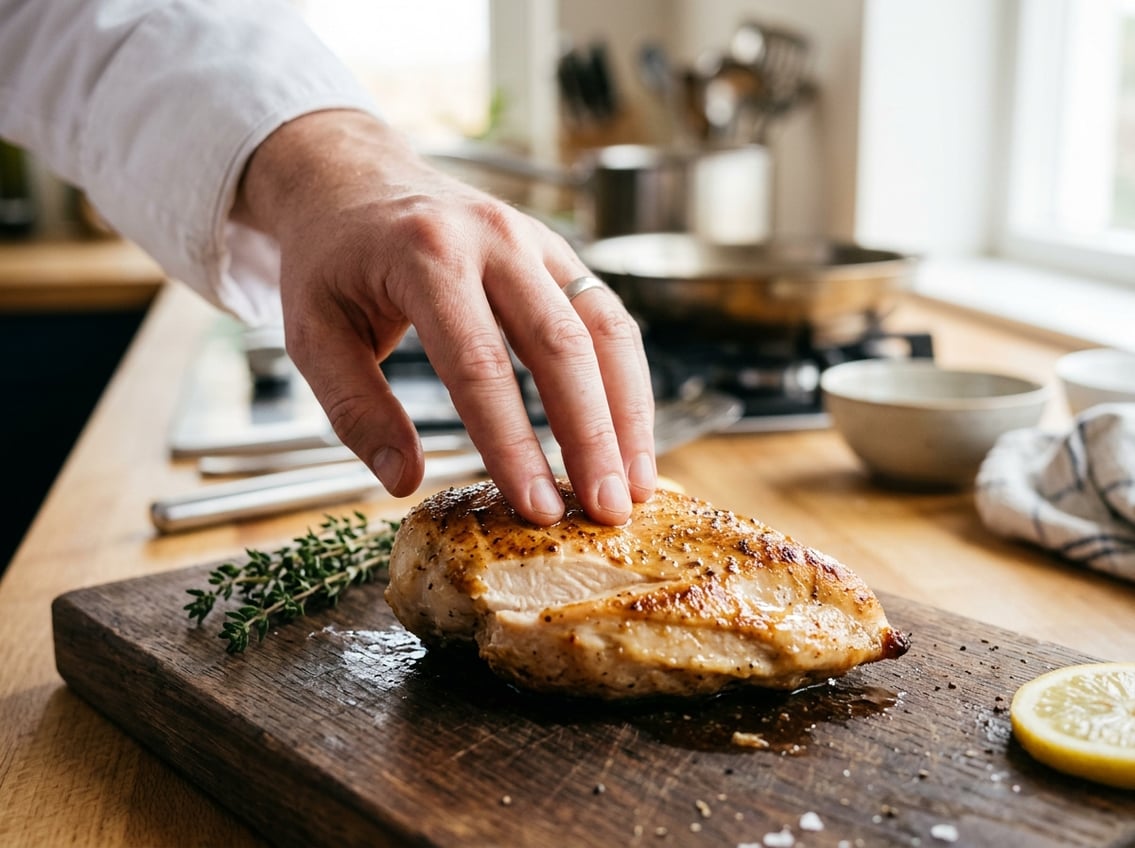
Touch helps, yet it should not be your only test.
The safest check uses temperature, then you can use juices and color as backup signs.
Use a Meat Thermometer in the Thickest Part
Use a meat thermometer and insert it into the thickest part of the breast, not against a pan or near the edge.
The USDA safe target for chicken breast is 165°F, and that is the clearest answer for how to know when chicken is done.
For the most accurate reading, let the thermometer sit long enough to stabilize.
If the number is below 165°F, keep cooking and check again.
Why Use a Food Thermometer Instead of Guessing
A food thermometer removes the risk of guessing by feel alone.
Chicken breast can change texture from one piece to the next, especially if the pieces are uneven in size.
Use the thermometer as your main check, then use touch and appearance to confirm the result.
It gives you a better chance at safe, juicy chicken without cutting into the meat too early.
When Clear Juices and Color Changes Help
Clear juices can support your decision, especially when they run from the thickest part after piercing.
Pink or red juices are a warning sign that the chicken may need more time.
Color also helps.
Cooked chicken is usually opaque and white to light brown in the center, while raw chicken looks pink.
Even so, color alone is not enough, so treat it as a backup sign rather than the main one.
What Affects Texture and Juiciness
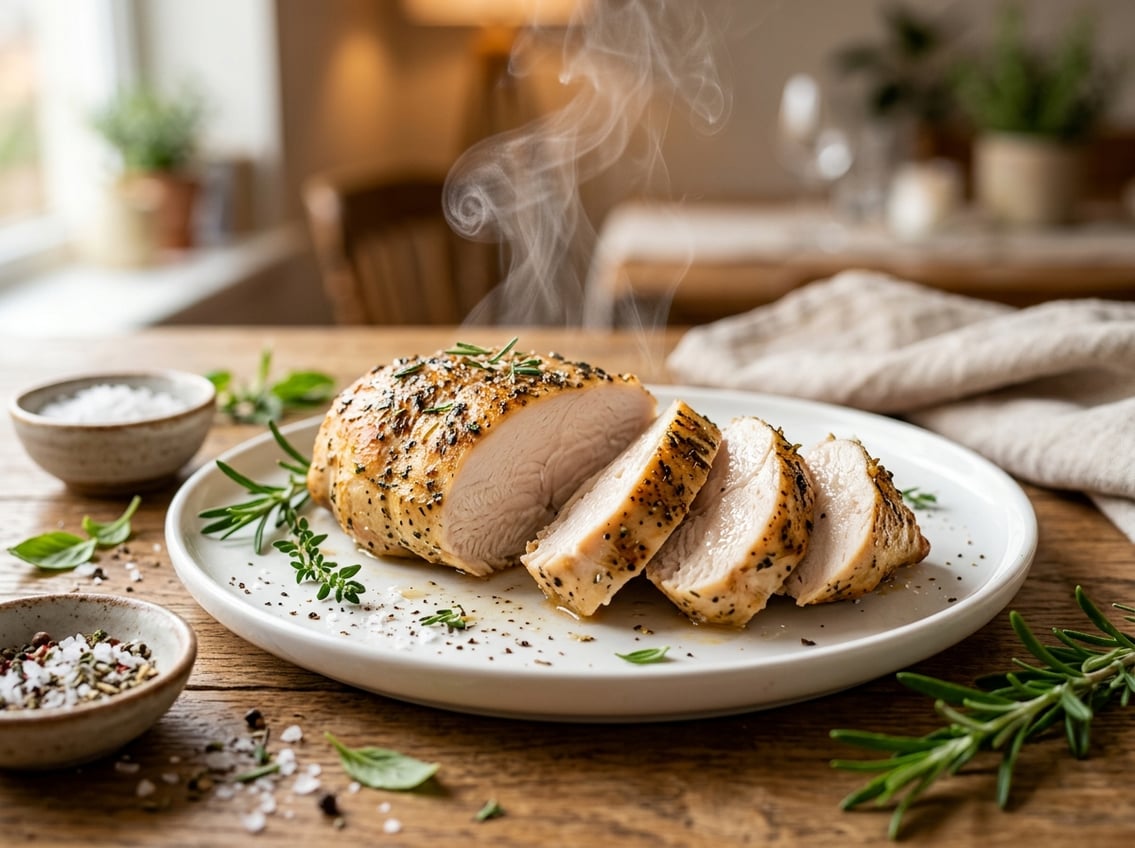
The feel of chicken breast changes based on heat, timing, and prep.
The method you use, the way you season it, and whether you let it rest all affect the final bite.
How Cooking Methods for Chicken Breast Change the Feel
Different cooking methods for chicken breast create different textures.
Sautéing, roasting, baking, grilling, and pan-searing all use heat in a different way, so the outside and inside can finish at different speeds.
For example, sautéing chicken breast can give you a browned outside and a juicy center if you control the heat well.
High heat or long cooking time can push the meat toward an overcooked chicken breast texture.
How Marinating Chicken Influences Tenderness
Marinating chicken can help the meat feel more tender and can improve moisture on the surface.
It also adds flavor, which can make the chicken seem juicier when you eat it.
A marinade cannot fix severe overcooking.
It works best as prep, not as a rescue step.
Why Resting Prevents Dry, Stringy Results
Resting lets the juices settle back into the meat after cooking.
If you cut too soon, more liquid runs out and the breast can feel drier than it should.
A few minutes of rest can make a clear difference in the texture of cooked chicken.
The meat stays more even, more tender, and easier to slice.
Common Mistakes and After-Cooking Handling
Small mistakes can turn a good chicken breast into a dry one.
After cooking, how you handle, store, and reheat it matters almost as much as the cooking time.
Signs You Have Cooked It Too Long
If the chicken feels very firm, dry, or stringy, you have likely gone past perfectly cooked chicken.
The surface may look shrunken, and the inside may pull apart in tough fibers.
This is common when you cook by time only and do not check the center.
What to Do if the Center Still Seems Underdone
If the center feels soft or the juices run pink, keep cooking it.
Check again with a thermometer in the thickest part until it reaches 165°F.
If the outside is already browned, lower the heat or finish it gently in the oven.
That helps protect the outside from drying out before the center is done.
Best Practices for Storing Cooked Chicken
Place cooked chicken breast in a shallow container in the refrigerator within two hours. Cover it and use it within a few days for best quality.
Reheat the chicken slowly to prevent it from turning tough. Gentle heat helps the meat stay closer to the feel of freshly cooked chicken.


