
What Makes Chicken Breast Moist? Key Techniques Explained
Moist chicken breast comes from salt, gentle heat, even thickness, and careful timing. If you control those factors, you can cook chicken breast that stays tender instead of turning dry.
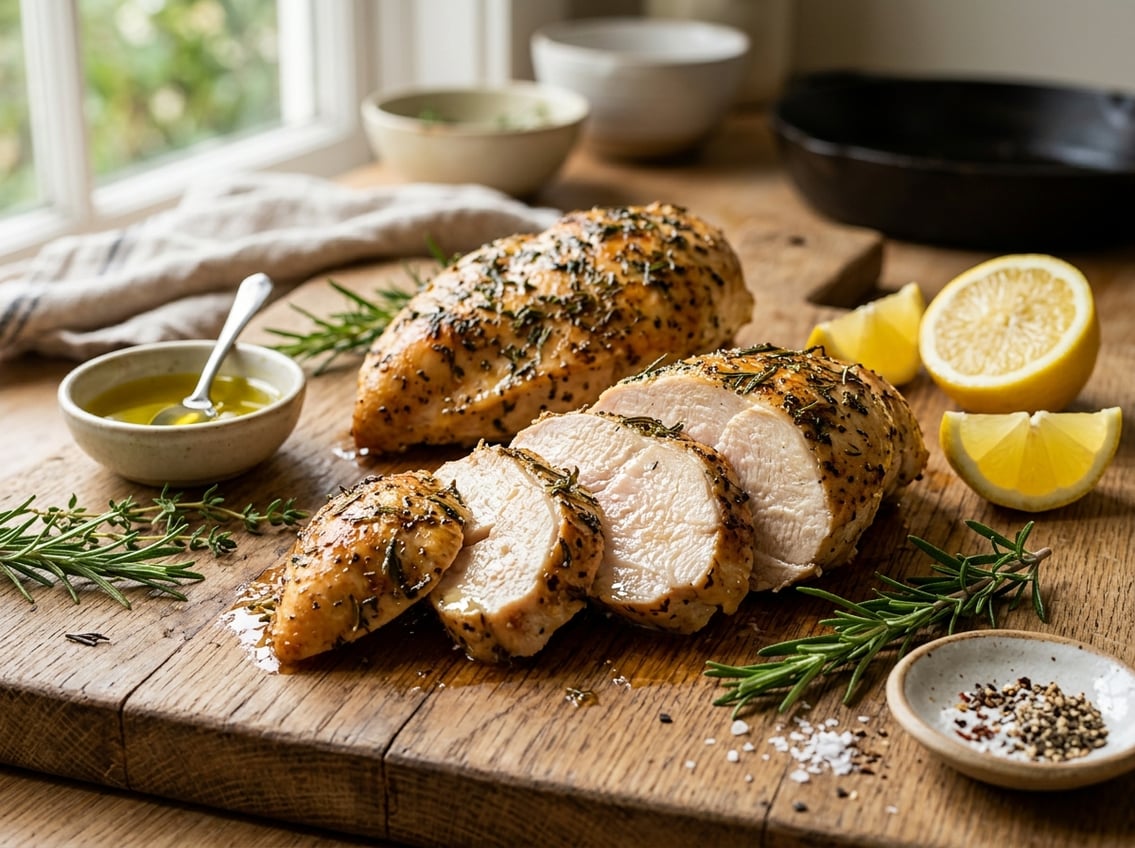
Chicken breast has very little fat and collagen, so it dries out faster than darker cuts. The best way to cook chicken breast is usually the method that protects moisture, not the one that uses the highest heat.
You can improve the result long before you start cooking. With the right prep and a thermometer, you can make juicy chicken breast that is safe, tender, and easy to slice.
The Main Factors That Keep Chicken Moist
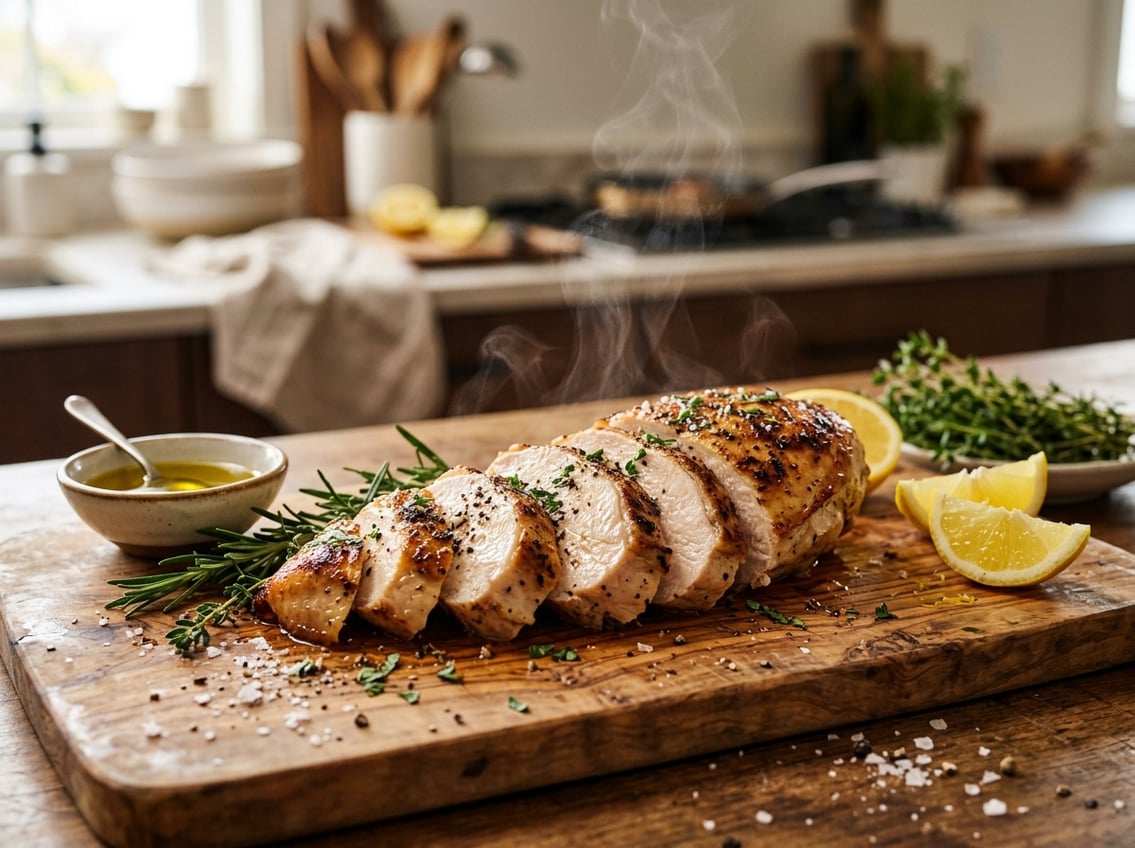
Moist chicken breast depends on what happens to the muscle fibers as they heat up. Salt, thickness, and final temperature all shape the result.
Tender chicken breast is not just about speed. The meat needs help to hold onto water while keeping the proteins from squeezing out too much juice.
Why Lean White Meat Dries Out Quickly
Chicken breast is lean white meat with less fat and less connective tissue than thighs. It does not benefit from long, high-heat cooking the way dark meat does.
When the proteins tighten too much, water gets pushed out. Tender chicken breast needs gentle handling from the start.
How Salt Improves Moisture Retention
Salt changes how muscle proteins hold water. When you salt early enough, it helps chicken breast stay juicy during cooking.
Even a simple salt treatment before cooking can make a clear difference.
Why Even Thickness Matters
Uneven pieces cook at different speeds. A thin end can dry out before the thick end reaches the right temperature.
Pounding or trimming the breast into even thickness helps the whole piece cook at the same rate. This makes it easier to finish with a tender chicken breast.
How Gentle Heat Protects Juiciness
High heat is not the enemy, but long exposure to high heat usually is. Gentle heat gives the outside time to brown without overcooking the center.
The less time the meat spends above its ideal temperature, the better the texture stays.
Why Final Temperature Determines Texture
Final internal temperature is the biggest factor in moisture loss. An instant-read thermometer removes the guesswork, so you can stop cooking before the meat gets dry.
Chicken breast stays juicy when you remove it near the safe finishing point and allow it to rest.
Prep Steps That Improve Juiciness Before Cooking
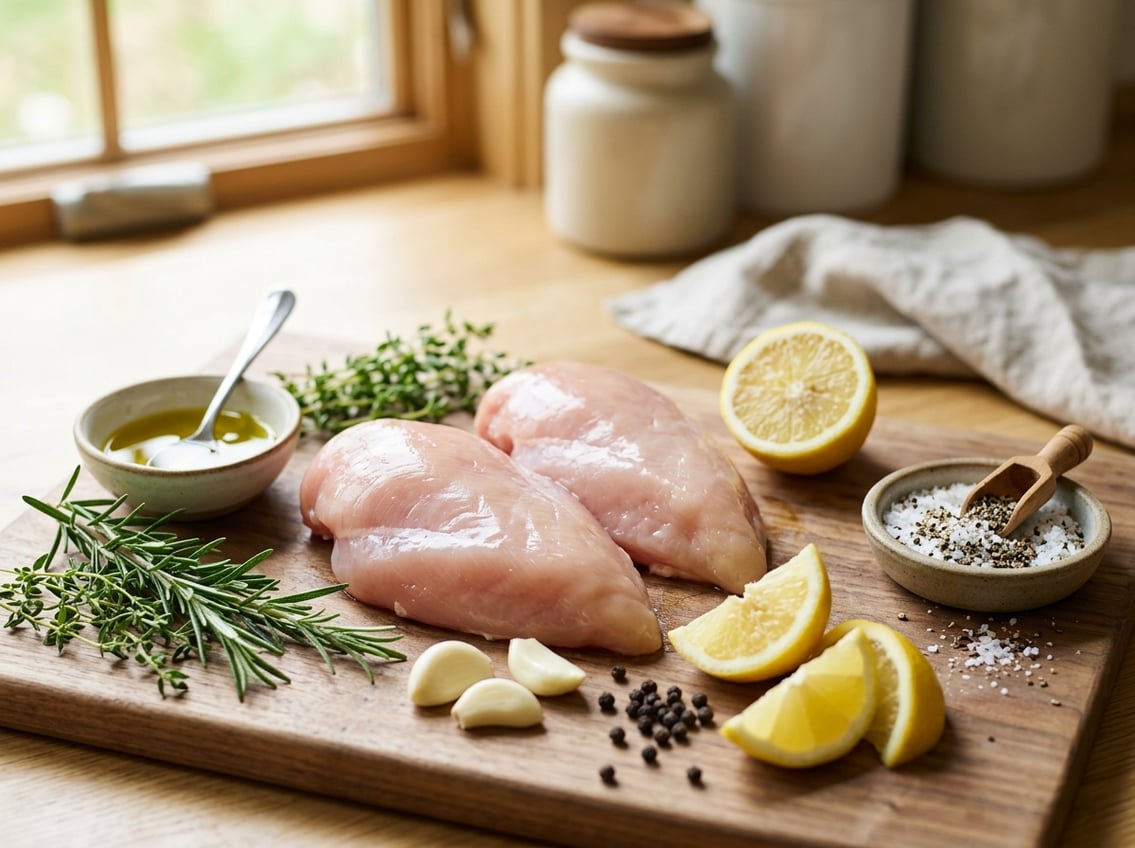
Good prep gives you a better starting point before heat ever hits the meat. Salt, brines, marinades, and portioning all affect how well the chicken holds moisture.
If you want to cook chicken breast with better results, these steps are often where the biggest gains happen.
Dry Brining vs Wet Brining
Dry brining means salting the chicken and letting it sit before cooking. Wet brining means soaking it in salted water, which can add extra moisture as well as seasoning.
Dry brining is easier and less messy. Wet brining can help too, especially when you want a little extra protection against dryness.
When Marinades Help and When They Do Not
A marinade helps most when it contains salt. Salted marinades can improve flavor and moisture retention, while acidic marinades mainly change the surface.
Marinade time should be reasonable, not endless. A balanced marinade works better than a very acidic one left on too long.
Pounding and Portioning for Even Cooking
Pounding the thick end of each breast helps create even thickness. You can also split very large breasts into cutlets if needed.
Even pieces cook more predictably, which lowers the chance of dry edges and underdone centers.
Seasoning Without Pulling Out Too Much Moisture
Seasoning right before cooking works, but seasoning ahead gives salt time to do its job. Dry brining often beats last-minute salting.
Use salt, pepper, and dry spices without flooding the meat with too much liquid. You want flavor on the surface and moisture inside the breast.
Cooking Methods That Deliver Better Results
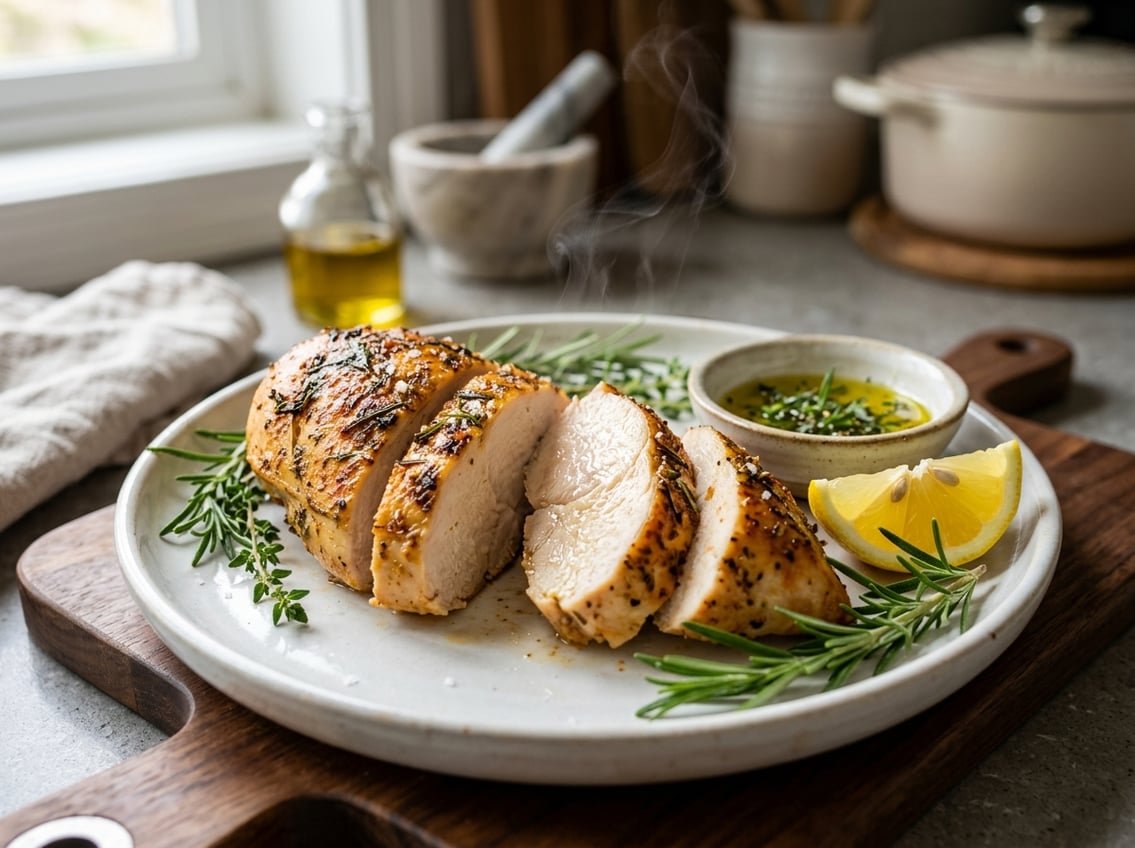
The cooking method should match your goal. Some methods focus on browning, while others focus on maximum juiciness and a very even finish.
Choose a method that gives you control over temperature and timing.
Skillet Sear and Covered Finish
Start with a quick sear in a skillet to build color. Then cover the pan so the meat cooks through gently.
Use medium heat instead of very high heat. High heat can brown the surface too fast and leave the inside behind.
Oven Baking Without Overcooking
Oven baking works well when you keep the temperature moderate and watch the internal temperature closely. A lower oven temp gives you more room to hit the target without overshooting it.
This method is a strong choice when you are cooking several pieces at once.
Poaching and Steaming for Gentle Heat
Poaching and steaming use gentle heat, which can help protect moisture. These methods do not create much browning, so they are best when tenderness matters more than a crisp surface.
You can produce juicy chicken breast if you stop cooking at the right temperature.
Sous Vide in a Temperature-Controlled Water Bath
Sous vide gives you the tightest temperature control, so you can keep the meat juicy while cooking it safely at a lower, precise temperature.
This method is useful when you want repeatable results. It takes longer, but it gives you a very consistent tender chicken breast.
Doneness, Resting, and Common Mistakes
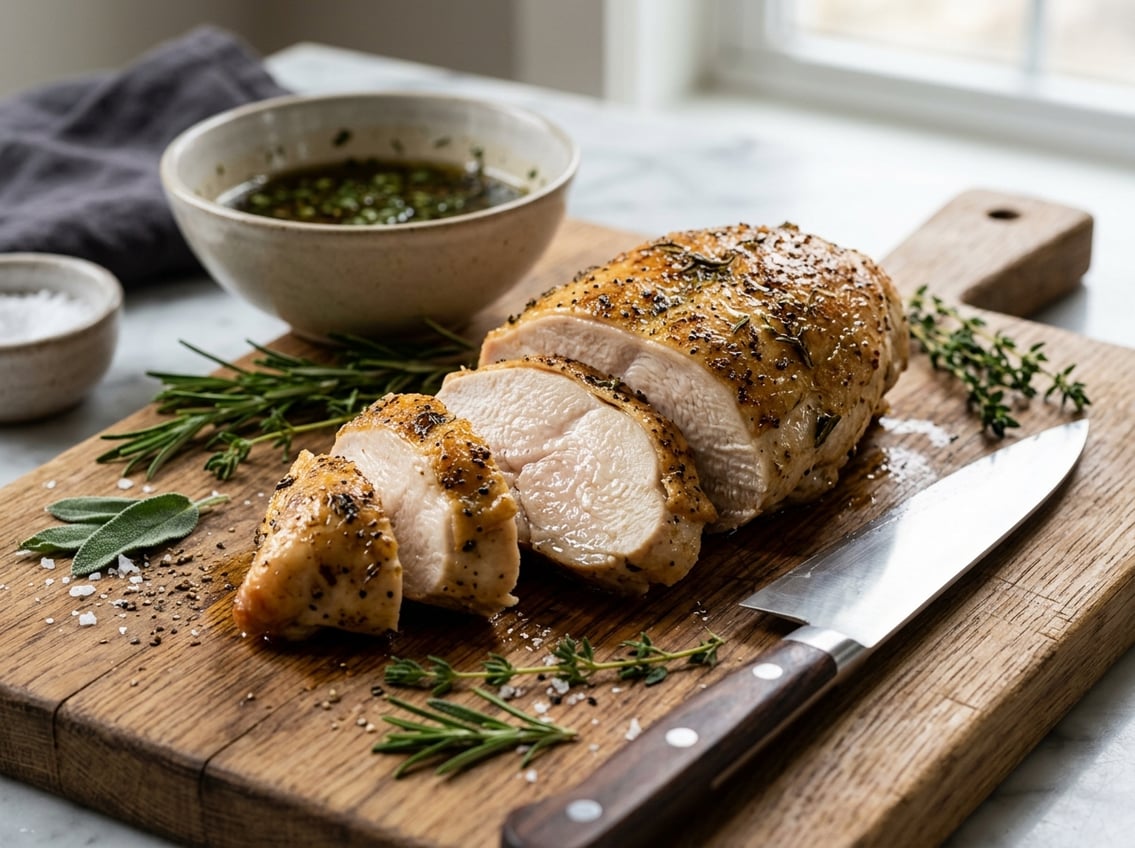
Even a good recipe can fail if you miss the final details. Checking doneness the right way and letting the meat rest both help keep chicken breast moist.
Small mistakes add up fast with lean meat. A few extra degrees or a rushed slice can turn tender chicken breast dry.
How to Check Internal Temperature Accurately
Use an instant-read thermometer and place it in the thickest part of the breast. Make sure the tip is in the center, not touching the pan or bone.
Thermometer checks are more accurate than color alone.
Why Resting Keeps Juices Inside
Resting gives the juices time to settle back into the meat after cooking. If you slice too soon, a lot of the moisture ends up on the cutting board instead of in the chicken.
A short rest helps chicken breast stay more stable when you cut it. The texture also feels better because the fibers have a chance to relax.
Mistakes That Cause Dry or Rubbery Texture
The most common mistakes are overcooking, using too much heat, and skipping the thermometer. Another issue is cooking breasts of very different sizes together without adjusting for thickness.
Tough, rubbery meat usually comes from heat that is too aggressive. Dry meat often means the chicken stayed in the pan or oven too long.
How to Adjust for Large or Small Breasts
Large chicken breasts require more time at a lower heat. Thin breasts cook faster and need closer attention.
If the pieces are very uneven, slice them into cutlets or pound them first. This method helps you protect tender chicken breasts from drying out.
You get more even cooking and better texture.


