
What Makes Chicken Breast Tender: Key Factors Explained
You may wonder why one chicken breast turns out soft and juicy while another feels dry or chewy. The answer depends on several controllable factors, including the meat’s structure, moisture, thickness, preparation, cooking temperature, and how you cut it.
If you want a tender chicken breast, handle the meat gently before, during, and after cooking.
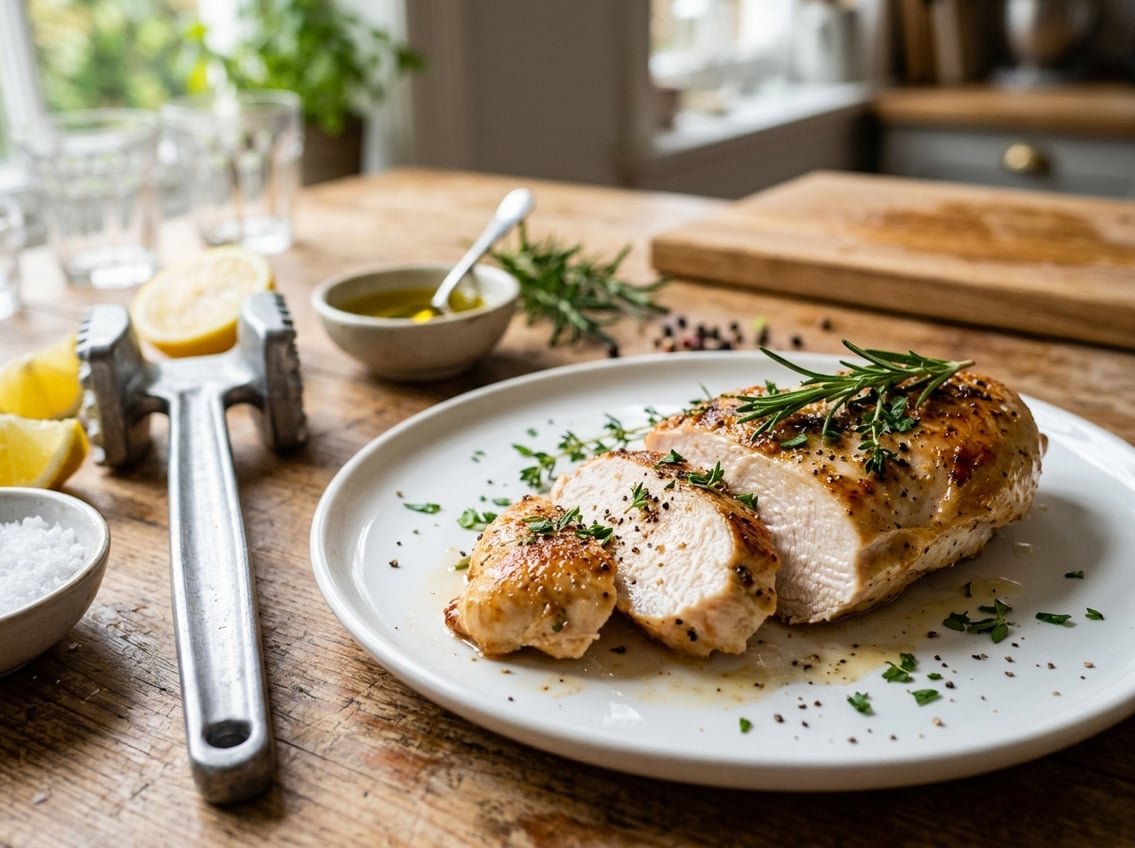
Chicken breasts are naturally lean, so they lose moisture fast if you cook them too hot or too long. With the right prep and cooking choices, you can make chicken breasts tender and juicy without much extra effort.
The same ideas help when you cook chicken breasts for meal prep or dinner.
The Main Factors That Affect Texture
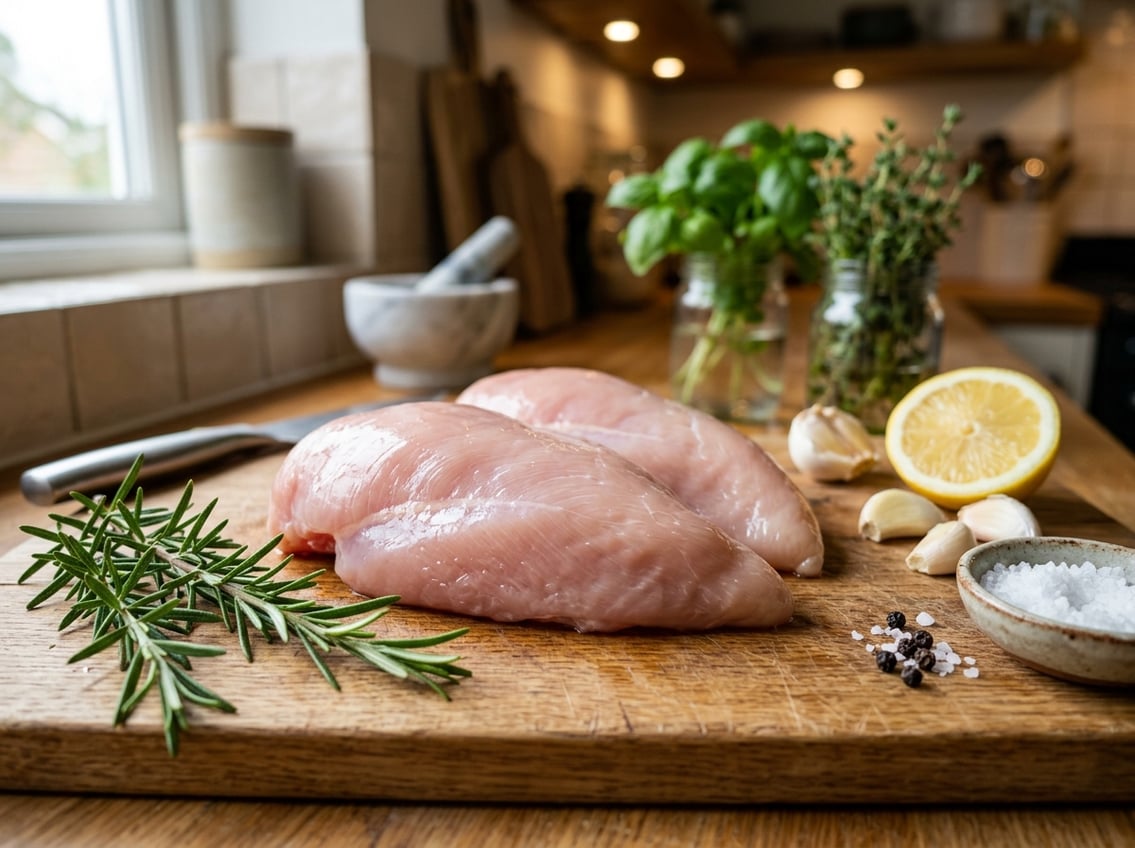
Chicken texture depends on how the muscle fibers react to heat and moisture. Thickness, size, and natural leanness all change how chicken breasts cook and how tender they feel when you eat them.
How Chicken Fibers Influence Tenderness
Chicken fibers tighten when they heat up. If the fibers contract too quickly, they squeeze out moisture and make the meat firmer.
Even cooking and careful heat control help keep chicken breast tender. Breaking down tough muscle fibers also creates a more tender bite.
Why Lean Meat Dries Out So Easily
Chicken breasts have very little fat compared with other cuts. Less fat means less protection against overcooking, so the meat can shift from juicy to dry fast.
Lean meat needs moisture support from prep and cooking. Brining, marinating, and careful timing help chicken breasts hold on to water better.
How Thickness and Size Change the Result
A thick chicken breast takes longer to cook than a thin one. If one side is much thicker, the thinner part can dry out before the center is done.
Pounding the meat to a more even thickness helps the whole piece cook at the same pace. This gives you a better chance at a moist chicken breast with a consistent texture.
Prep Methods That Improve Tenderness Before Cooking
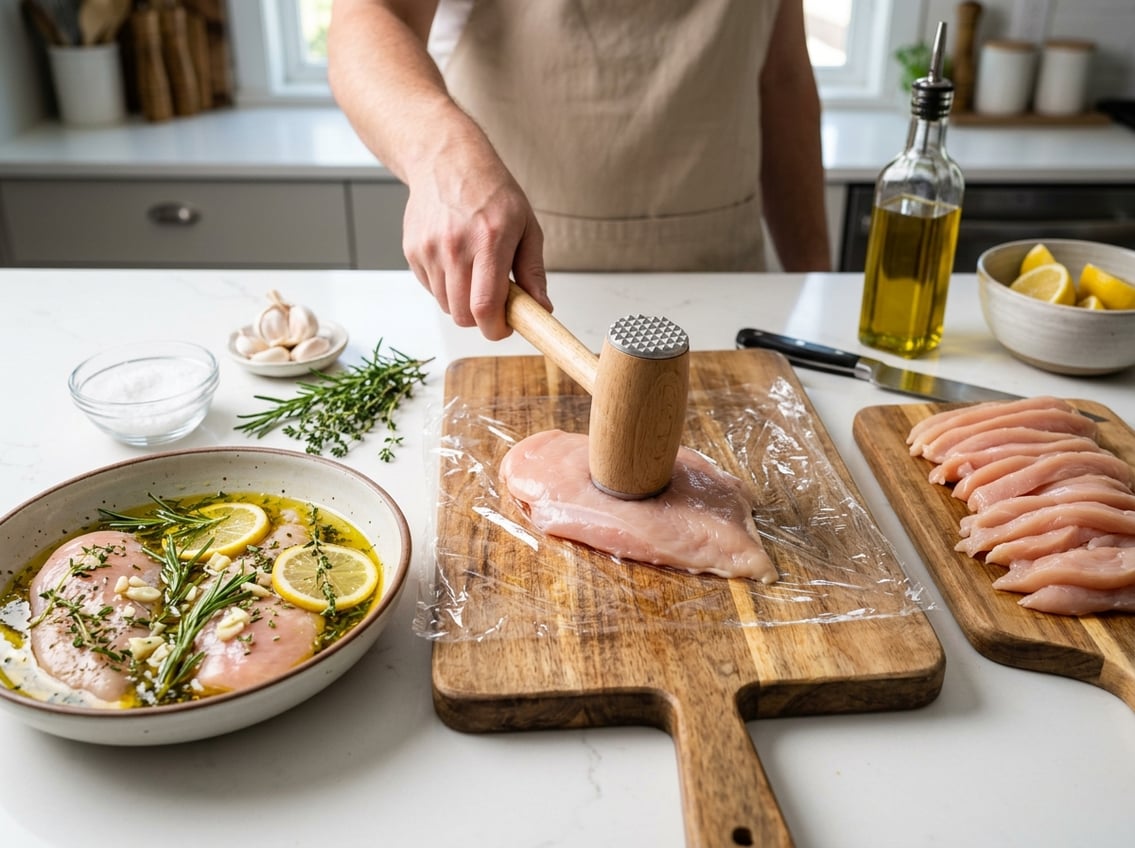
Good prep can make a big difference before heat ever touches the pan or grill. The most useful methods are simple and aim to reduce uneven cooking and help the meat keep moisture.
Pounding to an Even Thickness With a Meat Mallet
A meat mallet helps tenderize chicken breast by flattening thick spots and breaking up tight muscle structure. Place the chicken between sheets of plastic wrap or parchment, then pound gently until the thickness is even.
This does not need to be aggressive. The goal is to tenderize chicken, not tear it apart.
How Brining Helps Chicken Hold Moisture
Brining is one of the most reliable ways to make chicken breasts tender. A basic brine recipe uses water and salt, and you can add herbs or a little sugar for extra flavor.
When you brine chicken, the meat absorbs some liquid and seasons more evenly. Brining can improve juiciness and reduce dryness, especially for boneless skinless breasts.
When Marinating Improves Texture and Flavor
Marinate chicken when you want added flavor along with some tenderness. Marinating works best when the marinade has time to soak in and includes oil, seasoning, and a mild acid.
A few hours in the refrigerator can help improve texture. Marinating works well for baked, grilled, or pan-cooked breast meat.
How Acidic Marinades Can Help or Hurt
Acidic marinades can help tenderize chicken breast by loosening some muscle structure. Lemon juice, vinegar, yogurt, and buttermilk are common choices.
Too much acid or too much time can make the surface mushy. Use acidic marinades for balance, not for long soaks, especially with thin pieces.
Cooking Choices That Keep Chicken Soft and Juicy
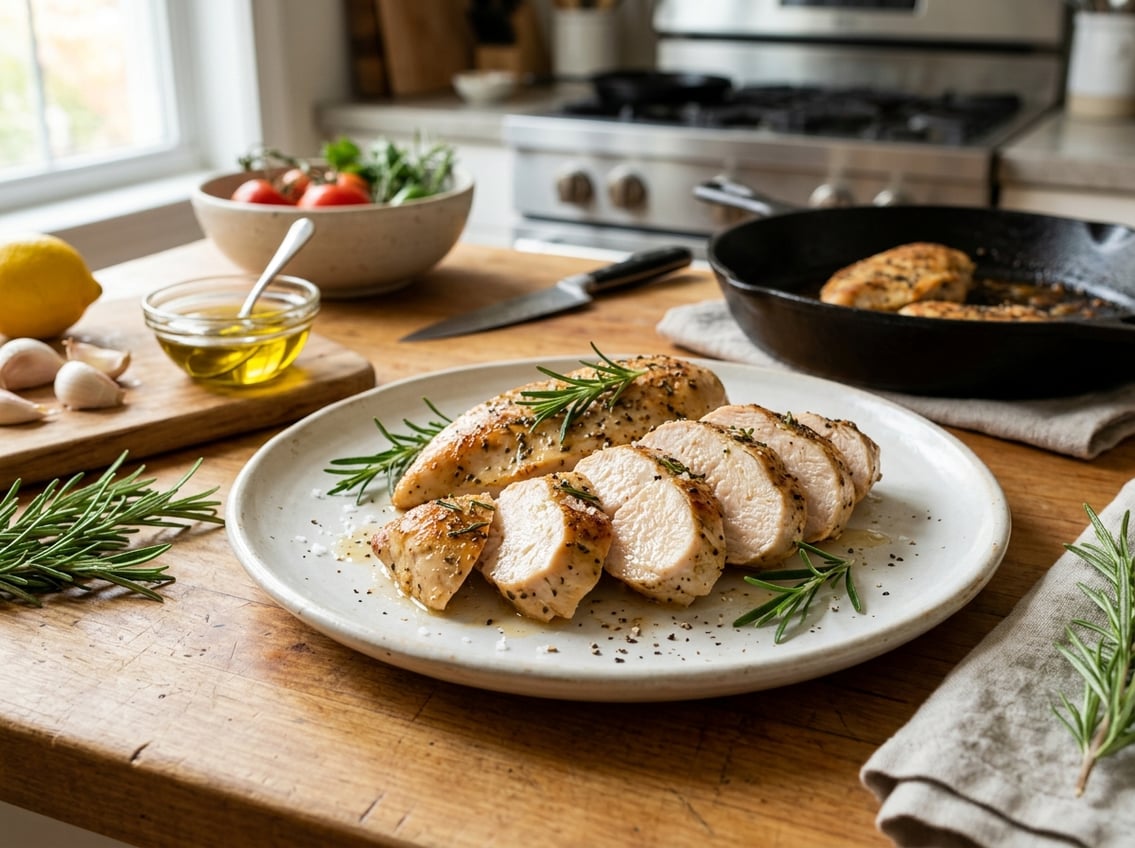
Cooking method matters just as much as prep. Gentle heat, careful timing, and the right end point help protect moisture and keep the meat from turning tough.
Why Gentle Heat Often Works Better Than High Heat
High heat can make the protein tighten fast and push out moisture. Gentle heat gives the inside time to cook before the outside dries out.
Many cooks prefer a steady oven, moderate stovetop heat, or a covered cooking method for juicy chicken breast. This gives you a better chance at an even result.
How Low and Slow Cooking Changes Texture
Low and slow cooking helps the meat stay tender because the temperature rises gradually. This works well in the oven, slow cooker, or braising-style dishes.
You get a wider margin for error than with very hot searing. The result is a moist chicken breast with a softer bite.
Why You Should Use a Meat Thermometer
Use a meat thermometer because color alone does not tell you when chicken is done. A thermometer helps you stop cooking at the right time instead of guessing.
That tool can prevent the most common cause of dry chicken, which is overcooking. It is one of the easiest ways to keep chicken breast tender from batch to batch.
The Importance of Resting Before Cutting
Resting lets the juices settle back into the meat after cooking. If you cut too soon, those juices run onto the plate instead of staying in the chicken.
Give the chicken a short rest before slicing. That small pause helps keep the chicken juicy.
Cutting and Serving for the Best Bite
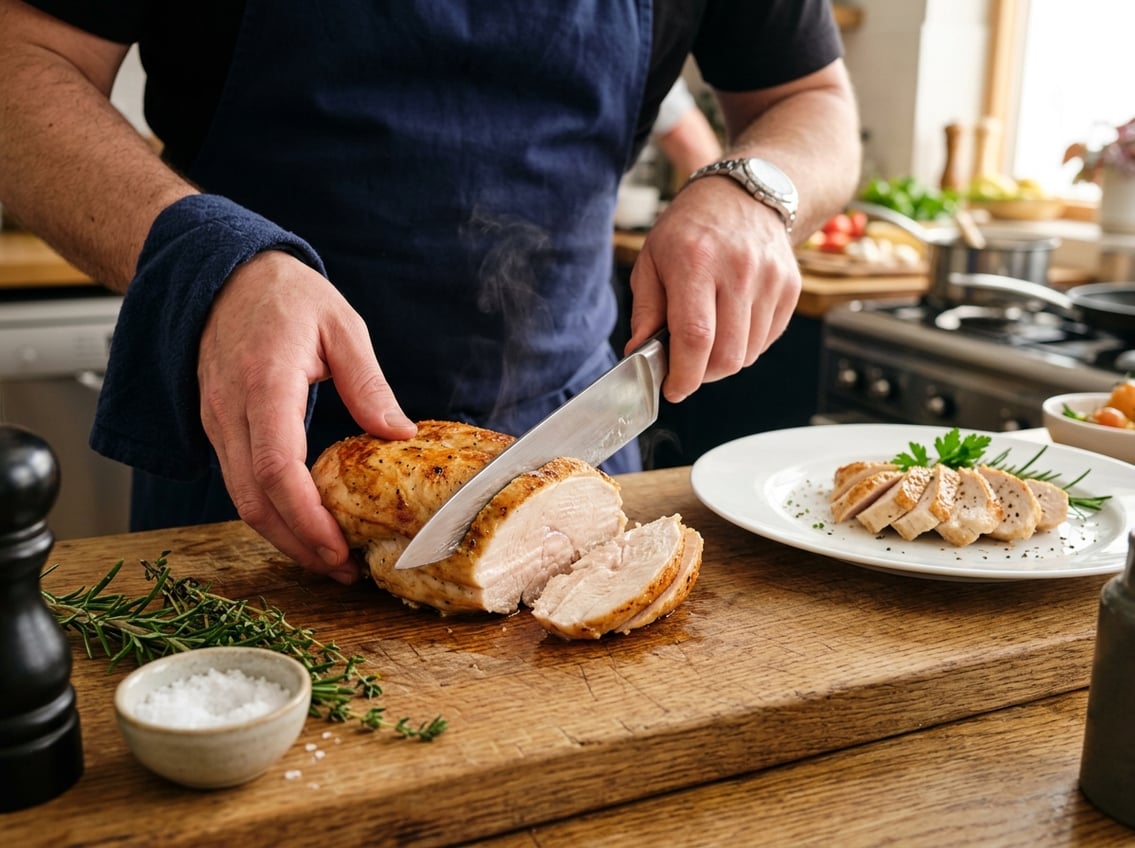
The way you slice cooked chicken affects texture more than many people expect. A good cut can make the meat feel softer, while a bad cut can make it seem chewy.
Why It Helps to Slice Against the Grain
Slice against the grain to shorten the long muscle fibers in the meat. Shorter fibers are easier to chew, so the chicken feels more tender.
Look at the direction of the fibers before cutting. Cutting across them can turn a firm piece into a more tender bite.
When to Cut Before Cooking Versus After Cooking
Cutting before cooking can help with even thickness or faster cooking, especially if you are making cutlets or strips. This works well when you want uniform pieces for stir-fries or salads.
Cutting after cooking is better when you want to keep moisture inside a whole breast. For juicy chicken breasts, cook first, rest second, slice last.
Common Mistakes That Make Chicken Feel Chewy
A few mistakes make chicken feel chewy fast. Cooking at too high a temperature, skipping rest time, slicing with the grain, and using uneven pieces all reduce tenderness.
Over-marinating in acid or overworking the meat with a mallet can also make chicken tougher.
To tenderize chicken, use moderate prep, careful heat, and clean slicing.


