
When Is Chicken Breast Done? Safe Temp and Signs
When is chicken breast done? The thickest part reaches 165°F, or 74°C, on a meat thermometer.
That gives you a clear, reliable sign that the chicken breast is safe to eat and helps you avoid dry, overcooked meat.
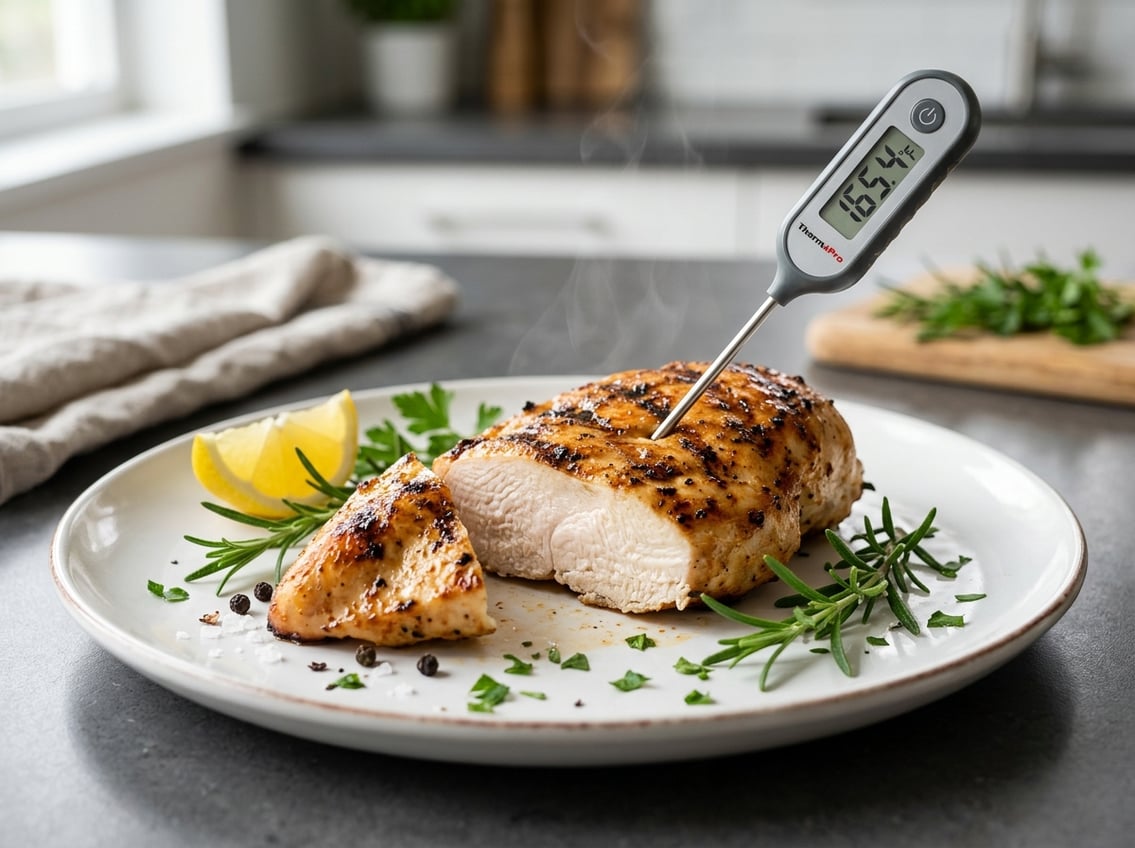
If you want juicy chicken, check the internal temperature of chicken breast at the thickest point.
Don’t rely on color or timing alone.
The meat cooks fast and dries out fast.
The same cooking temperature can give you safe chicken or tough chicken, depending on when you pull it from the heat.
A thermometer removes the guesswork and gives you a simple target you can trust.
The Exact Temperature to Pull Chicken Breast
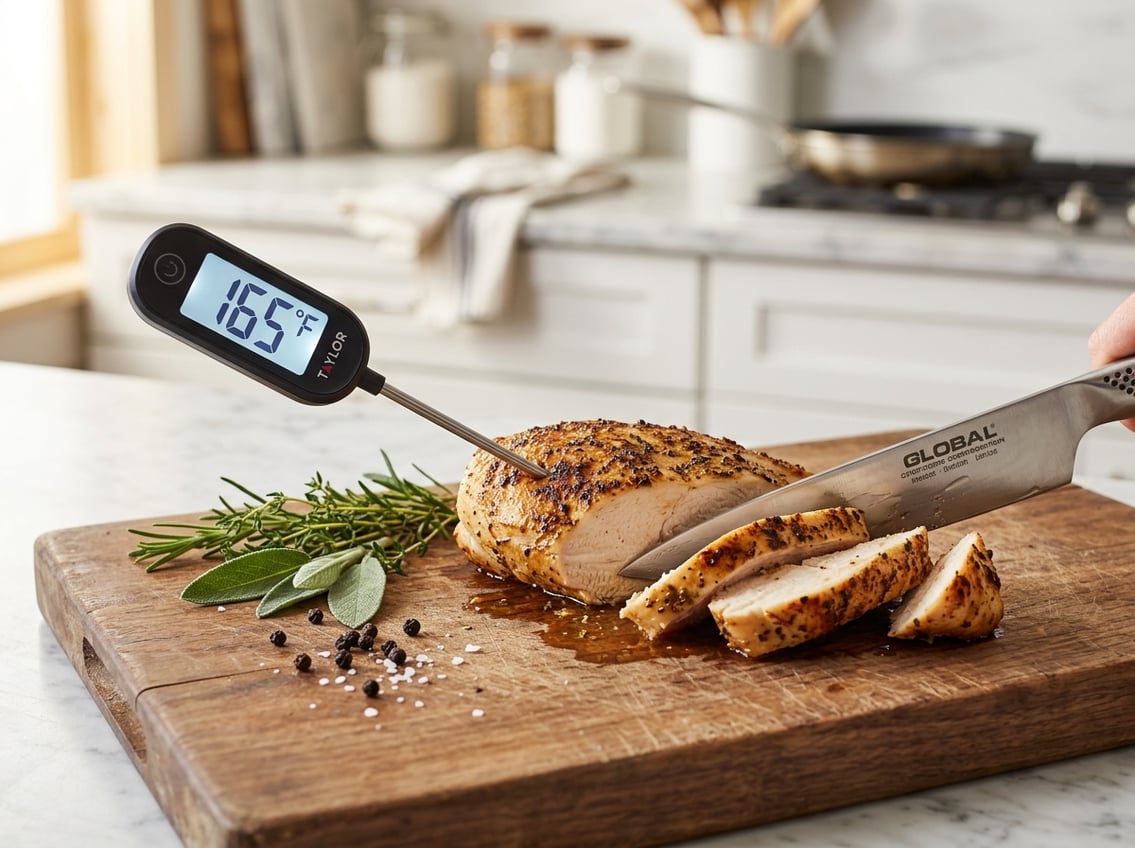
Aim for 165°F, or 74°C, in the thickest part of the meat.
That number gives you a safe internal temperature and a practical stopping point for most chicken recipes.
A thermometer helps you avoid overcooking while keeping the chicken safe to eat.
Why 165°F (74°C) Is the Safe Benchmark
The USDA sets 165°F (74°C) as the minimum safe internal temperature for poultry because it kills harmful bacteria such as Salmonella and Campylobacter.
This temperature is the main food safety benchmark for chicken cooking temperature in the US.
At this point, the meat is fully cooked through, not just browned on the outside.
For a clear reference, see USDA safe minimum internal temperature guidance.
When Carryover Cooking Helps
If you remove chicken from the heat a little early, the internal temperature can rise a few degrees while it rests.
This carryover cooking can help you protect juicy chicken instead of pushing it past done.
For many recipes, pulling the breast at 160°F and resting it for a few minutes can work if the temperature finishes at 165°F.
The safest approach is to keep checking until the center reaches the target.
How to Avoid Overcooking Chicken Breast
Breast meat is lean and overcooks fast.
Once it passes the right temperature, moisture leaves quickly and the texture turns stringy or dry.
Remove chicken from high heat as soon as the center reaches the safe point.
Let it rest for 5 minutes, and slice only after the juices settle.
Keep the heat moderate and check early rather than waiting for a timer.
How to Check Doneness Accurately
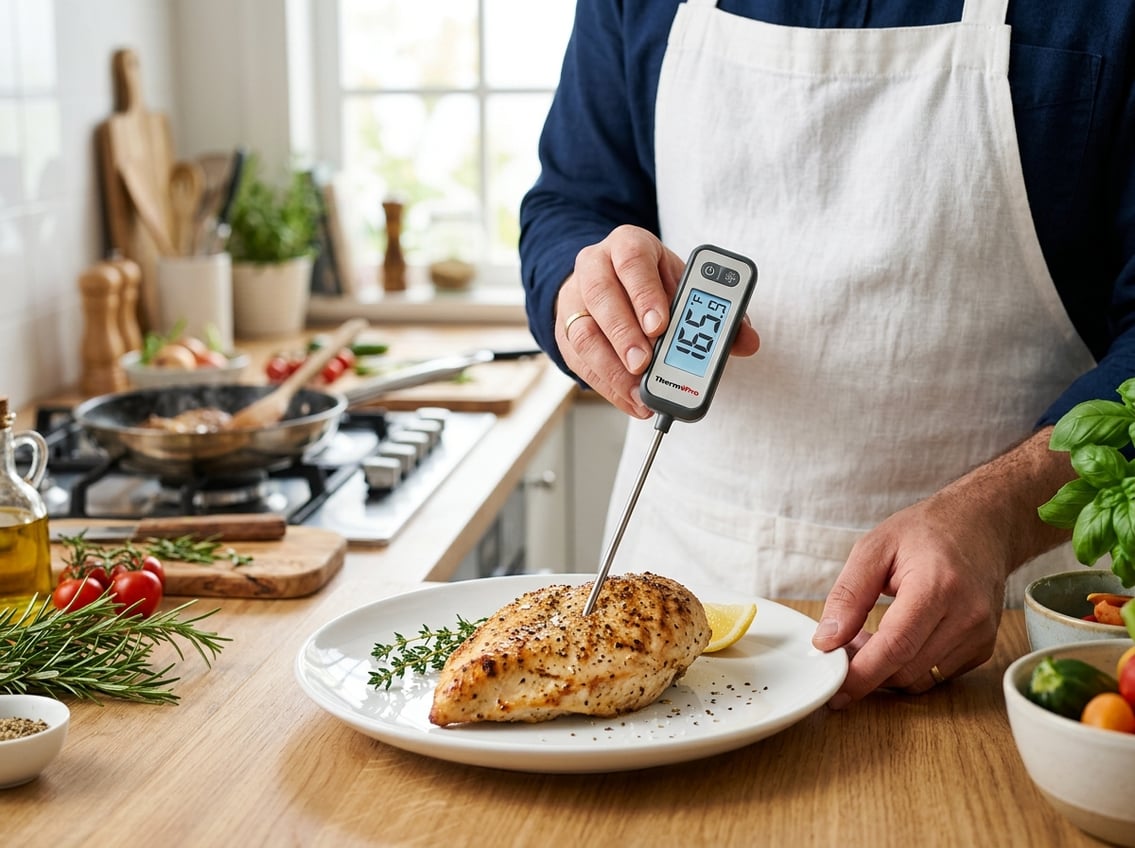
A meat thermometer gives you the most accurate answer to when chicken is done.
Visual signs can help, but temperature should lead your decision.
An instant-read thermometer gives you fast, precise results without cutting into the meat.
How to Use a Meat Thermometer Correctly
Insert the probe into the thickest part of the chicken breast.
Wait until the reading settles.
Avoid touching the pan, bone, or fatty areas.
Those spots can give a false reading.
Where to Insert an Instant-Read Thermometer
Place the tip in the center of the thickest section of the breast, usually from the side.
If the breast has an uneven shape, check more than one spot.
A digital instant-read thermometer helps because chicken breast can cook unevenly, especially in thick pieces.
If one part reads 165°F and another part is lower, the lower spot is the one that matters.
Why Color and Juices Can Mislead You
Cooked chicken is often white and firm, and the juices may run clear.
Even so, those signs are not enough to confirm doneness.
Chicken can look done before the center reaches a safe temperature.
Some fully cooked chicken can still look slightly pink near the bone or in certain lights.
Temperature gives you a better answer than appearance alone.
Cooking Method Differences That Affect Doneness
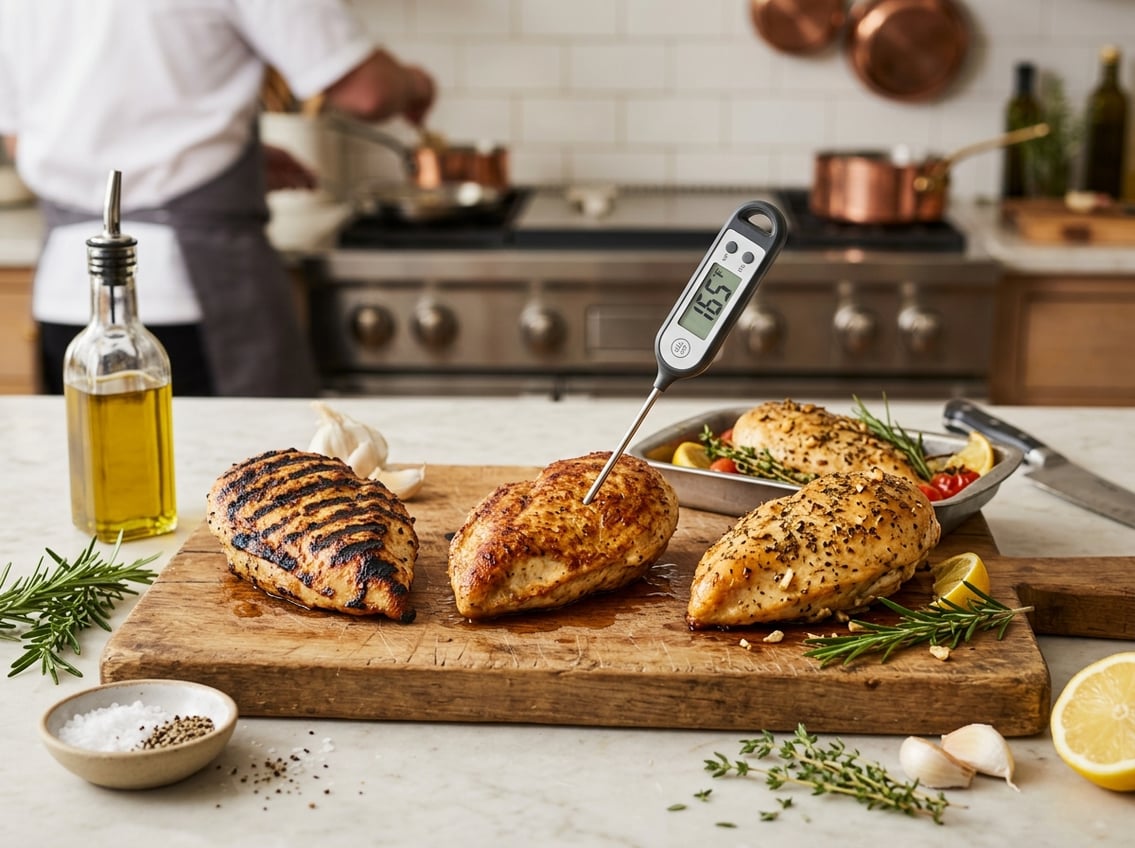
Different cooking methods change how fast chicken reaches the safe point.
Thickness, heat level, and resting time all affect the final result.
The same internal temperature matters in every method.
The path to that temperature is not the same.
Baked, Pan-Seared, and Grilled Breast Timing
Baking usually cooks more evenly.
Pan-searing and grilling cook the outside faster.
Baked chicken may be easier to time, but grilled or pan-seared chicken needs closer temperature checks.
Allrecipes’ chicken breast cooking guidance recommends roasting at 450°F for a short time to keep the meat juicy.
High heat can work well, as long as you check the center carefully.
How Thickness Changes the Finish Point
A thin breast can reach 165°F very quickly.
A thick breast may need more time or a lower oven temperature.
Pound uneven pieces to a more even thickness if you want more predictable results.
If one end is much thicker than the other, start checking early.
Remove chicken as soon as the thickest center is done.
What to Know About Sous Vide Chicken
Sous vide chicken gives you tighter control because the water bath holds a steady temperature.
This method produces juicy chicken when you finish it quickly in a hot pan after cooking.
The key is still the internal temperature of chicken at service.
If you use sous vide chicken in your recipes, follow a safe time and temperature plan and finish with a quick sear for texture.


