
Why Is Chicken Breast Healthy? Nutrition and Benefits
Chicken breast is healthy because it gives you a lot of protein with relatively few calories. It is naturally low in fat when you choose the skinless cut.
If you are asking why is chicken breast healthy, the short answer is that it can fit well into a balanced diet when you prepare it simply and watch portion size.
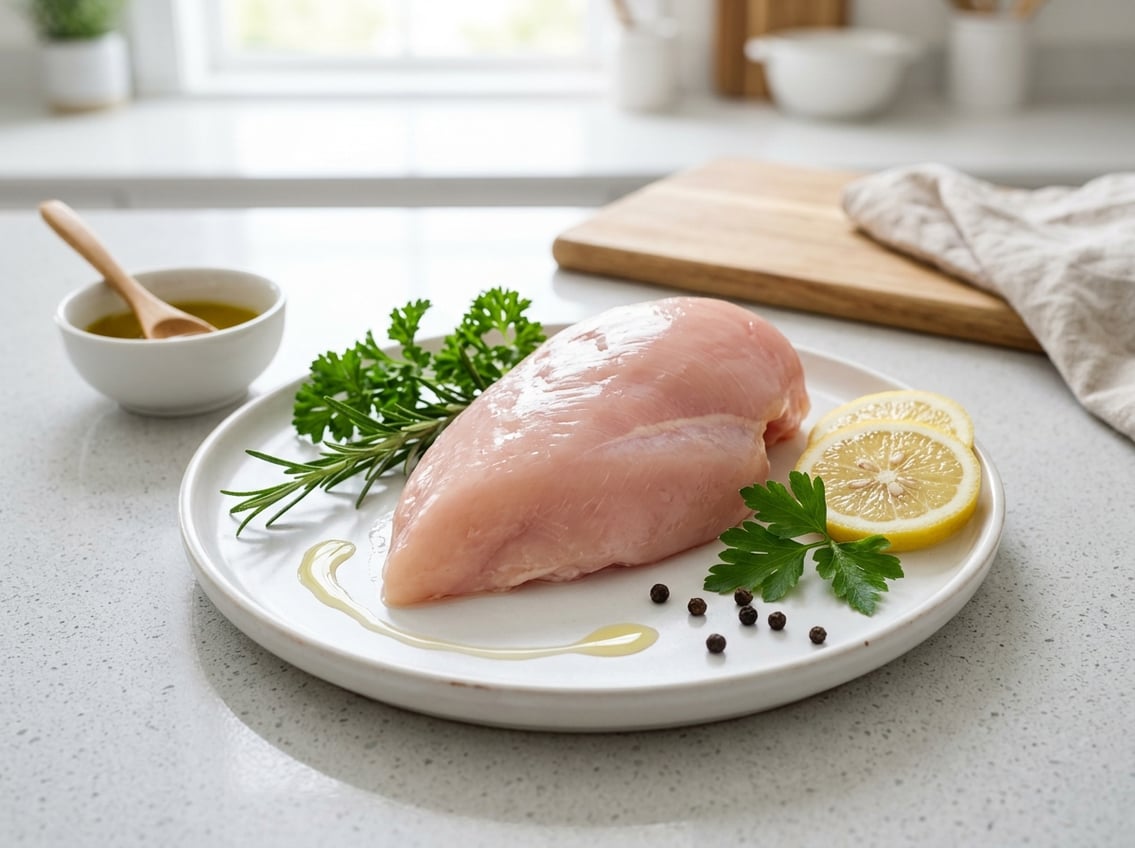
Its main strength is nutrient-dense lean protein, which can help you feel full and support muscle maintenance.
You can keep meals lighter without giving up satisfaction.
Chicken breast is a type of white meat that people often choose for everyday meals because it is versatile and easy to cook.
According to EatingWell’s review of chicken breast nutrition, it also brings useful nutrients like B vitamins, choline, and selenium.
What Makes Chicken Breast a Healthy Protein Choice
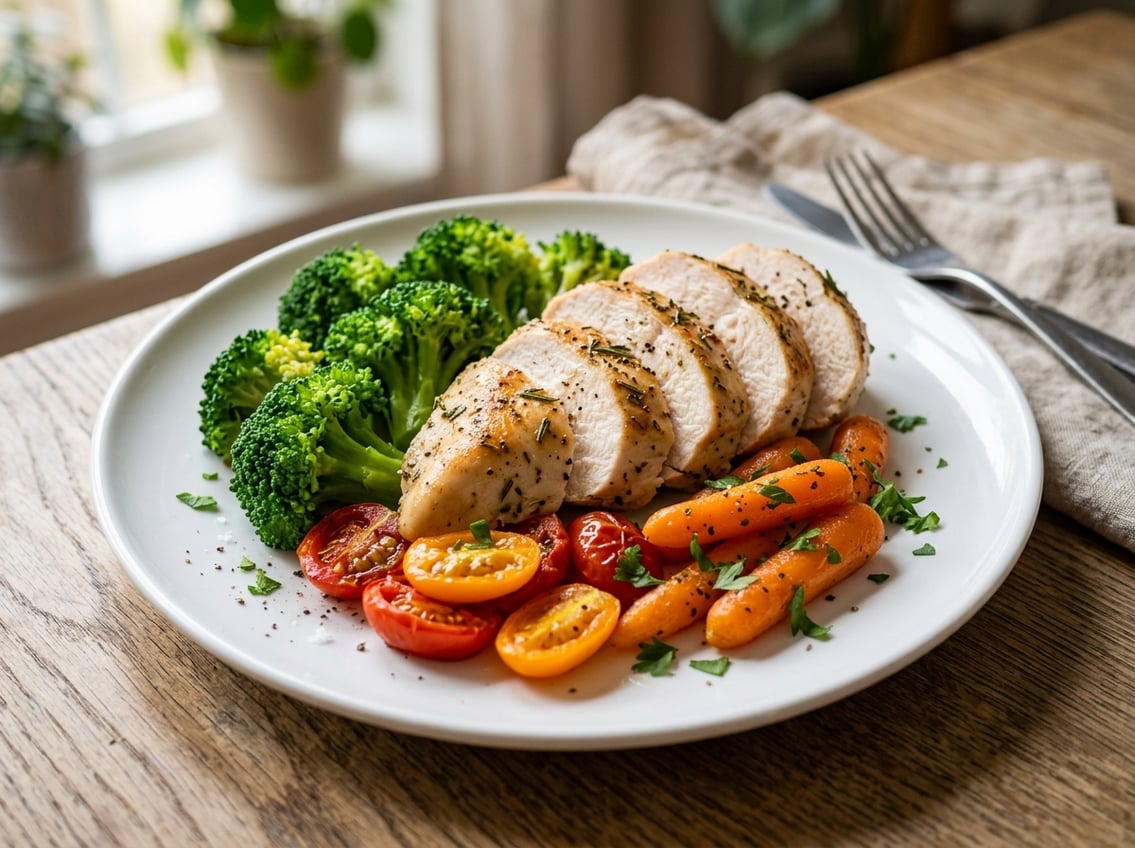
Chicken breast gives you a strong mix of protein and efficiency, meaning you get a lot of nutrition for the calories you eat.
As a skinless chicken breast, it is one of the leanest common animal proteins.
High Protein With Relatively Few Calories
Chicken breast stands out because of its protein content.
In a 3-ounce serving of cooked skinless chicken breast, you get about 26 grams of protein for about 128 calories, according to EatingWell.
That ratio matters if you want meals that support fullness without a large calorie load.
Protein also helps preserve muscle during weight loss and supports recovery after exercise.
Why White Meat Is Usually Lower in Saturated Fat
Chicken breast is white meat, and white meat is usually leaner than dark meat cuts like thighs and legs.
Lower fat content often means lower saturated fat, which is one reason chicken breast is often recommended in heart-aware eating patterns.
Replacing higher-fat meats with lean protein helps keep meals balanced.
Cooking method and added ingredients also affect the final nutrition.
Skinless vs. Skin-On: What Changes Nutritionally
Skinless chicken breast is the leanest option.
Leaving the skin on adds more fat and calories, which can be useful in some dishes, yet it changes the nutrition profile.
If you want the lowest-calorie, highest-protein version, skinless chicken breast is usually the better choice.
Skin-on chicken can still fit a healthy diet, especially if the rest of the meal is light and balanced.
Chicken Breast Nutrition and Key Nutrients
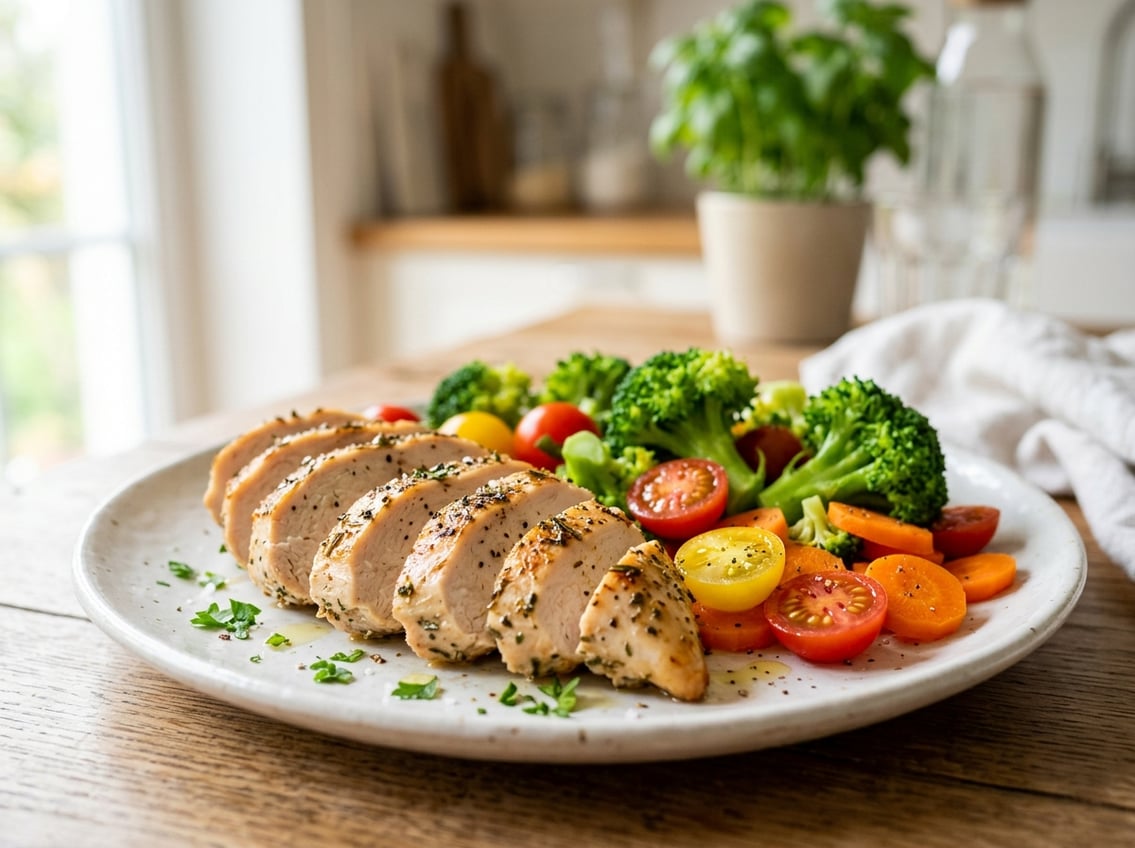
Chicken breast nutrition goes beyond protein and calories.
It also provides vitamins and minerals that support energy use, cell function, and basic body processes.
Typical Nutrition in a 3-Ounce Serving
A cooked, skinless 3-ounce serving of chicken breast has about:
- 128 calories
- 26 grams of protein
- 3 grams of fat
- 1 gram of saturated fat
- 0 grams of carbohydrates
Those numbers, reported by EatingWell, show why chicken breast is often used in high-protein meal plans.
It is filling without adding carbs or much fat.
Important Nutrients Like B Vitamins, Choline, Selenium, and Phosphorus
Chicken breast also provides key micronutrients.
These include B vitamins such as B6 and B12, plus choline, selenium, phosphorus, and small amounts of zinc and iron.
These nutrients help your body turn food into energy and support nerve function.
Choline is also important for brain and liver function, while selenium supports antioxidant defenses.
How Portion Size Affects Calories, Protein, and Fat
Portion size changes the nutrition picture fast.
A larger piece of chicken breast gives you more protein, yet it also raises calories, sodium if seasoned heavily, and total fat if the skin is left on or the meat is cooked in oil.
A practical serving size is about 3 to 4 ounces cooked, which is close to the size of a deck of cards.
If your goal is weight control, this size often works well as the protein base of a meal.
How It Can Support Health Goals
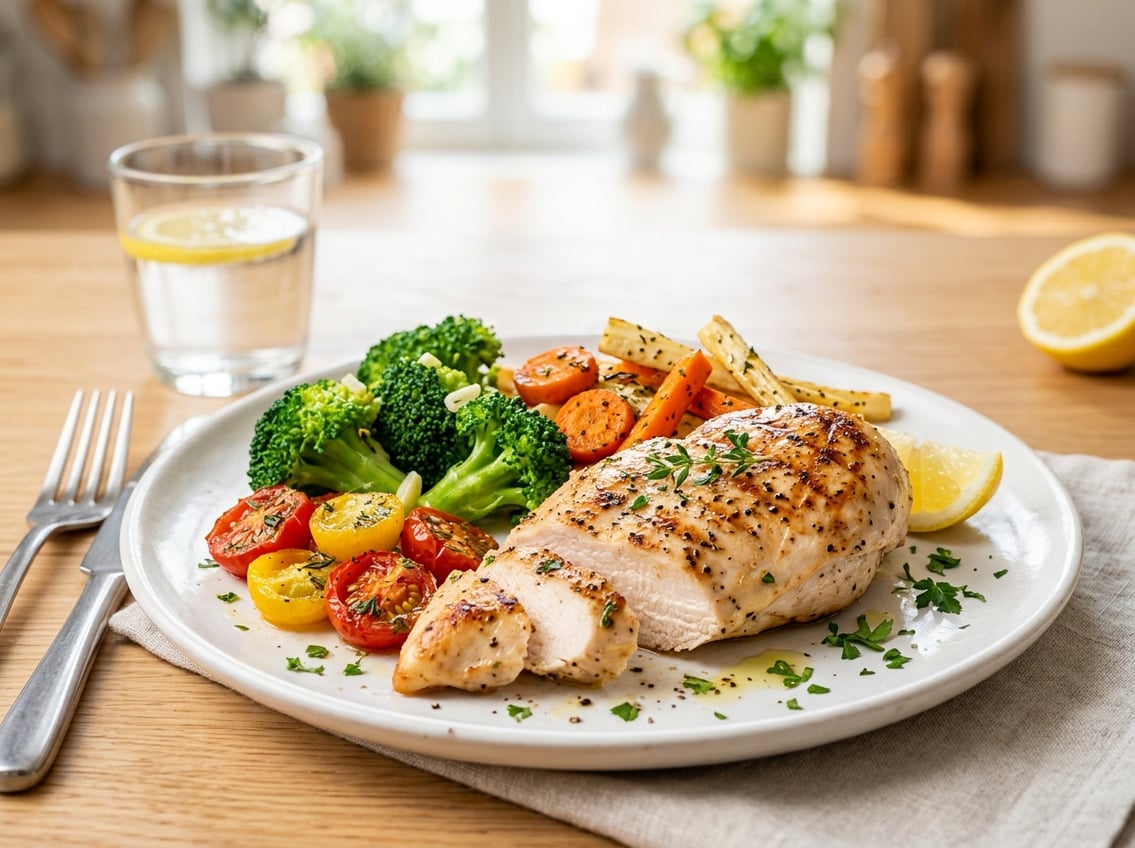
Chicken breast can support several common health goals because it is filling and versatile.
It is easy to pair with vegetables, grains, and healthy fats.
Weight Management and Fullness
Protein helps many people feel full after eating, and that can make it easier to manage hunger.
Chicken breast is especially useful here because it provides a lot of protein without many calories.
Chicken breast works best when you pair it with fiber-rich foods like vegetables, beans, or whole grains.
Muscle Maintenance and Recovery
If you exercise, chicken breast can help support muscle repair and maintenance.
Protein supplies amino acids, which your body uses to rebuild tissue after training or daily activity.
Athletes and active people often rely on lean protein meals.
A simple chicken breast meal after exercise can fit that need well.
Heart Health and Replacing Red or Processed Meat
Chicken breast may support heart health when it replaces red or processed meat, especially higher-fat versions.
A review cited by EatingWell notes that lean poultry can fit into a heart-healthy diet, and the American Heart Association includes lean poultry in heart-smart eating patterns.
The benefit comes partly from lower saturated fat.
You still need to watch salt-heavy seasonings, creamy sauces, and fried coatings.
Blood Sugar and Type 2 Diabetes Considerations
Chicken breast contains no carbohydrates, so it does not raise blood sugar the way many starches and sweets can.
It can help you build a meal that keeps blood sugar more stable when paired with fiber and healthy fats.
Research links replacing processed red meat with poultry to a lower type 2 diabetes risk, as noted by EatingWell.
How Preparation Changes the Health Impact

Chicken breast stays healthiest when you keep the preparation simple.
The cooking method, added fat, and extra toppings can turn a lean protein into a much heavier meal.
Why Grilled Chicken and Baked Chicken Are Usually Better Options
Grilling and baking usually keep chicken breast lighter than frying.
These methods let you cook the meat with little added fat while still giving you good flavor and texture.
A Real Simple guide to grilled chicken breast nutrition notes that grilled chicken breast is a strong source of lean protein and important nutrients.
Baking works in a similar way when you keep sauces and oils modest.
When Frying, Breadings, and Heavy Sauces Reduce the Benefits
Frying adds extra calories and fat, especially if you bread the chicken first.
Heavy sauces can also add a lot of sodium, sugar, or saturated fat.
The health value depends on how often you eat these versions and what the rest of the meal looks like.
Advanced Glycation End Products and High-Heat Cooking
High-heat cooking can create more advanced glycation end products, which are compounds that form when protein and sugar react under heat.
You do not need to avoid grilled food entirely, though you may want to limit very charring-heavy cooking.
Using moderate heat, flipping often, and avoiding blackened spots can reduce this issue.
Marinating chicken can also help lower compound formation while improving flavor.
Safe Handling, Storage, and Cooking Temperature Basics
Chicken breast stays healthy only when you handle it safely. Keep raw chicken cold and wash your hands after touching it.
Avoid cross-contamination by using separate cutting boards or utensils for raw chicken and ready-to-eat foods. Cook chicken breast to an internal temperature of 165°F for safety.
Check the temperature with a food thermometer. Color alone does not confirm doneness.


