
How Is Chicken Breast Cut? Simple Prep Methods
How you cut chicken breast depends on the shape you need and the recipe you are making. You can slice it into thin pieces, cut it into strips, dice it into cubes, or butterfly it into cutlets for faster, even cooking.
The key is to cut against the grain, keep the pieces even, and use a sharp knife on a stable cutting board. This keeps your chicken tender and helps it cook at the same rate.
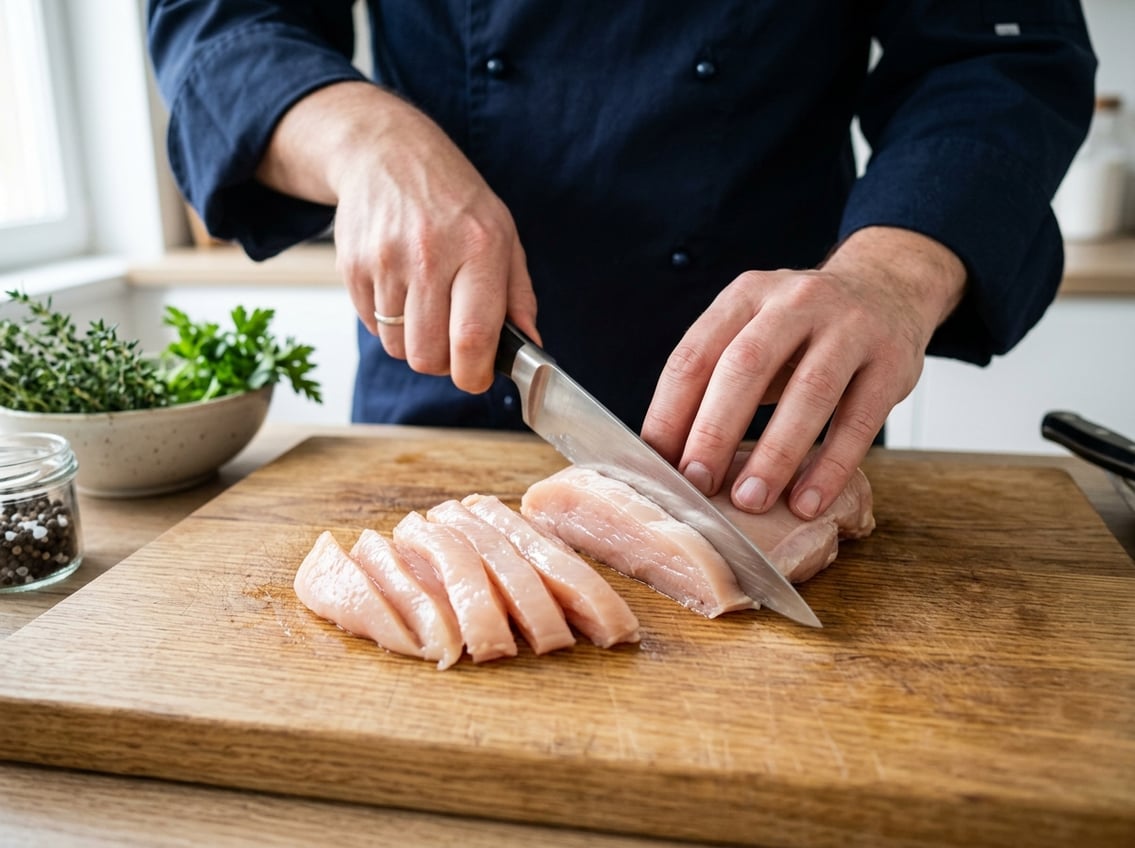
When you cut raw chicken breast, the shape of the meat matters as much as the knife work. Boneless breasts are thick at one end and taper at the other, so the way you cut them changes both texture and cooking time.
You can use the same basic method for most prep tasks. The main goals are clean cuts, even sizing, and safe handling.
Basic Cutting Methods
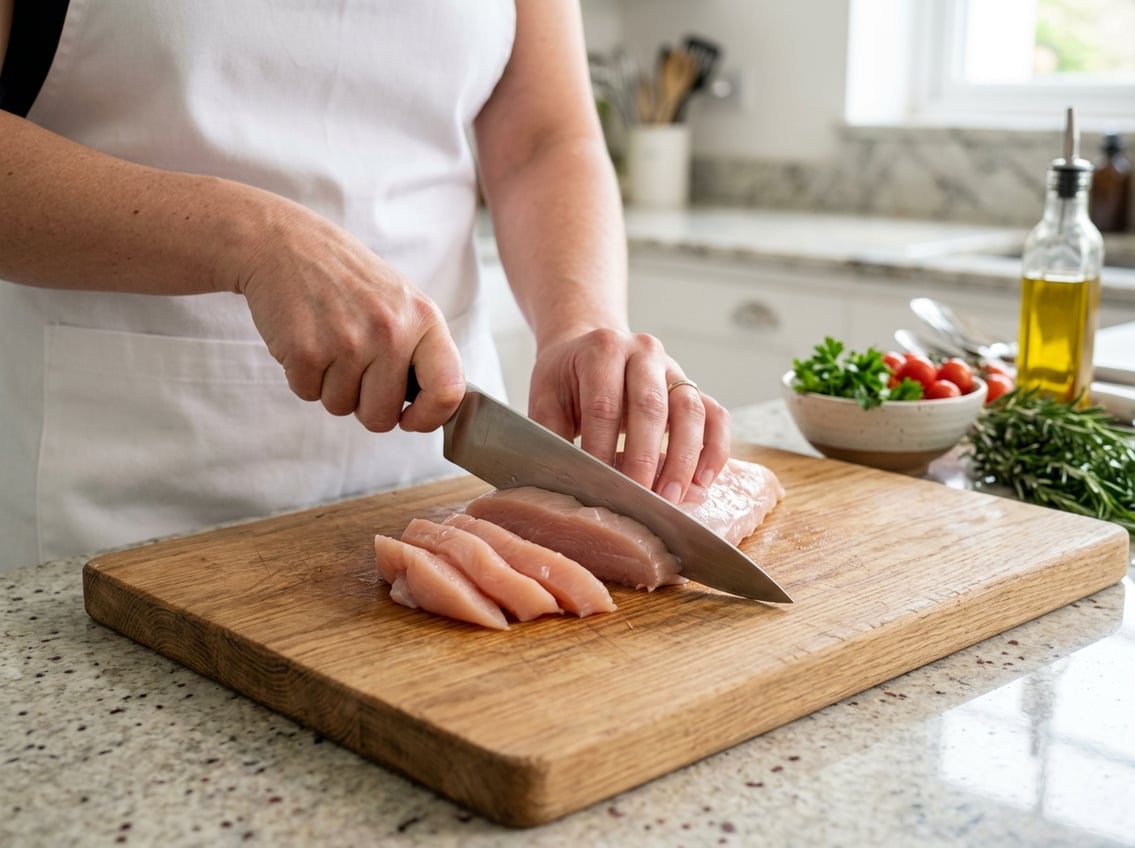
When you cut chicken breast, decide whether you need slices, strips, cubes, or thin cutlets. Each shape serves a different purpose, and the grain of the meat should guide your knife.
For cooked chicken, cutting against the grain helps keep the meat tender instead of stringy.
Slicing Against the Grain
Look for the long muscle lines on the surface of the breast. When you cut across those lines, the chicken feels softer when you eat it.
If you cut with the grain, the meat stays in long strands and can seem chewy. A sharp knife makes the cut cleaner and helps you keep the slices even.
Making Chicken Breast Strips
Chicken breast strips work well for quick dinners, stir-fries, wraps, and salads. Cut the breast into long pieces about the same width.
Try to keep the strips uniform so they cook at the same speed. If one end is much thicker, trim it first or flatten it a little before slicing.
Cutting Into Cubes and Pieces
To make cubes, first cut the breast into strips, then turn the strips and cut across them. This gives you neat, bite-size pieces for soups, casseroles, and meal prep.
Use the same method for larger pieces if you want chunkier chicken. Even sizes matter more than perfect shapes.
Butterflying for Thin Cutlets
Butterflying means slicing the breast horizontally almost all the way through, then opening it like a book. This gives you a thinner piece that cooks faster and works well for breaded dishes.
You can also pound the butterflied breast lightly to make it even thinner. That helps if one end is much thicker than the other.
Tools and Setup for Clean, Safe Cuts
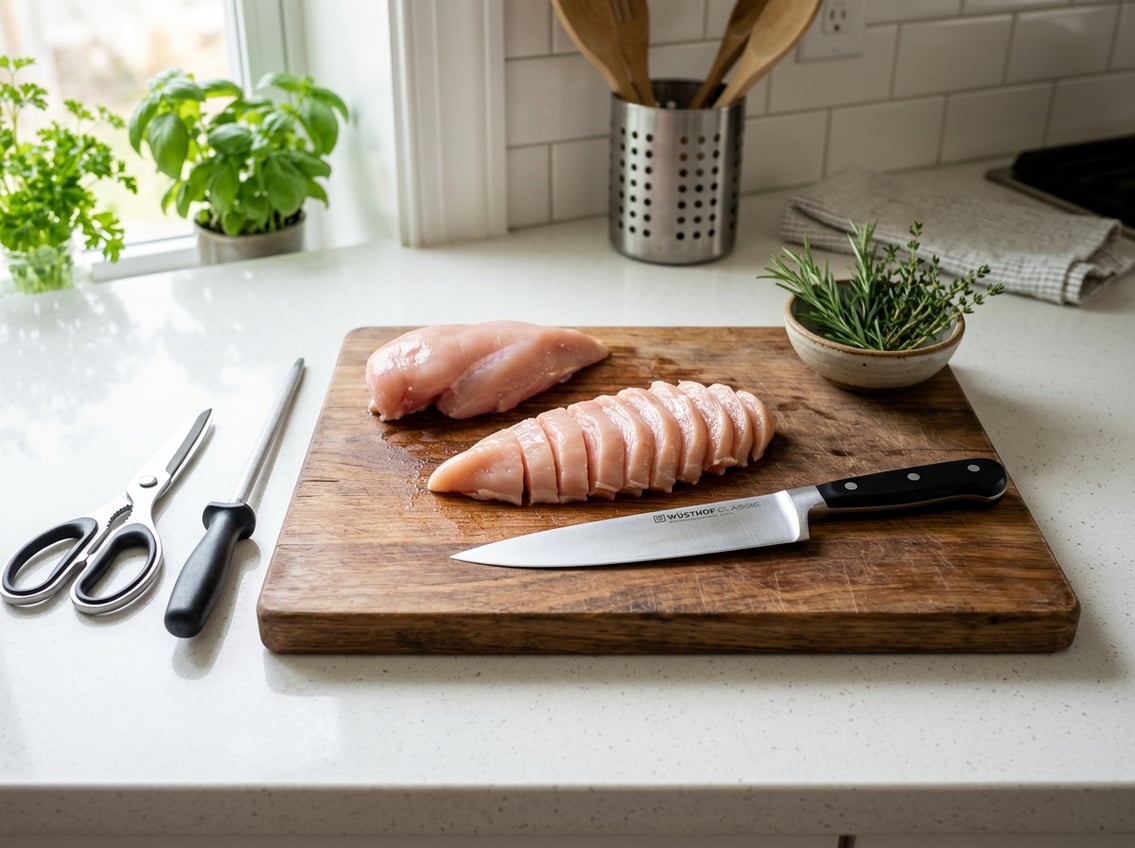
A clean setup makes cutting easier and safer. You need a firm surface, a sharp knife, and enough space to keep raw chicken under control.
The right tool depends on the shape you want. A chef’s knife works for most jobs, while a boning knife can help with tighter control on smaller or more precise cuts.
Choosing a Cutting Board
Use a sturdy cutting board that does not slide around. A large board gives you room to work and helps you keep raw chicken contained.
Many people prefer plastic for raw poultry because it is easy to wash well. Wood can also work if you clean it carefully and keep it separate from other prep tasks.
When to Use a Chef’s Knife or Boning Knife
A chef’s knife is the best all-around choice for slicing, dicing, and trimming chicken breast. Its wide blade gives you control on longer cuts.
A boning knife is thinner and can help when you want more precision around the tapering end of the breast. If your knife is dull, it can tear the meat instead of cutting it cleanly.
Using a Meat Mallet for Even Thickness
A meat mallet helps when one part of the breast is thicker than the rest. Pound the thick area gently between sheets of plastic wrap or parchment until the breast is more even.
This is useful before butterflying or making cutlets. Even thickness helps the chicken cook at the same rate.
Prepping the Chicken Before Cutting
Pat the chicken dry with paper towels before slicing. Dry meat is easier to grip and gives you a cleaner cut.
If you are working with raw chicken, keep the area organized and wash your hands, knife, and board after use.
Match the Cut to the Recipe
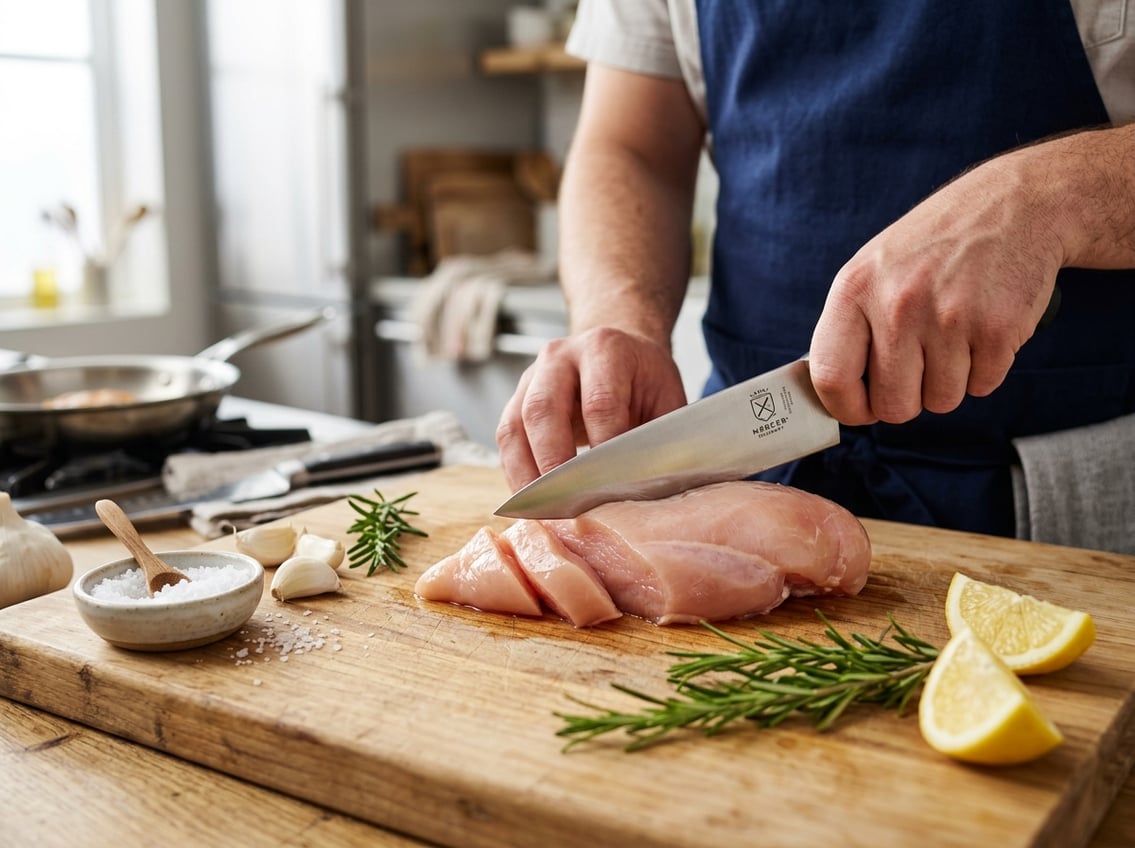
The best cut depends on how the chicken will cook. Thin pieces brown faster, chunks hold up in stews, and strips work well in fast recipes.
If you plan ahead, you can match the cut to the texture you want.
Thin Pieces for Chicken Parmesan
Chicken parmesan needs thin, even cutlets so the breading cooks before the coating burns. Butterflying and lightly pounding the breast helps you get the right thickness.
Thin cutlets also stay tender under sauce and cheese. If the chicken is too thick, the outside can overcook before the center is done.
Chunks for Kabobs and Chicken Pot Pie
For kabobs, cut the chicken into even chunks so the pieces cook at the same pace on the skewer. Medium cubes work best because they stay juicy and are easy to turn.
For chicken pot pie, chunkier pieces hold their shape in the filling. Use small cubes or bite-size pieces rather than thin slices.
Strips for Air Fryer Chicken
Chicken breast strips are a strong choice for air fryer chicken because they cook quickly and brown well. Keep them close in size so they finish together.
If you want a crisp coating, pat the strips dry before breading or seasoning. Uniform strips also make it easier to avoid dry ends.
Sliced or Diced Chicken for Chicken Salad
Sliced or diced chicken both work well in chicken salad, depending on the texture you want. Thin slices give a softer bite.
Small cubes make the salad feel more substantial. Even pieces help with meal prep because they mix well with dressing and other ingredients.
Smaller pieces are easy to portion and eat cold when using leftovers.


