
What Does Chicken Breast Split Mean? Cut Explained
Chicken breast split is a store label for a chicken breast that has been cut into portions, usually with the bone and skin still attached.
In most U.S. grocery stores, this means a bone-in breast has been split down the middle, so you get two individual pieces instead of one whole breast.
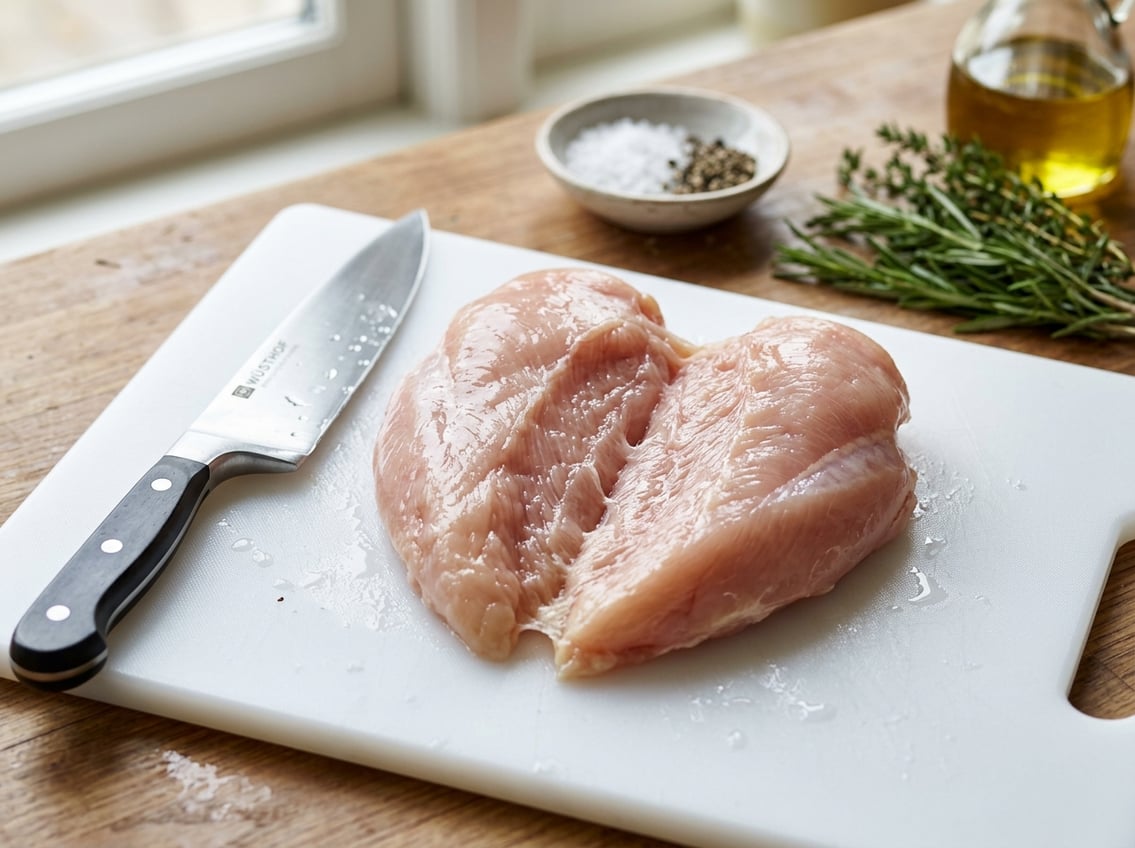
When you see “split chicken breast,” you are usually looking at a bone-in, skin-on breast cut that cooks like a richer, juicier version of boneless chicken breast.
Stores use slightly different names for this cut. You may also see split breast, bone-in split breast, or breast with ribs.
The core idea is the same. The breast has been separated into smaller portions, and the bones are often still part of the cut.
What the Label Means at the Store
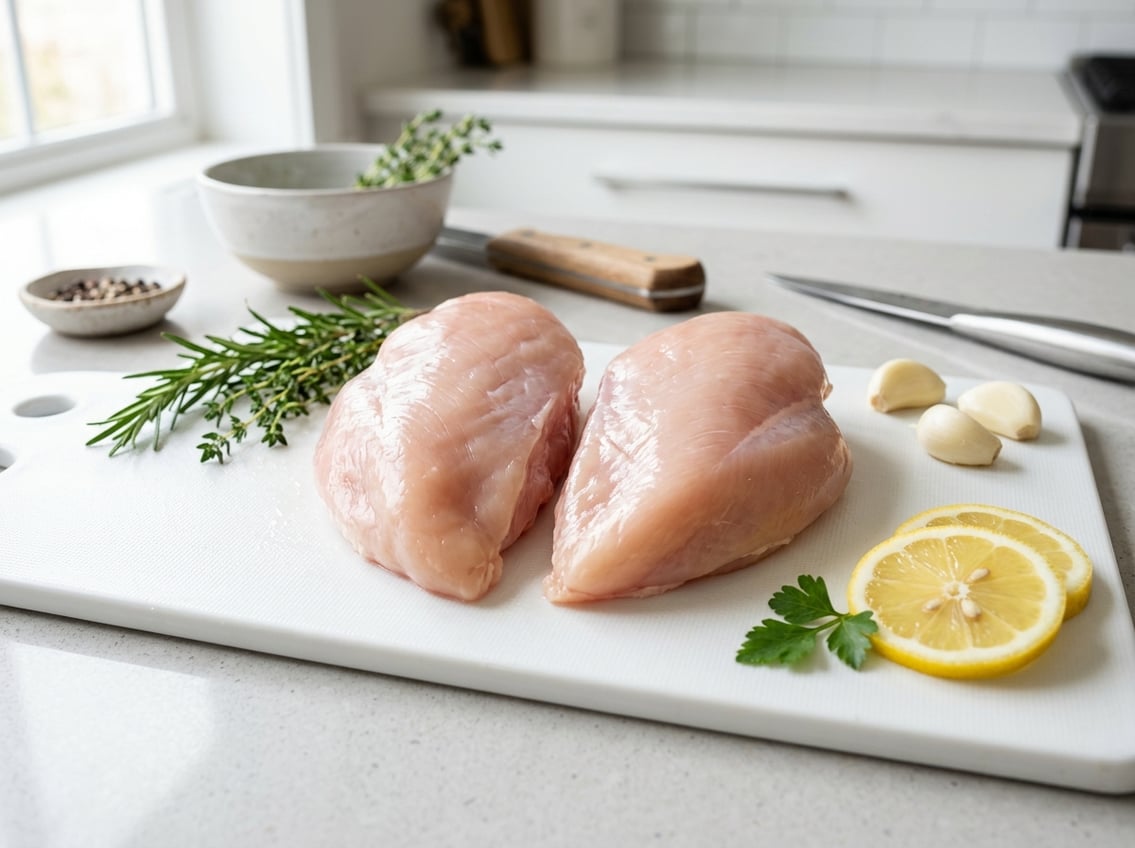
A split chicken breast is usually the same as a split breast or bone-in split breast.
At the store, the label tells you the cut still has the rib bones and often the skin, which changes both the flavor and the cooking time.
Some butchers also call it a breast with ribs.
The term helps separate it from boneless chicken breast cuts.
If you are used to buying boneless skinless chicken breast, the split version will look larger and thicker.
How a Whole Breast Becomes Two Portions
A whole breast comes from both sides of the bird and is divided into two halves.
A grocery store cuts that whole piece along the center line, leaving you with two split breasts instead of one connected breast.
As noted by BuyKitchenStuff, two halves make one whole breast.
What Bones and Skin Are Usually Included
Split breasts often include the rib bones, and the skin is commonly left on.
Some cuts may also include a bit of the wing area or the tenderloin, depending on how the chicken was processed.
The bones add flavor during cooking, while the skin helps the surface brown well.
Why It Is Often Called Bone-In Chicken Breast
Stores use bone-in chicken breast as a broad label for this cut because the bones are still attached.
That is the main feature that sets it apart from boneless chicken breast.
In many cases, the label is more useful than the shape alone, as noted by KitchPrep.
How It Differs From Other Chicken Breast Cuts
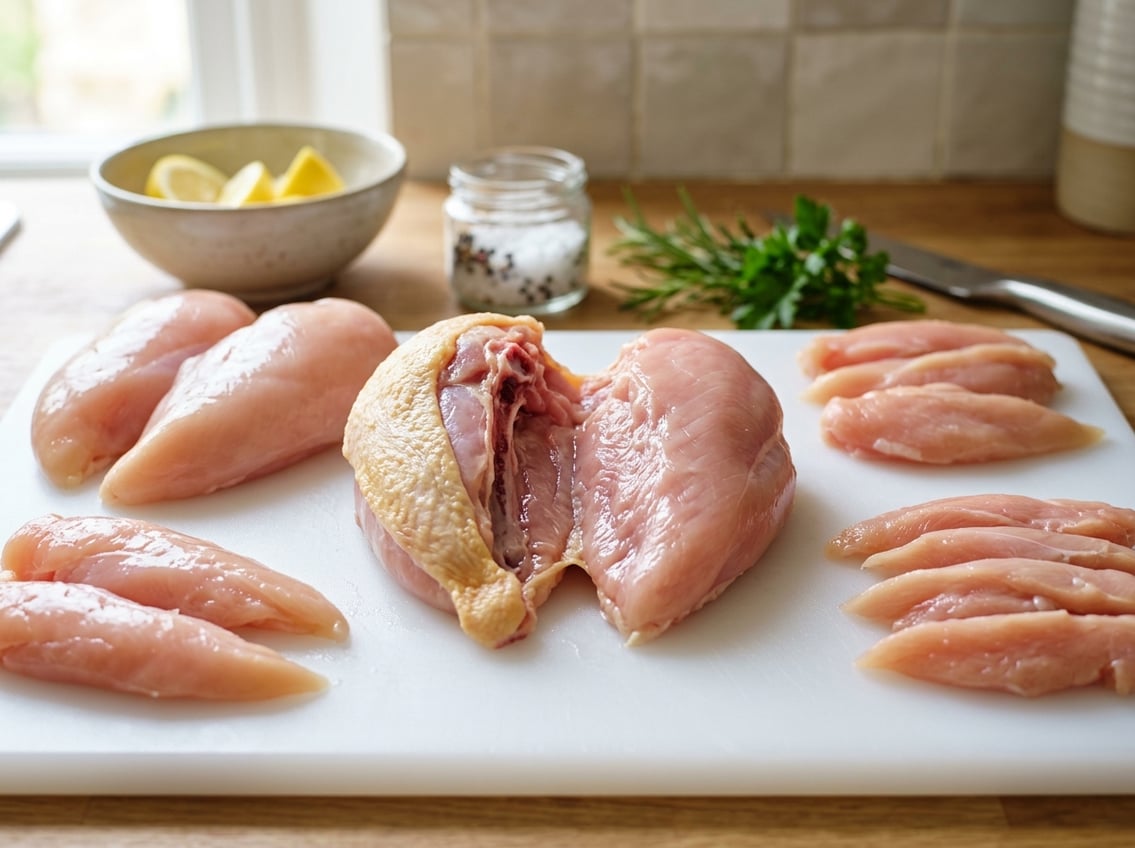
Split breast sits between boneless chicken breast and a whole bone-in breast in terms of size and cooking style.
The bone and skin make it more forgiving than a boneless cut, while it is still easier to portion and cook than a large whole breast.
Split Breast vs Boneless Skinless Chicken Breast
Boneless skinless chicken breast is trimmed of both bones and skin, so it cooks faster and has a milder flavor.
A split chicken breast keeps more natural moisture and usually tastes richer.
That extra structure means you need to cook it longer and watch the internal temperature closely.
Split Breast vs Boneless Breast
A boneless breast is a filleted cut with no bones attached.
A split breast is still bone-in, so it behaves differently in the oven or on the grill.
If you want quick sautéing or stir-frying, boneless breast is easier.
If you want more flavor from roasting, split breast is often the better pick.
Where Tenderloin and Tenderloins Fit In
The tenderloin is the smaller strip of meat attached to the underside of the breast.
You may see it sold separately as tenderloins, or still attached to the breast.
It is not the same thing as a split chicken breast, and it does not change the main cut, which is still a breast cut.
Compared with chicken breast cuts from the thigh, the breast is leaner and milder in flavor.
Buying, Cost, and What to Expect
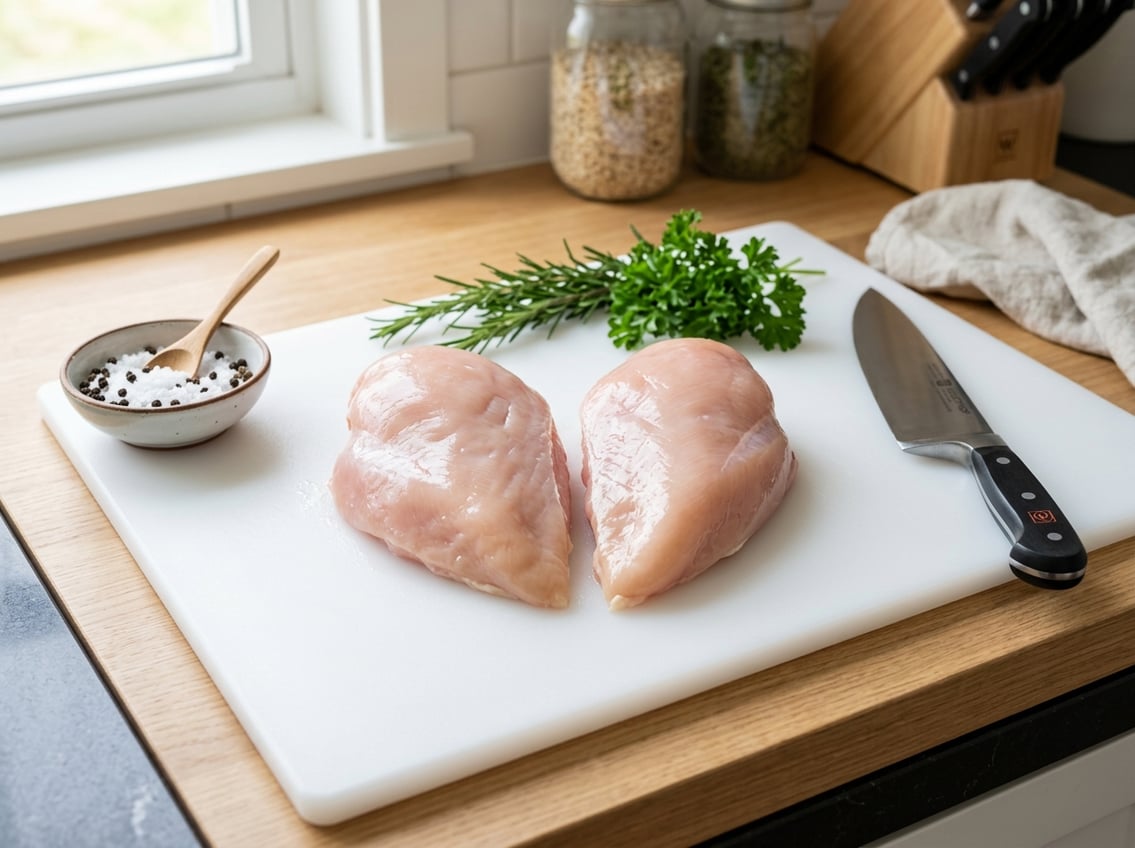
When you buy split chicken breast, look for firm meat, clean skin, and little excess liquid in the package.
The skin should look intact, and the bone should not be exposed in a way that suggests poor handling.
If you buy split chicken breasts from a butcher counter, you can also ask whether they are skin-on, bone-in, or trimmed.
What to Look for When You Buy It
Choose pieces that look evenly sized if you want predictable cooking time.
A bone-in split breast should feel heavy for its size, which usually means it has good meat coverage.
If the package lists “breast with ribs,” that is another sign you are buying the split version.
Where to Buy Split Chicken Breast
You can usually buy split chicken breast at major U.S. grocery stores, butcher shops, and warehouse clubs.
It is often near other chicken breast cuts in the meat case.
If it is not labeled clearly, ask the meat department for bone-in split breast or split breasts.
Is It More Expensive Than Other Options
It is not usually more expensive than boneless skinless chicken breast.
In many stores, bone-in cuts cost less because they need less trimming and processing.
Prices change by region, brand, and whether the chicken is conventional, organic, or air-chilled.
It helps to compare the per-pound price before you buy split chicken breasts.
Best Ways to Cook and Store It
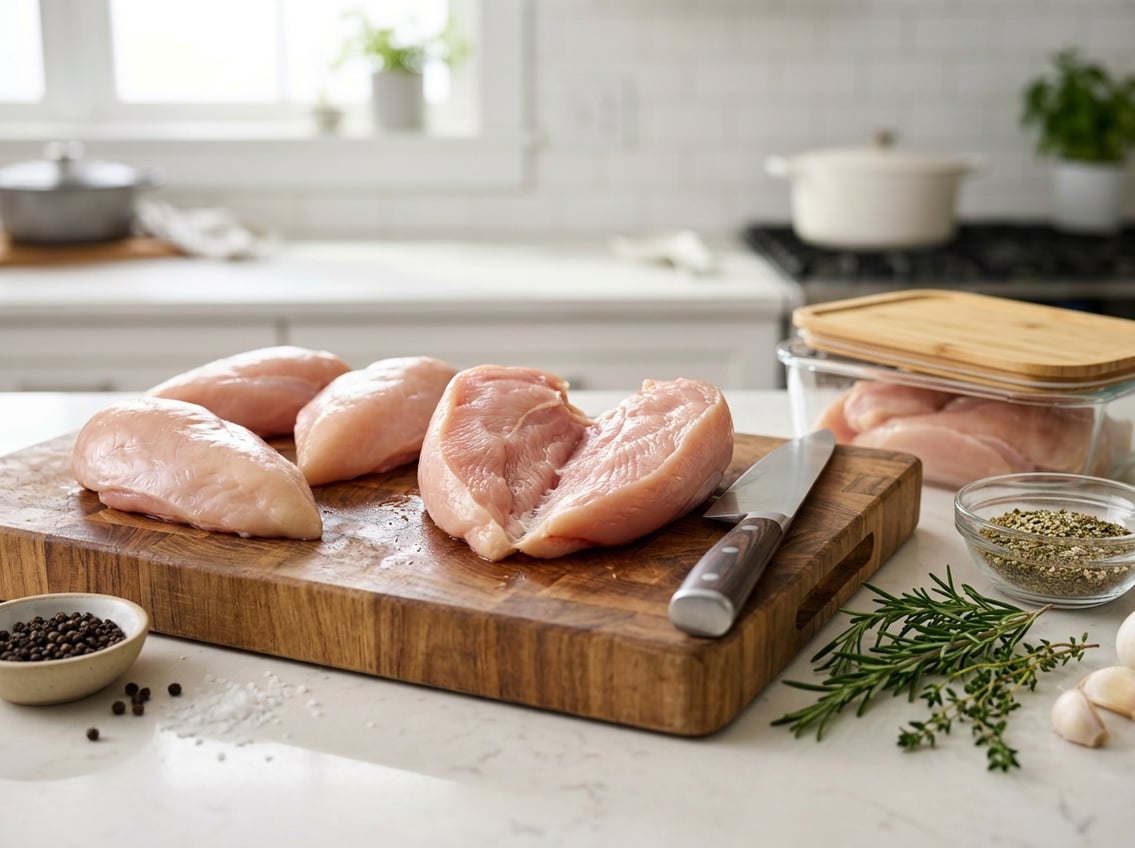
You get the best results with split chicken breast when you use enough heat to brown the skin and enough time for the meat to cook through.
Because the cut is bone-in, it usually takes longer than boneless breast, but it can stay juicier if you do not rush it.
Cooking Split Chicken Breast in the Oven
The oven is one of the easiest ways to cook split chicken breast.
Season it well, place it skin-side up, and roast until the thickest part reaches 165°F.
Bone-in pieces often do well at moderate oven heat, since that helps the skin crisp without drying the meat.
Baked Split Chicken Breast and Baked Split Chicken Breasts
A baked split chicken breast can be simple or heavily seasoned, depending on your meal plan.
If the pieces vary in size, use a thermometer instead of relying only on time.
How to Freeze It Safely
If you are not using split chicken breast soon, you can freeze it.
Wrap each piece well. Place it in a freezer bag or airtight container. Label it with the date.
Freeze split chicken breasts as soon as possible after purchase to keep texture and flavor in good shape.
Thaw them in the refrigerator before cooking.


