
When Is Chicken Breast Cooked Internal Temp Guide
When is chicken breast cooked internal temp? The safe answer is simple. You are looking for 165°F (74°C) in the thickest part of the breast.
That is the USDA safe minimum internal temperature for chicken. Trust this number instead of color, juice, or guesswork.
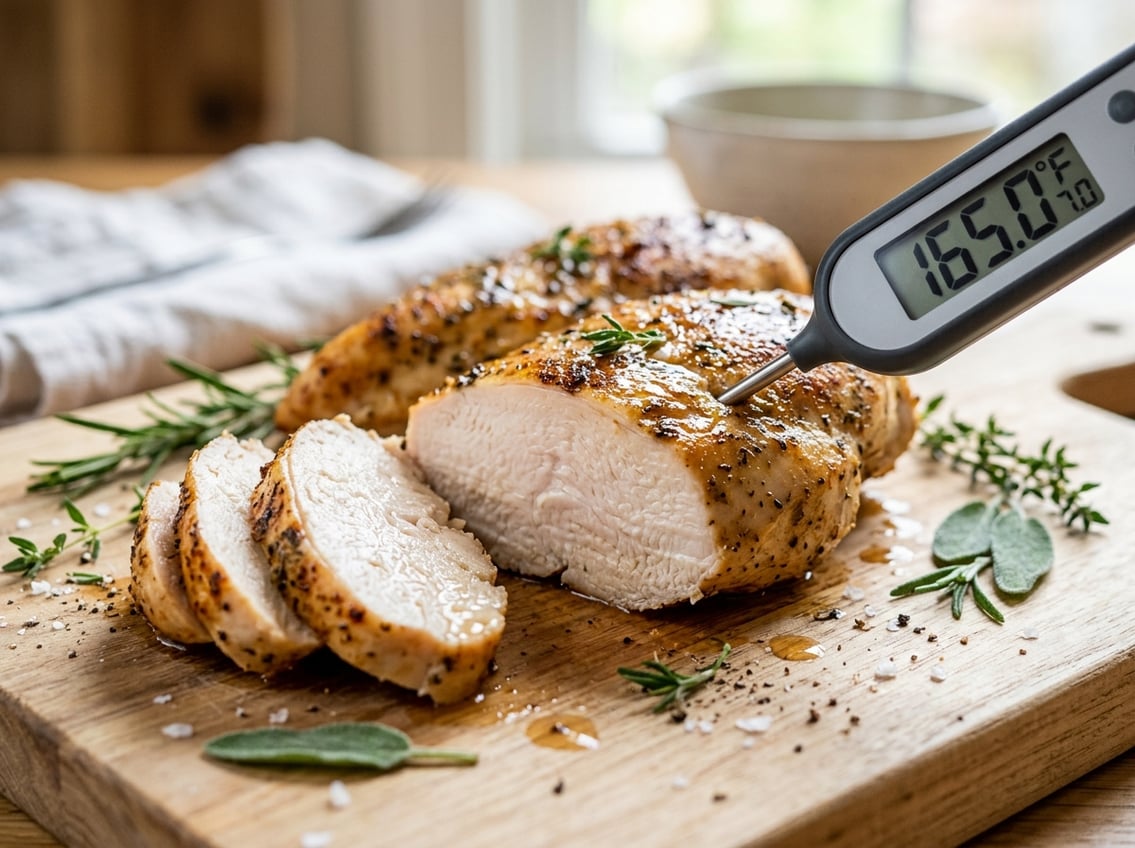
If you want juicy chicken breast that is also safe to eat, check the internal temperature, not the clock. A good thermometer gives you a clear answer in seconds.
It helps you avoid both undercooked meat and dry, overcooked chicken. Chicken breast is lean, so it can go from tender to dry fast.
Once you know what temperature chicken is done and how to measure it, you can cook with more confidence.
The Exact Temperature to Look For
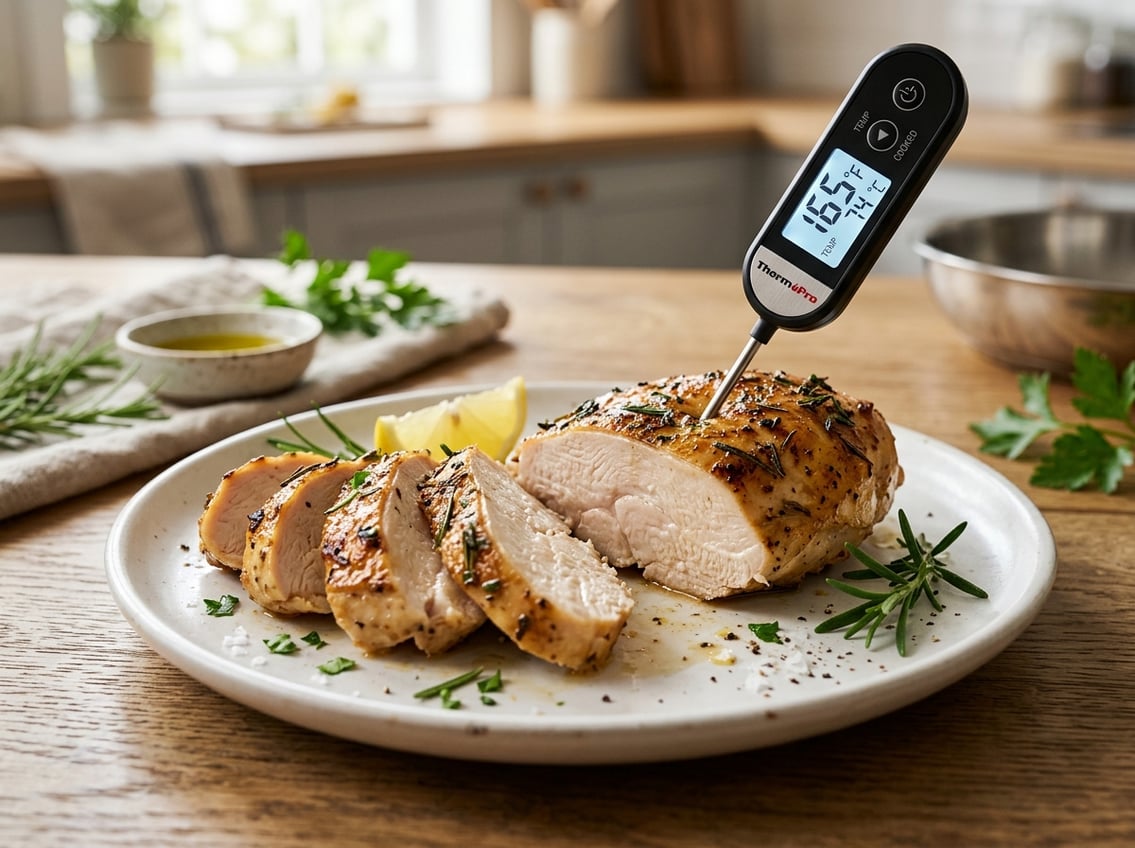
The safe minimum internal temperature for chicken breast is 165°F, or 74°C. Use this internal temp for food safety in the U.S.
Carryover cooking often causes the temperature to rise after you take the chicken off the heat. Pull temperature and final resting temperature can differ.
Safe Minimum Temperature for Chicken Breast
For chicken breast, the safe temperature is 165°F at the thickest point. This number applies to both boneless and bone-in breast meat.
165°F and 74°C Explained
165°F and 74°C are the same target, just in different units. According to Chicken Internal Temp Guide (Safe Cooking Temperatures), this is the temperature where harmful bacteria die and the meat is safe to eat.
Some methods use lower temperatures for longer times, but for home cooking, 165°F is the simplest and most reliable rule.
Pull Temperature vs Final Resting Temperature
You do not always need to reach 165°F while the chicken is still on the heat if carryover cooking will finish the job. Many cooks pull chicken breast at about 160°F, then rest it for 5 minutes.
The internal temperature often climbs the last few degrees on its own.
How to Check Doneness Accurately
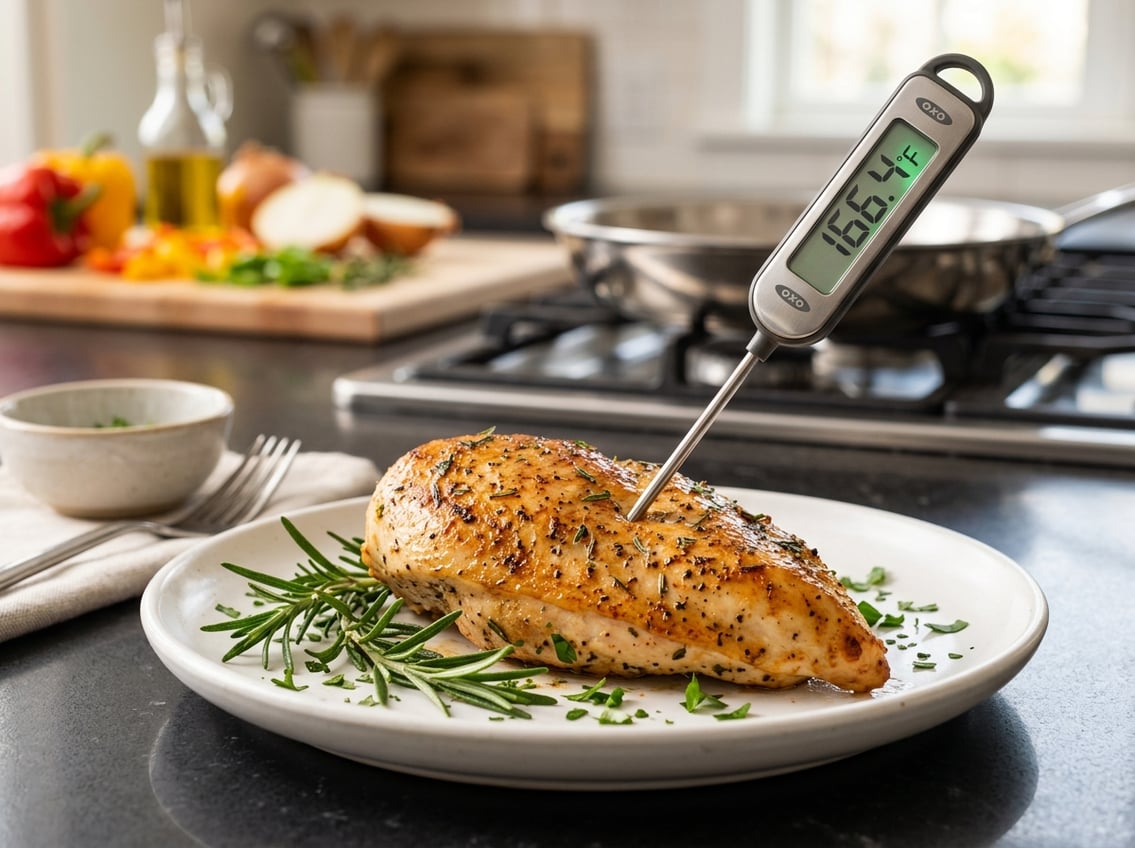
A meat thermometer is the most reliable way to check temperature. A food thermometer gives you a clear reading in seconds.
Where you place the probe matters just as much as the tool itself. The thickest part of the breast heats slowest, so check temperature there.
Best Thermometers to Use
An instant-read thermometer is the easiest choice for most home cooking. A probe thermometer works well if you want to monitor the temperature while the chicken cooks.
A Thermapen-style thermometer gives fast readings, which helps when chicken breast cooks quickly. Look for a thermometer that reads fast and accurately.
Slow dial thermometers can work, but they are easier to misuse.
Where to Insert the Probe
Insert the probe into the thickest part of the chicken breast. Avoid touching the pan, baking dish, or bone, because that can give you a false reading.
If the breast is uneven, test more than one spot. The thickest area is the one that tells you when the whole piece is close to done.
How to Check the Thickest Part Correctly
Push the probe into the center of the thickest section and wait for the reading to settle. If the number is still rising, give it another second or two.
For bone-in chicken, check near the thickest meat, not directly on the bone. That same rule applies when you check temperature near the bone on larger cuts, including when roasting a whole chicken.
Signs Chicken Breast Is Done Without Guesswork
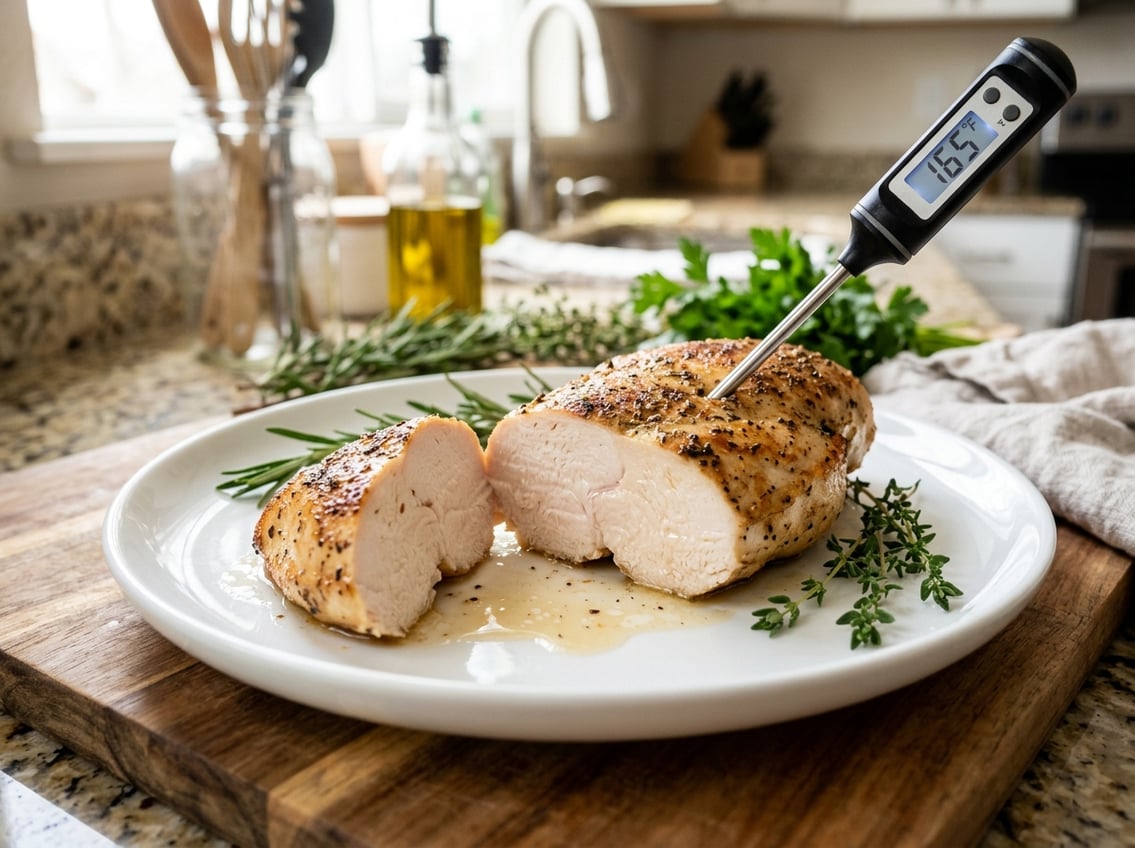
Color, texture, and juices can help you notice progress, but they are not as reliable as internal temperature. Food safety depends on what the thermometer says, not on how the meat looks.
Carryover cooking changes the picture after the chicken leaves the heat. Resting lets juices settle and lets the final internal temperature rise a little more.
Why Color Is Less Reliable Than Temperature
Cooked chicken can look white and still be underdone in the center. It can also look slightly pink near the bone even when it is safe.
A temperature reading matters more than visual signs. If the chicken is at 165°F, it is done even if the color is not perfectly uniform.
Is Pink Chicken Safe
Sometimes, pink chicken is safe if the internal temperature has reached 165°F. A pink tint near the bone can happen in young chickens or with certain cooking methods.
If the meat itself is soft and pink in the center, keep cooking it. If the thermometer confirms 165°F, the chicken is safe to eat even if a small area still looks pink.
How Resting Affects Juiciness
Resting gives carryover heat time to finish the last few degrees of cooking. It also helps the juices stay in the meat instead of running out when you cut it.
For chicken breast, a short rest of about 5 minutes can improve texture. That small pause often gives you a juicier result with the same safe internal temperature.
Cooking Method Tips for Better Results
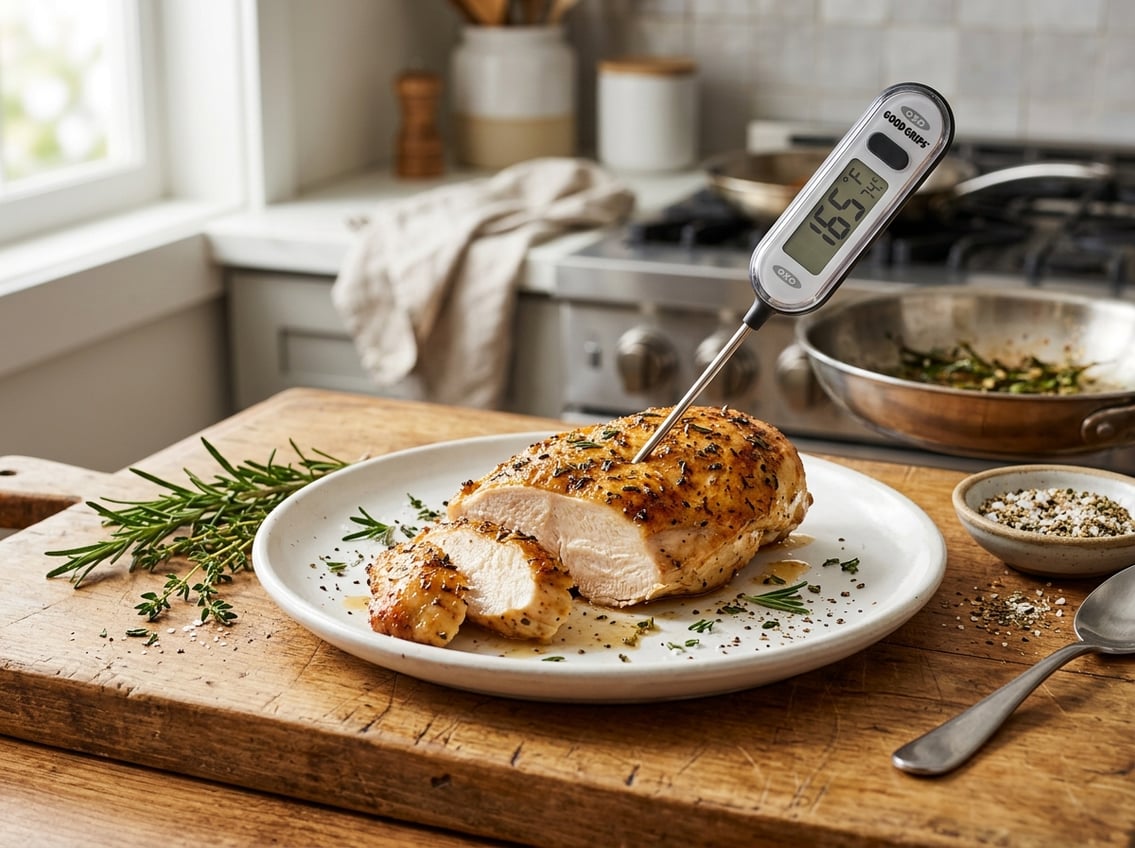
Different cooking methods change how fast chicken breast heats up. The main goal stays the same: check temperature early enough to avoid overcooking, then confirm the center reaches a safe level.
Even thickness helps every method. Pounding or slicing a breast so it cooks evenly makes temperature checks easier and more accurate.
Pan-Seared Breast on Medium-High Heat
For pan-seared breast on medium-high heat, the outside can brown fast while the center still needs time. Start checking temperature near the end of cooking so you do not overcook the surface.
An instant-read thermometer works well because the meat can change quickly. Keep the probe ready, especially if you are also avoiding cross-contamination by not moving raw chicken tools onto cooked food.
Oven-Baked Breast and Even Thickness
Oven baking gives you more even heat, which is helpful for thicker breasts. Try to keep the chicken breast close to the same thickness across the whole piece so the center cooks at the same pace.
If you are baking several pieces, check the thickest one first. That gives you the best read on when the batch is ready.
Air Fryer Chicken Breast Timing Notes
Hot air moves around the meat from all sides, so air fryer chicken breast cooks quickly. Check the temperature a little earlier than you would in a standard oven.
Use an instant-read thermometer to confirm the center reaches 165°F. The thermometer matters more than a fixed minute count because timing can vary by size.


