
How Long Do I Bake Chicken Breast? Timing by Size
How long should you bake chicken breast? For most boneless, skinless breasts, bake them for 25 to 30 minutes at 375°F. The exact time depends on size, thickness, and whether the chicken is bone-in.
If you use the right temperature and check for doneness with a thermometer, you can bake tender chicken breast without guessing.
The most reliable way to bake chicken breast is to match the oven temperature to the size of the meat, then pull it when the thickest part reaches 165°F. A small breast may finish sooner, while a large one needs more time, especially if it is bone-in.
Knowing how to bake chicken breast well gives you an easy path to weeknight dinners and meal prep. You can use baked chicken breast in salads, pasta, grain bowls, and sandwiches later in the week.
Bake Times at a Glance
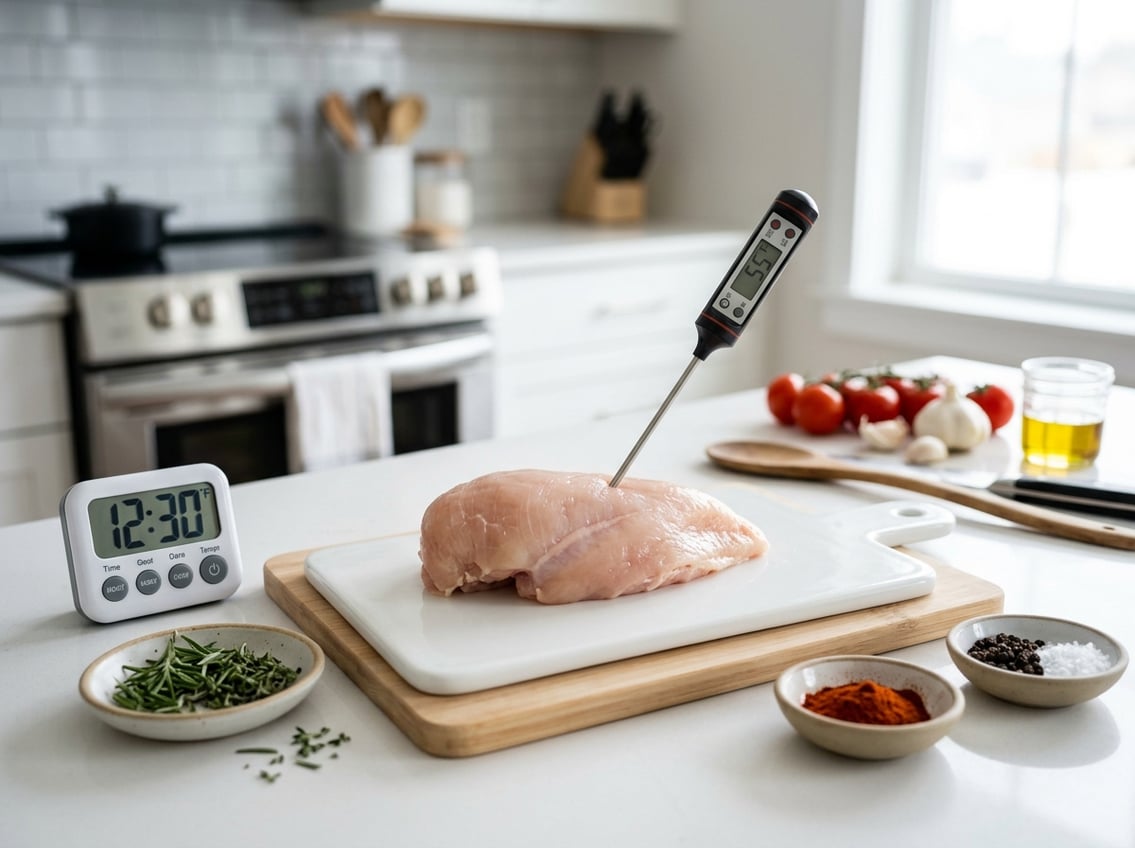
When you bake chicken breasts, time depends on temperature, size, and whether the cut is boneless or bone-in. Always check the internal temperature before serving.
For standard boneless chicken breasts, use 375°F to 425°F. A hotter oven shortens cook time, while a lower oven gives you a wider window for even cooking.
Boneless Breasts at 375°F, 400°F, and 425°F
- 375°F: Bake 6 to 8 ounce boneless breasts for about 25 to 30 minutes, according to Better Homes & Gardens
- 400°F: Bake medium boneless breasts for about 20 to 25 minutes
- 425°F: Bake medium boneless breasts for about 18 to 22 minutes
If your chicken breasts are very thick, start checking early and keep baking as needed. The thermometer still matters most.
Bone-In Chicken Breast Timing
Bone-in chicken breast usually takes longer than boneless. Plan on about 35 to 45 minutes at 375°F, depending on size and thickness.
Bone-in pieces often cook more evenly near the bone. For crisper skin, you can use 400°F, which may shorten the time a bit while still giving you good color.
How Chicken Breast Sizes Change Cook Time
Chicken breast sizes change cook time more than most people expect. A 5-ounce breast may finish several minutes before an 8-ounce breast.
For the best results, think in terms of thickness, not just weight. A thick, compact breast usually takes longer than a flatter one of the same weight.
How to Get Juicy Results Every Time
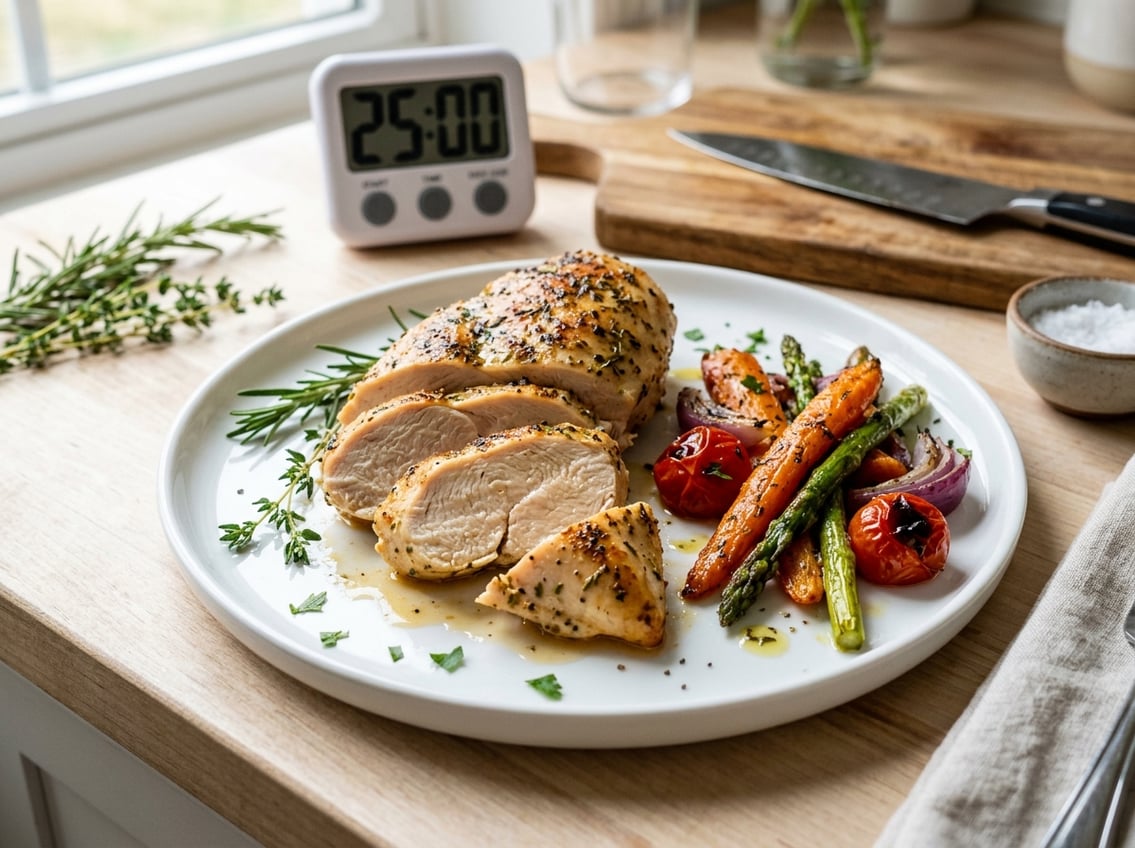
Juicy baked chicken breast depends on steady heat, the right pan, and careful temperature checking. Small steps make a big difference when you want baked chicken breasts that stay tender after resting and slicing.
A simple baked chicken breast recipe works best when you keep the cooking method consistent. Choose the right pan, check doneness early, and let the meat rest before cutting.
Best Temperature for Even Cooking
For even cooking, use 375°F as a default. It gives you enough heat to cook through without pushing the outside too fast.
If you want faster results and are comfortable checking early, 400°F or 425°F can work well. A baked chicken breast recipe at 400°F often relies on flattening the meat so it cooks evenly.
When to Use a Baking Sheet vs. Ceramic Baking Dish
Use a baking sheet when you want more browning and faster air flow around the chicken. It works well for boneless breasts and for batch cooking.
Use a ceramic baking dish when you want a more contained bake with juices collecting in the pan. This works well for bone-in chicken breast or when you want to add broth, sauce, or vegetables.
Why an Instant-Read Thermometer Matters
An instant-read thermometer removes guesswork. Chicken is safe at 165°F in the thickest part, and a thermometer tells you when you have reached that point.
A visual check is not enough, since chicken breasts can look done before they are fully cooked. How to Bake Chicken Breasts So They’re Always Juicy, Never Dry recommends checking temperature, especially for larger pieces.
Resting, Slicing, and Avoiding Dry Meat
Let the baked chicken breast rest for 5 to 10 minutes after it comes out of the oven. This helps the juices settle back into the meat.
Slice against the grain for a softer bite. If you cut too soon, the juices run out and the meat can seem dry even when it was cooked well.
Prep, Seasoning, and Batch Cooking Tips
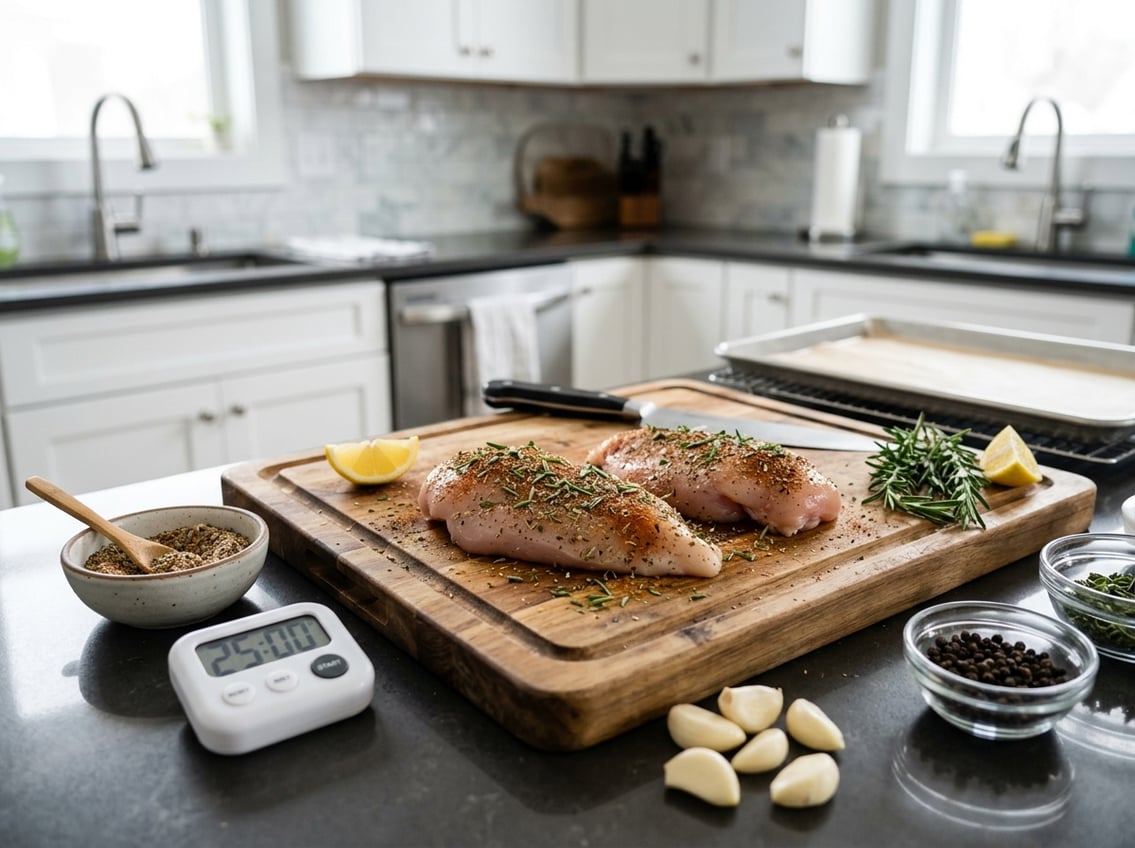
Good prep makes baking chicken breasts much easier. You do not need a long ingredient list, just even sizing, basic seasoning, and a plan for leftovers.
Simple seasoning helps baked chicken breast fit many meals. If you want one batch to work across several chicken breast recipes, keep the flavor balanced and versatile.
Simple Seasoning Options for Everyday Meals
A basic mix of salt, pepper, garlic powder, and onion powder works well. Paprika, Italian seasoning, lemon pepper, or a little smoked paprika can add variety.
If you plan to use the chicken in another dish, keep the seasoning lighter. That gives you more flexibility later for tacos, casseroles, pasta, or salads.
How to Bake Chicken Breasts Evenly
Choose chicken breasts that are close in size. If one is much thicker, pound it lightly or slice it to even it out before baking.
Arrange the breasts in a single layer with space between them. Crowding the pan can lead to uneven cooking and less browning.
How to Store Baked Chicken Breast for Later
Let the chicken cool, then store it in an airtight container in the fridge for up to 4 days. The Forked Spoon notes that leftovers are useful for several days.
For longer storage, wrap and freeze portions so you can pull out only what you need. Keep slices whole if you can, since that helps the meat stay moist when reheated.
Best Ways to Serve and Reuse It
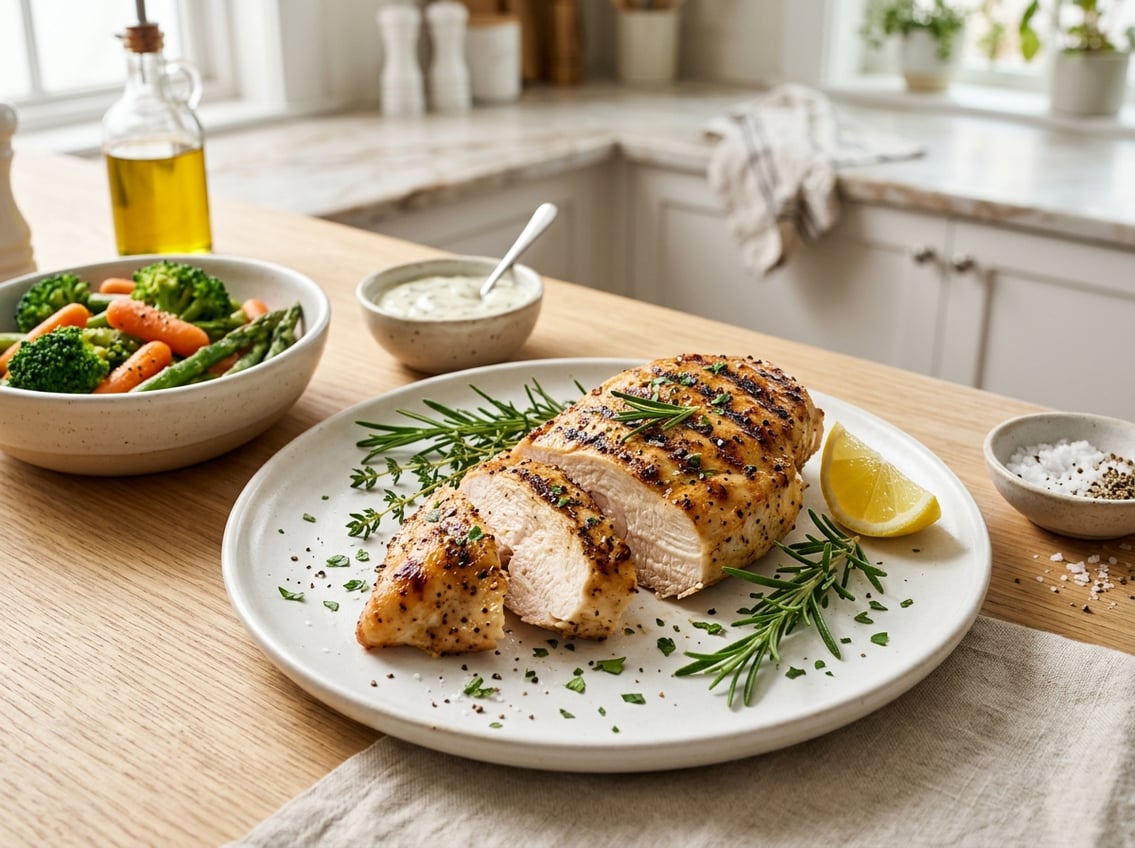
Baked chicken breast pairs well with many side dishes. You can keep it simple for dinner, then reuse leftovers in chicken salad or other recipes.
The mild flavor makes it easy to pair with vegetables, grains, and sauces.
Best Side Dish Pairings
Serve baked chicken breasts with roasted potatoes, rice, quinoa, green beans, broccoli, or a simple salad. Pasta, couscous, and roasted carrots also fit well.
For a fast plate, use one starch, one vegetable, and a light sauce or squeeze of lemon. That keeps dinner balanced without much extra work.
Using Leftovers for Chicken Salad and Meal Prep
Leftover baked chicken breast makes a strong base for chicken salad.
Chop or shred it, then mix it with mayo, yogurt, celery, grapes, herbs, or mustard, depending on the flavor you want.
You can also add baked chicken breasts to wraps, grain bowls, soups, and pasta dishes.
Using already cooked meat saves time on busy days and helps reduce waste.


