
What Is the Airline Chicken Breast? Cut, Names, and Cooking
What is the airline chicken breast? It is a skin-on chicken breast with the drumette attached, so you get a breast and part of the wing in one cut.
That attached wing joint sets it apart from a standard chicken breast and gives you a cut that is easier to handle and more attractive on the plate.
You may also hear it called airline chicken or airline chicken breasts.
The name sounds unusual, yet the cut itself is straightforward once you know what to look for.
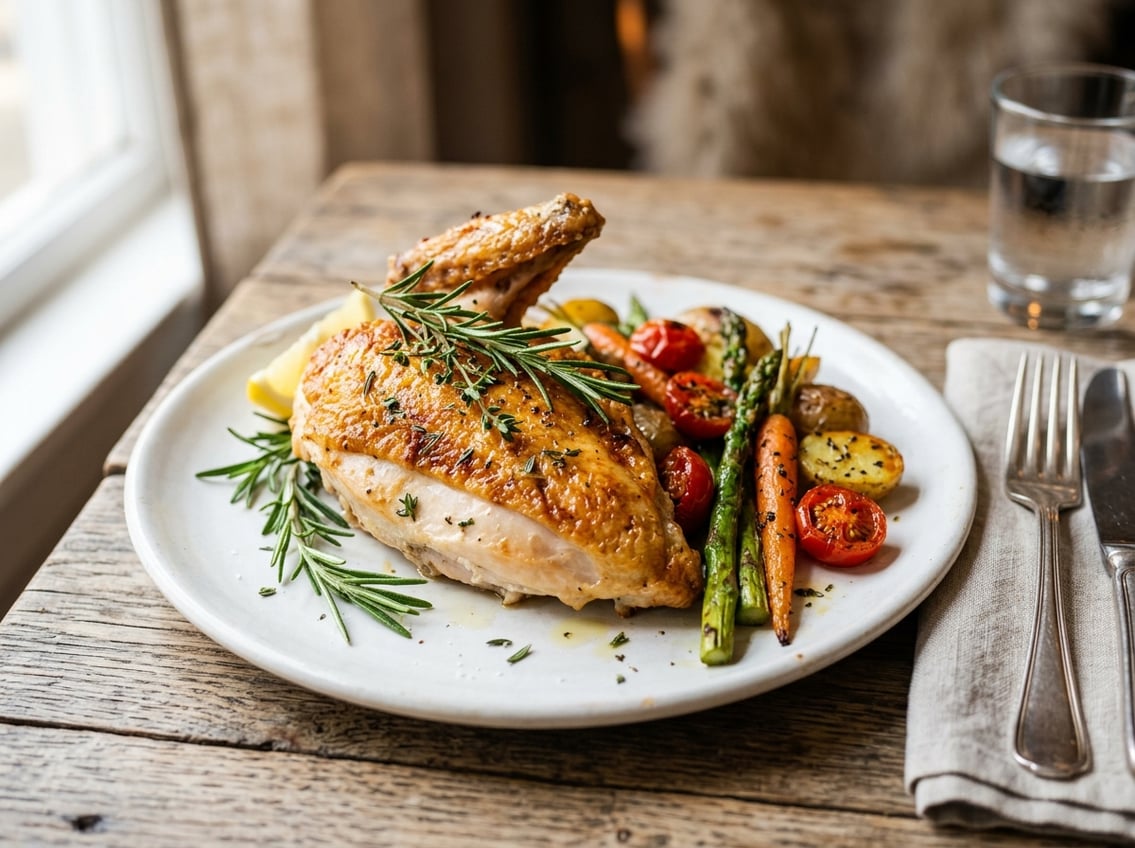
In US kitchens, this cut shows up most often in butcher shops, restaurant menus, and specialty meat cases.
Choose it when you want a juicy chicken breast with better presentation and a little extra flavor from the bone and skin.
How to Identify This Cut
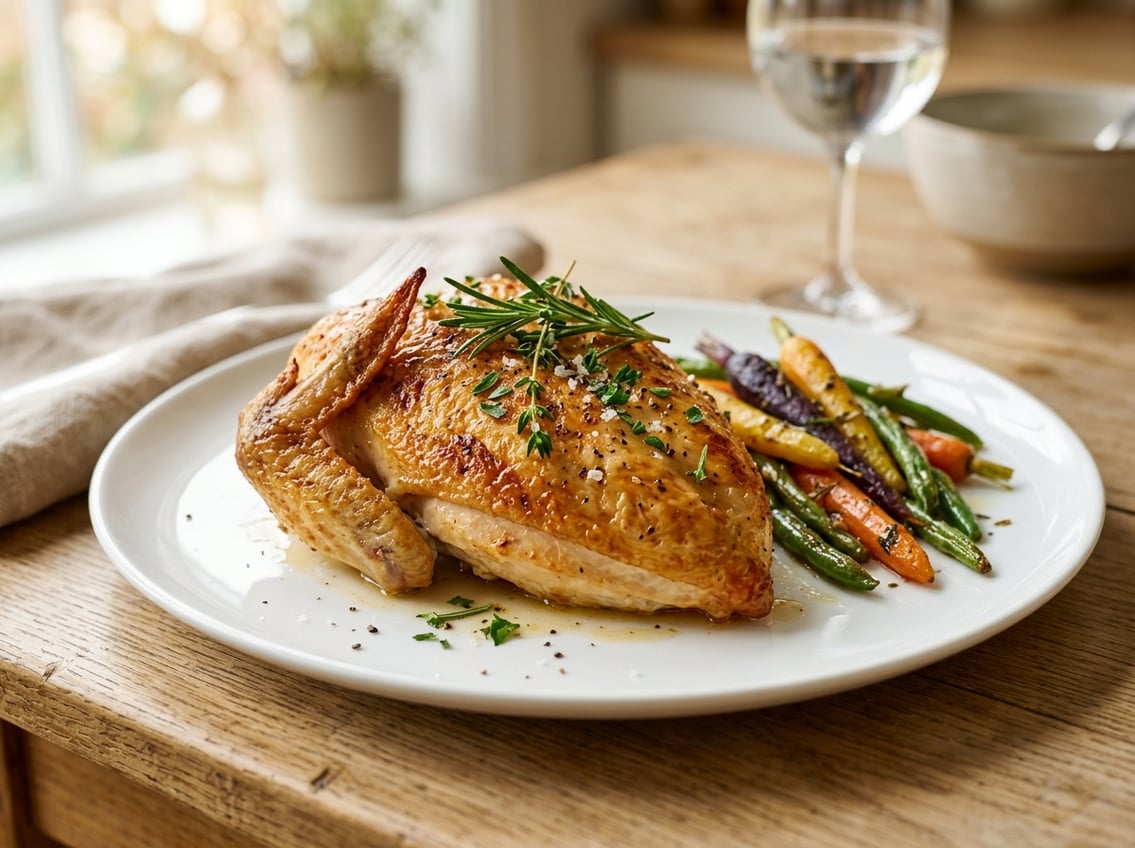
An airline chicken breast has a very specific look.
You see the main breast portion with the drumette attached at the top, usually with the wing joint trimmed clean for a neat shape.
Butchers often describe it as a skin-on chicken breast, and it may be bone-in or mostly boneless depending on preparation.
The key feature is the first wing joint left in place.
The Exact Anatomy of the Breast and Wing
The breast meat is the large white meat portion you expect from a chicken breast.
Attached to it is the drumette, the meaty upper section of the wing, connected at the first wing joint.
That small extra piece makes the cut easy to recognize.
It also gives you something to hold, which is one reason the airline cut became associated with neat, controlled eating.
How It Differs From Standard Chicken Breasts
A standard chicken breast is usually fully separated from the wing and may be sold skinless and boneless.
An airline chicken breast keeps the attached wing piece, so it looks more complete and usually cooks with more visual appeal.
The bone and skin help protect the meat from drying out.
That makes it a strong choice when you want a juicy chicken breast with better browning and a more polished finish.
Bone-In vs. Mostly Boneless Versions
Some versions are clearly bone-in chicken breast cuts with the wing joint attached.
Others are trimmed more aggressively and may seem closer to boneless, though they still keep the drumette.
If you buy from a butcher, ask exactly how the cut is prepared.
The airline cut should still show the attached wing section, even if the rest of the breast is trimmed cleanly.
Other Names You May See
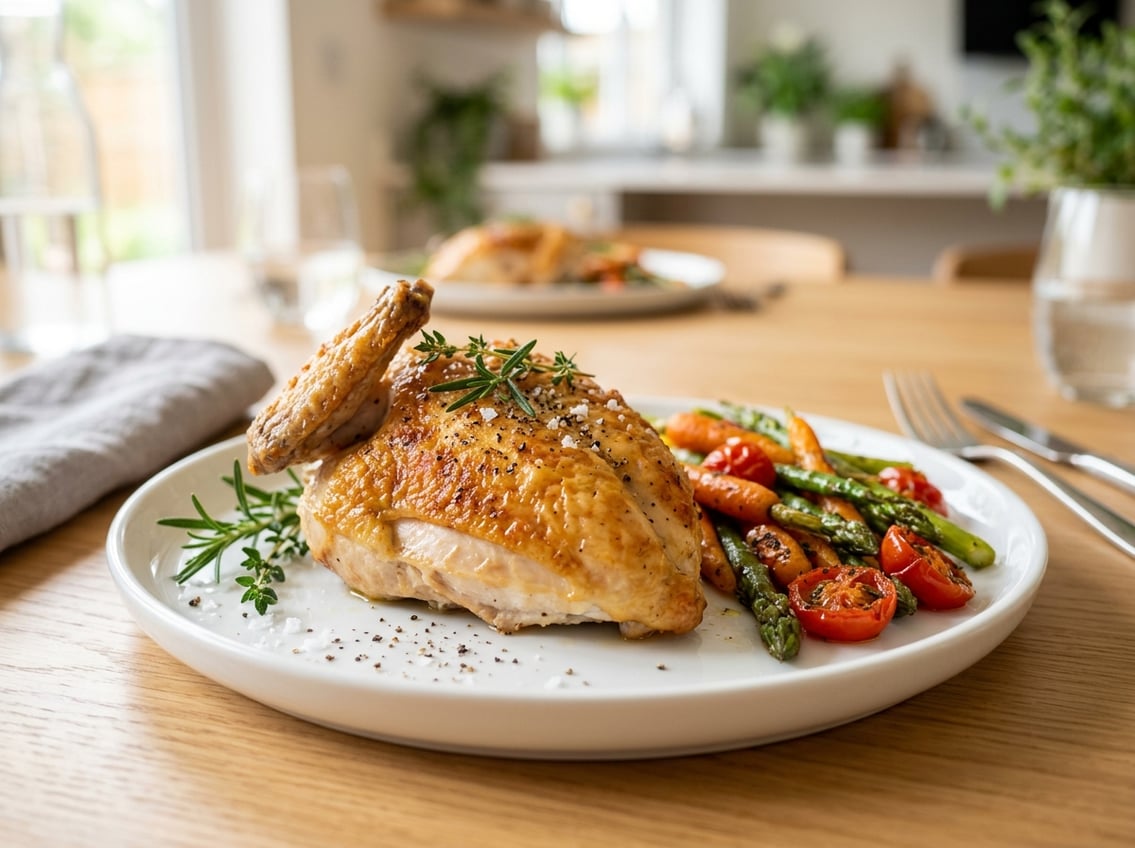
You may see airline chicken breast listed under older restaurant names or classic culinary terms.
These names usually point to the same basic idea, a breast with the wing joint attached.
The wording changes by butcher, restaurant, and region.
Knowing the common labels makes it easier to spot the cut on a menu or ask for it at the counter.
Statler Chicken and Statler Chicken Breast
Statler chicken and Statler chicken breast are common names for this style of cut.
Porter & York notes that “Statler” refers to a breast of chicken with the drumette still attached, a presentation associated with the Boston Hotel Statler.
This name is useful if you read older recipes or upscale menu descriptions.
It often signals a neatly trimmed chicken breast with a wing piece left on for presentation.
Frenched Breast and Frenched Chicken Breast
A frenched breast or frenched chicken breast usually means the bone or wing section has been cleaned and trimmed for a neat look.
In practice, this can describe an airline chicken breast, especially when the drumette is exposed cleanly.
The term “frenched” focuses on the trimming style, not just the cut itself.
If you see it on a menu, expect a polished, restaurant-style presentation.
Chicken Suprême and Restaurant Menu Terminology
Chicken suprême is another term you may see in fine-dining settings.
As noted by Tasting Table, it can refer to a breast with the first wing joint attached.
Restaurant menus often use these classic terms to sound more formal or traditional.
If you know the names, you can spot the same cut even when the wording changes.
Why It Is Popular and Where It Comes From
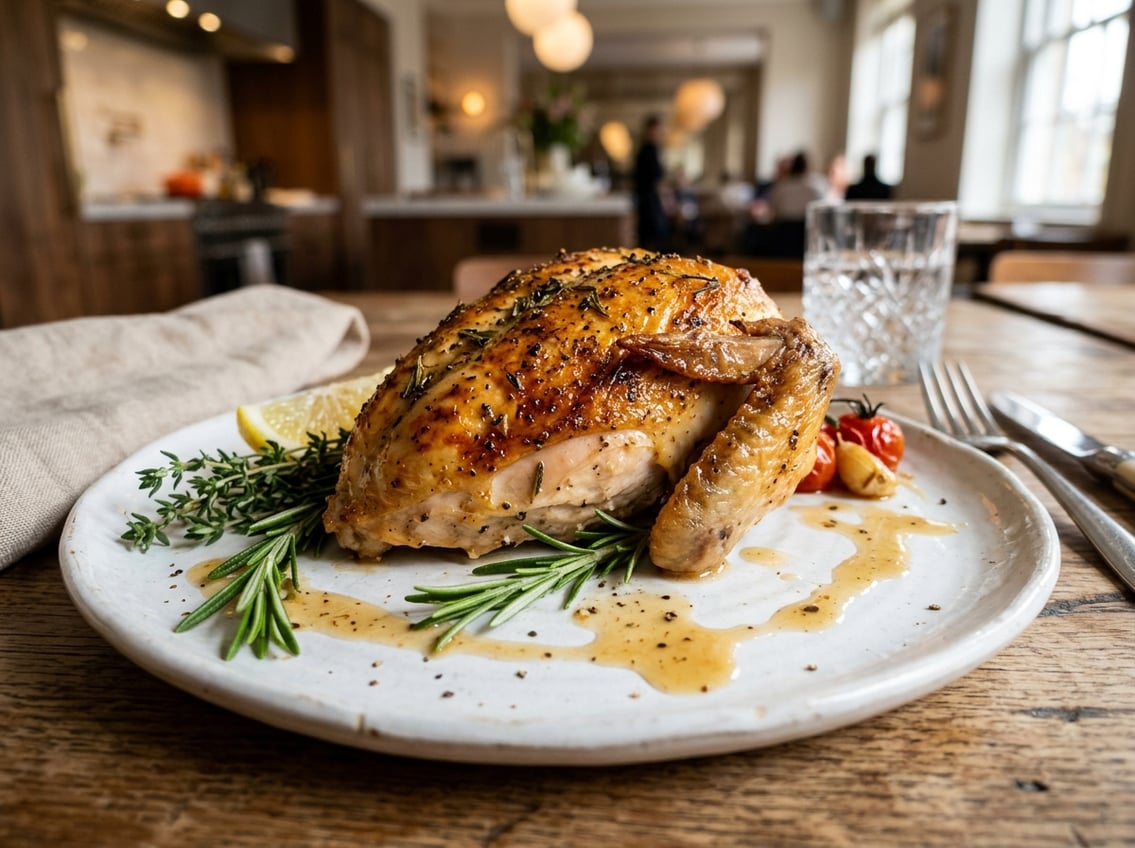
The cut became popular because it combines convenience, presentation, and a little extra flavor.
The attached drumette makes the breast easier to hold, which helps explain the airline connection described by Martha Stewart.
It also looks more refined than a plain breast.
That made it a natural fit for restaurants and for airline service in earlier decades.
Why Airlines and Restaurants Used This Cut
The name airline chicken comes from the idea that you could eat the piece by holding the drumette.
That made it practical for in-flight service and neat enough for plated meals.
Restaurants liked it for the same reason.
It gives you a portion that feels more complete than a plain breast and presents well on a plate.
Why the Skin and Bone Help With Moisture and Presentation
A skin-on chicken breast with a bone usually stays juicier than a boneless breast.
The skin protects the meat, and the bone helps with even cooking and better flavor.
It also browns well, which improves presentation.
If you want a piece that looks attractive and eats like a restaurant meal, this cut has a clear advantage.
Where to Buy It or What to Ask a Butcher For
You may not always find airline chicken in a standard grocery case.
It is more common at butcher shops, specialty meat counters, and stores with custom cutting.
Ask for an airline chicken breast, a statler chicken breast, or a Frenched breast with the drumette attached.
If the butcher is unsure, describe it as a skin-on chicken breast with the first wing joint still attached.
How to Prepare and Cook It at Home
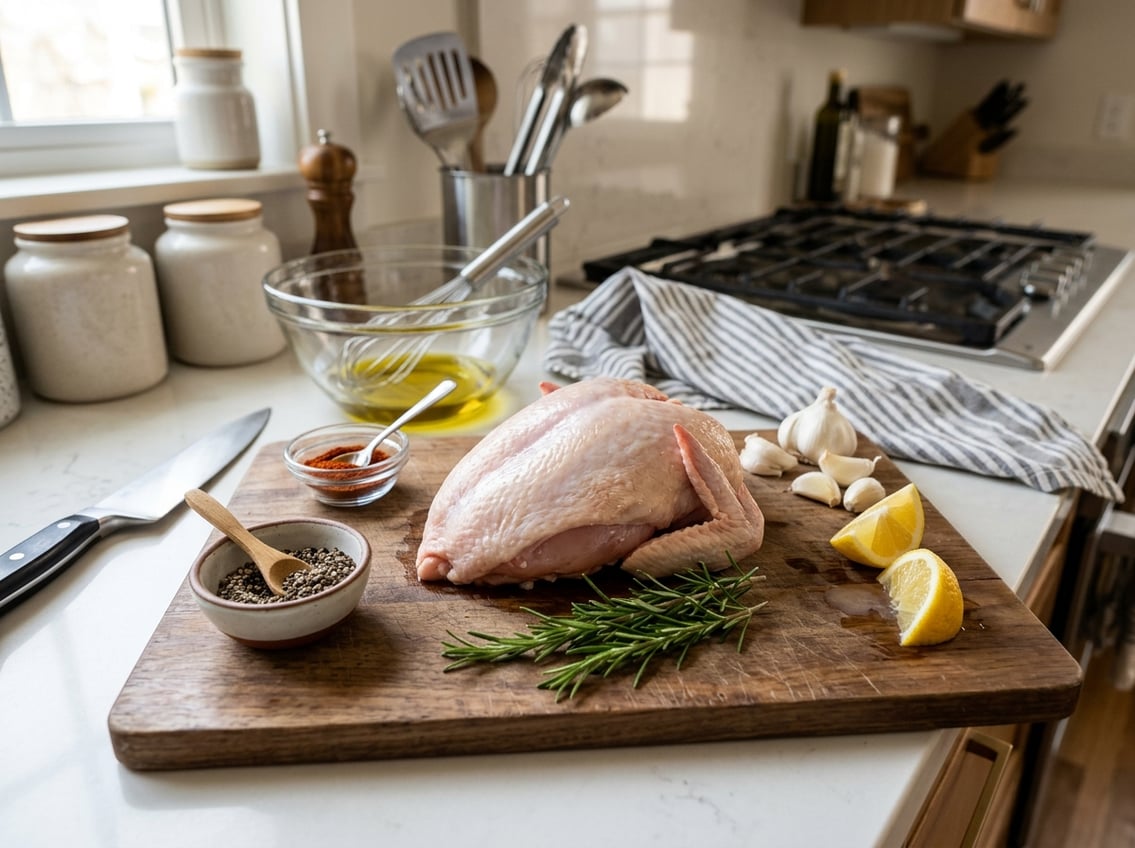
You can cook this cut much like a bone-in chicken breast, with a few extra steps for better skin and moisture.
The attached wing piece changes the shape, but the cooking goal is still the same: a juicy chicken breast with crisp skin.
The best results usually come from drying the skin well, searing the outside, and finishing in the oven.
That method gives you control over the texture and doneness.
How to Cut an Airline Chicken Breast From a Whole Bird
If you want to cut an airline chicken breast, start with a whole chicken or a split breast with the wing attached.
Remove the wing sections so the drumette stays connected while you trim away the rest of the wing at the first wing joint.
Aim for a clean, compact shape with the breast meat intact and the drumette left in place.
If you are new to the cut, Tasting Table’s guide to cutting an airline chicken breast explains the basic idea clearly.
Best Pan-Seared and Oven-Finished Method
For how to cook airline chicken breast, use a pan-sear followed by oven finishing.
Pat the chicken dry, let it sit at room temperature for about 30 minutes, and preheat your oven to 375°F, as recommended by Martha Stewart.
Sear it in a hot cast-iron skillet with oil for a few minutes on each side, then move the pan to the oven until the thickest part reaches 165°F.
This method helps the skin crisp while keeping the meat tender.
Tips for Crisp Skin and Tender Meat
Dry the chicken skin thoroughly before cooking. Avoid crowding the pan.
Use a thermometer to prevent overcooking the breast. Pull the chicken at the right temperature and let it rest briefly before serving.


