
Can Chicken Breast Have Worms? What to Know
Can chicken breast have worms? In normal retail chicken, you usually do not find worms.
You are more likely to see a vein, tendon, or small blood vessel that looks worm-like at first glance.
The main food safety issue is not a visible worm in the breast muscle. The real concern is whether you handled, stored, and cooked the chicken safely.
If you see something unusual, judge whether it is a harmless tissue strand or a sign the meat should be discarded.
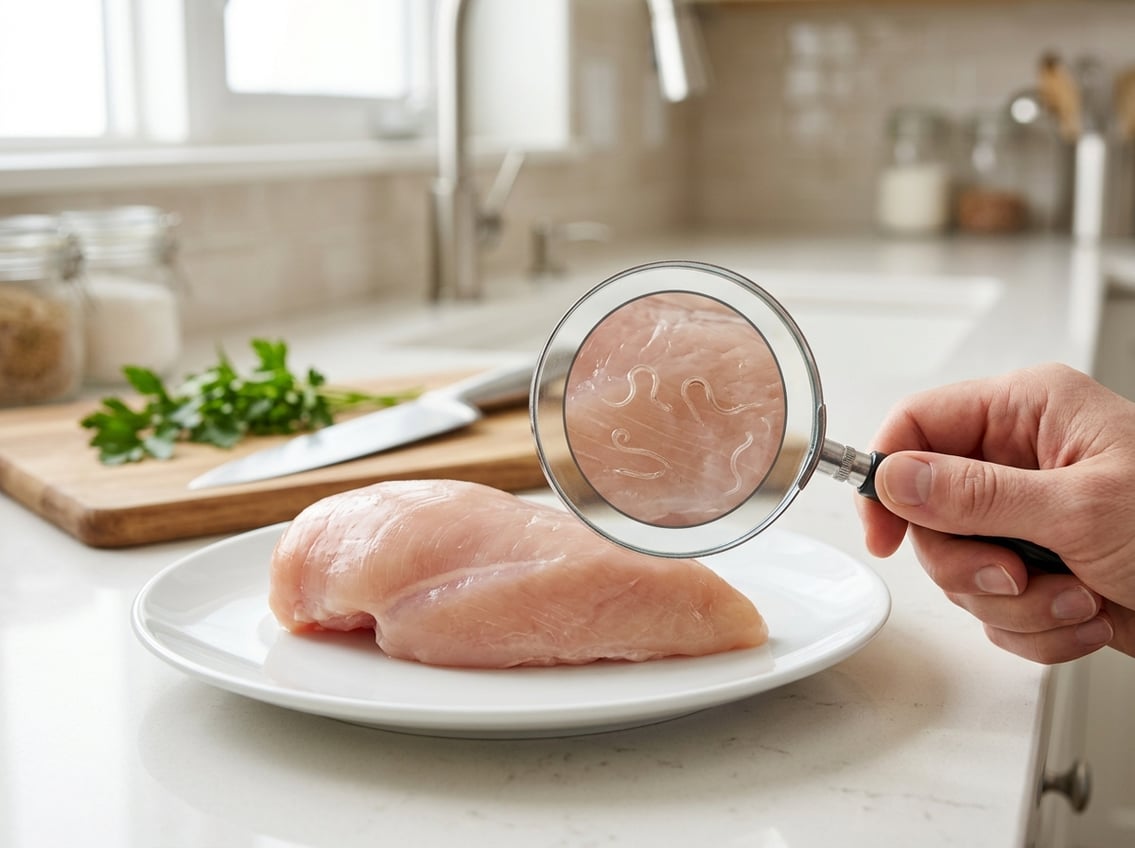
Chickens can carry parasites, and live birds can have worms and other infections, especially in the digestive tract.
Questions about whether eggs can have worms often come up for the same reason, since parasites in a flock can affect many parts of poultry health.
What It Means if You See Something Worm-Like in Chicken Breast
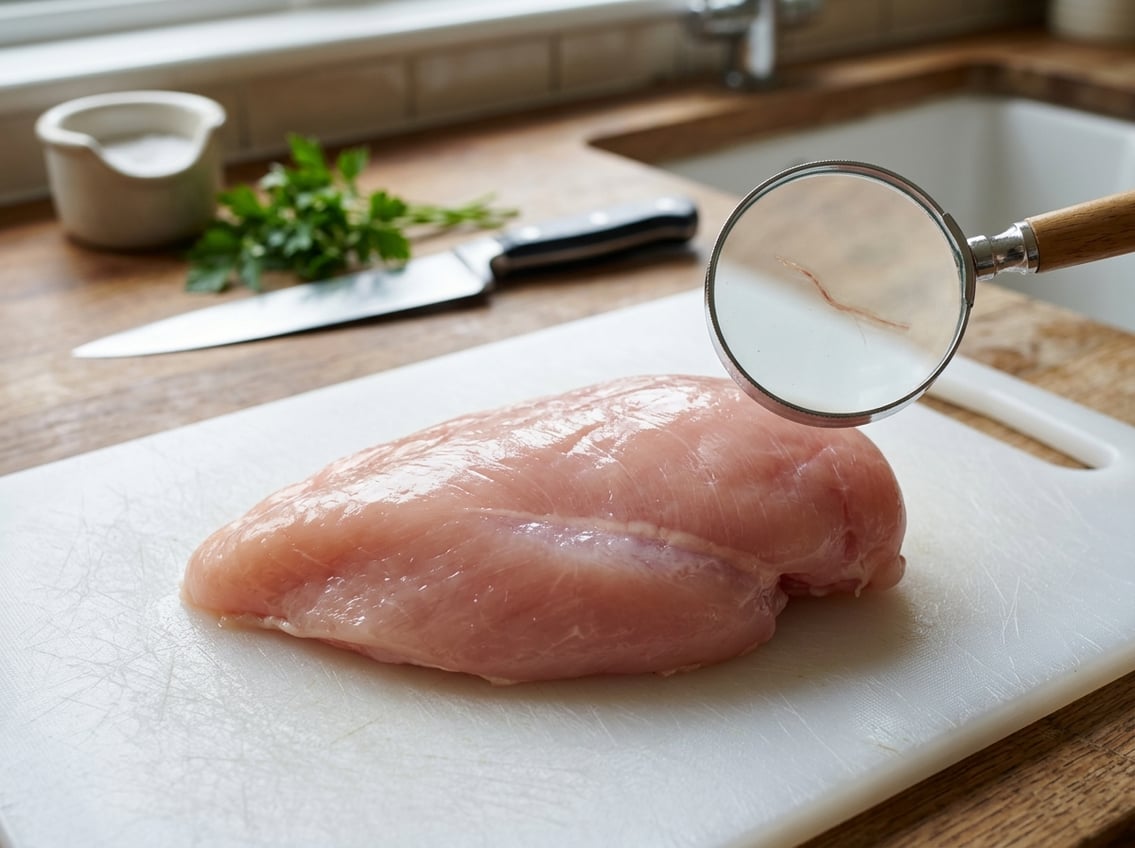
A worm-like shape in chicken breast usually does not mean you are looking at a living worm in muscle meat.
In most cases, this is a normal structure that can look unusual when raw.
If the meat looks suspicious, stop and inspect it closely.
You should cook chicken thoroughly before eating, and you should not eat meat that smells bad, feels slimy, or shows clear spoilage.
Whether Muscle Meat Can Actually Contain Parasites
Most poultry worms live in the intestines, not the breast muscle.
Some internal parasites can affect a bird’s health, but you do not commonly find visible worm bodies in breast meat at the grocery store.
In retail chicken, a worm-like object is much more often connective tissue than a parasite.
True parasitic problems are more likely in live birds than in properly inspected meat.
Why a Vein, Tendon, or Blood Vessel Is Often Mistaken for a Worm
A thin white or red line in chicken breast can be a vein, tendon, or blood vessel.
These structures may curl, stretch, or sit under the surface in a way that looks like a worm.
Texture helps you tell the difference.
A tendon feels firm and fibrous, while a worm would look more irregular and would not be attached like normal tissue.
When to Discard the Meat and Report a Product Concern
Throw the chicken away if you see moving material, strong off-odor, green or gray discoloration, or packaging damage with leakage.
If you think there is a real contamination issue, keep the package and contact the store or the manufacturer.
You can also report product complaints to the USDA’s Meat and Poultry Hotline.
Food Safety Risks and What to Do Before Eating
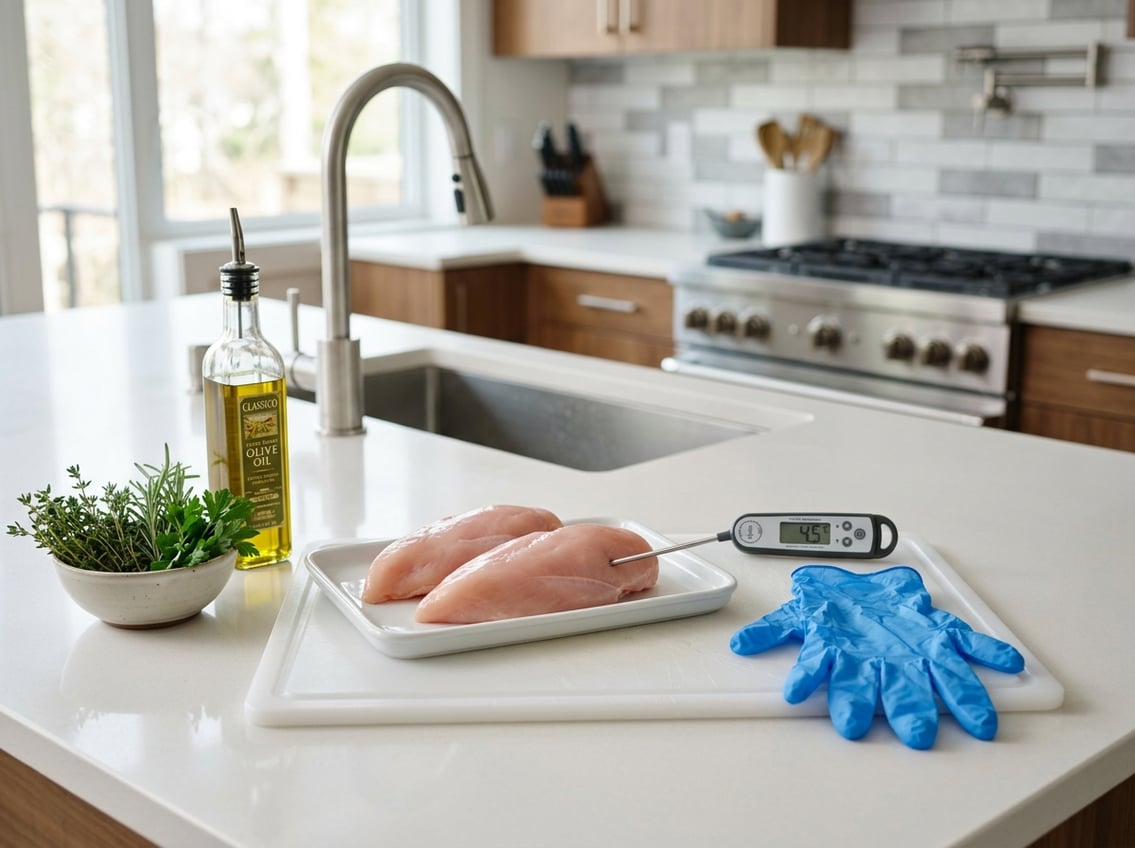
The main risk from chicken is not seeing a worm. The real risk is eating poultry that is raw, undercooked, or cross-contaminated.
Cook chicken thoroughly and handle it carefully to reduce the chance of illness from bacteria and some internal parasites.
External parasites are a different issue.
They affect live birds, not the meat on your plate, though poor flock health can still affect food quality and safety practices.
Human Health Risk From Raw or Undercooked Poultry
Raw chicken can carry germs that cause foodborne illness.
Parasites in poultry are less common in finished breast meat than bacterial contamination, yet undercooked meat is still unsafe.
If you have eaten chicken that seemed abnormal and you develop stomach pain, vomiting, diarrhea, fever, or allergic symptoms, you should seek medical advice.
The risk is higher if the meat was raw or only lightly cooked.
How Proper Cooking Lowers Risk
The USDA recommends cooking chicken to an internal temperature of 165°F.
Use a food thermometer in the thickest part of the breast, not just by color alone.
Heat kills common foodborne pathogens and greatly lowers safety risk.
A thermometer gives you a better answer than judging by juice color or appearance.
Safe Handling, Storage, and Cross-Contamination Prevention
Keep raw chicken separate from ready-to-eat food.
Wash hands, knives, boards, and counters with hot soapy water after contact with raw poultry.
Store chicken in a sealed container on the bottom shelf of the refrigerator.
That keeps juices from dripping onto produce, cooked food, or leftovers.
How Worm Problems Show Up in Live Chickens
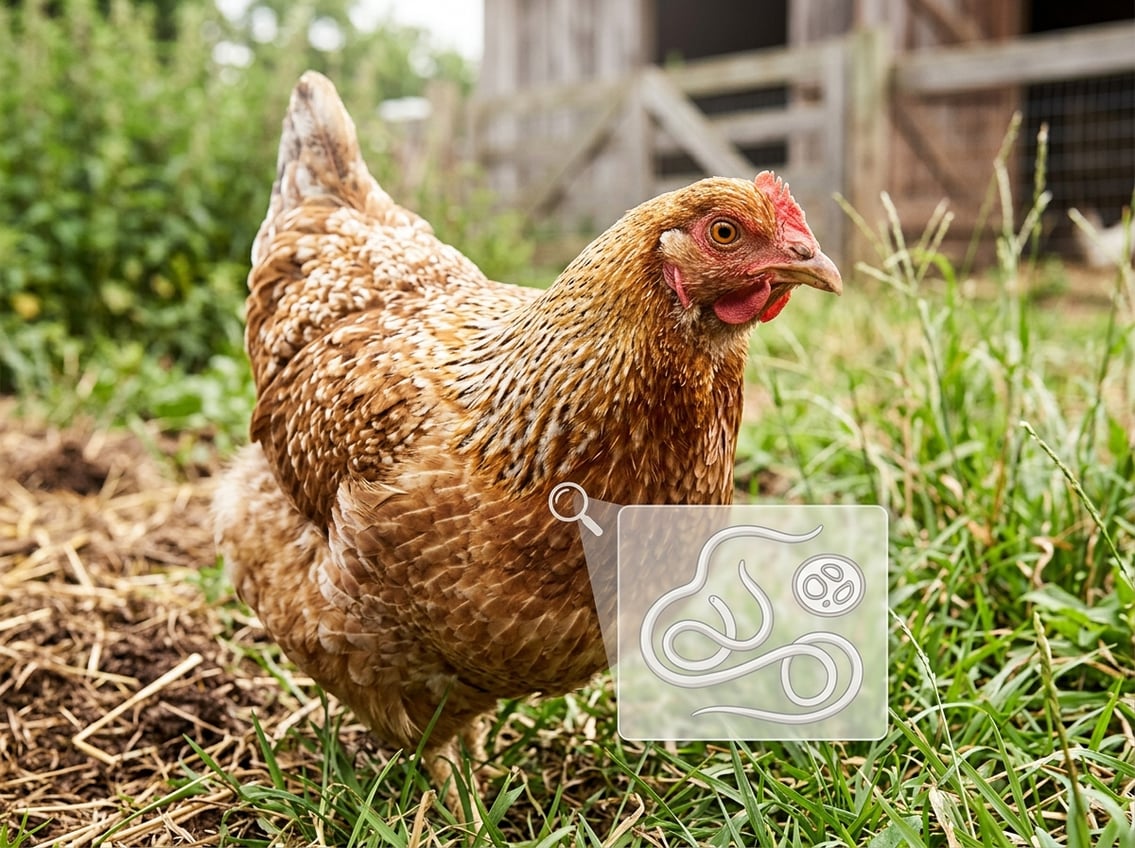
Worm problems usually show up first in the bird, not in the meat.
You may notice changes in body condition, droppings, appetite, and egg production before you ever see a parasite.
Some birds carry a light load with few signs.
Others look weak quickly.
Symptoms of Worms in Chickens and Signs of Worm Infestation
Common signs of worms in chickens include weight loss, pale combs, reduced appetite, slow growth, lethargy, and ruffled feathers.
In some birds, you may also see coughing or breathing changes if the parasite affects the airway.
Poor condition does not prove worms on its own.
Stress, poor diet, and other illnesses can look similar, so you may need testing or veterinary advice.
What Worms in Chicken Poop and Worms in Chicken Stool Look Like
Worms in chicken poop or stool may appear as long threads, small white segments, or moving bodies in fresh droppings.
You may also see diarrhea or droppings with mucus.
Sometimes you will not see a worm at all, only signs that point toward a parasite burden.
A fecal test is the most useful way to confirm the problem.
Whether Poop on Eggs, Pale Yolk, or Reduced Egg Production Are Warning Signs
Poop on eggs is usually a sanitation issue, not a worm sign by itself.
A dirty nest box, a hen stepping in droppings, or a broken egg is more common.
Pale yolk and reduced egg production can happen when a hen is stressed or underweight.
Parasites can play a role, so these signs deserve attention when they happen with other illness symptoms.
Can Worms Kill Chickens and When It Becomes Urgent
Worms can kill chickens when the infestation is heavy or untreated.
Severe internal parasites can cause anemia, weakness, and organ damage.
It becomes urgent if a bird stops eating, collapses, has very pale combs, or shows rapid weight loss.
At that point, you should isolate the bird and get veterinary help.
Common Poultry Parasites, Treatment, and Prevention
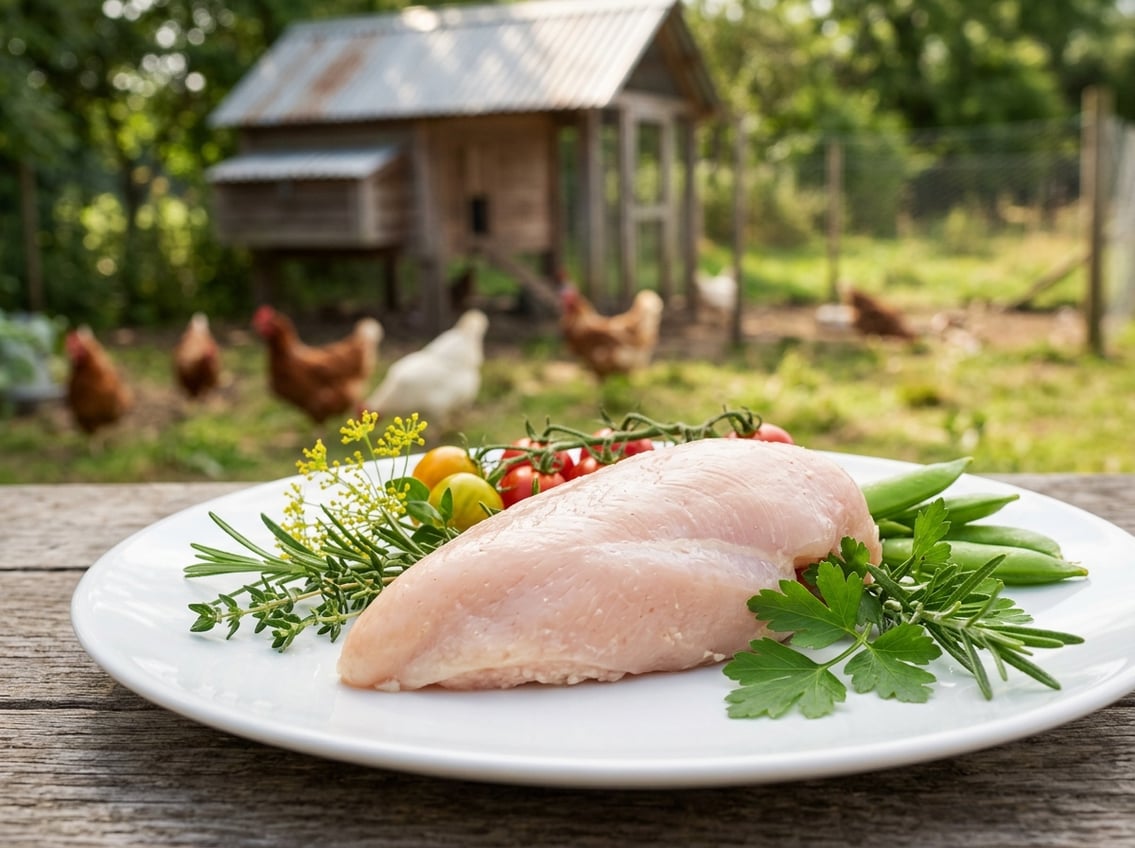
Chicken parasites include several worm species and also external parasites like mites and lice.
The exact problem depends on the bird’s age, housing, and exposure to contaminated ground, bedding, or intermediate hosts.
Some treatments are prescription-based.
Prevention depends on sanitation, bird management, and timely action.
Knowing the common species helps you match the problem to the right response.
Ascaridia galli, Heterakis gallinarum, and Other Common Worms
Ascaridia galli is a common roundworm in chickens and can affect the intestines.
Heterakis gallinarum also lives in the digestive tract and can spread through contaminated litter or soil.
Other common poultry worms include thread-like species that damage the gut and reduce nutrient absorption.
These infections are a major reason people ask whether deworming is necessary for backyard flocks.
Gapeworms, Cecal Worms, Gizzard Worms, Capillary Worms, and Eyeworms
Gapeworms can affect the airway and make birds gasp or stretch their necks.
Cecal worms live in the ceca, gizzard worms affect the gizzard area, capillary worms are smaller and harder to spot, and eyeworms can irritate the eye.
These parasites do not all look the same, and they do not all cause the same signs.
A veterinarian or poultry lab can help identify them.
How to Deworm Chickens and Whether Deworming Is Necessary
If you need to deworm chickens, use a product approved for poultry and follow label directions or veterinary guidance.
Off-label treatment can create residue problems in eggs and meat.
Routine blanket treatment is not always needed.
Whether deworming is necessary depends on fecal tests, flock history, stocking density, and whether birds are showing symptoms.
Biosecurity, Litter Management, and the Role of Diatomaceous Earth
Good biosecurity lowers parasite spread.
Clean coops regularly, rotate runs if possible, keep feed dry, and reduce exposure to wild birds and contaminated soil.
Fresh litter and dry bedding matter a lot.
Diatomaceous earth is often mentioned in backyard poultry care, but it should not replace sanitation or proven parasite treatment.
How Parasites Relate to Blackhead Disease and Scaly Leg Mite
Some parasites and diseases connect in poultry.
Heterakis gallinarum carries organisms that cause blackhead disease. This disease is especially serious in turkeys.
Scaly leg mite is not a worm. It is an external parasite that affects the legs.
Parasites in chickens include both internal worms and outside pests. These different parasites require different control methods.


