
Can I Boil Chicken Breast? Safe, Tender Results
You can boil chicken breast and get safe, tender results if you keep the heat gentle and stop at 165°F. A rolling boil is more likely to make the meat stringy and dry, while a low simmer helps the chicken cook evenly.
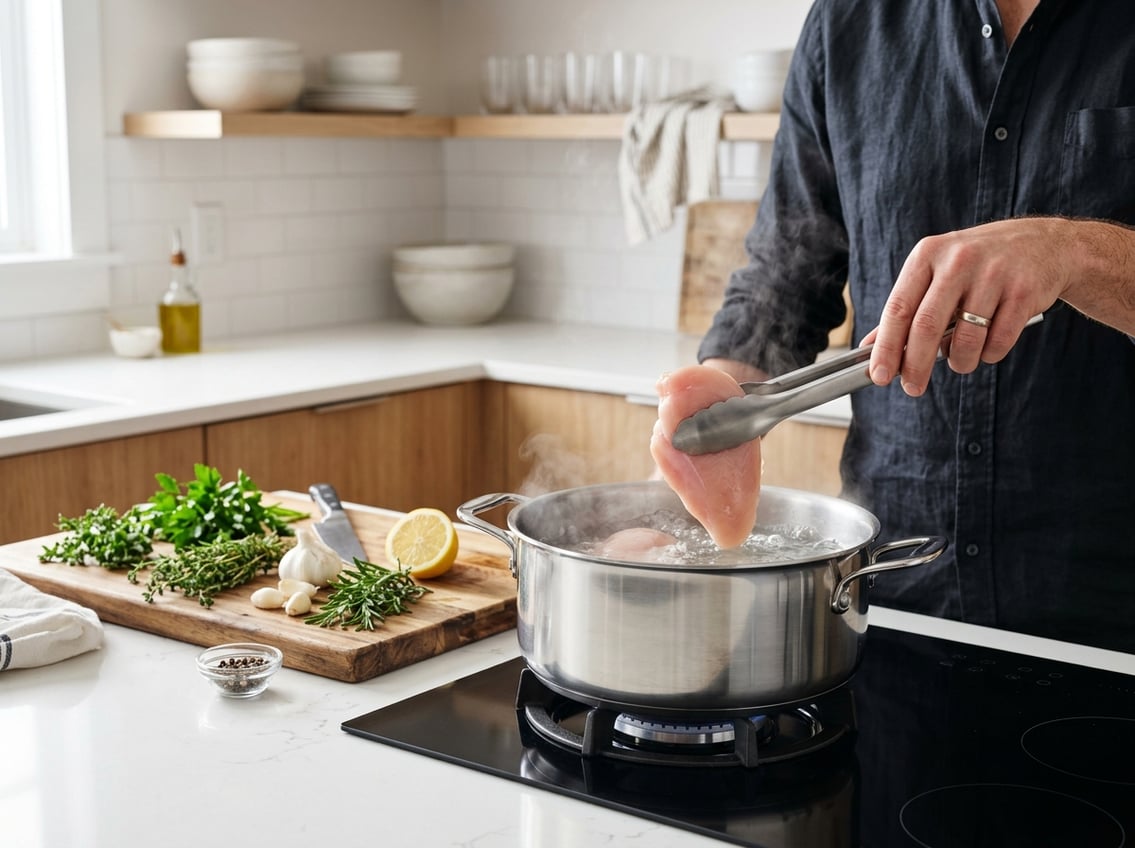
The best approach uses a gentle simmer in flavorful liquid, followed by a temperature check. That simple change makes a big difference in texture and keeps your boiled chicken breast useful for salads, soups, sandwiches, and meal prep.
The Short Answer and Best Method
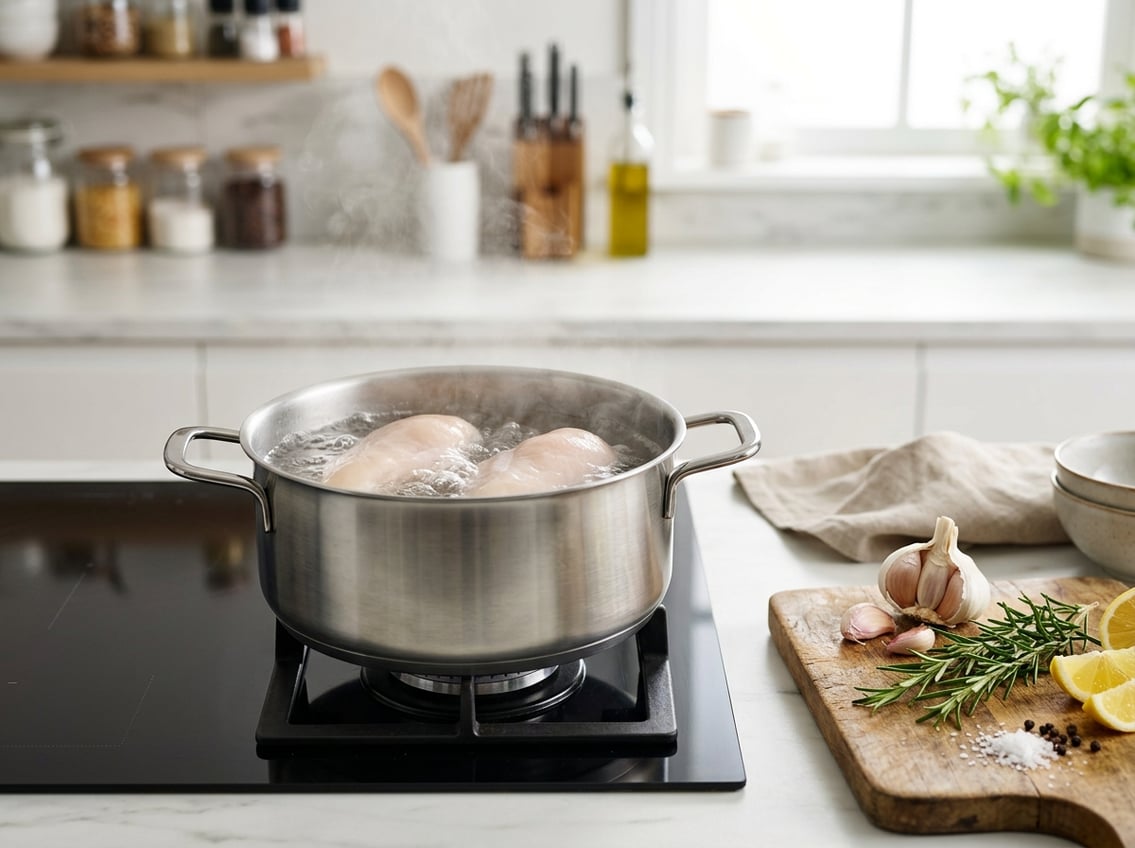
You can safely boil chicken breast. Bring the liquid to a boil first, then reduce it to a gentle simmer until the chicken reaches 165°F.
This method works especially well for boneless, skinless pieces, which cook faster and stay more tender when you avoid aggressive heat. Boiling liquid is a practical choice because chicken breasts can dry out quickly with roasting or grilling.
Why Gentle Simmering Works Better Than a Rolling Boil
A rolling boil moves the meat around too much and can squeeze out moisture. Gentle simmering cooks the outside and inside at a steadier pace, which helps you end up with tender chicken breast instead of tough, chalky meat.
If the liquid is barely bubbling, you can keep the chicken from overcooking while still bringing it up to a safe temperature.
Boiled Chicken vs. Poached Chicken
People often use “boiled chicken” and “poached chicken” to mean the same thing. Both usually involve cooking chicken in hot liquid at a gentle heat rather than at a full boil.
The difference is mostly the heat level. True poaching uses lower heat, while many recipes use the word “boil” even when they really mean a simmering liquid.
How to Boil Chicken Breast Step by Step
Start with chicken breasts in a wide pot or deep skillet. Add enough water or broth to cover them, then season the liquid with salt, garlic, onion, herbs, or lemon if you want more flavor.
Bring the liquid to a boil, then lower the heat until it stays at a low simmer. Cover the pot and cook until the chicken reaches 165°F, then rest it briefly before slicing, chopping, or shredding.
Timing, Temperature, and Doneness
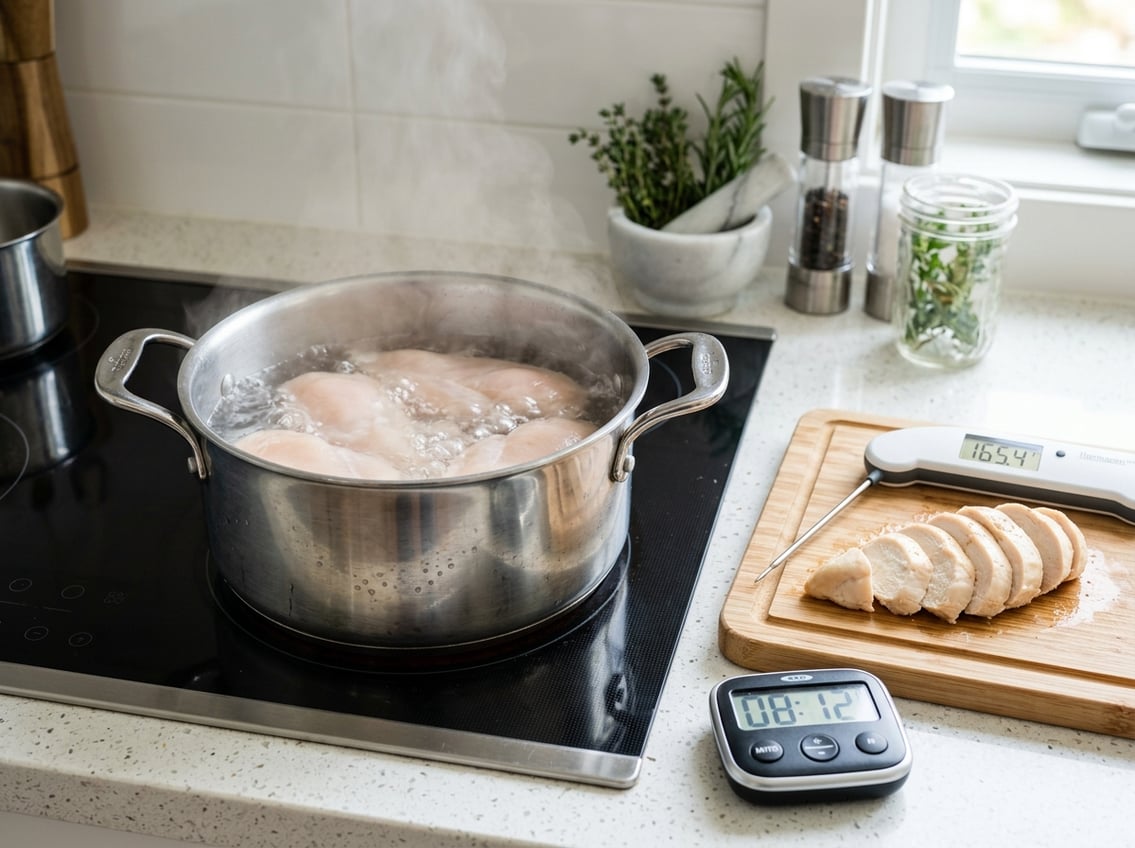
Cooking time depends on size, cut, and whether the meat is frozen. Use time as a guide and an instant-read thermometer as the final check.
How Long to Boil Chicken Breast
For boneless, skinless chicken breast, a gentle simmer usually takes about 12 to 15 minutes. Bone-in breasts need more time, often around 25 to 30 minutes.
The exact time depends on thickness. Thin pieces can cook faster, while larger breasts may need a few extra minutes before the center is fully done.
How Long to Boil Chicken Breasts by Size and Type
Here is a simple guide for how long to boil chicken breasts:
| Chicken Type | Approximate Time |
|---|---|
| Boneless, skinless chicken breast halves | 12 to 15 minutes |
| Bone-in, skin-on chicken breasts | About 30 minutes |
| Cut into 2-inch pieces | 8 to 10 minutes |
These times are starting points. If your pieces are unusually large or small, adjust as needed and check the temperature.
Using an Instant-Read Thermometer
An instant-read thermometer gives you the most reliable way to know when boiled chicken breast is done. Insert it into the thickest part of the meat, and stop cooking when it reaches 165°F.
Even if the outside looks cooked, the center may still be underdone, especially with thick breasts or uneven pieces.
Frozen Chicken, Storage, and Leftovers
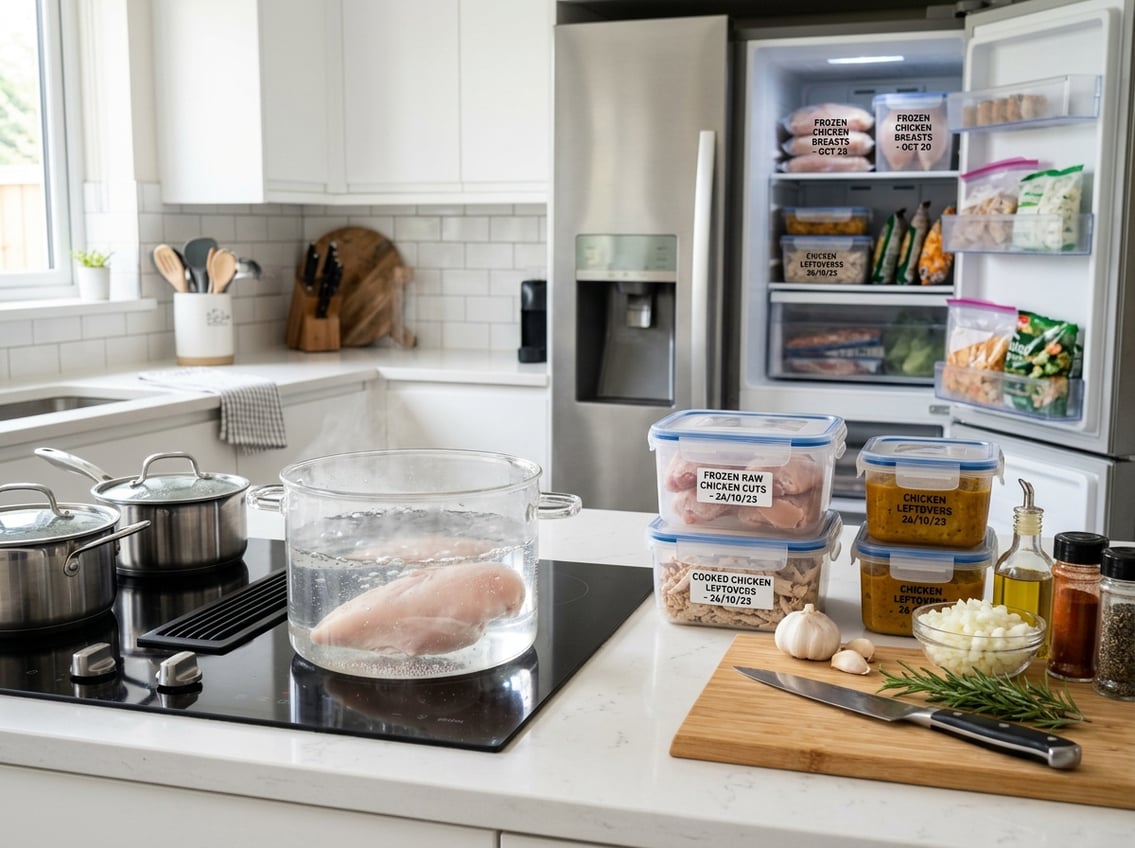
You can boil frozen chicken, but it takes longer and needs careful temperature checking. Once cooked, cool it quickly and store it the right way so it stays safe and usable.
Can You Boil Frozen Chicken Safely
You can boil frozen chicken breast safely if it reaches 165°F in the center. Use a gentle simmer, allow enough time, and handle it cleanly.
Thawed chicken gives you more even results. If you boil frozen chicken, expect the cooking time to increase, and do not guess based on appearance alone.
How to Store Boiled Chicken
Let boiled chicken cool fully first. Then place it in a clean, covered container and move it to the refrigerator or freezer.
If you want to keep it moist, store it with a little cooking liquid. That helps protect the texture and makes it easier to reheat later.
How Long Cooked Chicken Keeps
Cooked chicken keeps in the refrigerator for up to 3 days. If you need longer storage, freeze it for up to 2 months.
Label the container with the date so you can track freshness. Reheat only the portion you plan to eat.
Best Ways to Use It After Cooking
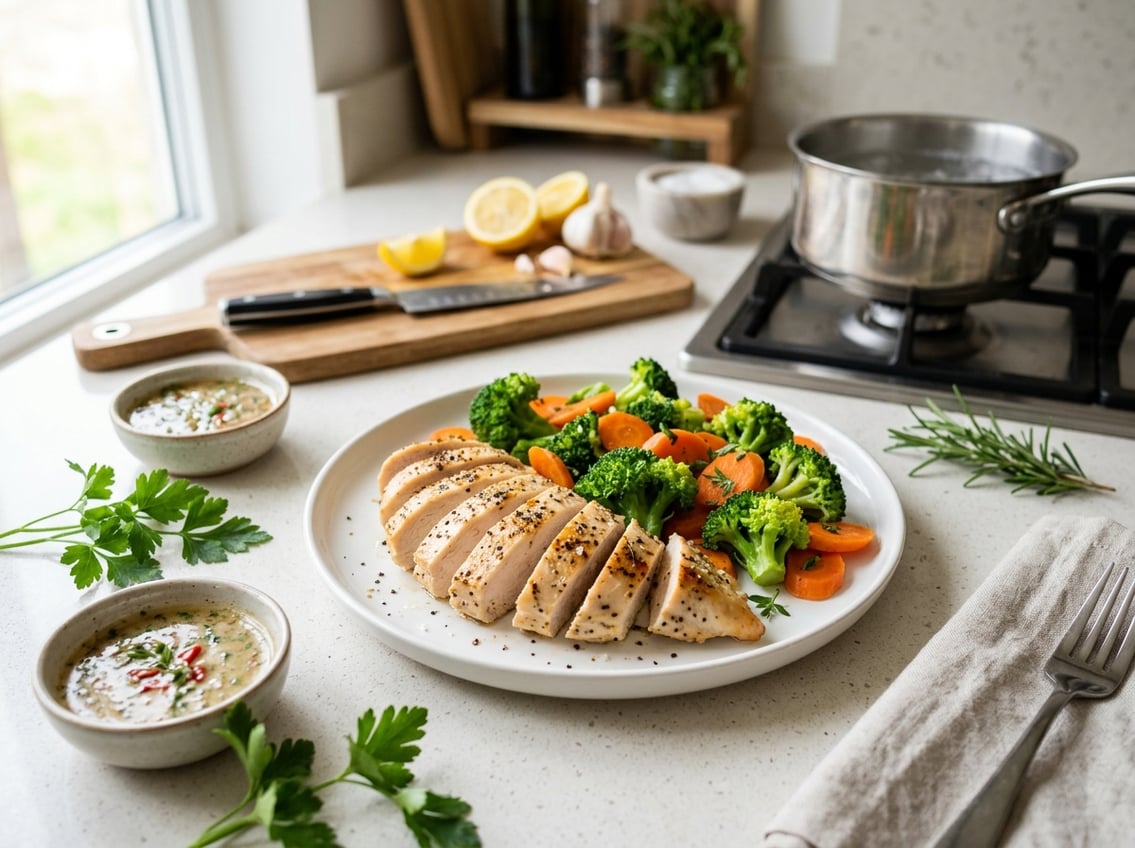
You can use boiled chicken in many fast meals. It works well when you want cooked protein ready to go for the week.
How to Make Shredded or Chopped Chicken
Let the chicken cool until you can handle it safely. Then shred it with two forks or chop it into bite-size pieces with a knife.
Shredded chicken is best for tacos, salads, wraps, and sandwiches. Chopped chicken works better when you want a neater texture in grain bowls or casseroles.
Best Meals for Meal Prep and Quick Dinners
Boiled chicken is useful for meal prep because it stays plain and flexible. You can season it later in different ways depending on the meal.
It fits well in:
- Chicken salad
- Rice bowls
- Pasta dishes
- Wraps
- Sandwiches
- Quesadillas
When Boiled Chicken Works Best in Soups and Casseroles
Boiled chicken blends into other ingredients in soups and baked dishes. It fits naturally in chicken pot pie and chicken tortilla soup.
The meat absorbs flavor from the broth, vegetables, and seasonings. Boiled chicken also mixes easily into casseroles because it is already cooked.
If you want a simple, reliable protein base, boiled chicken is an easy option to keep on hand.


