
When to Weigh Chicken Breast for Accurate Portions
When you want portions that match your recipe, calorie target, or meal prep plan, it matters when you weigh chicken breast. If you weigh at the wrong stage, the number can shift because chicken loses water as it cooks, which changes the chicken breast weight you eat.
For the most accurate tracking, weigh chicken breast raw unless your recipe or food log specifically expects cooked weight. That simple rule keeps your portions more consistent and makes it easier to compare what you measure chicken against in labels, databases, and recipes.
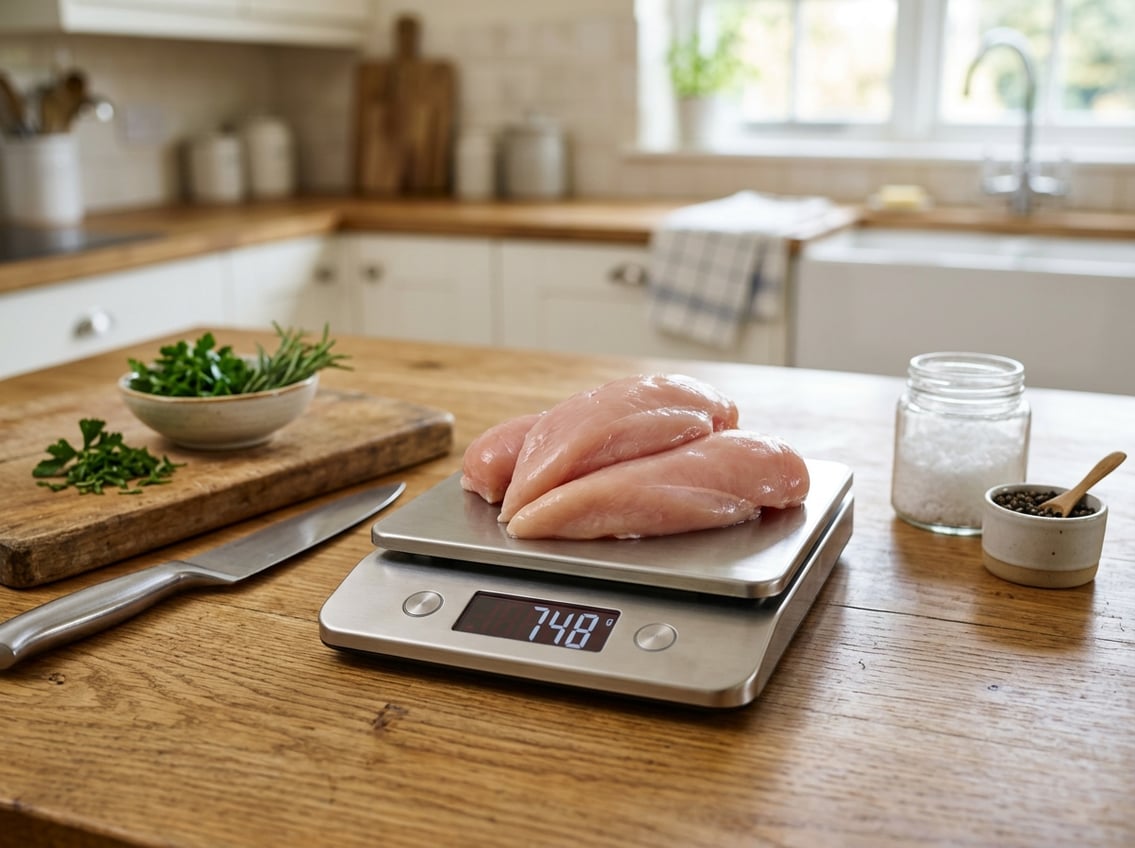
Weigh It Raw or Cooked
You can weigh a raw chicken breast or a cooked chicken breast, but the number means something different each time. Food labels, nutrition databases, and most recipe measurements usually use raw chicken breast, while cooked weighing is useful when you are portioning leftovers or pre-cooked meals.
Match your weighing method to the way the nutrition data was built. That keeps your chicken breast weight estimates aligned with the food you are actually eating.
The Best Time to Measure for Nutrition Tracking
For nutrition tracking, weigh the raw chicken breast before seasoning or cooking. Raw weights line up best with package labels and most database entries, so your logged calories and protein are more likely to be accurate.
This is especially useful if you track meals in an app. If you search raw chicken nutrition data, you will see that raw weight is the standard reference point.
When Recipe Instructions Should Override Your Preference
Some recipes give a weight for cooked chicken, especially when you use leftovers or rotisserie chicken. In those cases, follow the recipe’s method instead of switching to raw weight.
If a recipe says “2 cups chopped cooked chicken,” measuring raw chicken will not give you the right amount. The same is true when you are dividing a batch of cooked chicken into equal portions.
Why Consistency Matters
You do not need one perfect rule for every meal. You need one method that you use the same way every time for a given task.
If you always weigh raw chicken for meal prep and always weigh cooked chicken for leftovers, your results stay predictable.
How Weight Changes During Cooking
Chicken loses weight during cooking because water leaves the meat, and that changes the cooked chicken breast compared with the raw chicken breast. The amount of shrinkage depends on heat, time, and the cooking method you use.
A lean cut like chicken breast can lose a noticeable amount of moisture, so the number on the scale after cooking is not the same as what you started with.
Typical Moisture Loss by Cooking Method
Cooking method affects how much moisture loss you get. Higher-heat methods like grilling and roasting usually shrink chicken more than gentler methods.
A practical range from chicken weighing guidance looks like this:
| Cooking method | Typical weight loss |
|---|---|
| Grilling | 20% to 30% |
| Baking or roasting | 15% to 25% |
| Boiling | 10% to 20% |
Why Larger Breasts Can Shrink More Noticeably
A larger chicken breast often shows shrinkage more clearly because there is more water to lose. A thick piece can also cook unevenly, which can cause more moisture to escape by the time the center reaches a safe temperature.
If you compare two pieces side by side, the bigger one may seem to shrink more in visible size. That does not always mean it lost a larger percentage, just that the change is easier to see.
Simple Raw-to-Cooked Conversion Examples
A raw chicken breast that weighs 8 ounces may end up near 6 ounces after cooking. That kind of change can affect both portions and calorie counts.
A simple estimate for grilled chicken is to divide cooked weight by about 0.75 to 0.80, which gives you a rough raw equivalent. For example, 6 ounces cooked may come from about 7.5 to 8 ounces raw.
What Affects the Number on the Scale
The scale does not just reflect meat. Bone, skin, trimming, and even extra water in the package can change what you see.
The cut you buy matters just as much as the cooking method. A boneless piece will not weigh the same as a bone-in piece, even if they look similar in size.
Boneless vs Bone-In Portions
A boneless chicken breast gives you the most direct edible weight. A bone-in chicken breast weighs more on the scale because the bone adds mass, even though it does not add calories.
If you compare boneless chicken breast with bone-in chicken breast, the bone-in piece may appear much larger on the package label. That makes it less useful for precise nutrition tracking unless you account for the bone.
Skin-On vs Skinless Differences
Skin-on chicken breast usually weighs more than skinless chicken breast. The skin adds weight, and it can also change how much fat renders during cooking.
If you remove the skin before or after cooking, the final chicken breast weight changes again. For accurate logging, weigh the portion in the same form you plan to eat.
Pack Size, Trimming, and Water Retention
Store packages can include extra liquid, especially in chilled poultry trays. That liquid can make the package weight higher than the actual meat weight you serve.
Trimming also matters. A heavily trimmed chicken breast may weigh much less than a similar-looking one with more fat, connective tissue, or moisture. For a general reference on average size, typical chicken breast weight can vary quite a bit across cuts and packages.
How to Measure Portions Accurately
A digital kitchen scale gives you the cleanest answer when you need exact portions. It helps you measure chicken in a way that supports better meal prep, better logs, and fewer guesswork errors.
Small habits make a big difference. Zero the scale, use the right state of the meat, and record the weight before or after cooking in the same way each time.
Using a Digital Kitchen Scale Step by Step
Place the digital kitchen scale on a flat surface. Turn it on, set it to grams or ounces, and press tare if you are using a plate or bowl.
Then place the raw chicken breast on the scale and wait for the reading to settle. If you are measuring cooked chicken, let it rest first, then weigh the portion you plan to eat.
When Estimating Is Acceptable and When It Is Not
Estimating is fine when you are making a casual family meal and do not need exact numbers. A rough portion is often good enough if you are not tracking intake closely.
Estimation is not ideal when you are following a high-protein plan, counting calories, or entering macros into an app. In those cases, the extra few seconds to measure chicken can improve accuracy a lot.
Portioning Chicken for Meal Prep and Recipes
For meal prep, weigh the total raw chicken breast first. Cook it, then divide the batch into equal portions.
This method keeps each container close to the same size. If a recipe calls for a fixed cooked amount, weigh the chicken breast after resting.
Portion the chicken from there. A food scale guide for weighing chicken explains the basic setup clearly.


