
When to Cut Chicken Breast Before or After Cooking
When you decide when to cut chicken breast, consider the dish you are making and the texture you want. If you need fast, even cooking, cut it before cooking.
If you want the juiciest slices for serving, cook it whole first, then slice it after a short rest.
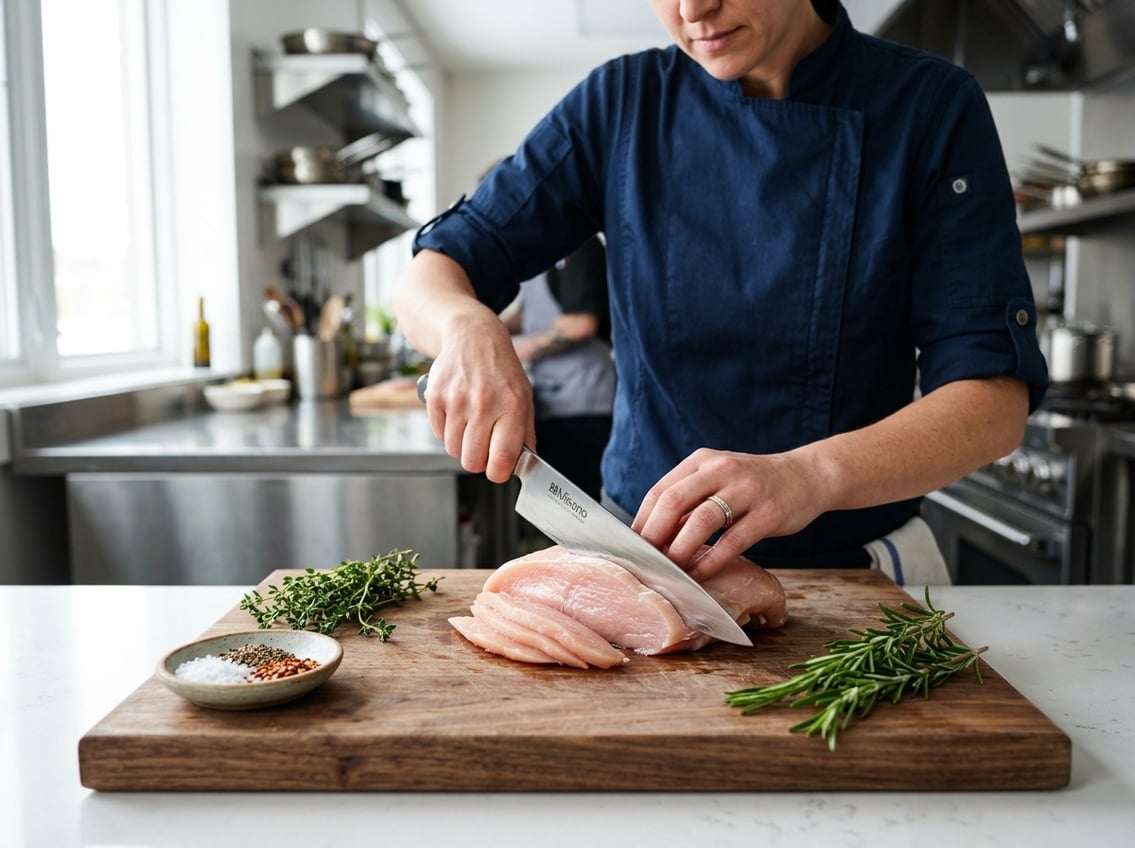
Cutting chicken breast the right way affects both texture and cooking time. Whether you are meal prepping or making dinner, aim for even pieces that cook well and stay tender.
Best Timing Based on the Recipe
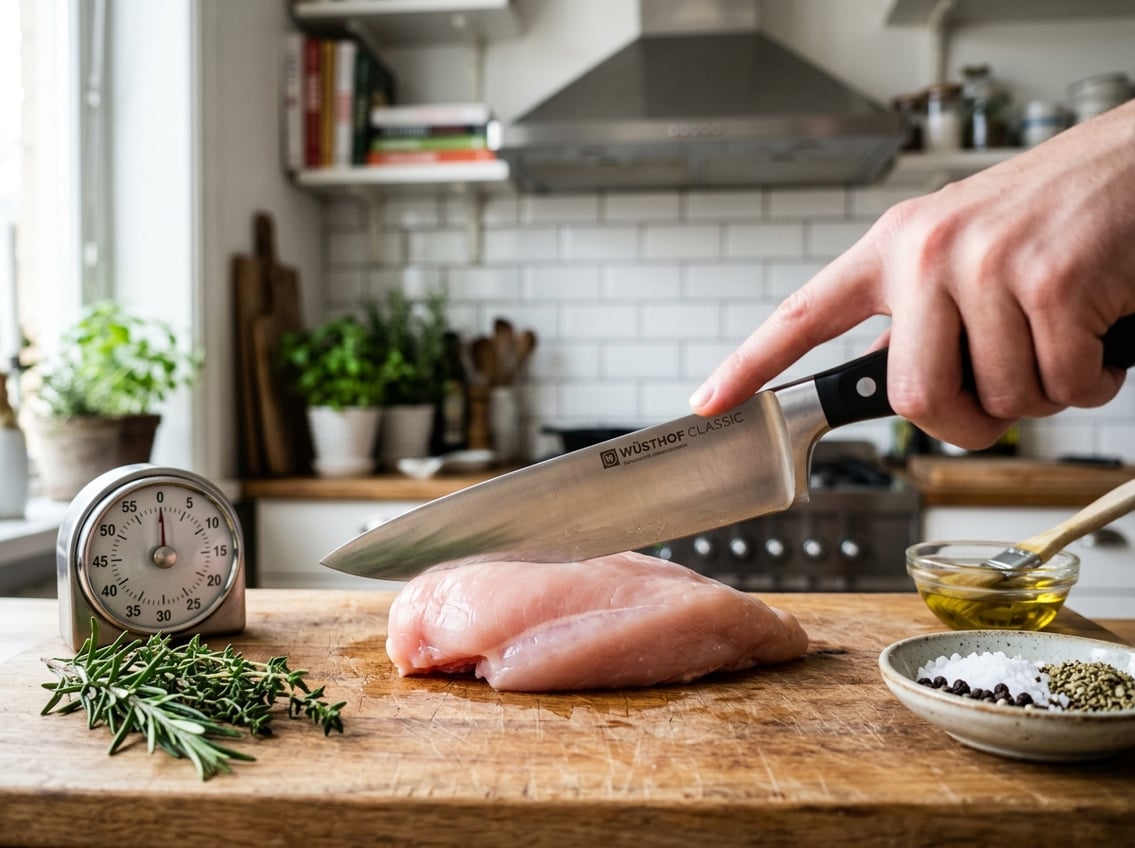
Choose when to cut chicken breast based on your recipe and how much surface area you need. Smaller pieces cook faster, while whole breasts keep more moisture.
Cut raw chicken when you need speed and uniform size. Cut cooked chicken when you want clean slices for serving.
The method also changes whether you make chicken tenders, a chicken cutlet, chicken breast strips, or diced chicken.
Cut Before Cooking for Fast, Even Pieces
Cut raw chicken breast before cooking when you need quick, even cooking. This works well for cubes, stir-fries, skewers, salads, and weeknight meals where speed matters.
You can also slice raw chicken into thin cutlets by butterflying or opening it flat. That gives you a thinner piece that cooks faster and more evenly.
For dishes like fajitas, it is often easier to cook first in strips, then finish with seasoning and sauce.
Cut After Cooking for Juicier Slices
Cut chicken breast after cooking when you want moist slices for serving. Let it rest first, then slice it against the grain so the meat stays tender.
This works well for sandwiches, pasta, salads, and plated dinners. Whole chicken breast holds onto juices better during cooking, and slicing after the rest period helps keep those juices inside the meat.
When Butterflying First Makes More Sense
Butterflying helps when the breast is thick in one spot and thin in another. Flattening it helps the meat cook at the same rate.
If you need even thickness for a chicken cutlet or a dish that cooks quickly, butterfly before cooking. It also makes it easier to portion the breast into even halves.
How to Prep and Slice Raw Chicken Safely
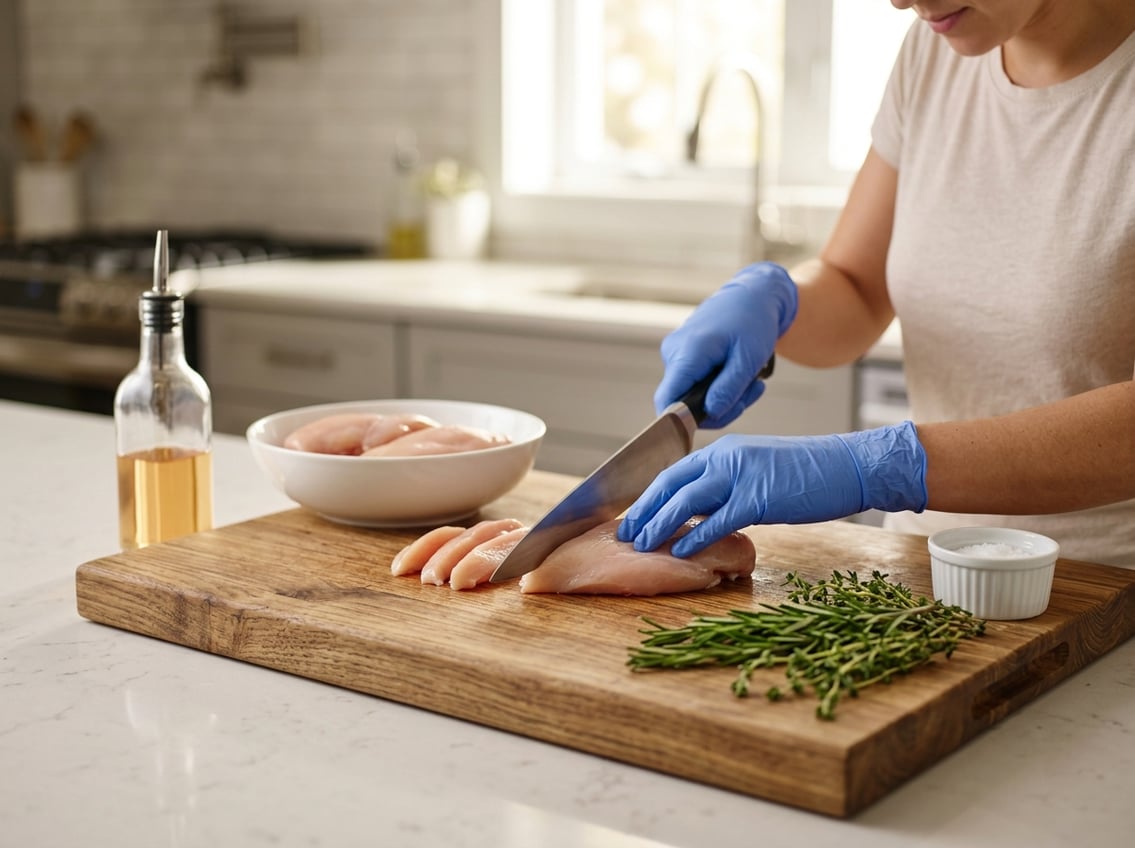
Start with clean tools, stable surfaces, and steady knife work. Make each piece close in size so the chicken cooks evenly and stays easy to handle.
Use a Sharp Knife and Plastic Cutting Board
Use a sharp knife so you slice cleanly instead of tearing the meat. A dull knife can slip and makes the job slower and less safe.
A plastic cutting board is practical for raw chicken because you can wash and sanitize it easily. Keep the board separate from foods that will not be cooked, and clean it right after use.
Why Slightly Chilled Chicken Is Easier to Handle
Slightly chilled chicken is firmer and easier to control than very soft raw meat. That makes slicing more precise, especially if you want thin strips or even cubes.
Do not freeze the chicken solid. Keep it just cold enough to hold its shape.
How to Slice Chicken for Uniform Thickness
Place the breast flat on the board and slice in steady strokes. If one side is much thicker, turn the breast and trim it into more even layers before cutting it into strips or cubes.
Aim for the same thickness across every piece. That helps the chicken finish at the same time and keeps the texture consistent.
Which Cut Works Best for Common Dishes
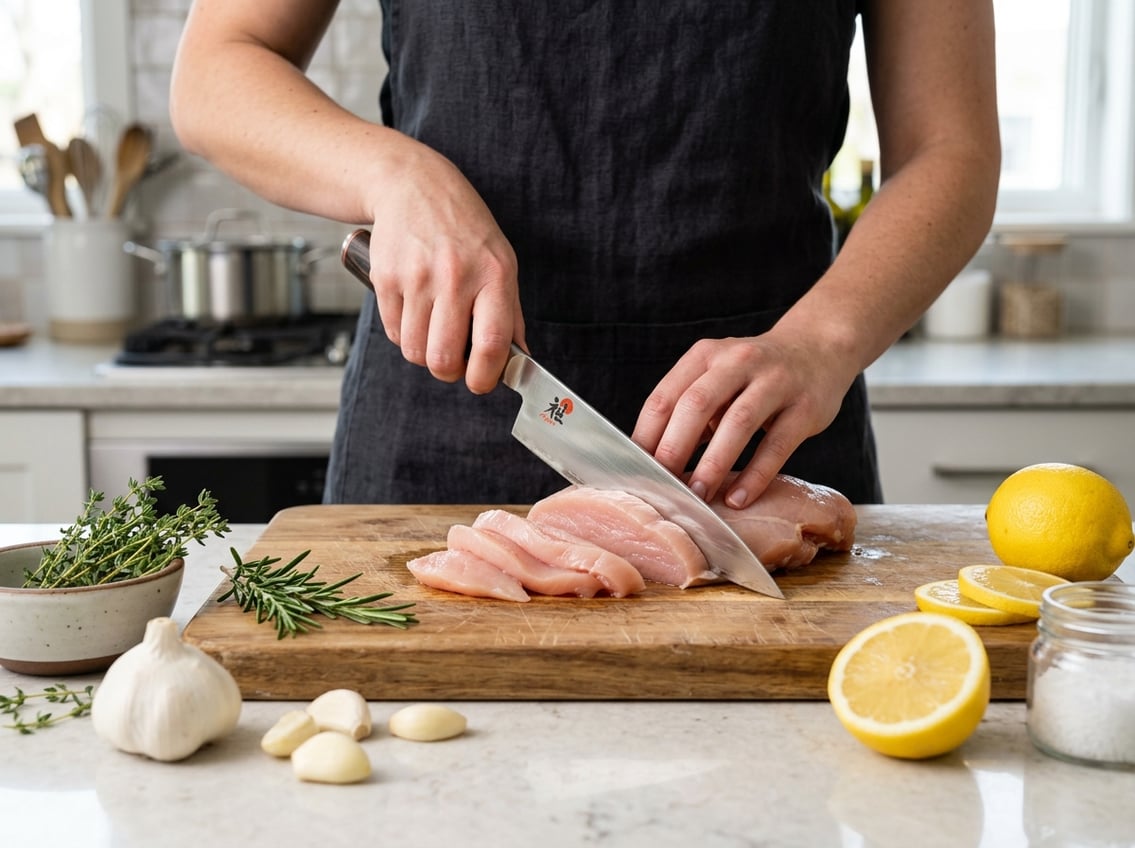
Different dishes call for different shapes. The right cut changes how the chicken cooks, how it absorbs sauce, and how it feels in each bite.
Strips for Chicken Fajitas and Quick Sautes
Use chicken breast strips for chicken fajitas, quick skillet meals, and fast sautés. Strips cook quickly and mix well with peppers, onions, and sauces.
This shape also gives you good browning in a hot pan. If the recipe moves fast, strips are often more useful than larger pieces.
Cubes for Chicken Stew and Skewers
Use chicken cubes or diced chicken for stew, kebabs, and skewers. Cubes are easy to thread, spoon, and portion.
If you are making chicken stew, keep the pieces a bit larger so they do not break apart during long simmering. For skewers, aim for even sizes so each piece cooks at the same rate.
Cutlets for Chicken Piccata and Pan-Fried Meals
Use chicken cutlets for chicken piccata, breaded cutlets, and pan-fried meals. Thin cutlets cook fast and develop a good crust.
They also work well when you want a neat presentation. For a dish like chicken piccata, even thickness helps the lemon-butter sauce coat each piece without overcooking it.
Common Mistakes That Affect Texture and Cooking
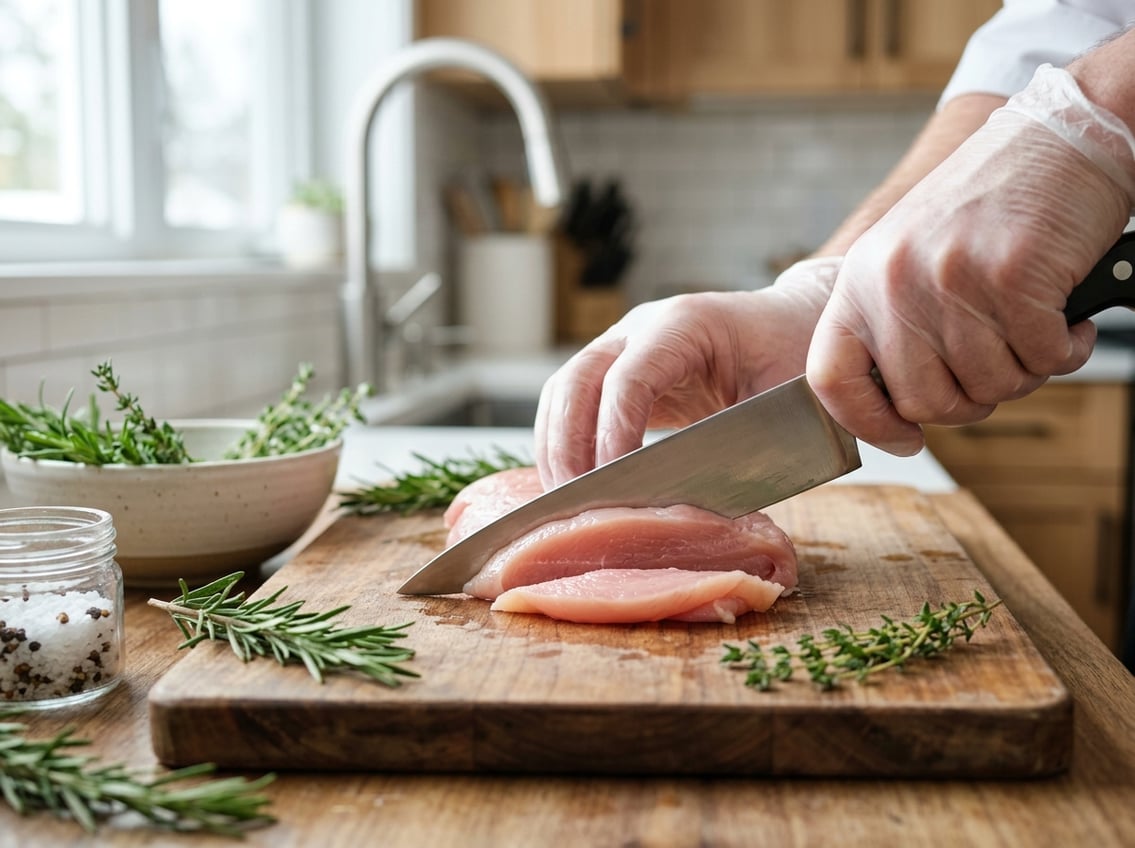
Small slicing mistakes can change how chicken tastes and cooks. A clean cut, even size, and the right direction of the grain all matter more than many people expect.
Cutting With the Grain Instead of Across It
Many people cut with the grain instead of against it. The grain is the direction of the muscle fibers, and slicing the same way makes the meat seem stringy.
When you cut across those fibers, each bite feels softer and easier to chew.
Making Uneven Pieces That Cook at Different Rates
Uneven pieces cause trouble because thin pieces dry out before thick ones finish. That is a common issue when you cut chicken breast without first leveling the thickness.
Trim and portion the breast into similar sizes. That gives you better browning, better texture, and fewer underdone spots.
Choosing the Wrong Cut for the Dish
One recipe may need a different cut than another. How you cut a chicken breast depends on whether you want fast cooking, a tender slice, or a sturdy cube.
Thin strips work well for quick sautés. Cubes are better for stew and skewers.
Cutlets fit pan-fried dishes. Using the wrong shape can make the chicken dry out, break apart, or feel awkward to eat.


