
Chicken Breast or Thigh Healthier: What to Choose
Your choice between chicken breast or thigh depends on your goal, taste, and cooking method. Chicken breasts are leaner and give you more protein for fewer calories.
Chicken thighs have more fat, richer flavor, and a softer bite. The better pick changes with your calorie target, protein needs, and whether you prefer white meat or dark meat.

Quick Answer by Health Goal
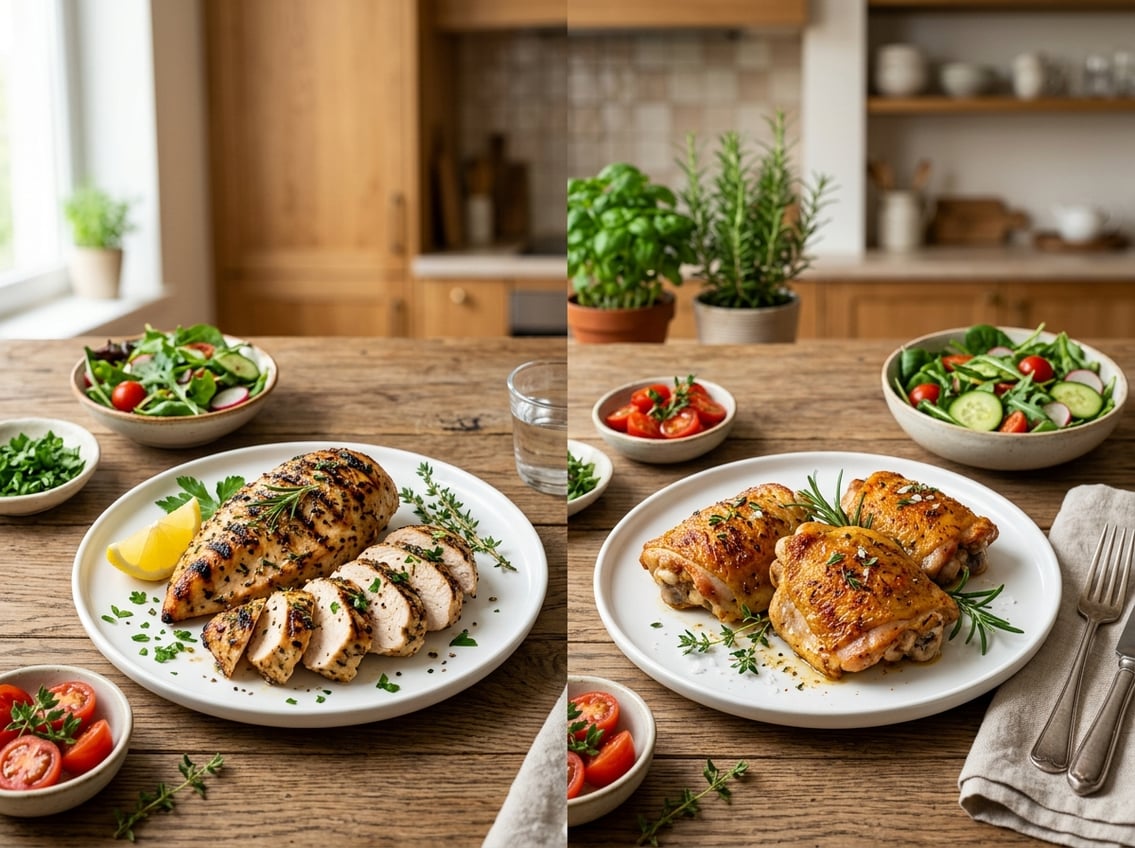
Chicken breast is lower in calories, fat, and saturated fat. Chicken thigh offers richer flavor and texture.
For a skinless, roasted comparison, chicken breast has more protein per 100 grams and fewer calories than thigh.
Best Pick for Lower Calories and Weight Loss
Choose chicken breast if you want fewer calories and a higher protein density. This makes it easier to build filling meals without adding much fat.
Skinless chicken breast is the common lean protein choice for calorie control. Skinless chicken thigh can still fit, but it usually adds more energy to the plate.
Best Pick for Protein Density and Muscle Building
Choose chicken breast when you want the most protein per bite. It gives you more protein with less fat, which helps when you want to meet protein goals while keeping calories lower.
Chicken thigh also provides strong protein and can support muscle building. Breast offers more protein for fewer calories.
Best Pick for Satiety, Flavor, and Tenderness
Choose chicken thigh if you want more satiety from fat, plus better texture and tenderness. Dark meat tastes richer and stays juicier during cooking.
That extra fat can make meals feel more satisfying. If dry chicken breast is not appealing, thigh may be the more practical choice.
Nutrition Differences That Matter
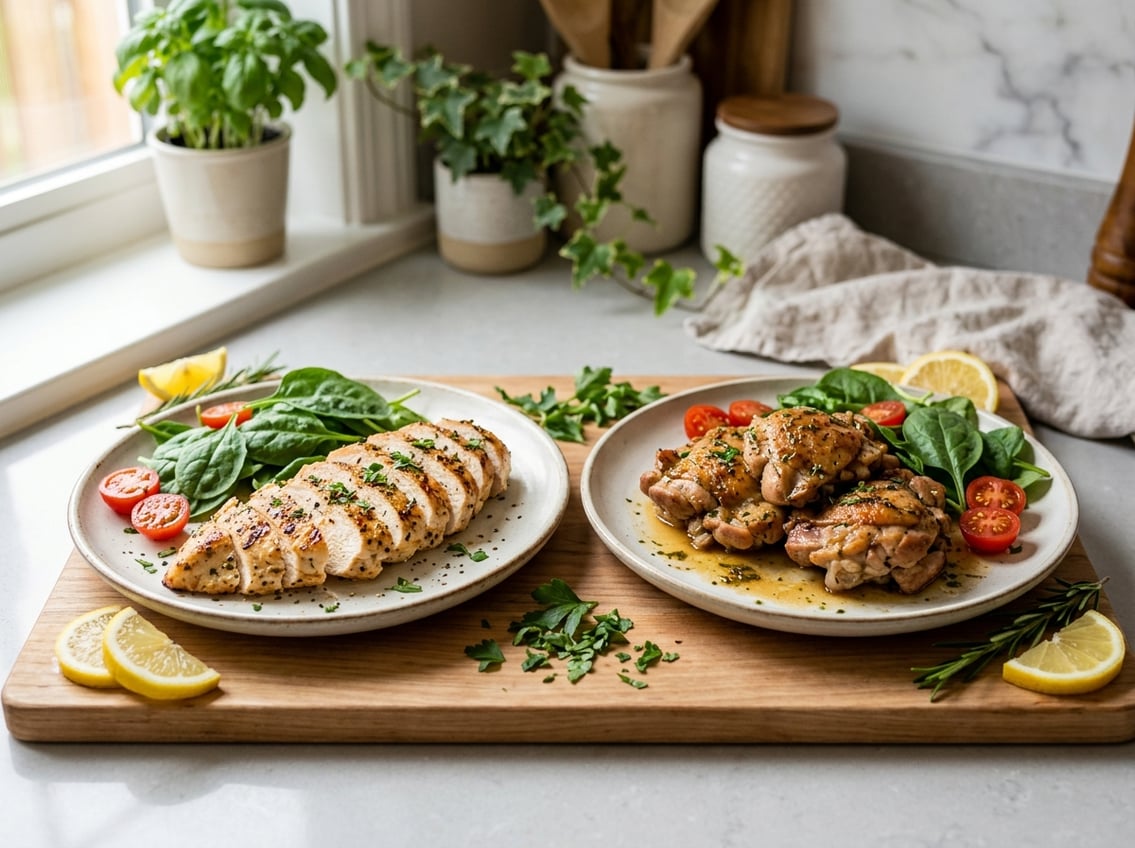
The biggest nutrition gap is in macronutrients, especially calories, protein, and fat. Micronutrient differences are smaller, but they can matter if you eat chicken often.
Macronutrients in Skinless Portions
Skinless chicken breast gives you more protein and less fat than skinless chicken thigh. A roasted 100-gram serving of chicken breast has about 165 calories and 31 grams of protein.
The same amount of roasted chicken thigh has about 179 calories and 24.8 grams of protein, according to Verywell Health. Chicken thigh contains more total fat and saturated fat.
If you are watching calories closely, that difference can add up over time.
Micronutrients in White and Dark Meat
Chicken thigh provides more iron, heme iron, zinc, and vitamin B12. Chicken breast has more vitamin B6 and niacin, and can provide a bit more choline and selenium, depending on the cut and preparation.
These differences are real, but not large enough to make one cut automatically better for everyone. If your diet includes other rich protein sources, either cut can work well.
How Myoglobin Changes Iron and Color
Chicken thigh is darker because it contains more myoglobin, a protein that stores oxygen in muscle. More myoglobin means darker meat and a stronger flavor.
That higher myoglobin level also links to the higher iron content in dark meat. White meat, like chicken breast, has less myoglobin and a lighter color.
How Cooking Changes the Healthiest Choice

Your cooking method can matter as much as the cut you choose. Dry heat methods keep calories lower, while breading, added oil, and packaged sauces can change the nutrition quickly.
Grilling, Baking, and Roasting
Grilling, baking, and roasting are healthy cooking methods for both cuts. These methods work well with skinless chicken and help avoid extra fat from frying.
They also fit meal prep because you can cook larger batches and portion them later. If you use olive oil, keep the amount modest so calories stay under control.
Pan-Searing, Braising, and Moisture Retention
Pan-searing can be a healthy choice if you use little oil and control the heat. It works especially well for chicken breast, which can dry out if overcooked.
Braising suits chicken thigh because the extra connective tissue and intramuscular fat help the meat stay tender. Thigh works well when you want moisture and texture.
Fried and Processed Options to Watch
Fried chicken raises calories and fat quickly, especially when breading absorbs oil. Processed chicken products can also carry more sodium than plain chicken, so check labels carefully.
Some pre-seasoned or marinated products add a lot of salt. High heat grilling that blackens the surface can also raise exposure to heterocyclic amines, so avoid heavy charring when possible.
Which Cut Fits Your Diet and Routine
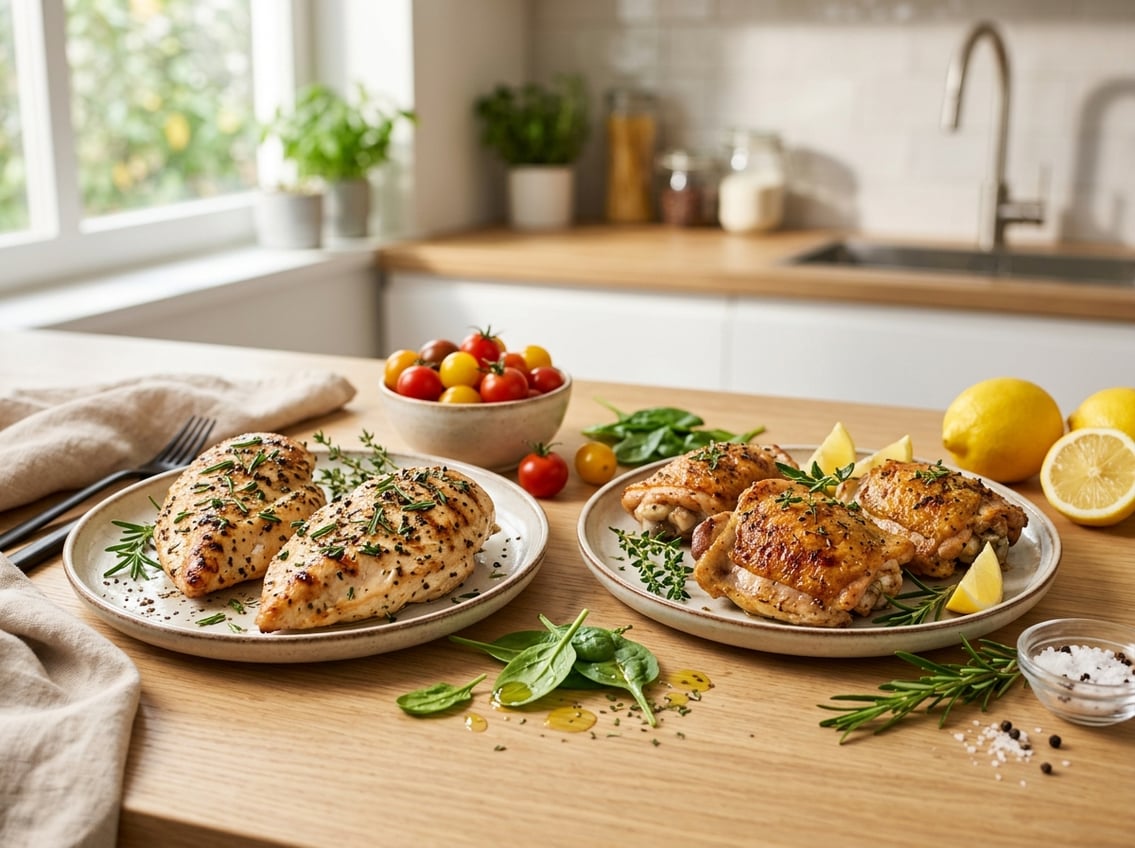
The best choice depends on your health goal and how you cook during the week. Both chicken thigh and chicken breast can fit a balanced diet when you choose skinless pieces and keep sodium and added fat in check.
Choosing for Heart Health and Lower Fat Intake
If you want lower saturated fat and a leaner plate, choose skinless chicken breast more often. This supports heart health and keeps calories lower at the same time.
Chicken thigh can still fit, especially if your total diet is low in saturated fat and rich in plants, whole grains, and other lean protein sources. Portion size still matters.
Choosing for Budget, Taste, and Everyday Cooking
If you care more about taste, tenderness, and price, chicken thigh often makes more sense. It tends to be cheaper by the pound and stays juicy in simple recipes.
Chicken breast works well for quick meal prep, salads, rice bowls, and dishes where you want a lean protein. Chicken thigh works well in stews, sheet-pan meals, and recipes that benefit from richer flavor.
When Mixing Both Cuts Makes Sense
Using both cuts gives you the best mix of nutrition and flexibility.
You can use chicken breast for lighter meals. You can choose chicken thigh for dinners when you want more flavor.
That approach helps if you are feeding a family with different preferences.
A mixed plan lets you keep your meals practical without locking into one cut every time.


